
About this sermon
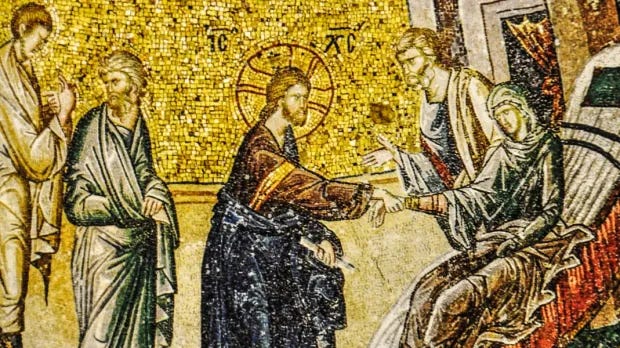
The healing of Saint Peter’s mother-in-law must have been a pretty big deal to warrant its coming down through the decades of oral tradition after the Passion of Christ all the way to Saint Mark. Many biblical scholars suggest Mark’s gospel dates from the early 60s; some even as late as the year 70. Even at the earlier date, we are talking about 30 years of oral preaching and teaching about the healing of a fever. It seems like a rather mundane problem to have—which is not to diminish how serious a high fever can be from a physical perspective, of course. Yet this episode is among the first healing miracles of Jesus, and it is a healing of a woman, which is significant for a reason I will mention in a moment.
It is a fairly iron-clad rule of the New Testament that what is included in the four Gospel accounts is not mundane or unremarkable, but rather what is included is included for a very specific purpose: that is conveys not merely knowledge, but spiritual knowledge, about Jesus Christ and how He is the Messiah and Eternal Word of the Father; and on a practical level this means that what is included in the Gospel accounts of Jesus has spiritual meaning for us that feeds our desire to be transformed by the Holy Spirit—transformed heart, and thereby a transformed life. The Gospel details from Matthew, Mark, Luke, and John are included to proclaim the Gospel’s power to set us free from the bondage of our sins, that we might receive the liberty of that abundant life which the Father manifested in His Son Jesus, our Lord and Saviour.
So, we must ask, given this iron-clad rule, might it be the case that the fever described by Saint Mark might indicate something more than Peter’s wife’s mother having a temperature higher than 98.6 degrees—that the image of her having a fever represents not a physical condition, but one spiritual?
It turns out there is plenty of support for just that interpretation, and it shows up early in the life of the Church (the early Church meaning the patristic Church). S. Jerome, for example, interpreted the fever as intemperance. In traditional moral theology, “intemperance” refers to lack of moderation or restraint, and an excessive indulgence of any passion or appetite. More recently, the term is used to refer to an addiction to intoxicating beverage (that is, to alcohol), but in the Church it means an addiction to anything at all. The Venerable S. Bede, another Church Father, interpreted “fever” in the same way, and also included under its category addiction to sexual gratification. Many other Church Fathers could be cited here, all seeing fever as representing a spiritual, not merely physical, condition.
Now, we do not know (because Mark does not specify) which particular form of spiritual malady Peter’s mother-in-law possessed. Unable to exercise restraint over some sort of addiction is something every human being suffers from, at least from time to time. Addiction to television, addiction to cell phones, addiction to gossip, addiction to control, addiction to victimhood, addiction obviously to food, as well as addiction to things we normally speak of as addictive (drugs, alcohol)—these are part of the human condition, and the Church generally calls these “passions” and what is named in our Psalm as “prison.”
And what spurs forth our giving into our passions (our addictions) is, in the vocabulary of the Church, of course, demons. We should note in this passage that Mark speaks of demons three times in this passage. Within the Christian faith, being sick has everything to do with our inability to exercise restraint against our common human impulses and human addictions: that is, unable to resist temptation dangled before our eyes like the serpent dangled the fruit of the paradise Tree in front of Adam and Eve. According to Scripture, being sick, in short, means giving into our passions.
And yet, it is to provide healing from our human weakness that Christ came as the Light that lighteth all human beings. Again we marvel at the power of Jesus Christ. We see this even right at the beginning of Mark’s Gospel: Jesus healing, and in our passage today, Jesus healing Peter’s mother-in-law. And again, Mark means “spiritual healing,” and that is indicated by the fact that as the fever left her, she served them. It is easy to overlook the significance of this act of serving, but in the Greek the word is of the same root as the term we today use for an ordained Deacon. Older English translations often use, “the fever left her, and she ministered unto them,” which is closer. Ministering is the activity, of course, of Jesus: and the significance I mentioned earlier of this episode involving a woman is that this woman, Peter’s mother in law, after being healed of her spiritual fever, of her spiritual “passion” (meaning addiction), is the first person in Mark’s gospel to imitate Jesus. To be healed, which is what salvation means, is not just to receive relief (or absolution) from Jesus from our sinful temptations, but it is to lead a different way of life thereafter—to walk from henceforth in Christ’s holy ways. It is to lead a transformed life with an illumined heart, illumined by the power of Jesus Christ.
Brothers and sisters, as we continue to approach and prepare for Lent having the knowledge of the new light of Christ shining in our hearts, let us bring our desire to be healed by God to Him — that we can know the power of His healing, His love. And let us as well take to heart the doctrine of S. John: that if we say we have no sin (that is, no passions), we deceive ourselves, and the truth is not in us. But if we confess our sins and passions, the Father is faithful and just to forgive us our sins, and to cleanse us from all unrighteousness — that being healed, we can serve Him Who is Jesus Christ, Our Lord, Who lives and reigns with the Father in the unity of the Holy Ghost: ever one God, unto the ages of ages. Amen.
Get full access to Anglican Ascetic Podcast at anglicanascetic.akensideinstitute.org/subscribe
More from Anglican Ascetic
Evenings with Bede: S4, Ep. 3: S. John’s Greeting
Nov 22, 2026 · 35m
In the audio provided, the lessons are read, and then followed by a homily by yours truly.A Lesson from the Revelation to S. John, 1.4-7John, to the seven churches which are in Asia: Grace be unto you...

On Keeping a Holy House of Prayer
Nov 22, 2026 · 17m
Our Feast of Dedication which we celebrate today we are celebrating because it was on this date, 104 years ago—that is, on the 19th of November, 1922, despite our being established in 1769 through...
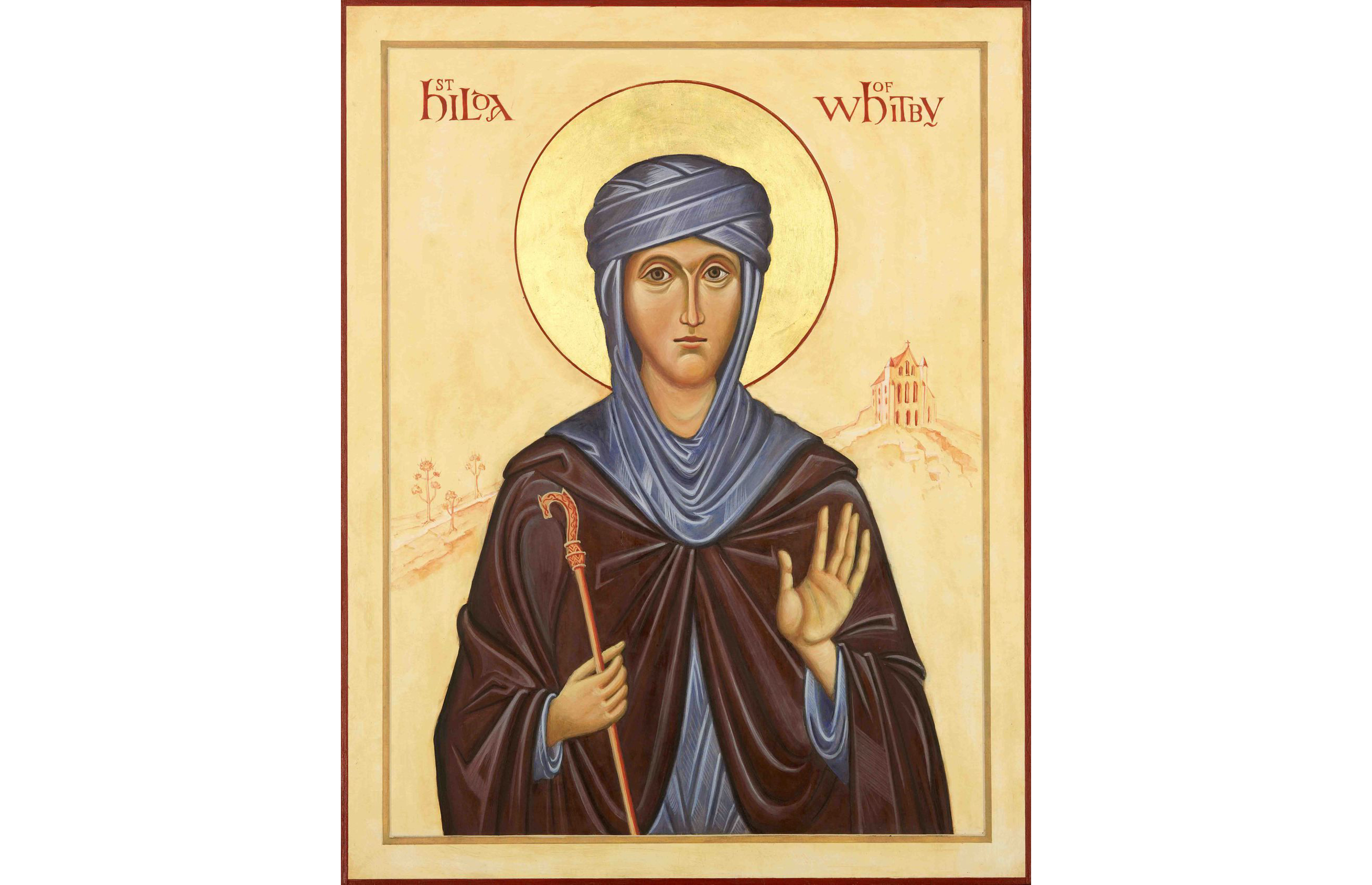
On the Witness of S. Hilda of Whitby
Nov 18, 2026 · 20m
Almighty and everlasting God, We give Thee thanks for the purity and strength with which Thou didst endow Thy servant Hilda, Abbess; and we pray that by Thy grace we may have a like power to hallow...
Evenings with Bede: S4, Ep. 2: Bede’s Introduction
Nov 16, 2026 · 31m
In the audio provided, the lessons are read, and then followed by a homily by yours truly.A Lesson from the Revelation to S. John, 1.1-3The Revelation of Jesus Christ, which God gave to Him, to make...
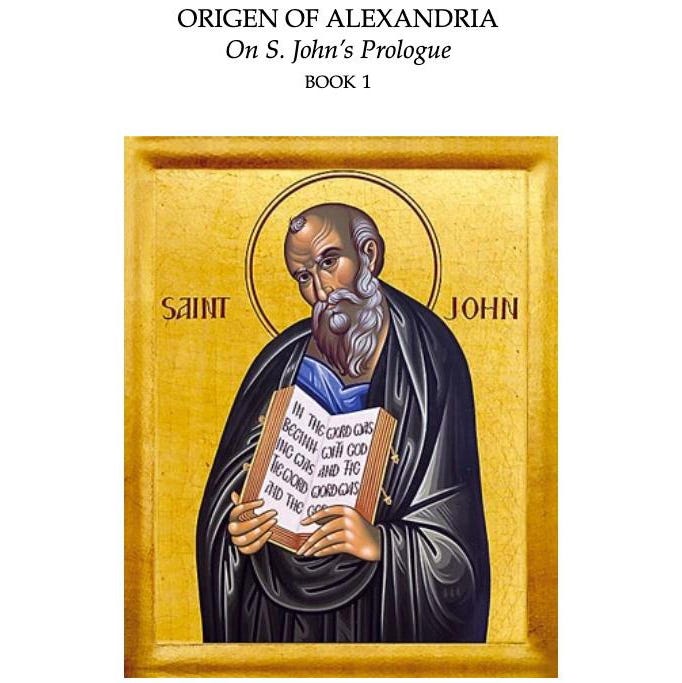
Ep. 1: S. Origen on S. John’s Prologue
Nov 14, 2026 · 1h 37m
This is unedited audio of a parish scripture study course in which we are studying the Prologue of S. John’s Gospel as interpreted by the early 3rd century Church Father and brilliant interpreter of...

On S. Martin, Bishop of Tours
Nov 11, 2026 · 15m
O God, Who by Thy Holy Spirit didst enable Thy servant Martin to withstand the temptations of the world, the flesh, and the devil: Grant that we, in the same Spirit, may with pure hearts and minds...
Take these sermons with you.
Follow Anglican Ascetic in the Getsermons app to get every new sermon, build playlists, and pick up right where you left off.

