
Anglican Ascetic
On the Eucharist and Illumination
Aug 18, 2024 · 14m
Prefer sermons downloaded automatically?
About this sermon
One of the mandatory steps within the process of being ordained to the Priesthood is to do an internship as a hospital chaplain. In my case, I spent twenty weeks in four hospitals in suburban Chicago, near where my family lived at the time (this was fall 2015). Although I spoke with priests who bemoaned and even regretted their chaplain internship experience (and I even heard some horror stories), many priests, including my then-Bishop, the Prelate who ordained me, assured me that hospital chaplaincy was for them meaningful, positive, and deeply, and permanently, life-changing.
And I must say, it was for me as well. Thanks be to God! It was never easy, and often unpredictable. My very first overnight duty on-call saw me assist an experienced chaplain whom I was shadowing as we ministered to a large family of over 25 relatives who that night suffered the loss of one of their family members to a kind of brain hemorrhage that, tragically, was inoperable. Talk about being thrown into the deep end of the pool and having to learn how to swim. Over the twenty weeks, in not only hospital patients and their families, but in the hospital staff, nurses, doctors, and my fellow chaplains, I witnessed so many instances of loss, of tragedy, of suffering and confusion, but also I witnessed joy, love, faith, and remarkable examples of God active in people’s lives, holding them up by His grace. These were exactly the kinds of experiences one should have in preparing for the sacrificial ministry of the sacred priesthood.
The ultimate example of sacrificial priestly life is Our Lord and Savior Jesus Christ. His example to us, being divine and human mingled together, is so profound that it is well past our ability to grasp it completely and finally. This is why we continually revisit the accounts of His life given to us by the Evangelists—that by hearing them, by which we read, mark, learn, and inwardly digest them both literally and spiritually (both senses together always), we are drawn deeper into the mystery of Him, drawn into deeper encounter of Him and His presence, which as well reveals the mystery of Christ in us. This we do even as we read about many actions of Christ, and many of His sayings and words, that are hard to understand.
For example, Jesus says to us today in the Gospel: “Truly, truly, unless you eat the flesh of the Son of man and drink His blood, you have no life in you.” This was a teaching, a hard saying, that was so hard, it sifted and weeded out the true disciples from the larger group of Jesus followers. After hearing this, many followers drew back and no longer went about with him. Some of us, even today, might flinch a bit at this saying, at both its physicality (flesh and blood) and its bluntness. Jesus, often winsome and generous in His public ministry, was nonetheless never above teaching in a direct, confrontational, and even aggressive way. Perhaps this is because being poked awake from a cozy, care-free, spectator kind of discipleship into discipleship that is active, engaged, and inquiring is something disciples of Christ constantly need.
And yet the Church, in remembering the words of Jesus, and taking them to heart in prayer in the years and decades after the Ascension of Christ, began to discern within the hard sayings of Jesus a depth that echoed profoundly in the Scriptures. We hear an example of this in our passage from the Book of Proverbs. Wisdom, who we learn was God’s first creation, and who from the beginning rejoiced daily in God’s activities, uses maids (which represent apostles and preachers of the Gospel) to invite simple people (meaning those people, like Nathaniel, who are without guile but also yet to some extent naive about life) to into her house: “Come,” she says, “eat of my bread and drink of the wine I have mixed. Leave simpleness, and live, and walk in the way of insight.” This elaborates upon our Lord’s hard saying, “Unless you eat the flesh of the Son of Man and drink His blood, you have no life in you.” Jesus teaches us that His flesh is bread. Eating His bread and drinking His wine is precisely the nourishment we need to walk in the way of insight, to have the lamp of illumination lighting up our path, because our mind is more Christ-like.
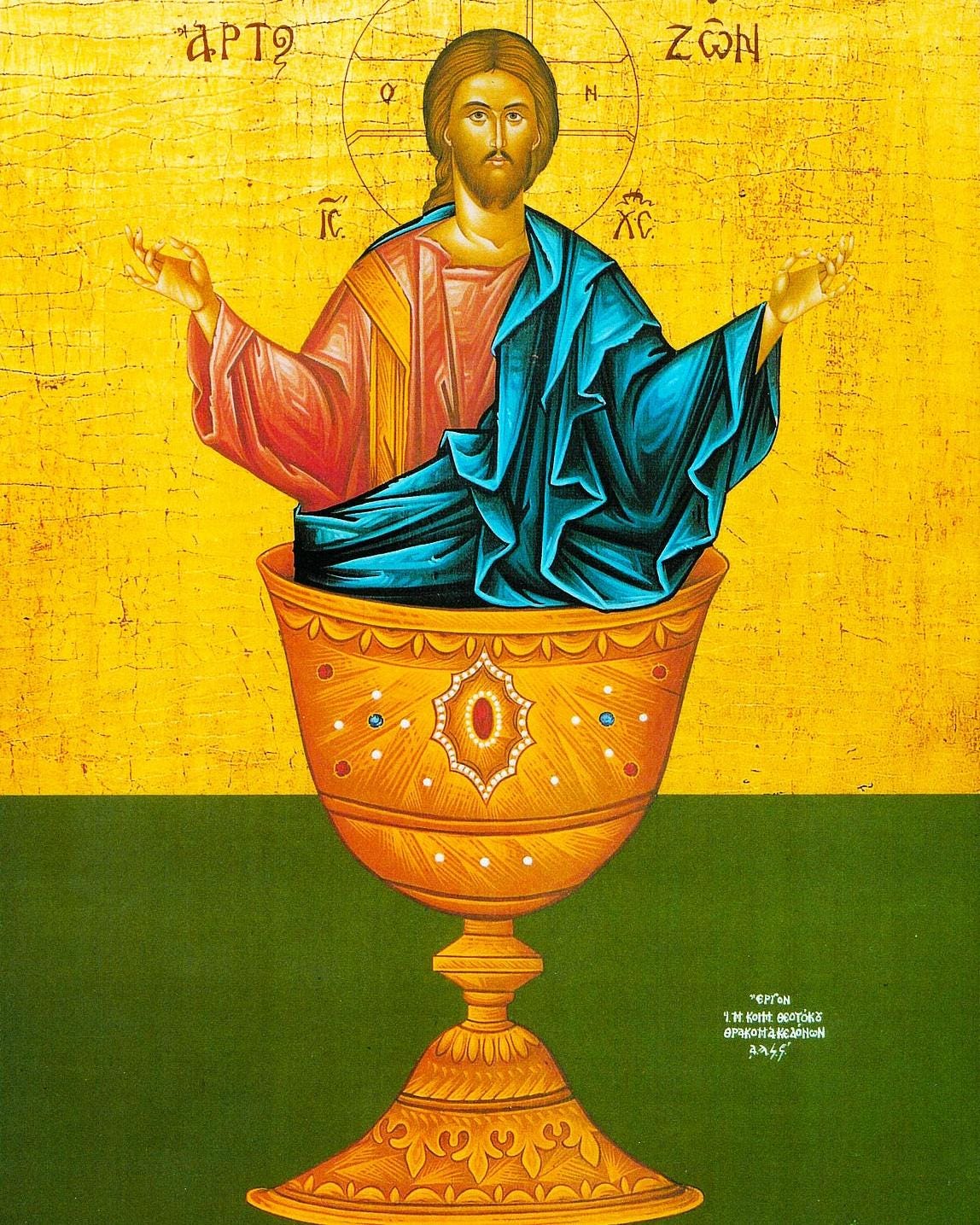
In the Eucharist, our nourishment is Christ. Our nourishment is Him, which means His sacrificial life. To eat the consecrated bread is to receive into our body Christ’s sacrifice: in fact Him on the Cross. To drink the consecrated wine is to receive Christ’s life (blood in ancient understanding being the source of life). Eternal life is received through Christ’s sacrifice and Christ’s life. In receiving the Eucharist, we receive Christ’s sacrificial life, in which the entirety of His sacrificial life is really and truly present: abiding in us, and we in Him.
The Almighty God the Father has given His only Son to be for us a sacrifice for sin, and also an example of godly life. As we receive the Sacrament of the Eucharist, the source and summit of Christian life, we open heart to receive Christ, Who in S. Paul’s words is the power of God and the wisdom of God. This is our participation in the Eucharist. We enter Christ’s redemptive stream, His river of wisdom, the streams whereof make glad the city of God, the holy place of the tabernacle of the Most High. In the Eucharist, let us ever be still, and know in the Eucharist is God: even the very Christ Who lives and reigns with the Father in the unity of the Holy Ghost, ever one God: world without end.
Get full access to Anglican Ascetic Podcast at anglicanascetic.akensideinstitute.org/subscribe
More from Anglican Ascetic
Evenings with Bede: S4, Ep. 3: S. John’s Greeting
Nov 22, 2026 · 35m
In the audio provided, the lessons are read, and then followed by a homily by yours truly.A Lesson from the Revelation to S. John, 1.4-7John, to the seven churches which are in Asia: Grace be unto you...
On Keeping a Holy House of Prayer
Nov 22, 2026 · 17m
Our Feast of Dedication which we celebrate today we are celebrating because it was on this date, 104 years ago—that is, on the 19th of November, 1922, despite our being established in 1769 through...
On the Witness of S. Hilda of Whitby
Nov 18, 2026 · 20m
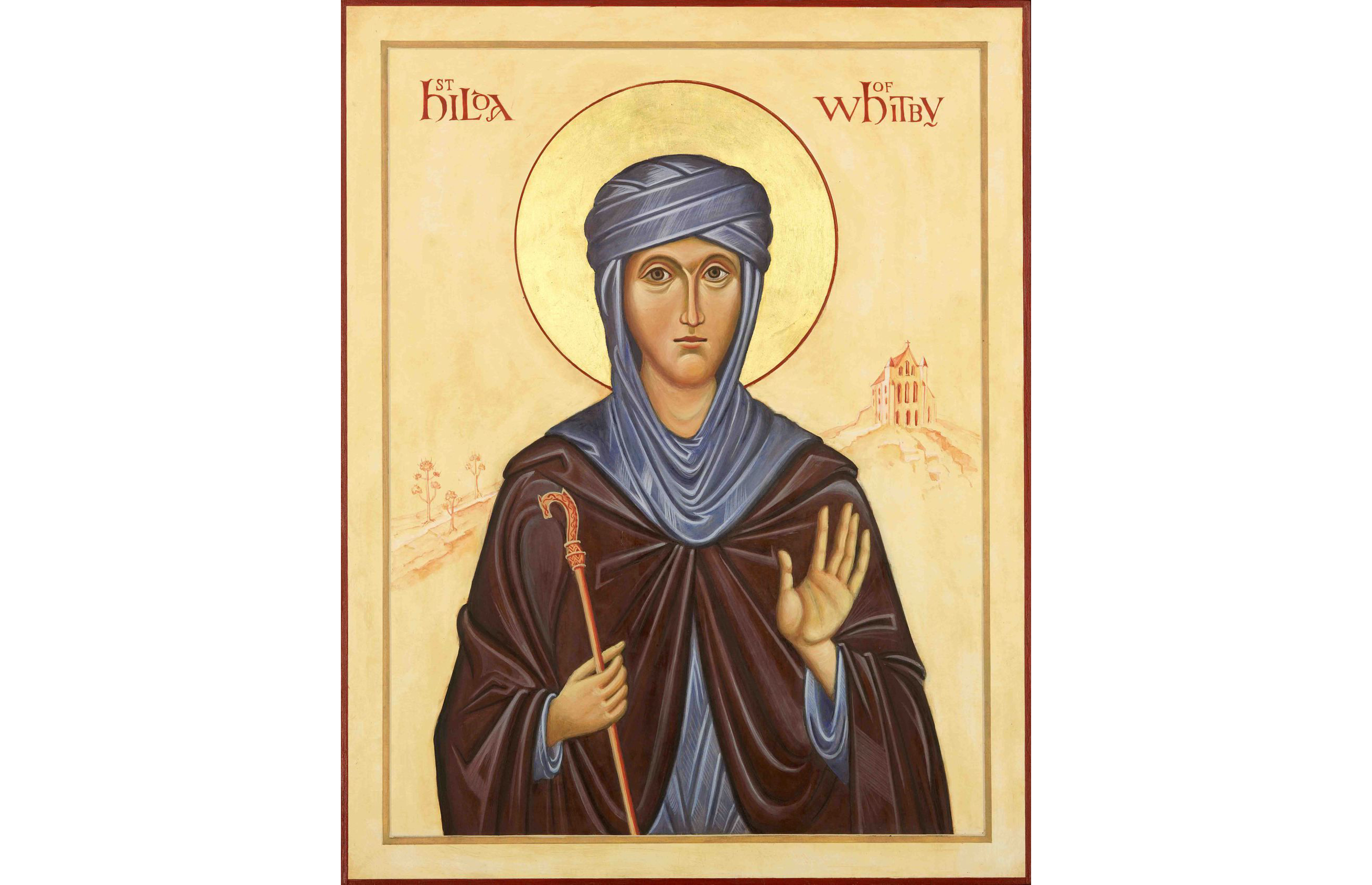
Almighty and everlasting God, We give Thee thanks for the purity and strength with which Thou didst endow Thy servant Hilda, Abbess; and we pray that by Thy grace we may have a like power to hallow...
Evenings with Bede: S4, Ep. 2: Bede’s Introduction
Nov 16, 2026 · 31m
In the audio provided, the lessons are read, and then followed by a homily by yours truly.A Lesson from the Revelation to S. John, 1.1-3The Revelation of Jesus Christ, which God gave to Him, to make...
Ep. 1: S. Origen on S. John’s Prologue
Nov 14, 2026 · 1h 37m
This is unedited audio of a parish scripture study course in which we are studying the Prologue of S. John’s Gospel as interpreted by the early 3rd century Church Father and brilliant interpreter of...
On S. Martin, Bishop of Tours
Nov 11, 2026 · 15m
O God, Who by Thy Holy Spirit didst enable Thy servant Martin to withstand the temptations of the world, the flesh, and the devil: Grant that we, in the same Spirit, may with pure hearts and minds...
Take these sermons with you.
Follow Anglican Ascetic in the Getsermons app to get every new sermon, build playlists, and pick up right where you left off.

