
Anglican Ascetic
On the Man Who Taught Me How to be a Christian
May 17, 2026 · 29m
Prefer sermons downloaded automatically?
About this sermon
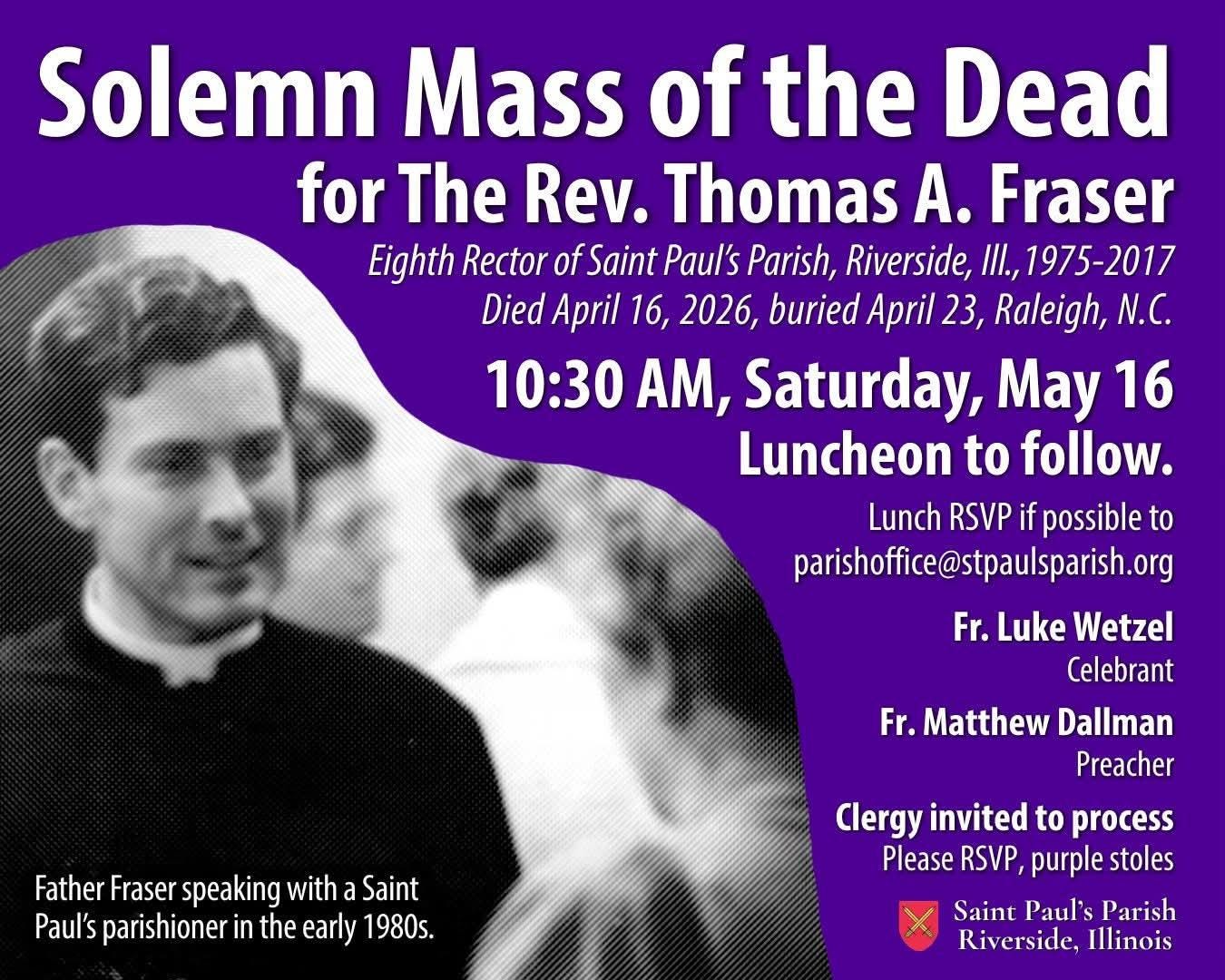
Father Fraser graced me with the opportunity to preach in this pulpit many times as a seminarian, and I think once or twice as a Deacon before we left for my first parish, downstate in Pekin and Morton. The first homily was for the Baptism of Christ by the hand of S. John the Baptist, aka the Theophany. I believe that morning I said everything that could possibly be said about the momentous event. The homily lasted over 29 minutes, and if you are really lucky this eulogy just might come in just under that.
My family and I were parishioners at St Paul’s, Riverside from Nov. 2009 through June 2016. We started just days after my daughter Marla was born. Father Fraser was my mentor from the first time I set foot in St Paul’s through even his final days before he died. He texted me less then four weeks before he died. Pardon me while I say this directly: Father Fraser taught me everything about Christian life: how to be Christian, how to be Catholic and Benedictine, how to be Anglican, and what it means to be an Episcopalian; how to be a laic, a priest, a rector. When I started at St Paul’s, I was in significant ways in the wilderness, and within a short time, I became (in the words of my daughter Marla) a “hard-core Anglican.”
Father Fraser mentored me on all channels: directly, through the formation class he taught “Adult Theology Class,” which was for other parishioners weekly over two years (or so he said); for us it was weekly over four years; pastorally, through regular spiritual direction; liturgically, through the very holy manner in which he celebrated the Mass and preached; and less formally in the hundreds of conversations we had, during coffee-hour and, in many cases, over the phone. He taught me what it means to be God-centered in all things. He taught me what devotion to the Blessed Virgin Mary and the Saints means. He taught me what it means to be a Priest, in terms of pastor, liturgist, sacramentalist, and teacher; and he taught me what it means to be a Rector, both administratively and pastorally, as he saw the Anglican Rector as a contemporary adaptation of the Benedictine Abbot.
He taught me about the glories of the Anglican tradition and the glories of the Episcopal Church, as well as the current troubles that plague both and make life in the contemporary Episcopal Church as an orthodox-catholic a challenge. He taught me how to see the Anglican tradition as part of the Church: part of, that is, the historic, sacramental, apostolic Church that naturally finds its places alongside the Roman and Orthodox traditions; thus he taught me how to be at peace as an Anglican–how like Elijah to see the wind, the earthquake, the fire outside of the cave, but through it all, how as an Anglican to hear the still small voice of God. He taught me about English change-ringing, because of the set this parish possesses. He taught me about the brilliance of Catechesis of the Good Shepherd, which all of my children have gone through, and which we have started at my current parish. He understood the parish also from the perspective of organizational dynamics, and shared much wisdom about how to recognize and handle different dynamics common to parish life. He taught me about the central importance of parish culture. He also taught me about the 7 Ecumenical Councils, holy icons, monasticism, and many aspects of spirituality.
He welcomed my aspiration to priesthood–when I first told him, only after three months at the parish, he said, “Matthew, do you think that I am surprised?” He encouraged me to start theological study, first at Catholic Theological Union (in Chicago) and then, also, Nashotah House, guiding me successfully through both master’s programs, which I did concurrently. He helped us discern God’s calling to my first cure in Pekin, Illinois, helping us to overcome the unknown and our resistance to leaving Chicago. His words “You never go home” still ring in my soul. He advised me when I was discerning God’s call to my current parish in Florida. He also strongly encouraged my study of Martin Thornton. He called me a “Martin Thornton junkie.” This parish here exemplifiesMartin Thornton’s vision of a godly parish, and Father Fraser encouraged me, as a budding adult catechist, to follow Thornton’s idea of “devout experimentation” in the classes I started very early to teach her. Besides preaching and teaching, he encouraged me to be a lector, altar server, thurifer, member of the altar guild, scheduler for the liturgical ministers, and bell ringer. My seven years here was the closest I got to a curacy, and it was often intense.
In short, Jesus Christ, by the power of His Holy Spirit operating through the Rector of this holy house, Father Fraser helped me see God’s purpose for my life; he helped to turn my life around, and that of my wife as well, and tilled the soil for my children to grow up as devout Anglican Christians. His spirit is active in my life to this day, and in my family. He was a force of nature.
I have been asked many times why I chose the Episcopal Church. And I have said, many times, that I did not choose the Episcopal Church. God drew me to St Paul’s Parish in Riverside, Illinois–only God, and Him alone. I grew up ELCA, and upon heading to college, began a 17-year wilderness period before God led me to St Paul’s. I had never heard of “the Episcopal Church” nor “Anglicanism.” The Holy Spirit led me there through my wife’s inquiry as we walked by it one day in 2009, “Have you ever checked that place out?” I looked at the sign, which read, in large letters, “Saint Paul’s Parish” and in smaller letters “Anglican/Episcopal - Benedictine.” I said, “No, and I don’t know what any of those words mean, either.” It is my absolute, firm conviction that God, by means of the then-anonymous guiding of the Holy Spirit, led us to this very hold and unique Episcopal parish as part of my, and our, vocation.
What led us to stay was the sense of holiness that pervaded the liturgy, community, church grounds, and buildings. I was looking for God, and I and my family found Him here, and were here found by Him. To paraphrase Saint Paul in 1 Cor 14, we we began worshipping here, instead of finding a church assembled and speaking in tongues–for we had visited many churches prior to St Paul’s and found nothing but people speaking in tongues (let the reader understand)–instead of that, we found the church, it was assembled and speaking prophetically. Christians in this place spoke freely about how God was present in their lives; people like Helen Jablonski, of blessed memory, and many others. And so coming here, we fell on our face (me literally), and we worshipped God, and we declared, and continue to declare, that God is really here among us.
I will say a couple more things. Father Fraser, unsurprising to many, encouraged my family’s devotion to icons, as well as nurtured the interest in Gregorian plainsong that I already had. Yes it was the icons installed in the nave and sanctuary. Perhaps more importantly, it was the parish’s tradition of giving an icon to every household annually on All Saints’ Day that was the seed. Today my family has over 100 icons in our house, and my eldest daughter is studying iconography with the foremost iconographer in the western world, Aidan Hart. Even our two youngest children, Martin and Hildegard, 8 and 3, have a devotion to icons. Martin loves St George, and whenever Hilda sees an icon of the Theotokos, she points and says “Mama.” As far as plainsong, I already had a devotion to plainsong before joining St Paul’s; but the commitment there to plainsong in the liturgy and Father Fraser’s encouragement, greatly increased that. My family has chanted Matins and Evensong daily in the home, and has for nine years. We do so several times a week in services in our current parish. This is owing in large measure to Father Fraser.
Finally, while I knew him for only 16 years (one says “only” when one is talking about a man who was rector of a …
Get full access to Anglican Ascetic Podcast at anglicanascetic.akensideinstitute.org/subscribe
More from Anglican Ascetic
On Eucharist and Creation
Nov 26, 2026 · 16m
O most merciful Father, Who hast blessed the labours of the husbandman in the returns of the fruits of the earth; we give Thee humble and hearty thanks for this Thy bounty; beseeching Thee to continue...
Evenings with Bede: S4, Ep. 3: S. John’s Greeting
Nov 22, 2026 · 35m
In the audio provided, the lessons are read, and then followed by a homily by yours truly.A Lesson from the Revelation to S. John, 1.4-7John, to the seven churches which are in Asia: Grace be unto you...
On Keeping a Holy House of Prayer
Nov 22, 2026 · 17m
Our Feast of Dedication which we celebrate today we are celebrating because it was on this date, 104 years ago—that is, on the 19th of November, 1922, despite our being established in 1769 through...
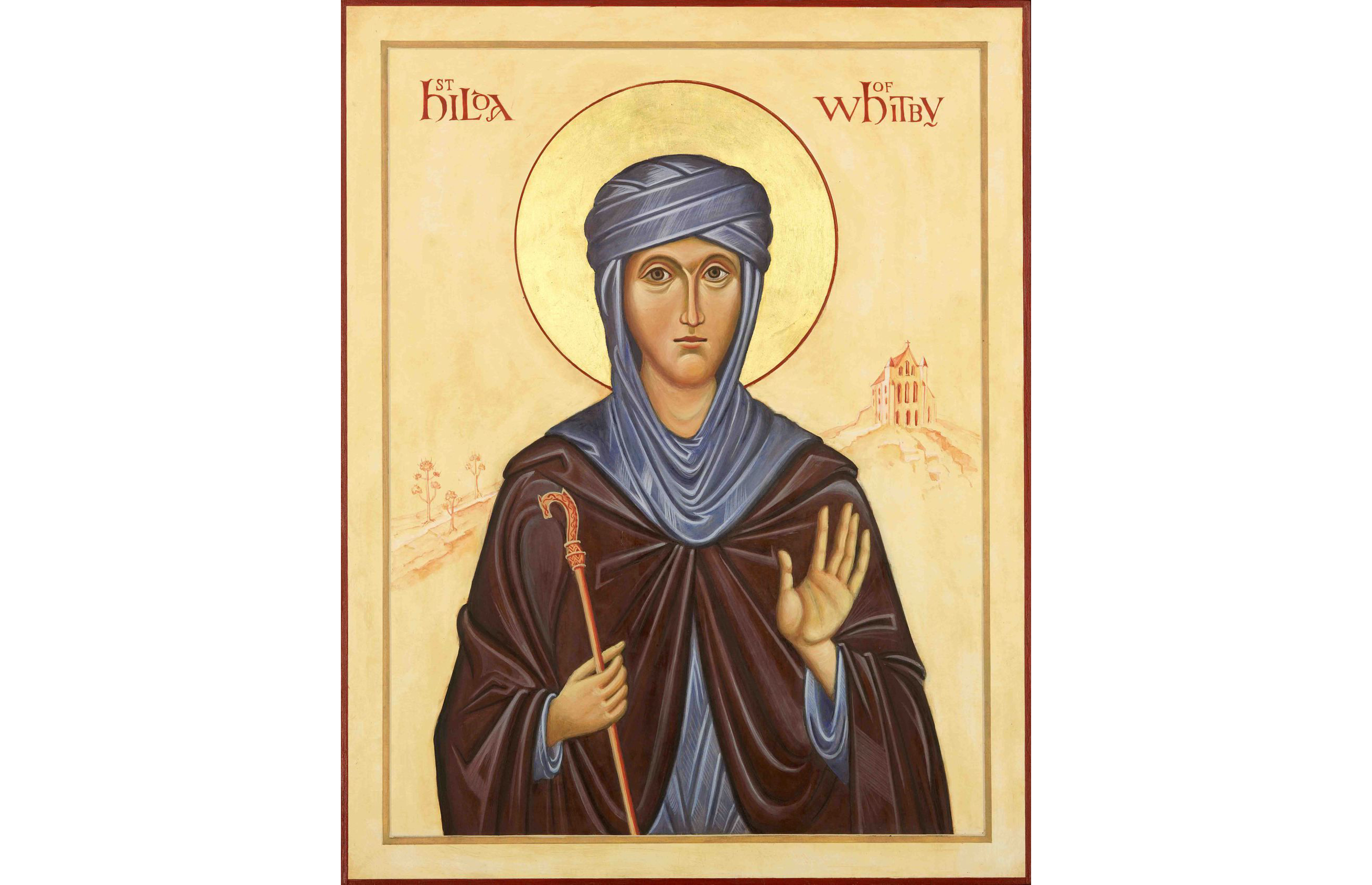
On the Witness of S. Hilda of Whitby
Nov 18, 2026 · 20m
Almighty and everlasting God, We give Thee thanks for the purity and strength with which Thou didst endow Thy servant Hilda, Abbess; and we pray that by Thy grace we may have a like power to hallow...
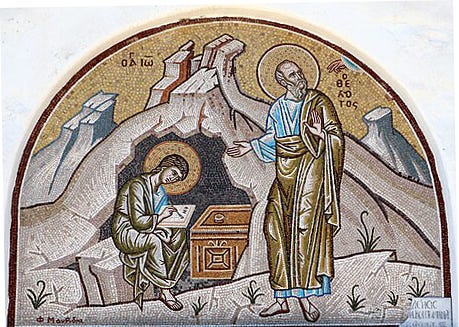
Evenings with Bede: S4, Ep. 2: Bede’s Introduction
Nov 16, 2026 · 31m
In the audio provided, the lessons are read, and then followed by a homily by yours truly.A Lesson from the Revelation to S. John, 1.1-3The Revelation of Jesus Christ, which God gave to Him, to make...
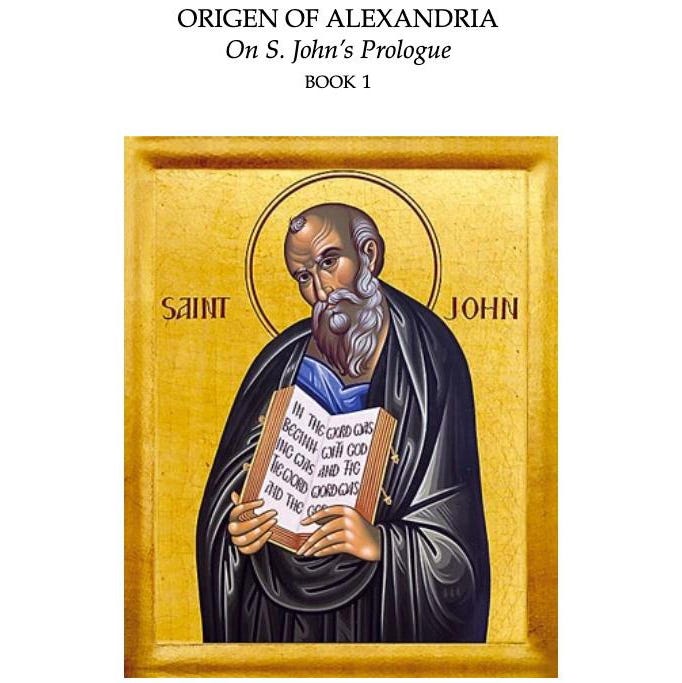
Ep. 1: S. Origen on S. John’s Prologue
Nov 14, 2026 · 1h 37m
This is unedited audio of a parish scripture study course in which we are studying the Prologue of S. John’s Gospel as interpreted by the early 3rd century Church Father and brilliant interpreter of...
Take these sermons with you.
Follow Anglican Ascetic in the Getsermons app to get every new sermon, build playlists, and pick up right where you left off.

