
Anglican Ascetic
Saint Romuald and the Domestic Church
Jun 19, 2023 · 20m
Prefer sermons downloaded automatically?
About this sermon
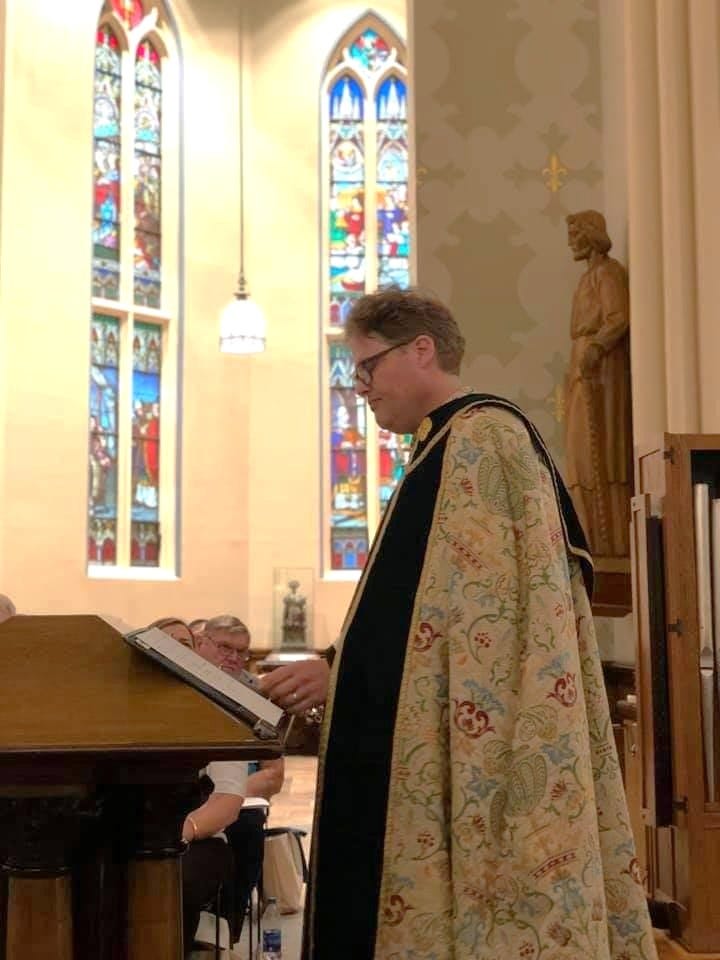
Offered on the Memorial of Saint Romuald (19 June, 2019) in the Lady Chapel of the Basilica of the Sacred Heart on the campus of the University of Notre Dame during solemn Evensong, a service I was asked by Dr Timothy O’Malley of the McGrath Institute for Church Life to plan and lead as Cantor, as part of one of their annual summer conferences.
Romuald is a true saint for the domestic church. He was a Benedictine monk who fell asleep on this day in the year AD 1027. In Dante’s Divine Comedy, we find at one point Saint Benedict himself indicating to the pilgrim the presence of contemplatives, who are named “fires,” and these included Macarius (a desert father) and Romuald. His devotion to Christ was fueled by his many mystical experiences of God’s presence in solitude while praying the Psalms. So much so that he felt driven out of a strictly coenobitic life in Benedictine community and rather devoutly experiment with the eremitic life, so as that between the life of community and the life of a hermit in solitude and what he saw as inherent tension between the two, there might be forged a new kind of harmony. His biography was written by none other than Saint Peter Damien, holy doctor of the Church, he is the founder of the Camaldolese Order (an outgrowth of the Order of Saint Benedict), and Romuald left us a Brief Rule that I think might be seen as a “How to Get Started” chapter in as yet unwritten, but probably never to be written, “Operations Manual” for the domestic church. But to explain that, I first need to back up.
It was at last summer liturgy conferences that Dr O’Malley asked me to put together a plainsong Evensong in the Anglican tradition for this year’s conference. It had become known (because I use social media more than the average person) that I had been conducting an experiment in my home, based in plainsong and the daily Offices (the Anglican equivalent to the Liturgy of the Hours) – that my family (my wife and our then four daughters whom we were homeschooling) might be ready to make the leap from the short, ten-minute form of daily chant developed from my study of Anglican pastoral theologian and priest Martin Thornton that we had used for four years, into chanting Matins and Evensong (Morning Prayer and Evening Prayer) everyday. Sufficed to say, the experiment has taken. Two years in, and it has become the anchors of our family’s life, both in terms of routine but more importantly, in terms of our devotion to the Most Holy Trinity, it has spread within our parish, where we have daily Matins and Evensong in our chapel and have formed a plainsong choir in our parish (now 14 people strong) that has had three solemn Evensong services within the liturgical calendar (Eve of Michaelmas, Eve of Presentation, and Eve of Pentecost), and, we are here.
Let me report that it is mind-blowingly wild that the waves of a homeschooling experiment in Pekin, Illinois might come to shore in the Lady Chapel of the Basilica of the Sacred Heart. The Providence of God is real and active, and grace has been bestowed in two ways: one, to hear His invitation to give this experiment in domestic church a try, and two, to be steady during the ups and downs of its implementation which were adventurous as most things in a family often are.
I arrived at this prayer of thanksgiving, not to boast in anything I have done, but to boast in what our loving Lord has done; and my gratitude was clarified by our two lessons of sacred scripture, as well as the example of Saint Romuald – all three of which present to the question of the domestic church the Light of Christ.
The account of Samuel’s encounter with the Lord draws our attention to the domestic environment, the unique culture of our homes. We want the environment, the ecology, of our homes to be such wherein the space of our home, and the pattern of our life in it, is one where God can be heard: like Samuel heard God, even where God calls our name, like he called Samuel’s name. Also, our passage helps us t o dispense with the need for our home life to be a perfect haven of pure devotion by all members of the family. God called Samuel despite the word of the Lord being rare in those days and no frequent vision. The only concrete description was that Samuel was sleeping in relative proximity to the Ark of God, which for us is a prefigurement of Our Lady. In his introduction to Redemptoris Mater, Joseph Ratzinger wrote that Mary’s faith means trust in God and obedience, even when one walks in darkness. Perhaps in terms of concrete practice, devotion to Our Lady within the domestic church, even one that may seem far from a space that realizes the sacred, is a sure foundation for an environment to emerge and grow in the home in which we can hear God, and is the way to begin to develop one, that our response to God’s call of us is not slothfully ignored but rather that of Samuel, “Here I am!”
It is to the characteristic of adventure in prayer that Saint Luke’s account of the parents of Jesus finding Him in the Temple when He was twelve years old draws us towards. Let us assume that the domestic church life of the Holy Family was the ideal model of sanctity, fellowship, prayer – and really, the type of the eucharistic life realized in the home. All the more reason for us to be encouraged in our family lives by the fact that even for Mary and Joseph, whose intimacy and closeness with Jesus are a permanent and inexhaustible catechesis for the Church, even for them there were moments when Jesus felt far away. This is all part of the ebb and flow of the Christian life – between consolation and desolation, between presence and absence, between real communion and desire for communion. This is the Christian adventure, and it demands heroism on the part often of parents, who are uniquely empowered by God by the grace of their marriage to help the whole family find Jesus again; and it demands native heroism on the part of children, who through their curiosity and wonder show new ways to find Jesus, to echo Samuel’s “Here I am.”
All of this would be “Saint Romuald approved,” and here I circle back to my assertion that Romuald is a true saint for the domestic church, with particular emphasis on the helpfulness of something he wrote, called his Brief Rule. First of all let us recognize that the patterns of day to day life today compared with 150 years ago are dramatically different, a primary reason for which is the technology of the automobile dramatically transforming cities, so much so that life for many of us in our homes is more like the life of Christian hermits than we might be comfortable admitting. Although we gather in social spaces of our cities and towns (I don’t think Bowling Alone is quite right as whenever I bowl, the lanes are filled with large groups of people) and of course although we gather in our parish churches, we often do not know our neighbors, or many of them, or see our fellow parishioner but once a week, if not less often. Home life, even with large families, is often analogous to the hermit’s cell – we are not divorced from wider society, but we often encounter them in in strikingly anti-incarnational ways on social media and even the telephone, and families often “do their own thing.”
And so the first sentence of Romuald’s Brief Rule is topical. It reads, “Sit in your cell as in paradise.” We would translate, “Be in your home as in paradise,” not because we falsely think our homes are the Church Triumphant itself in microcosm, but rather “paradise” as Jesus described it to the confessing thief next to Him on the cross, “Today you will be with me in paradise.” Our homes are this kind of paradise: where we work by grace through the process of everyday purification and purgation knowing that Jesus is very close with us, and has chosen to come close to us and walk with us. And that process of everyday purification – the home as paradise – is the arranging of our lives in and through the pattern of home life so as…
Get full access to Anglican Ascetic Podcast at anglicanascetic.akensideinstitute.org/subscribe
More from Anglican Ascetic
On Eucharist and Creation
Nov 26, 2026 · 16m
O most merciful Father, Who hast blessed the labours of the husbandman in the returns of the fruits of the earth; we give Thee humble and hearty thanks for this Thy bounty; beseeching Thee to continue...
Evenings with Bede: S4, Ep. 3: S. John’s Greeting
Nov 22, 2026 · 35m
In the audio provided, the lessons are read, and then followed by a homily by yours truly.A Lesson from the Revelation to S. John, 1.4-7John, to the seven churches which are in Asia: Grace be unto you...
On Keeping a Holy House of Prayer
Nov 22, 2026 · 17m
Our Feast of Dedication which we celebrate today we are celebrating because it was on this date, 104 years ago—that is, on the 19th of November, 1922, despite our being established in 1769 through...
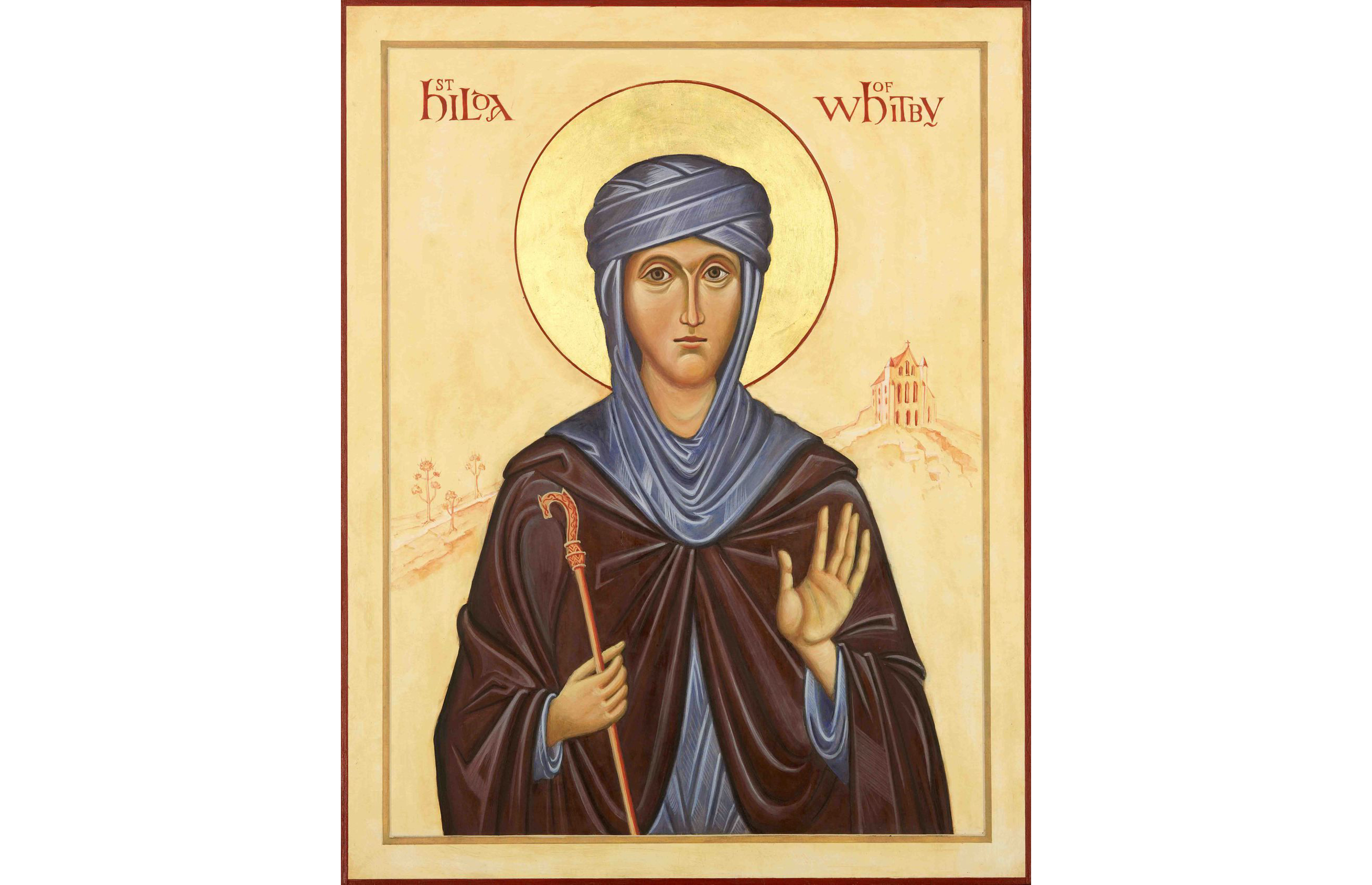
On the Witness of S. Hilda of Whitby
Nov 18, 2026 · 20m
Almighty and everlasting God, We give Thee thanks for the purity and strength with which Thou didst endow Thy servant Hilda, Abbess; and we pray that by Thy grace we may have a like power to hallow...
Evenings with Bede: S4, Ep. 2: Bede’s Introduction
Nov 16, 2026 · 31m
In the audio provided, the lessons are read, and then followed by a homily by yours truly.A Lesson from the Revelation to S. John, 1.1-3The Revelation of Jesus Christ, which God gave to Him, to make...
Ep. 1: S. Origen on S. John’s Prologue
Nov 14, 2026 · 1h 37m
This is unedited audio of a parish scripture study course in which we are studying the Prologue of S. John’s Gospel as interpreted by the early 3rd century Church Father and brilliant interpreter of...
Take these sermons with you.
Follow Anglican Ascetic in the Getsermons app to get every new sermon, build playlists, and pick up right where you left off.

