
Catholic Daily Reflections
Wednesday of Holy Week - Perceiving Jesus as Lord
Mar 31, 2026 · 7m
Prefer sermons downloaded automatically?
About this sermon
Read Online
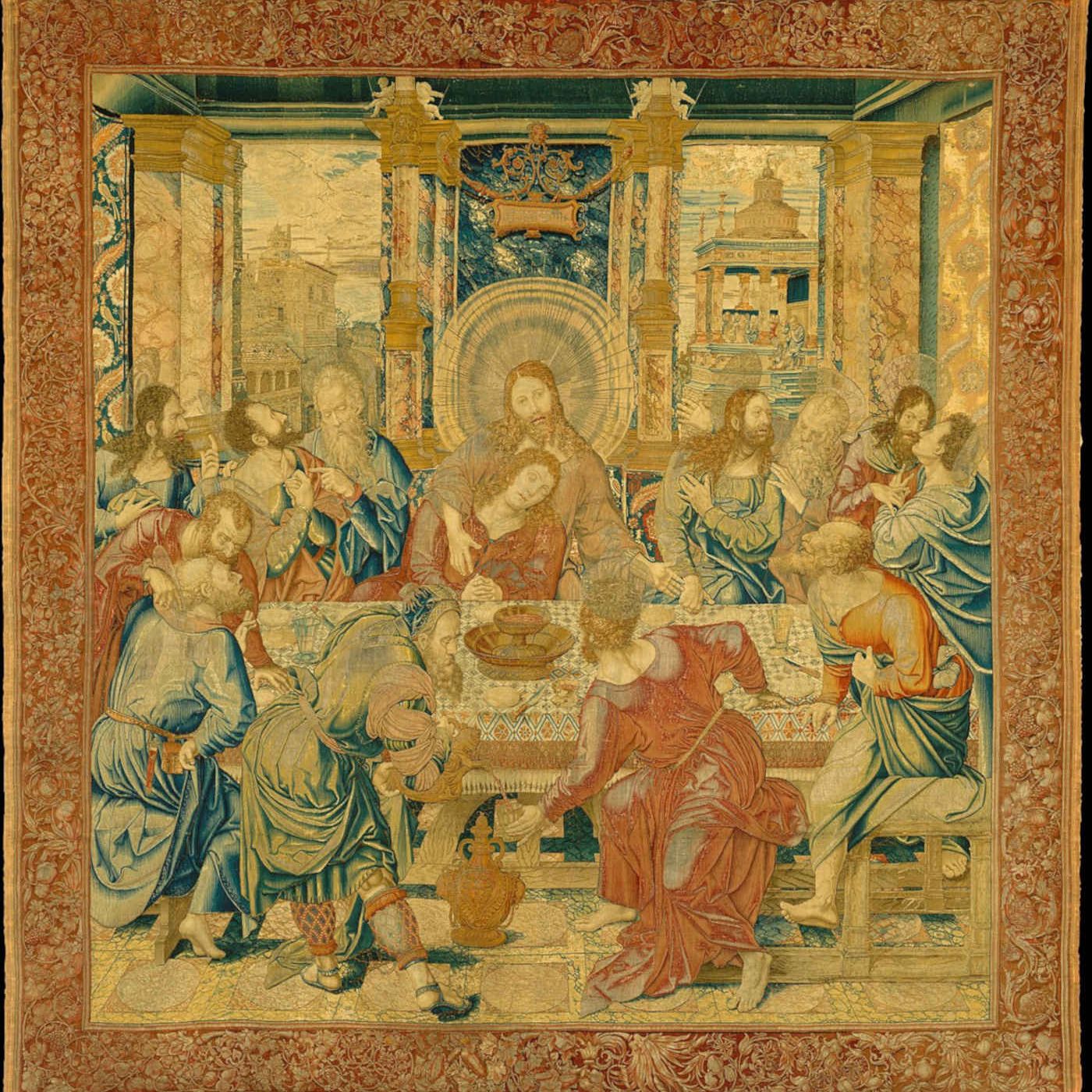
“Amen, I say to you, one of you will betray me.” Deeply distressed at this, they began to say to him one after another, “Surely it is not I, Lord?” He said in reply, “He who has dipped his hand into the dish with me is the one who will betray me.” Matthew 26:21–23
The Last Supper was both a glorious moment of grace and a painful moment of betrayal. During that meal, Jesus instituted the Eucharist, the gift of His Body and Blood, Soul and Divinity that perpetuates His saving sacrifice until the end of time. It was also at that holy meal that one of Jesus’ closest companions lied to His face and resolved to betray Him for thirty pieces of silver.
According to the Torah, if an ox killed a slave, the owner was required to pay the slave’s master thirty pieces of silver. The holy irony is that Judas betrayed Jesus for the price of a slave, even though Jesus came to set all people free from the slavery of sin.
When Jesus informs the Twelve that one of them would betray Him, He does so without anger or self-pity. His words reflect holy sorrow, accompanied by resignation, clarity, and gentleness. This sorrow is not merely sadness over His impending suffering but a loving sorrow for the lost soul of His betrayer. Deeply distressed, the disciples respond one after another, “Surely it is not I, Lord?”
The Greek word Kyrios, used here for “Lord,” denotes authority, mastery, and divine lordship. It appears frequently in the New Testament, primarily in reference to Jesus. In the Greek Old Testament (the Septuagint), Kyrios replaces YHWH, the sacred and unspoken name of God, about 7,000 times. By addressing Jesus as Kyrios, the eleven recognize Him not only as their teacher but as the Messiah and Son of God. This title expresses a relationship of trust and reverence, acknowledging Jesus’ divine authority.
When Judas speaks, he replaces Kyrios with Rabbí—“Surely it is not I, Rabbi?”—a transliteration of the Hebrew and Aramaic term meaning “teacher.” While respectful, this address falls short of acknowledging Jesus as Kyrios, focusing on Him as a human teacher rather than as Lord, Messiah, and God. This distinction is subtle but significant, inviting us to reflect on how we approach Jesus during the Holy Mass, since this conversation took place at the Last Supper—the first Mass. Do we approach Him with the heart of Judas, recognizing Him only in an earthly sense, or with the faith of the other disciples, seeing Him as Lord?
Judas did not hate Jesus. Unlike the Pharisees who sought His death, Judas regretted his betrayal, tried to return the thirty pieces of silver, and tragically “went off and hanged himself” (Matthew 27:3–5). His greatest failure was that he could not look beyond Jesus’ humanity to perceive His divinity. His eyes were fixed on himself—particularly his greed and selfish desires. In a similar way, when we approach the Eucharist without faith, surrender, and adoration, we risk falling into Judas’ error: focusing more on ourselves than on Christ.
At Mass, we say, “Lord, have mercy,” not “Rabbi, have mercy.” This prayer must come from the depths of our hearts, recognizing our need for mercy with God as its source. When we kneel at the consecration, our hearts should cry out, “My Lord and my God!” Yet, how often are we distracted, thinking about our plans after Mass? When we neglect to approach Jesus in faith and reverence, we miss the opportunity to encounter Him as He truly is—our Lord and our God.
Reflect today on how you participate in the Holy Mass. See yourself at the Last Supper, uniting that moment with every Mass you attend. Pray that you may receive Jesus with love, devotion, and reverence, looking beyond the appearance of bread and wine to encounter your Lord.
My Lord and my God, I believe in You, I adore You, I hope in Your mercy, and I love You with all my heart. Please fill me with a deep faith in Your presence, especially every time I attend Mass. May I recognize my need for You and surrender completely to Your mercy and love. Jesus, I trust in You.
Image: Bernard van Orley, CC0, via Wikimedia Commons
Source: Free RSS feed from catholic-daily-reflections.com — Copyright © 2026 My Catholic Life! Inc. All rights reserved. This content is provided solely for personal, non-commercial use. Redistribution, republication, or commercial use — including use within apps with advertising — is strictly prohibited without written permission.
More from Catholic Daily Reflections
Friday of the Thirty-fourth Week in Ordinary Time - The Nearness of God’s Kingdom
Nov 26, 2026 · 7m
Read OnlineThe Nearness of God’s KingdomJesus told his disciples a parable. “Consider the fig tree and all the other trees. When their buds burst open, you see for yourselves and know that summer is...

Thanksgiving Day, United States - Gratitude that Heals
Nov 25, 2026 · 7m
Read OnlineGratitude that HealsAs he was entering a village, ten persons with leprosy met him. They stood at a distance from him and raised their voices, saying, “Jesus, Master! Have pity on us!”...

Thursday of the Thirty-fourth Week in Ordinary Time - Your Redemption is at Hand
Nov 25, 2026 · 7m
Read OnlineYour Redemption is at Hand“People will die of fright in anticipation of what is coming upon the world, for the powers of the heavens will be shaken. And then they will see the Son of Man...
Wednesday of the Thirty-fourth Week in Ordinary Time - The Glory of Martyrdom
Nov 24, 2026 · 7m
Read OnlineThe Glory of MartyrdomJesus said to the crowd: “They will seize and persecute you, they will hand you over to the synagogues and to prisons, and they will have you led before kings and...
Tuesday of the Thirty-fourth Week in Ordinary Time - Our Final Destination
Nov 23, 2026 · 7m
Read OnlineOur Final DestinationWhile some people were speaking about how the temple was adorned with costly stones and votive offerings, Jesus said, “All that you see here—the days will come when...
Monday of the Thirty-fourth Week in Ordinary Time - Giving All to the New Temple
Nov 22, 2026 · 7m
Read OnlineGiving All to the New TempleWhen Jesus looked up he saw some wealthy people putting their offerings into the treasury and he noticed a poor widow putting in two small coins. He said, “I...
Take these sermons with you.
Follow Catholic Daily Reflections in the Getsermons app to get every new sermon, build playlists, and pick up right where you left off.

