
crumbs from His table fellowship podcast
Bird’s Eye Overview of Bible Study Methods
Nov 14, 2026 · 11m
Prefer sermons downloaded automatically?
About this sermon
Ever-speaking God,
Who spoke the world into being,
Who sustains it by Your all-powerful word,
Who breathed out the Scripture we approach today:
In coming to Your Word,
We come to You Yourself.
Open our eyes to behold You,
Our ears to hear the Good Shepherd ‘s voice,
Our hearts to love You,
And our wills to follow You
All the days of our lives,
In the name of Jesus the living Word.
Amen.
If we were having a cup of tea together and you asked me how to study the Bible for yourself, here is the quick and dirty overview of the process I would give you. (Indeed, I have shared this very summary with college girls in southeast Asia many years ago.) It is the same process I included in the last Pretend Bible Study, but I thought you might benefit from a stand-alone post to save for reference.
The first step is to read or listen to the passage prayerfully, with an attentive, listening heart, at least 3 times. Reading from multiple translations may be helpful. Do read at least once in your heart language, if that is not English. Let it steep in your soul like tea leaves or ground coffee, until it begins to flavor your heart and mind.
Next, still in an attitude of prayer, we undertake three things: observation, interpretation, and application.
Observation asks, “What does it say?” Interpretation asks, “What does it mean?” Application asks, “How do I respond in relationships?”
Observation
The observation part of the study process does not concern itself with drawing conclusions or inferences. It is like a detective or CSI team searching for evidence. This is where the most time is needed, because rushed or superficial observation skews everything that follows. Two rubrics can give us pointers on what specifically we’re noticing (if we get stuck).
First, bring the 5 W’s and H into your observation. Ask and answer who, what, when, where, why, and how questions from the text. If the answer isn’t in the text, you might make a note of the question for later in the process. Read it like a note from your first childhood crush. Slow down and really notice as many details as you can. See if you can record 25 observations. If that seems easy, try 25 more. Keep going until you get stuck. Then try again tomorrow. I still notice new details after 38+ years of daily Bible reading.
Another group of things you can count on one hand are these:
Index finger, for things like each other;
Middle finger, for things unlike each other;
Ring finger, for things repeated, whether words, phrases, images, or ideas;
Pinky finger, for things that are related, such as cause and effect, conclusions stated and marked with a “therefore” or something similar in the text, metaphors and similes, lists, and so on (still looking only at what is clear in the text without extrapolating or inferring);
Thumb, for things emphasized, such as anything Jesus says after, “truly, truly,” or things to remember or do “above all”;
And palm, for things true to life.
Here they are as a list:
· Things alike
· Things unlike
· Things repeated
· Things related
· Things emphasized
· Things true to life
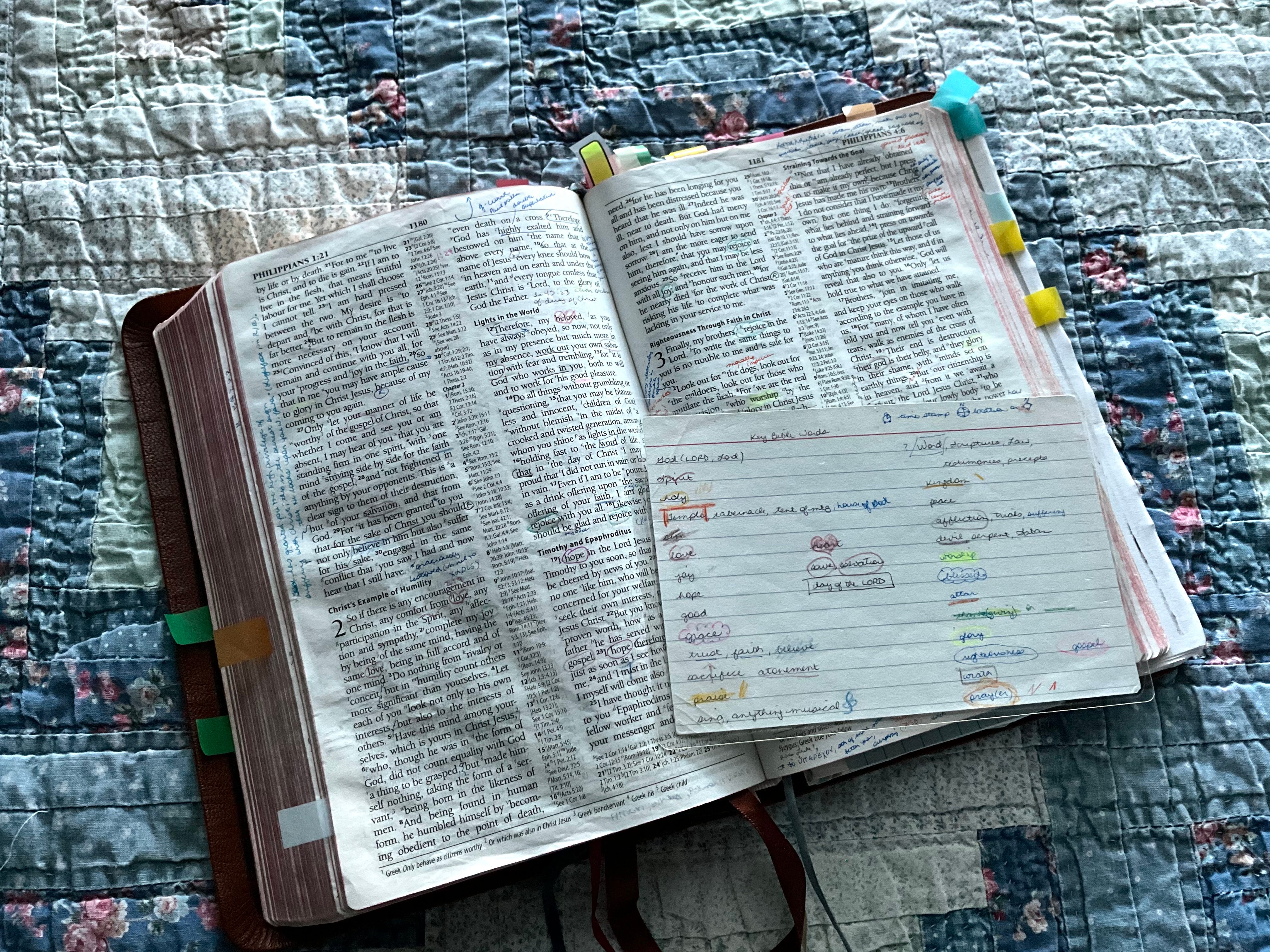
As to things repeated, I keep a list of key repeated words to mark throughout Scripture in addition to paying attention to repeated words and phrases within the passage under examination.
Interpretation
In interpretation, there is a saying that “context is king.” We can work outward through circles of context from a single word to the entirety of Scripture. We can delve more deeply into this later, but the goal is prayerfully to let Scripture interpret Scripture as much as possible. Concordances, cross references, and commentaries come into play here, and we often need to return to observation to reexamine the evidence for things we’ve missed. Paraphrasing, titling paragraphs or chapters, and charting the whole book or section of a long book can prove helpful too.
I find writing out verses, passages, or books by hand to be very helpful throughout the study process. It makes me slow down and notice details I missed in reading only.
Application
In application, we respond to what the Scripture teaches and what the Spirit illuminates in our lives. The Scriptures read us as we read them. The response could be a change of belief, a change in how I see or treat myself, how I behave towards my family, friends, and coworkers, how I live as a citizen of my place in the world, how I pray, how I worship, how I see God, what I know of Him. The response could be praying the words back to Him with fresh understanding. It could be visible, outward obedience, or something invisible and internal, known only to the Lord and myself. It could be a change in being as well as a change in doing.
Conclusion
We never truly finish studying the Scriptures. Every time we come to them, we begin again, but it’s a different “we” than it was a day or an hour ago. There is always more to learn and always more to be transformed until we see our Lord face to face, knowing fully as we are fully known.
Remember to stay in conversation with God throughout, listening to His voice in His Word and responding in prayer. Ask Him questions and look in the Bible for answers. Don’t forget that this is His Word, and study is one way we hear His voice. Linger in reflection and meditation on what you read and the details you observe. Thank God for His promises and what He reveals about Himself.
This concludes another installment of pretend Bible study, where we prayerfully read the Scriptures one chapter at a time, but it need not end your time alone with God. Blessed studying to you all. Until next time, courage, dear hearts.
crumbs from His table fellowship is a reader-supported publication. To receive all new posts and support my work, consider becoming a free or paid subscriber.
Did you find this helpful? Would you find it more helpful in a printable PDF? Please let me know if there are ways it can serve you better.
Get full access to crumbs from His table fellowship at crumbsfromhistable.substack.com/subscribe
More from crumbs from His table fellowship podcast
Not Alone
Nov 26, 2026 · 3m
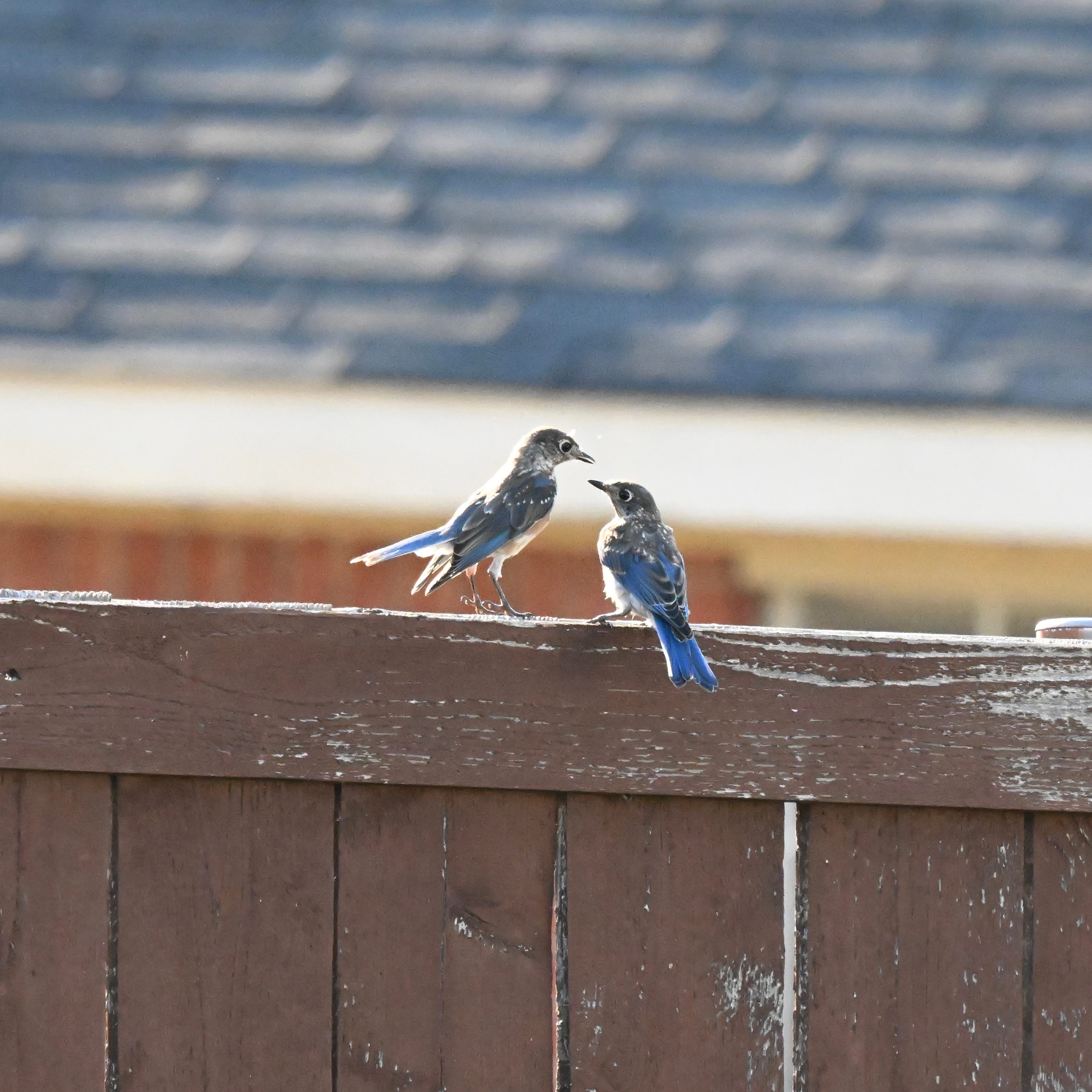
No locks or bars or gates—No exile, imprisonment,Infirmity, caregiving, alienation—Can exclude the intrusionOf the Father of mercies,The Man of Sorrows,The Comforter into lonelySolitude,...

Evening Prayer and Philippians 2
Nov 23, 2026 · 19m
This is the second post in our Philippians series. To hear or read the first post, visit this page:Call to Worship:“Blessed is the God and Father of our Lord Jesus Christ, the Father of mercies and...

Morning Prayer and Philippians 1
Nov 9, 2026 · 28m
Starting today, we are prayerfully reading Philippians together. If you are able, please read and pray along with me.If you would like to study this passage for yourself, please keep listening after...
Reaching
Oct 27, 2026 · 4m
My roots are in Zion;My home is not here.This groaning life is pilgrimage, a tortuous,Path winding where the wind blows.All my stability is in heaven,In the trustworthy promises of God,In the...

Parable of the Waiting Room
Oct 6, 2026 · 15m
A peek into our time capsule…The sparsely adorned walls, uncomfortable chairs, and odd assortment of magazines scattered on the various tables confirmed that the woman was in the right place. She...
A Prayer for a Life-Changing Diagnosis
Sep 18, 2026 · 6m
So as not to worry you, I myself do not have a new chronic diagnosis or cancer recurrence, thanks be to God. However, I have heard of more new diagnoses these last 2 or 3 years than in any other...
Take these sermons with you.
Follow crumbs from His table fellowship podcast in the Getsermons app to get every new sermon, build playlists, and pick up right where you left off.

