
Discipleship for the Present Podcast
Orthodoxy - 01 - Chapters 1-3
Jun 30, 2026 · 32m
Prefer sermons downloaded automatically?
About this sermon
Most of us assume that madness belongs to the wild, the unrestrained, and the deeply imaginative. But what if the people most likely to completely lose their minds are actually the strictly rational thinkers?
The episode opens by stripping away the illusion that logic is the ultimate stabilizing force. Exploring the first three chapters of G.K. Chesterton’s Orthodoxy, we look carefully at late 19th-century Europe—a landscape violently shifting under the weight of strict materialism and scientific determinism. It is here we find Chesterton trying to build a shelter for the modern mind, searching for what he calls "practical romance": the dual capacity to view the world as an astonishing, alien wonderland while simultaneously feeling entirely at home in it.
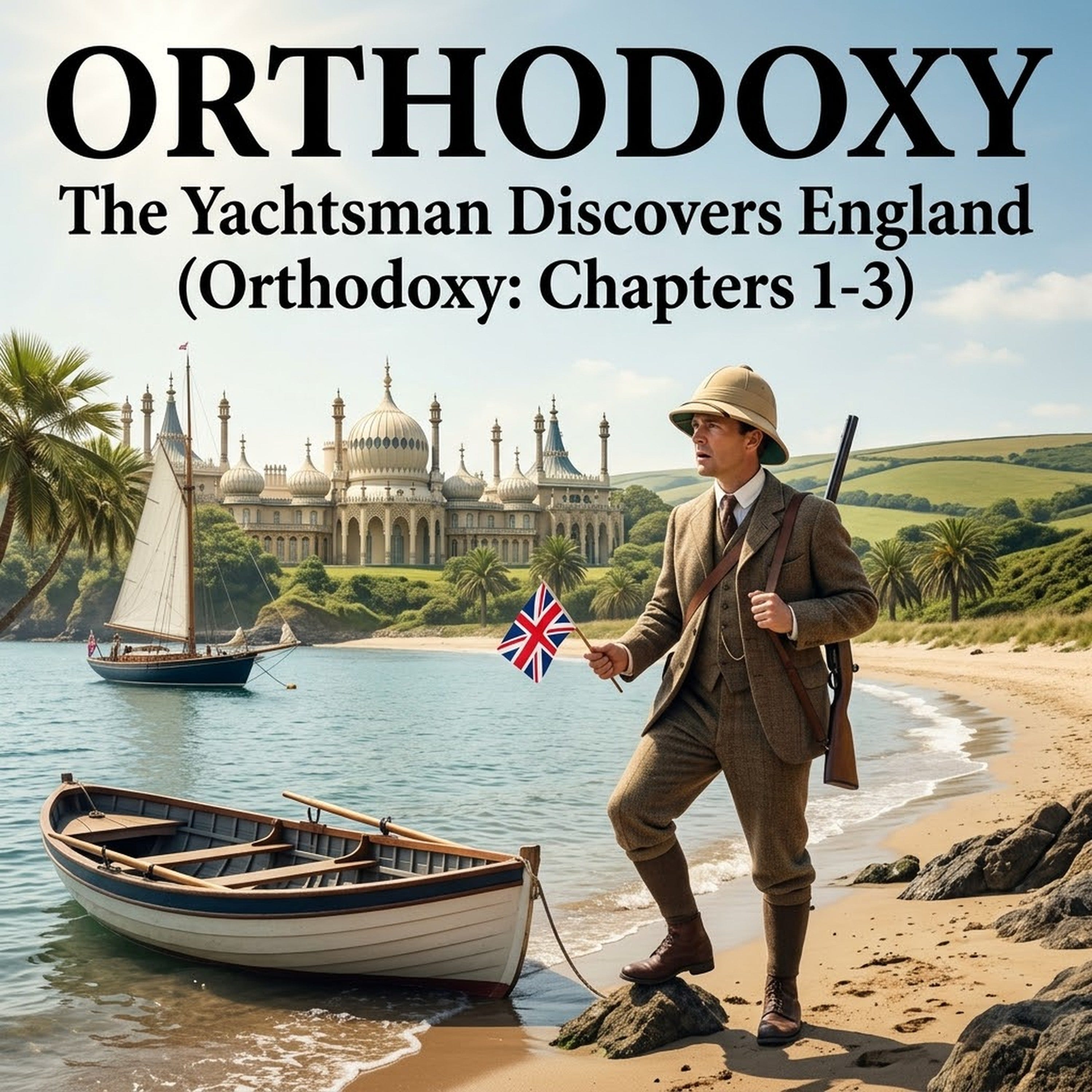
That search for grounding leads to a devastating blow to the modern ego: the illusion of originality. Much like the comic image of the English yachtsman who proudly "discovers" his own country, Chesterton confesses that his grueling attempt to invent a groundbreaking heresy only resulted in a sloppy, inferior copy of ancient Christianity. The episode draws this realization into modern spiritual life, exposing how the idol of hyper-individualism exhausts us. We exhaust ourselves trying to be ten minutes in advance of the truth, when peace actually requires the intellectual submission of repentance.
At the center of this diagnostic puzzle is the Hanwell Asylum and the pathology of pure logic. Chesterton famously argues that "the madman is not the man who has lost his reason; the madman is the man who has lost everything except his reason." The episode unpacks how a purely mathematical approach to reality creates a suffocatingly small cosmos. The materialist’s universe may be logically complete, but it entirely leaves out the vast, messy, soaring reality of human existence. This contrast is visualized geometrically: the circle represents pure reason—a closed, infinitely narrow loop—while the cross embraces the paradox of intersecting lines, extending its arms outward into the four winds.
From there, the episode turns to the concept of "wandering virtues." When ancient truth is shattered, virtues go rogue like a spiritual autoimmune disease. We see truth isolated from pity, which results in literature that acts as moral torture. We see pity isolated from truth, which destroys human agency and accountability. But the most dangerous dislocation is humility. Modern modesty has migrated from its rightful home. Instead of doubting our own capacity and marveling at the magnificent truth of the world, modern people assert their own feelings with absolute certainty and apply their skepticism strictly to objective truth itself.
Finally, the episode shifts to the paralysis of the modern mind. Without objective truth, society turns to the worship of the boundary-free will. Yet, as the episode illustrates, every choice inherently requires limitation—you cannot draw a giraffe without accepting the boundaries that make it a giraffe. The antidote to this paralysis is found in the historical figure of Joan of Arc. Unlike the armchair philosophers endlessly theorizing about the abstract nature of goodness, she embraced the severe limitations of obedience and acted like a thunderbolt. She embodies the profound cost, and the ultimate sanity, of fruitful discipleship.
In This Episode
Why purely logical, rational thinkers are actually more prone to madness than imaginative creatives
The "English yachtsman" and the profound human need for "practical romance"
How the modern idol of hyper-individualism masks an exhausting illusion of originality
The Hanwell Asylum and why pure logic, divorced from mystery, becomes a psychological pathology
The circle versus the cross: the difference between a closed loop of reason and a universe that embraces paradox
"Wandering virtues" and the spiritual autoimmune disease of truth without pity or pity without truth
The dislocation of humility: how modern skepticism became a toxic refusal to believe in objective truth
Why the worship of a boundary-free will actually leads to the complete paralysis of action
Joan of Arc, the necessity of limitation, and the true cost of fruitful action
The danger of tearing the "seamless garment" of Christ's character into isolated, palatable strips
Practical Reflection
Where in your own spiritual life are you exhausting yourself trying to invent a novel, custom-made way to follow God rather than resting in the stability of the ancient path?
Are you caught in a cycle of overanalysis, trying to logically map out every spiritual problem until your world shrinks to the size of a claustrophobic closet?
Where are you standing paralyzed at the crossroads of endless options, waiting for perfect freedom instead of embracing the fruitful limitations of obedience today?
Suggested Substack Excerpt
Most of us assume that logic is the ultimate stabilizing force, but what if pure reason is actually a recipe for madness? Exploring the profound insights of G.K. Chesterton’s Orthodoxy, this episode unpacks the pathology of modern intellectualism, the illusion of originality, and the spiritual autoimmune disease of wandering virtues. Join us as we examine why true sanity requires us to step outside the closed loop of our own logic and embrace the expansive mystery of God’s kingdom.
AI Disclosure
This episode was created using Google NotebookLM Audio Overview, based on human-curated source material, structured guidance, and editorial review. AI is used as a tool for clarity and delivery, not as a replacement for thoughtful study or engagement with the original texts.
Copyright
© 2026 Discipleship for the Present / Kamashcu Production Studios. All rights reserved.
This is a public episode. If you would like to discuss this with other subscribers or get access to bonus episodes, visit discipleshipforthepresent.substack.com
More from Discipleship for the Present Podcast
The Bible - NT - 27d - Revelation, Chapters 19-22
Sep 20, 2026 · 45m
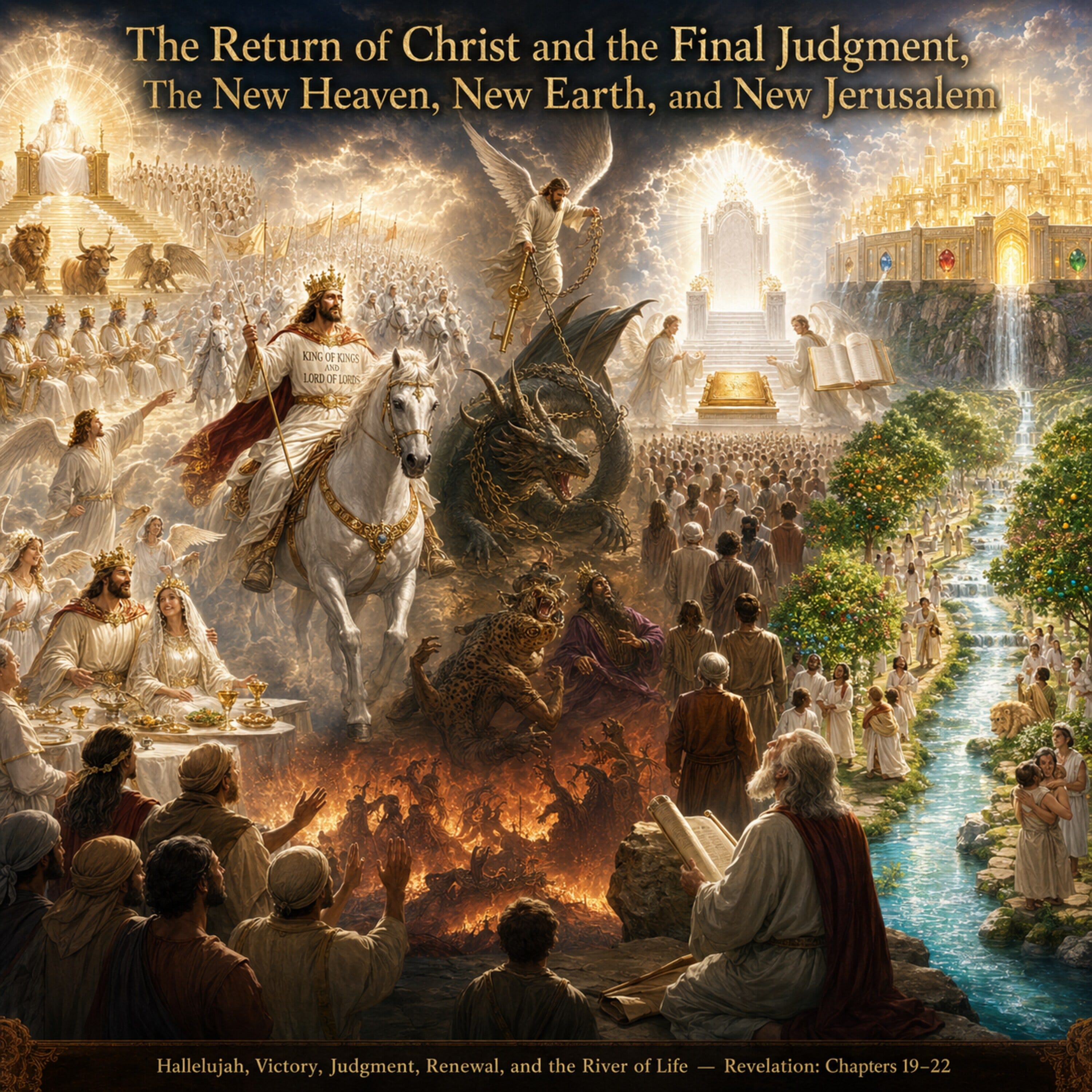
The final chapters of the Book of Revelation are a labyrinthine journey through some of the most vivid and symbolic imagery in all of scripture. From dragons and crystal cities to the ultimate...
The Bible - NT - 27c - Revelation, Chapters 12-18
Sep 20, 2026 · 39m
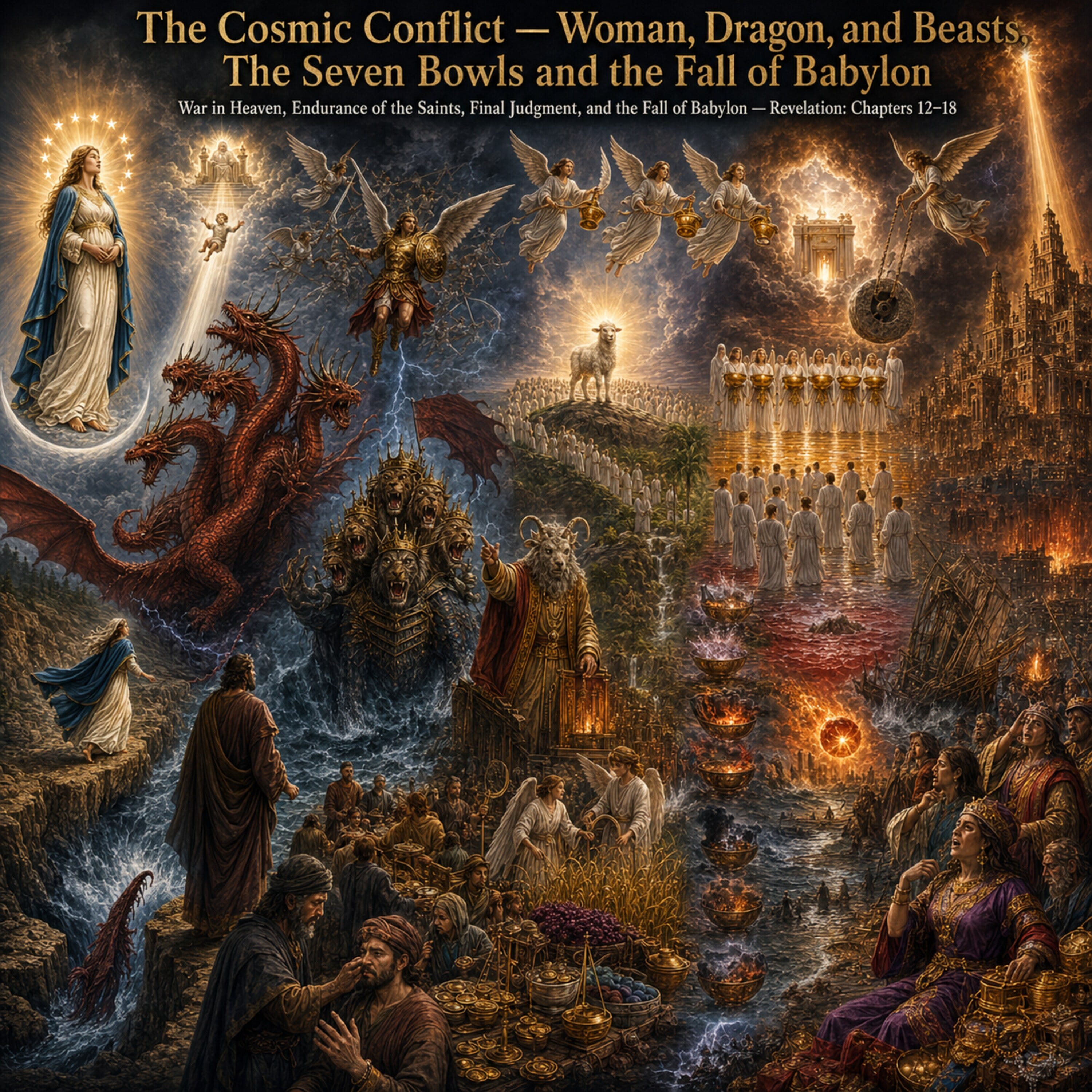
In this episode of Wisdom for the Present, we embark on a transformative exploration of the Book of Revelation, chapters twelve through eighteen. This section of scripture, often shrouded in mystery...
The Bible - NT - 27b - Revelation, Chapters 4-11
Sep 20, 2026 · 55m
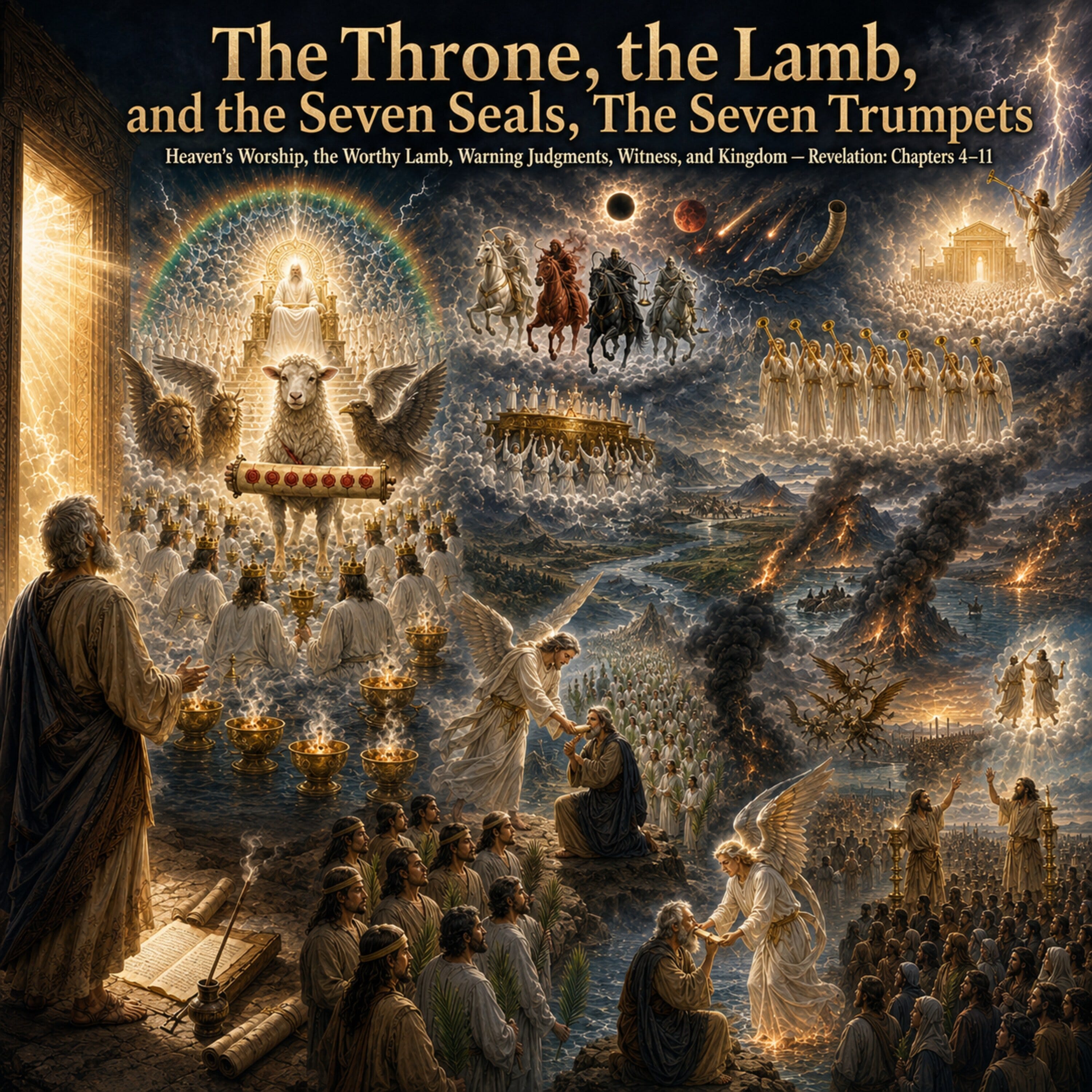
Most of us approach the Book of Revelation with a sense of trepidation, expecting cryptic symbols and apocalyptic visions. But chapters 4 through 11 offer something profoundly different: a survival...
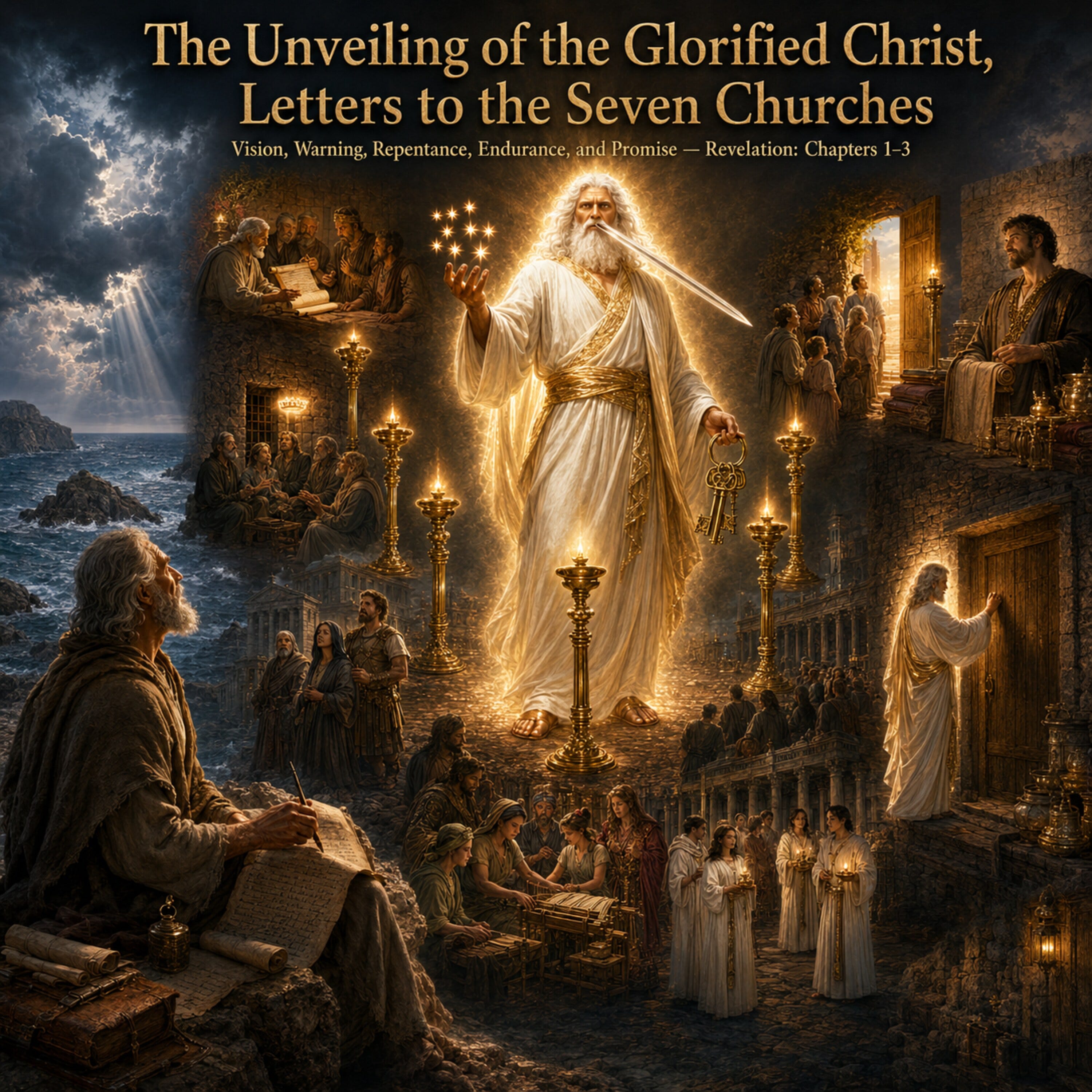
The Bible - NT - 27a - Revelation, Chapters 1-3
Sep 20, 2026 · 54m
In the opening chapters of the Book of Revelation, we find a profound cosmic performance review of seven historical communities in ancient Asia Minor, now modern-day Turkey. These letters, addressed...
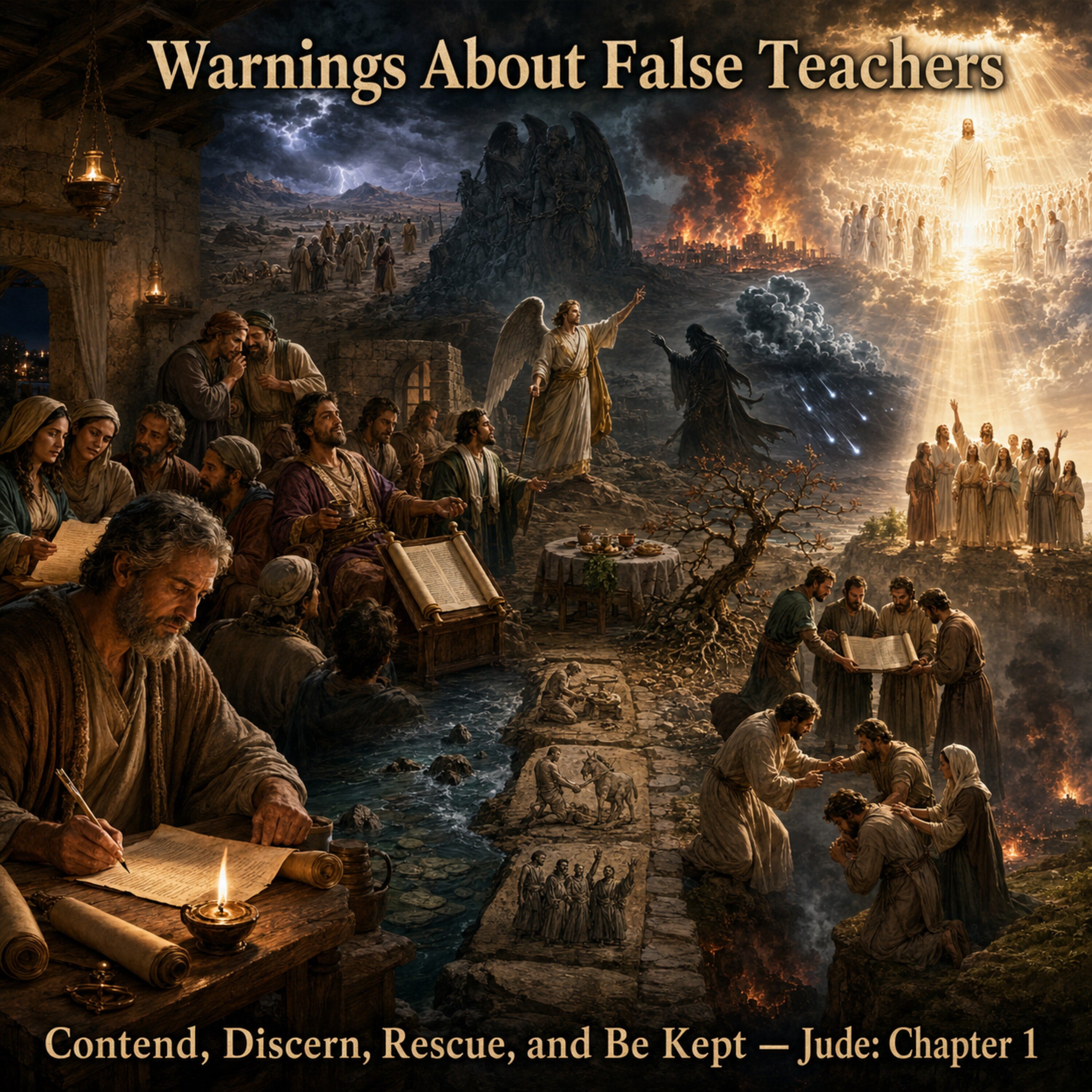
The Bible - NT - 26 - Jude, Chapters 1-1
Sep 20, 2026 · 46m
In the Book of Jude, we find a compact yet profound letter that serves as a survival guide for navigating toxic environments. Jude, a servant of Jesus Christ and brother of James, writes with...
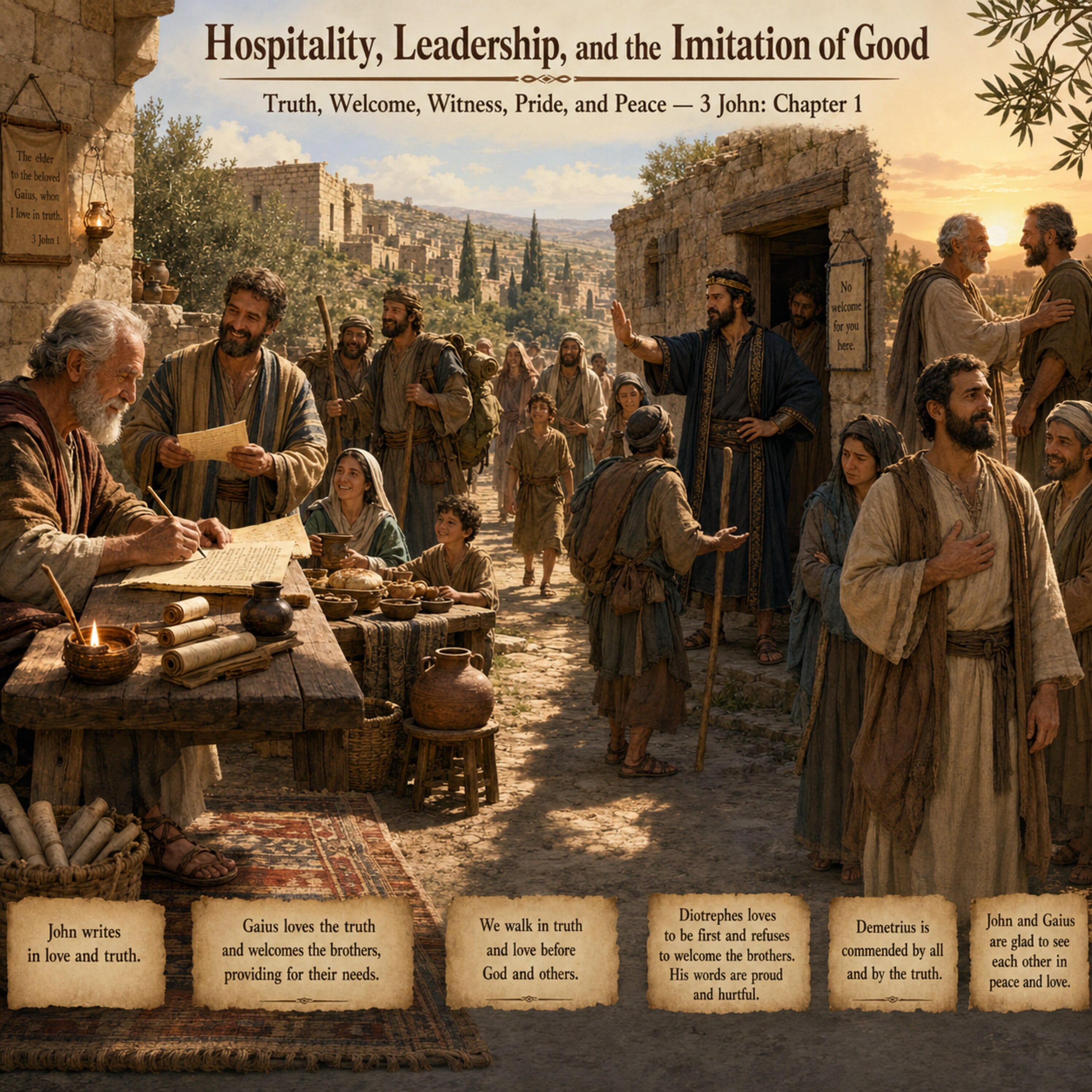
The Bible - NT - 25 - 3 John, Chapters 1-1
Sep 20, 2026 · 35m
In the brief yet profound letter of Third John, we are invited into a world where the prosperity of the soul is the ultimate measure of success. Imagine waking up to find your physical and financial...
Take these sermons with you.
Follow Discipleship for the Present Podcast in the Getsermons app to get every new sermon, build playlists, and pick up right where you left off.

