
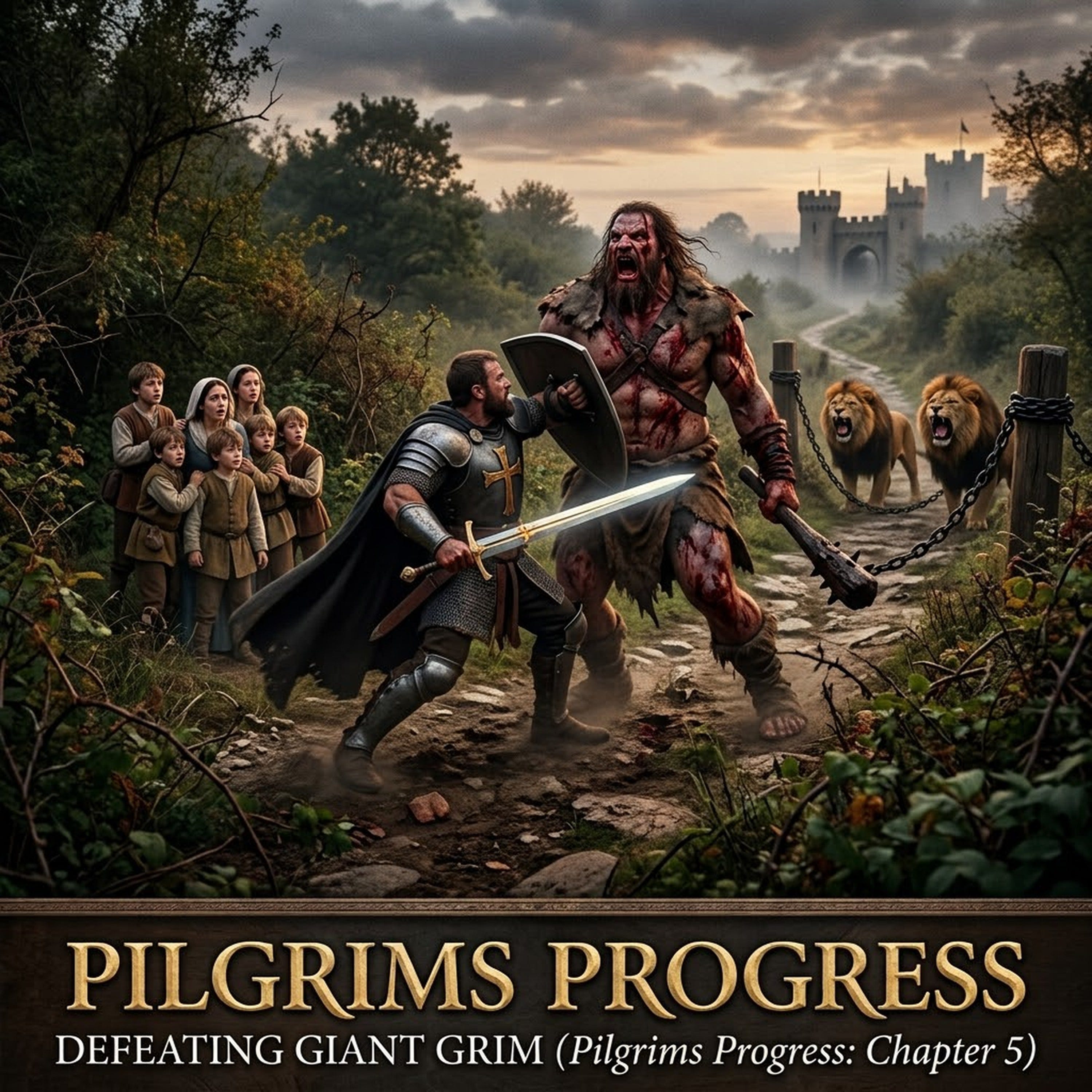
Discipleship for the Present Podcast
Pilgrims Progress - 05 - Part 2b
Jun 30, 2026 · 39m
Prefer sermons downloaded automatically?
About this sermon
Most of us remember a spiritual journey as a steady, upward climb toward light. But the middle miles of John Bunyan’s The Pilgrim’s Progress begin in a much more dangerous place: the comfortable chair.
The episode opens by looking carefully at the deceptive nature of peacetime. Before the lions, before the monsters, and before the dark valleys, Christiana and her group encounter a resting place. It is here they realize a sobering truth: when the pressure of persecution is temporarily lifted, spiritual muscles atrophy. As the hosts observe, "peacetime might actually be more dangerous than wartime." Forgetting the tools of faith in a season of comfort leaves the traveler entirely unequipped for the systemic intimidation waiting just down the road in the form of Giant Grim and the chained lions.
That systemic pressure becomes even clearer when Mercy encounters Mr. Brisk. He evaluates her devotion through a purely economic lens. He sees her endless sewing and assumes it is for personal ambition. When Mercy reveals she gives her garments away to clothe the naked, he completely abandons his pursuit, labeling her radical generosity an "illness of mind." The episode draws this into modern life by examining our cultural obsession with the hustle. To a worldly mind whose only metric is accumulation and personal branding, living out the law of love through selfless service is completely illegible.
From there, the episode turns to the internal battles of the mind and body. Matthew’s agonizing colic serves as a visceral metaphor for hidden, unconfessed sin. The cure is not a gentle remedy, but a bitter, terrifying "universal pill" of true repentance. To swallow the grace of God requires the literal tears of grief over the sin itself. The ego rebels against this exposure, yet as the episode notes, you cannot bypass the tears. You cannot cure a spiritual cancer with a surface-level apology; it must be ruthlessly purged.
This leads to one of the episode’s central psychological contrasts: the paralyzing anxiety of Mr. Fearing versus the arrogant presumption of Mr. Self-Will. Mr. Fearing is so terrified of offending God that he lacks all joy, yet his guide honors him as the necessary, doleful "bass notes" in God's music. In stark contrast, Mr. Self-Will weaponizes the historical failures of biblical figures to justify his own toxic indulgences. The episode forces us to ask which extreme we naturally drift toward: the crippling religious scrupulosity that doubts grace, or the hyper-grace that uses mercy as a blank check for vice.
Finally, the episode shifts to the societal battleground of Vanity Fair. The historical trauma of the city has evolved; the mob with burning stakes has been replaced by a subtle, terrifying beast that demands conformity. This monster represents any system or ideology that requires you to compromise your soul to save your career, your life, or your social standing. The wisdom found here is not in achieving a quick, decisive victory. The pilgrims do not kill the beast; they merely thrash it until it limps. The calling is generational—standing firm in the truth today so that the systemic rot has less power to carry off the children of tomorrow.
The episode closes with a practical reflection on the Valley of Humiliation. What if the low places in your career or ministry are not a punishment, but a fertile country house away from the exhausting noise of ego? And where, when facing the paralyzing smoke of the dark pit, might you need to stand completely still and simply wait for the light?
In This Episode
Why peacetime and comfortable "resting places" are often more spiritually dangerous than active persecution
Giant Grim, the lions, and the systemic intimidation that pushes us onto hidden bypaths
How the provision of a spiritual guide does not erase the personal requirement of cross-bearing and obedience
Mercy, Mr. Brisk, and how radical generosity looks like an "illness of mind" to modern hustle culture
Matthew's colic and the bitter, terrifying, yet necessary pill of true repentance
Reimagining the Valley of Humiliation not as a punishment, but as a fertile escape from the exhausting race of ego
The psychological contrast between Mr. Fearing’s crippling scrupulosity and Mr. Self-Will’s arrogant presumption
How the strong must slow their pace to carry the weak, completely reversing worldly power dynamics
The necessity of cracking "hard texts" in Scripture rather than settling for bite-sized theology
Engaging the beast at Vanity Fair and the generational calling to fight until the monster limps
Practical Reflection
Where has a "resting place" of comfort or smooth sailing caused you to leave behind essential spiritual tools or lose your vigilance?
In what areas of your life are you functioning like Mr. Brisk, evaluating relationships and faith through the lens of economic efficiency and personal ambition?
What modern "beast" or systemic compromise are you facing in your industry or community, and what would it look like to stand firm enough today just to make it limp for the next generation?
Suggested Substack Excerpt
The journey of faith is not a sprint; it is a grueling marathon of endurance that is often threatened most by our own seasons of comfort. In this episode, we map stages four through six of The Pilgrim’s Progress against Jesus' core instructions for discipleship, exploring the dangers of hustle culture, the bitter pill of repentance, and the quiet freedom of the Valley of Humiliation.
AI Disclosure
This episode was created using Google NotebookLM Audio Overview, based on human-curated source material, structured guidance, and editorial review. AI is used as a tool for clarity and delivery, not as a replacement for thoughtful study or engagement with the original texts.
Copyright
© 2026 Discipleship for the Present / Kamashcu Production Studios. All rights reserved.
This is a public episode. If you would like to discuss this with other subscribers or get access to bonus episodes, visit discipleshipforthepresent.substack.com
More from Discipleship for the Present Podcast
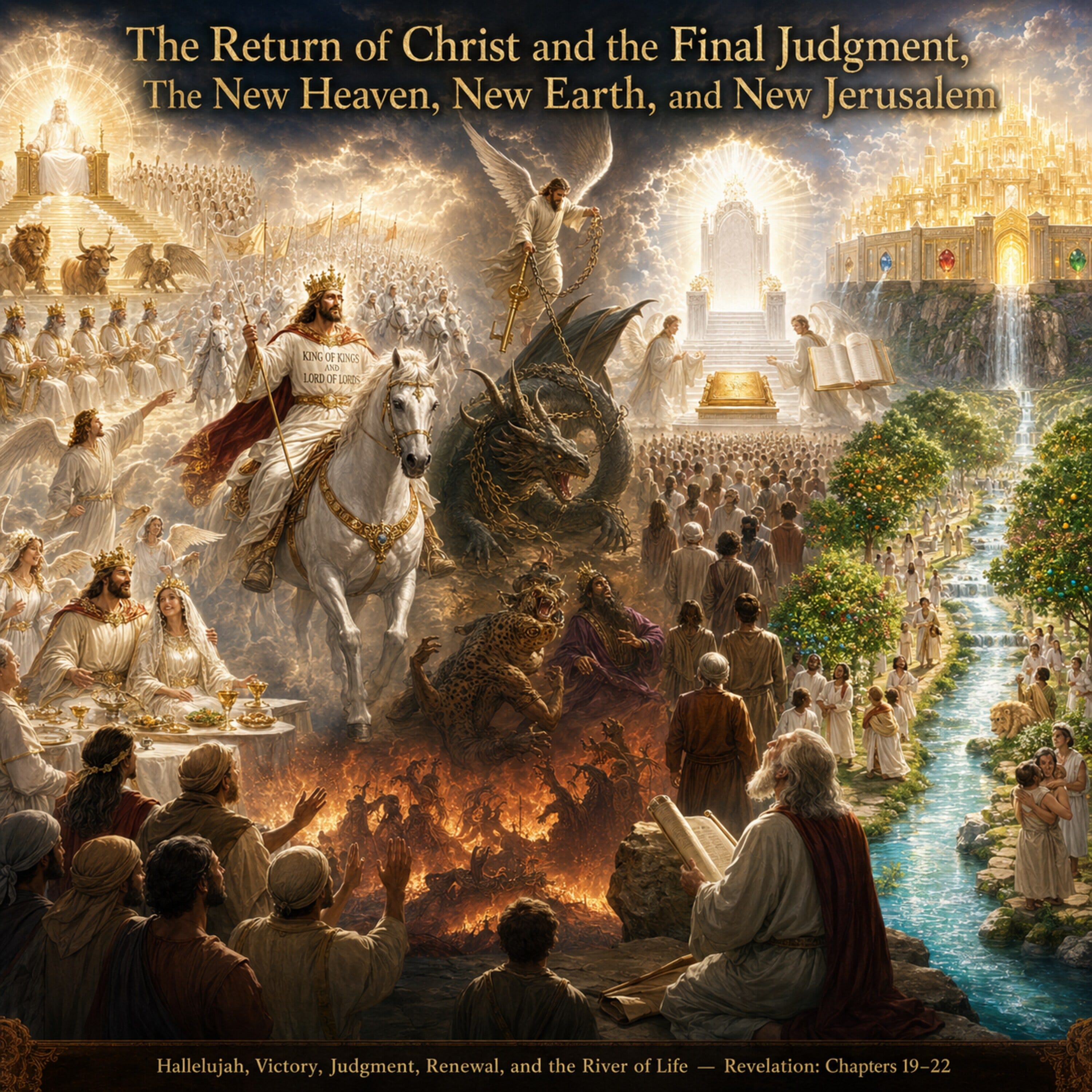
The Bible - NT - 27d - Revelation, Chapters 19-22
Sep 20, 2026 · 45m
The final chapters of the Book of Revelation are a labyrinthine journey through some of the most vivid and symbolic imagery in all of scripture. From dragons and crystal cities to the ultimate...
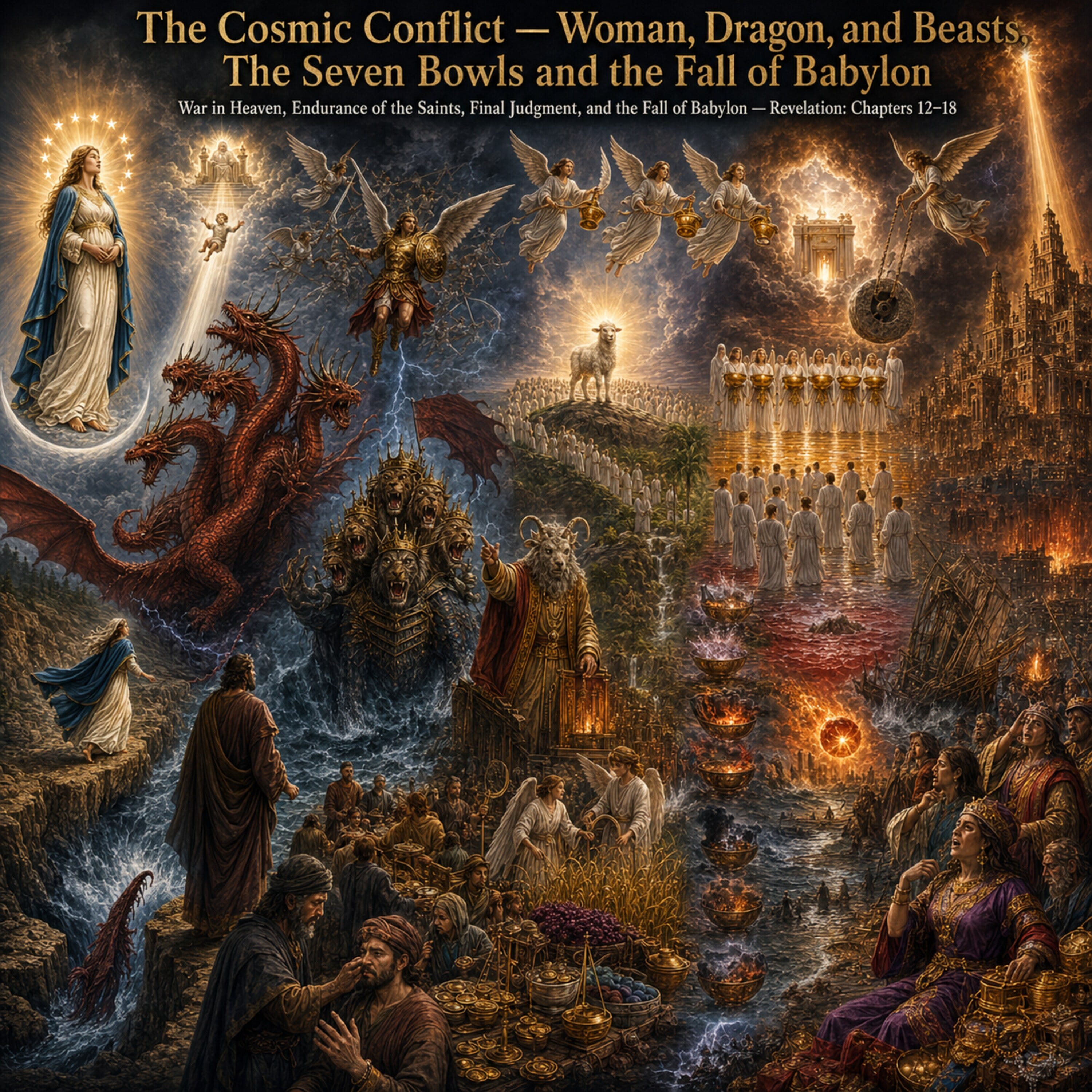
The Bible - NT - 27c - Revelation, Chapters 12-18
Sep 20, 2026 · 39m
In this episode of Wisdom for the Present, we embark on a transformative exploration of the Book of Revelation, chapters twelve through eighteen. This section of scripture, often shrouded in mystery...
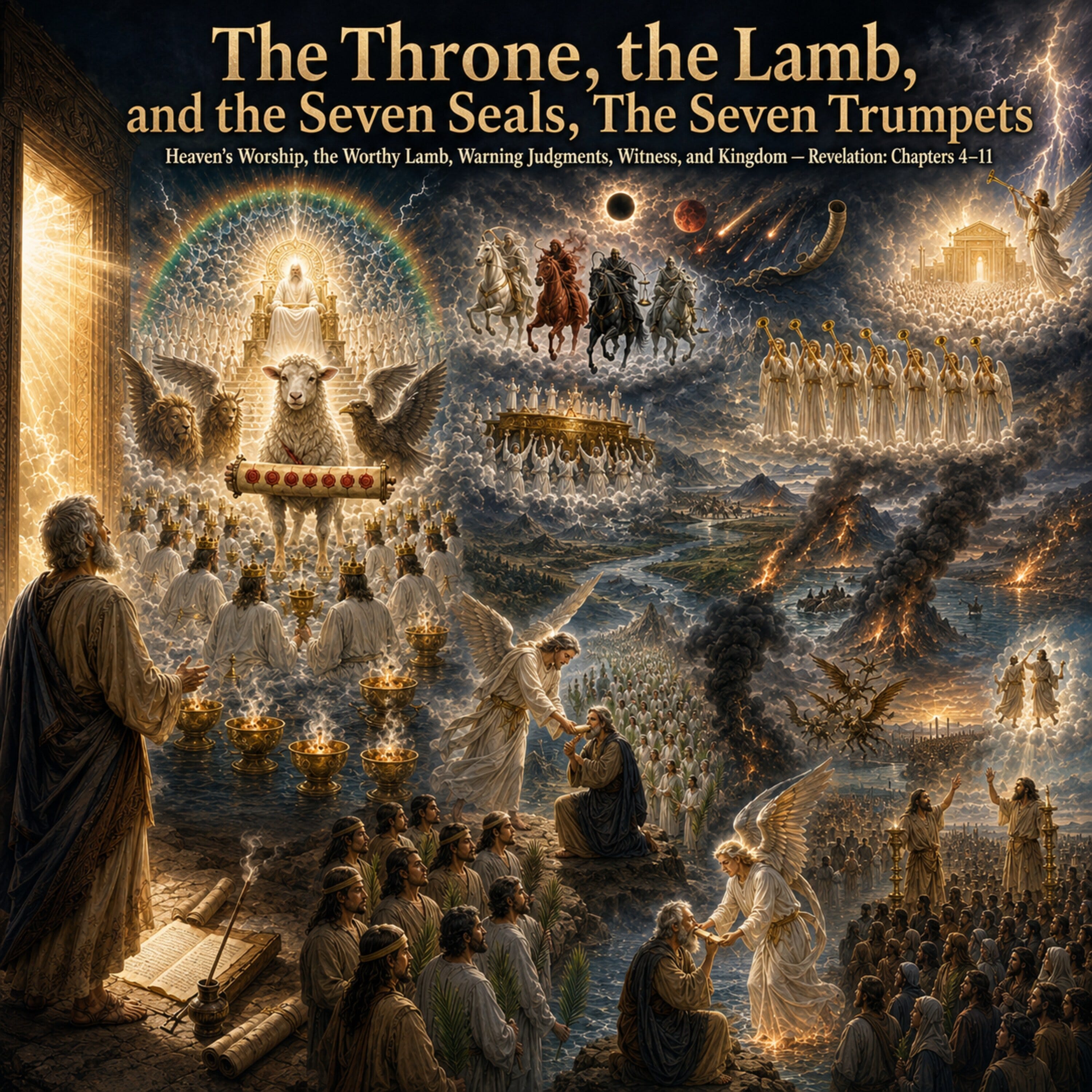
The Bible - NT - 27b - Revelation, Chapters 4-11
Sep 20, 2026 · 55m
Most of us approach the Book of Revelation with a sense of trepidation, expecting cryptic symbols and apocalyptic visions. But chapters 4 through 11 offer something profoundly different: a survival...
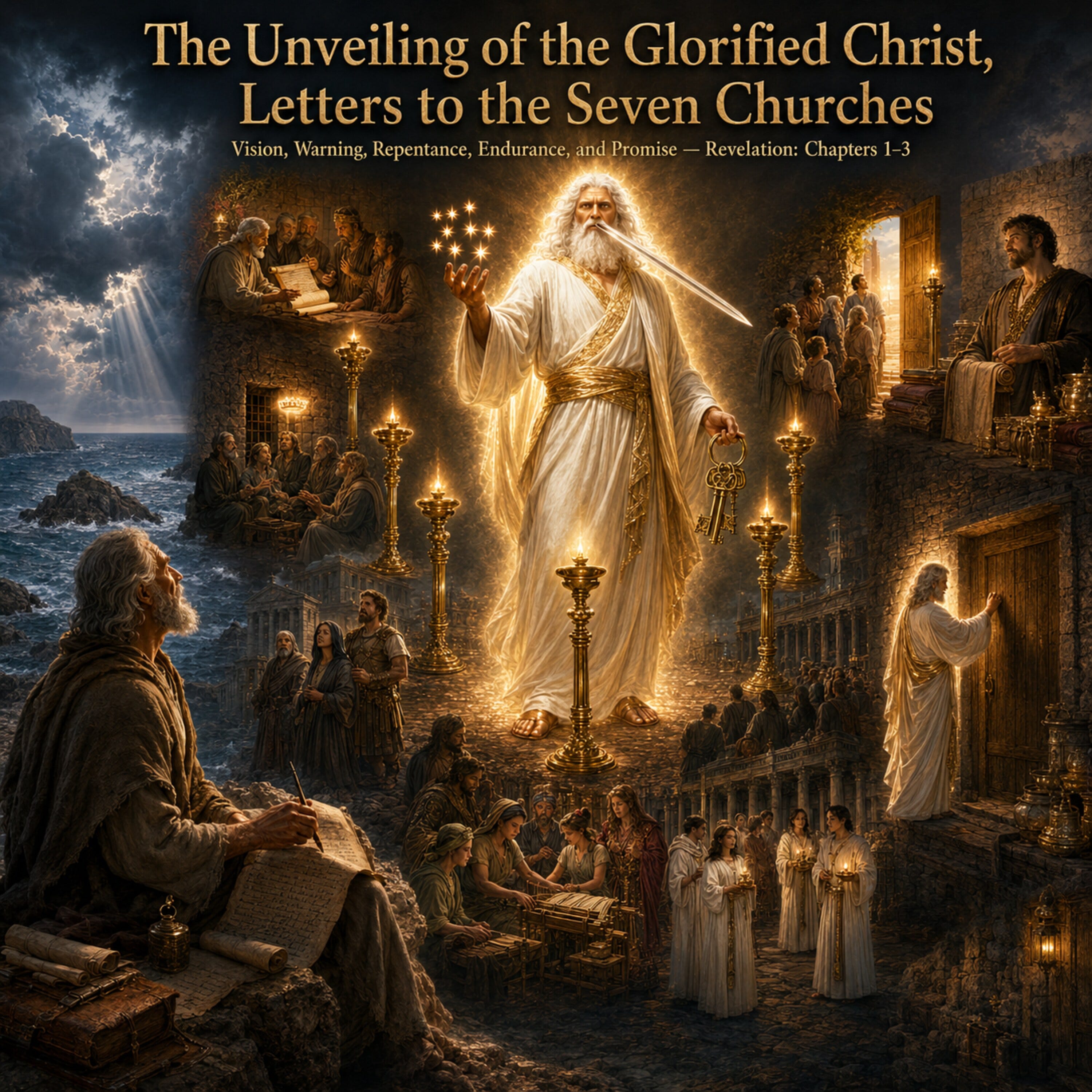
The Bible - NT - 27a - Revelation, Chapters 1-3
Sep 20, 2026 · 54m
In the opening chapters of the Book of Revelation, we find a profound cosmic performance review of seven historical communities in ancient Asia Minor, now modern-day Turkey. These letters, addressed...
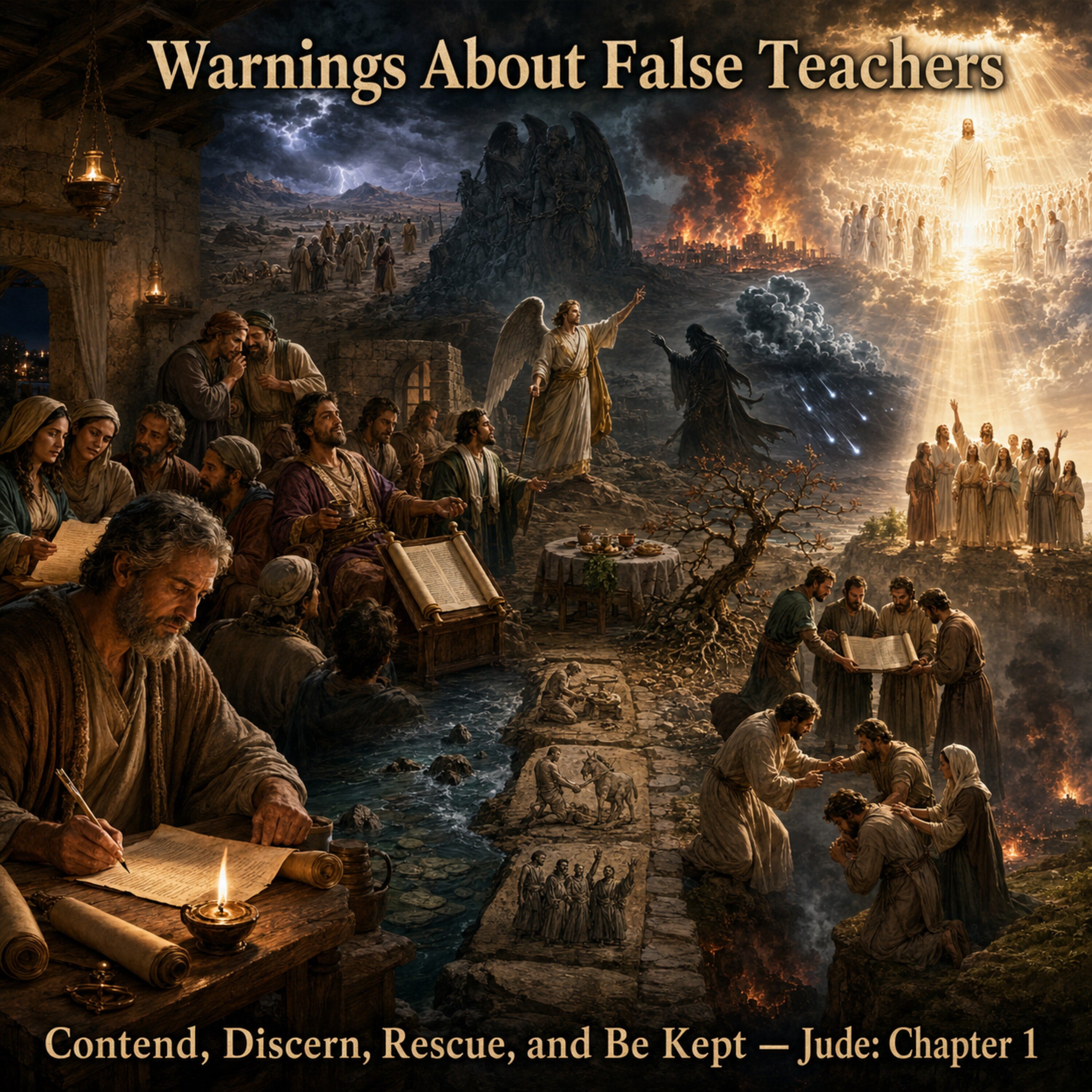
The Bible - NT - 26 - Jude, Chapters 1-1
Sep 20, 2026 · 46m
In the Book of Jude, we find a compact yet profound letter that serves as a survival guide for navigating toxic environments. Jude, a servant of Jesus Christ and brother of James, writes with...
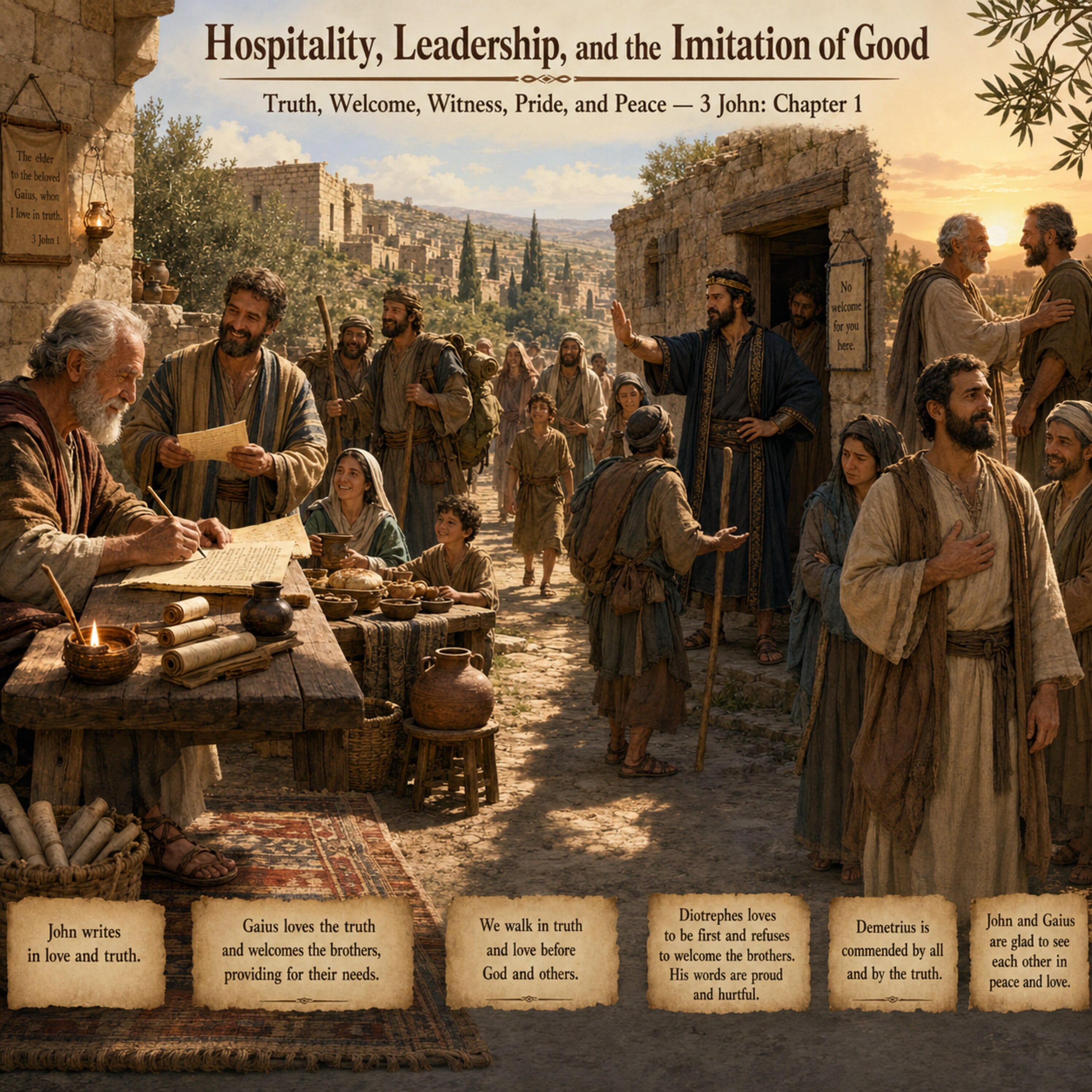
The Bible - NT - 25 - 3 John, Chapters 1-1
Sep 20, 2026 · 35m
In the brief yet profound letter of Third John, we are invited into a world where the prosperity of the soul is the ultimate measure of success. Imagine waking up to find your physical and financial...
Take these sermons with you.
Follow Discipleship for the Present Podcast in the Getsermons app to get every new sermon, build playlists, and pick up right where you left off.

