
Extra Credit Podcast
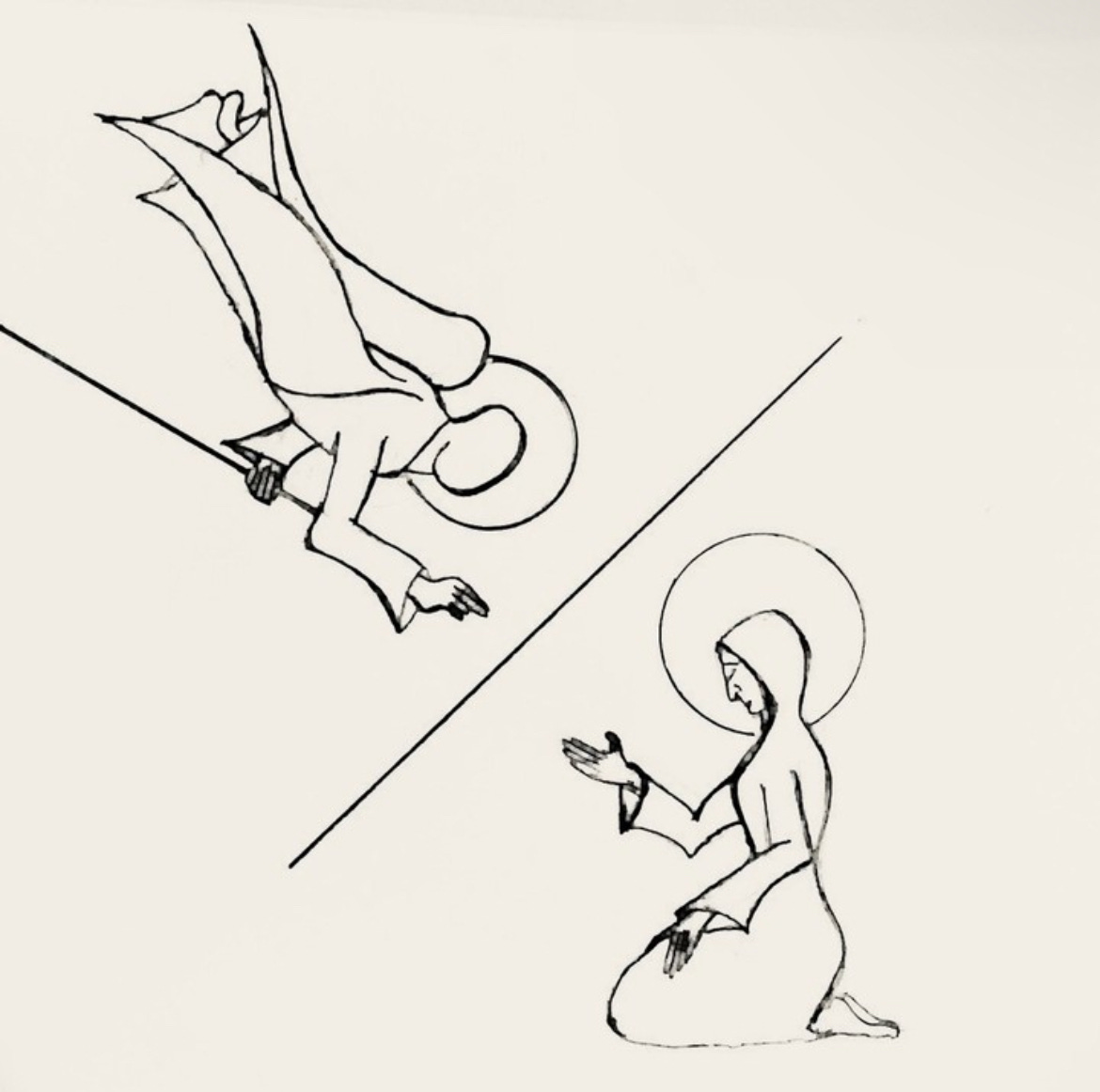
The Angel of the Lord
Nov 21, 2024 · 1h 1m
Prefer sermons downloaded automatically?
About this sermon
Angelology has nothing to say to us if it is separated from Trinitarian theology. The one God the angels face is triune. Their worship of Father, Son, and Holy Spirit, is simultaneously their service to us (and vice versa).
Just so, the angels consistently refuse to be worshiped. They won’t accept worship, because they were created to worship (see Col. 2:18 and Rev. 22:8—9). There is, however, one angel within Scripture that does not refuse worship when it is offered to him.
The Angel of the Lord
It is often assumed that the Christian confession of the Trinity is a total break from Judaism’s understanding of God. It is assumed that the Jewish faith is flatly or simply “monotheistic” while the Christian faith introduces a modification to that. Nothing could be further from the truth.
As Robert Jenson argues, the God of Israel is unique in that he is not only the author of history but also a character within it. He lives his history with his people. Histories hold together just like plays do; they have a single plot.
And history, just like a play, has a cast of characters. If you read through the Old Testament it is easy to identify the characters in this drama/history. On Israel’s/humanity’s side of the story there are a lot of characters (Moses, Abraham and Sarah, Joshua, Isaiah, Ezekiel, etc.). But on God’s side there are only three characters.
First, there is the Lord of Israel who rules Israel’s history because he is its author. He, in a manner of speaking, stands outside of the drama just as an author stands outside of the story he writes.
Second, there is God himself as a character within the drama. The old rabbis recognized the peculiar way the Scriptures talk about this character on God’s side. The Scriptures refer often to a character/agent in the story that is distinguishable from God, but still God. This character goes by different names: the Word of the Lord, the Glory of the Lord, the Name of the Lord, and the Angel of the Lord.
In the Scriptures, whenever the Angel of the Lord shows up in the drama he is clearly identified as someone other than the Lord, but by the end of the scene he turns out to just be the Lord himself.
The old rabbis of Israel noticed this subtlety within the texts (with the Word of the Lord, the Glory of the Lord, the Angel of the Lord, etc.) and used one term to classify them all: the Shekinah. The Shekinah is God as character in within the story. Or: God with us.
The third and final character within God is the “breath,” the “wind,” or the “spirit” of God. Whenever Israel’s story gets stuck or stagnate, God’s breath begins to blow and it keeps Israel’s history moving towards its dramatic ending (resurrection).
In this way the New Testament doesn’t add anything. It certainly does not introduce any new divine characters in the drama. Rather, as Jenson says, it provides a sort of playbill for the drama.
Imagine you are running late to a play. When you arrive you head straight for the auditorium and on your way in you are handed a playbill. You reach your seat but the lights are down because the action has already begun.
All the characters of the drama are on stage, doing what they do. But it isn’t until the intermission when the lights come up that you are able to look over the playbill and find the list of the actors’ names.
The New Testament provides us something like a playbill. It has always been Jesus’ of Nazareth at work in the drama, whether playing “roles” like the Angel of the Lord. He is the Shekinah, God with us as another character within the drama.
And nothing could be more fitting for him to take on the title of “angel.” For what does “angel” mean except messenger? Jesus of Nazareth is not only a messenger of God, but he is the message of God in flesh.
In that sense, just as Jesus Christ is the Chief-Apostle, he is no less the Chief-Angel.
Here are the quotes from Maggie Ross’s essay “Barking at Angels” that I finished with:
Behold the God who is infinitely more humble than those who pray to him, more stripped, more emptied, more self-outpouring—and we need to remember that humility and humiliation are mutually exclusive. Humility knows only love, and God is love. The scandal of the incarnation is not that we are naked before Emmanuel, God with us, but God is naked before us, and, in utter silence, given over into our hands and hearts. And it is in the depths of this beholding, in the silence of the loving heart of God, that the divine exchange takes place most fully, where each of us in our uniqueness and strangeness is transfigured into the divine life. And it is for this that God comes to us, the Word made flesh, stable-born and crucified.
Therefore, in this world’s night, let us enter more deeply into stillness so we may behold the herald angels. Let us be undistracted even if the sheepdog continues to bark at our side. Let us so plunge into this beholding that its silence and light will radiate even through our own darkness to illumine all the darkness and pain of this world, to announce tidings of great joy for this day and all the days to come.
This is a public episode. If you would like to discuss this with other subscribers or get access to bonus episodes, visit cameroncombs.substack.com
More from Extra Credit Podcast

Q&A with Chris E.W. Green
Nov 23, 2026 · 59m
Office Hours Q&A w/ Dr. Chris Green from TheoCon 26 Our midweek Bible study will not meet this week so I thought I’d share the Office Hours Q&A session with Dr. Chris Green from this year’s TheoCon....

On the Antichrist: “Are You the Antichrist or Should We Look for Another?”
Nov 19, 2026 · 58m
1 John Ep. 3 For many of us it will be shocking to learn that the only uses of the term antichrist in the scriptures come in the letters of John (1 John 2, 4, and 2 John 1). And what may be more...

Christ Is Tempted in Me
Nov 12, 2026 · 55m
1 John Ep. 2 This week we come to the famous division of the three temptations common to humanity that John gives in 1 John 2: the lust of the flesh, the lust of the eyes, and the pride of life. Many,...

The Contradiction of Grace
Nov 5, 2026 · 54m
1 John Ep. 1 “As long as I am imperfect and unruly, neither being obedient to God through the practice of the commandments, nor becoming perfect in knowledge in my mental faculties, Christ must be...

On Self-Love
Oct 29, 2026 · 57m
The Garden of the Heart Ep. 6 This week we turn to the difficult question of self-love. Does the gospel call us to love ourselves? The answer to the question is not a simple or straightforward Yes...

The Erotic Love of God
Oct 15, 2026 · 58m
The Garden of the Heart Ep. 5 This week we turn to discuss Eros—both its terror and its grandeur—and the way in which it reveals the depths of God’s heart for us. It is hard for us to believe, but the...
Take these sermons with you.
Follow Extra Credit Podcast in the Getsermons app to get every new sermon, build playlists, and pick up right where you left off.

