

Faith & Finance
Faith-Based Investing: Separating Fact from Fiction with Mark Regier
Oct 29, 2026 · 24m
Prefer sermons downloaded automatically?
About this sermon
You may know how your retirement investments are performing, but do you know what they're actually supporting?
For many Christians, stewardship shapes how we earn, spend, save, and give. Yet when it comes to investing, we may not think much about the companies and industries represented in our portfolios.
Faith-based investing offers an opportunity to align those decisions more closely with our Christian convictions. But what does that look like in practice? Does investing according to your values mean sacrificing financial returns? And can individual investors really make a difference?
Mark Regier, Vice President of Stewardship Investing at Praxis Investment Management, joined the show today to explore these questions. With more than 25 years of experience in faith-based investing, Regier offers a thoughtful perspective on how Christians can approach their portfolios with greater intentionality.
Recognizing God's Ownership of Our Investments
Faithful investing begins with a foundational biblical truth: Everything belongs to God.
Psalm 24:1 declares, "The earth is the LORD's and the fullness thereof, the world and those who dwell therein."
This principle reminds us that we're not ultimately owners of our resources but stewards entrusted with managing what belongs to God.
"When we think about it that way, our investments are just the same as every part of our life, where we ask the Lord to have ownership and control over what we do," Regier explains.
One important consideration is that investing in a company often means becoming a partial owner of that business. Whether through individual stocks or investment funds, our financial resources are connected to businesses whose decisions affect employees, customers, communities, and the wider world.
That ownership also brings an opportunity to stay informed and engaged. Just as Christians seek to honor God through their spending and generosity, they can also consider how their investments reflect their values.
Faith-Based Investing Is About More Than Avoidance
When people hear the term faith-based investing, they often think of avoiding companies or industries whose practices conflict with their Christian convictions.
This approach, commonly called screening, is an important starting point. Investors may choose to exclude certain businesses based on their products, services, or practices. But Regier emphasizes that faith-based investing can go much further.
At Praxis Investment Management, the goal isn't simply to avoid certain investments but also to identify opportunities to contribute positively to the world. These opportunities can include:
Shareholder engagement: Using the responsibilities and opportunities of ownership to encourage companies toward more responsible business practices.
Community investing: Directing capital toward initiatives that support underserved communities and expand economic opportunities.
Impact bonds: Investing in bonds that help finance projects with positive social or environmental outcomes.
Praxis incorporates these and other strategies into its ImpactX approach, which identifies seven ways investors can pursue positive impact through their portfolios. The broader principle is that stewardship involves more than asking what we should avoid. It also invites us to consider what our resources can help accomplish.
Does Faith-Based Investing Mean Sacrificing Returns?
One of the most common concerns about faith-based investing is whether aligning a portfolio with personal convictions comes at the expense of financial performance.
According to Regier, that trade-off isn't necessarily required. He points to research suggesting that values-aligned investing does not inherently lead to lower returns. However, the results depend significantly on how a portfolio is constructed and managed.
For example, Praxis uses a process called portfolio optimization to apply its investment screens while keeping performance closely aligned with appropriate market benchmarks.
The objective is to balance investors' financial goals with their desire to invest according to their convictions.
This distinction matters, especially for individuals and families who rely on their investments to fund retirement, meet future needs, or support charitable giving.
Of course, no investment strategy can guarantee returns, and faith-based portfolios can still lose value or underperform broader markets. Investors must carefully evaluate diversification, expenses, risk, and their long-term financial objectives.
Faith-based investing doesn't eliminate the need for sound financial planning. Rather, it adds another important consideration to the investment process: whether our financial decisions reflect what we believe.
Taking the First Step Toward Faithful Investing
For Christians exploring faith-based investing, the process doesn't have to start with a complete portfolio overhaul. Regier recommends starting with a conversation.
A knowledgeable financial advisor can help you examine your existing investments, clarify your priorities, and identify opportunities to align your portfolio more closely with your convictions.
A Certified Kingdom Advisor (CKA®) can be especially helpful in this process. These professionals are trained to apply biblical financial principles and help clients make decisions consistent with their faith.
It's also important to recognize that faith-based investing is personal. Christians may differ in how they evaluate certain companies or investment strategies. Thoughtful stewardship involves prayer, discernment, and an understanding of your particular financial circumstances.
Ultimately, the goal isn't simply to build a portfolio that carries a faith-based label. It's to approach investing with the same intentionality and biblical wisdom we seek to apply to every other area of our financial lives.
After all, if everything belongs to God, then our investments are another opportunity to steward His resources faithfully.
To connect with a Certified Kingdom Advisor, visit FindaCKA.com. To learn more about Praxis Investment Management and its approach to faith-based investing, visit PraxisInvests.com.
On Today’s Program, Rob Answers Listener Questions:
My husband is retiring from federal service. What should we ask his employer about life and health insurance, accrued leave, and other benefits? And how should we think about Medicare and Social Security, including retroactive benefits?
My husband and I are retired, and our advisor recommends rebalancing our retirement accounts. What are the benefits and drawbacks?
My wife, daughter, and I are considering sharing a larger rental home with our newly married son and daughter-in-law. What should we think through before entering a multigenerational living arrangement?
Resources Mentioned:
Become a FaithFi Partner
Praxis Investment Management
Faithful Steward: FaithFi’s Quarterly Magazine
FaithFi Field Guide: How Do I Prepare the Next Steward?
FaithFi Field Guide: How Much Money is Enough?
Our Ultimate Treasure: A 21-Day Journey to Faithful Stewardship by Rob West
Wisdom Over Wealth: 12 Lessons from Ecclesiastes on Money
Look At The Sparrows: A 21-Day Devotional on Financial Fear and Anxiety
Rich Toward God: A Study on the Parable of the Rich Fool
Find a Certified Kingdom Advisor® (CKA)
FaithFi App
Remember, you can call in to ask your questions every weekday at (800) 525-7000. Faith & Finance is also available on Moody Radio Network and American Family Radio. You can also visit FaithFi.com to connect with our online community and partner with us as we help more people live as faithful stewards of God’s resources.
Hosted by Simplecast, an AdsWizz company. See pcm.adswizz.com for information about our collection and use of personal data for advertising.
More from Faith & Finance
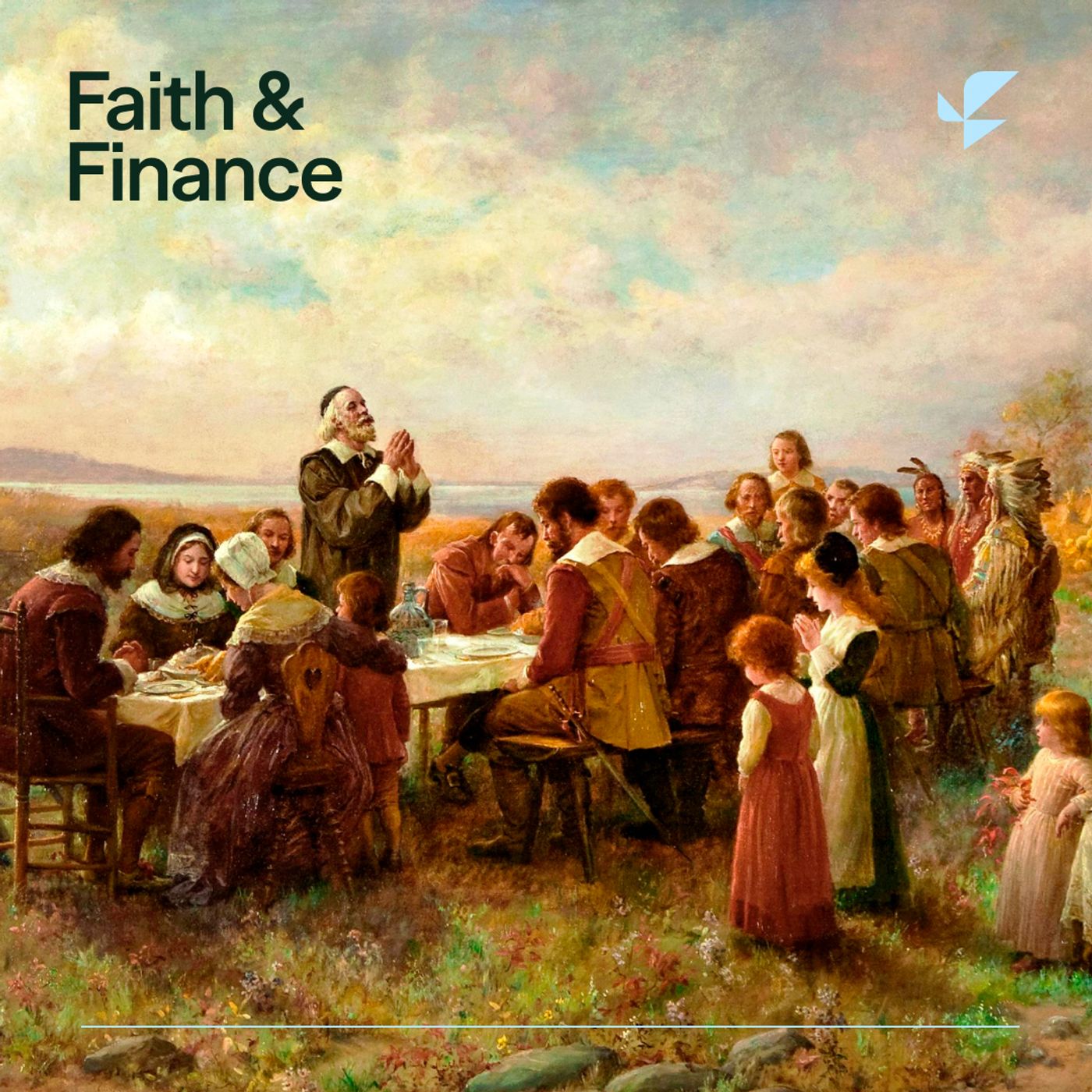
The Story of Thanksgiving
Nov 26, 2026 · 24m
Thanksgiving is a time to gather with family and friends, count our blessings, and thank God for His faithfulness. But the story behind one of America's most cherished traditions began not with...
Passing On Relational Wealth with Sharon Epps
Nov 25, 2026 · 24m
When we think about leaving an inheritance, we often focus on financial assets—savings, investments, property, and other resources we hope to pass on to the next generation. But preparing the next...
Giving Within Your Means
Nov 24, 2026 · 24m
Scripture calls us to be generous, open-handed, and willing to sacrifice for others. But generosity should never become an excuse for neglecting the responsibilities God has already placed in our...
Love Good with Stephen Jackson
Nov 23, 2026 · 24m
Biblical stewardship reaches far beyond what we give away. It includes our work, our investments, and everything God has entrusted to us. But have you ever stopped to consider whether the money you're...
Count Your Blessings: The Power of Gratitude
Nov 20, 2026 · 24m
In 1897, hymn writer Johnson Oatman Jr. penned the words to a beloved gospel song that continues to encourage Christians more than a century later: Count Your Blessings.Throughout his lifetime, Oatman...
The Hidden Retirement Benefits of an HSA with Mark Biller
Nov 19, 2026 · 24m
Healthcare expenses can take a significant bite out of your budget. But what if there were a way to prepare for those costs while reducing your taxes and building savings for retirement? That's...
Take these sermons with you.
Follow Faith & Finance in the Getsermons app to get every new sermon, build playlists, and pick up right where you left off.

