
Faith & Finance
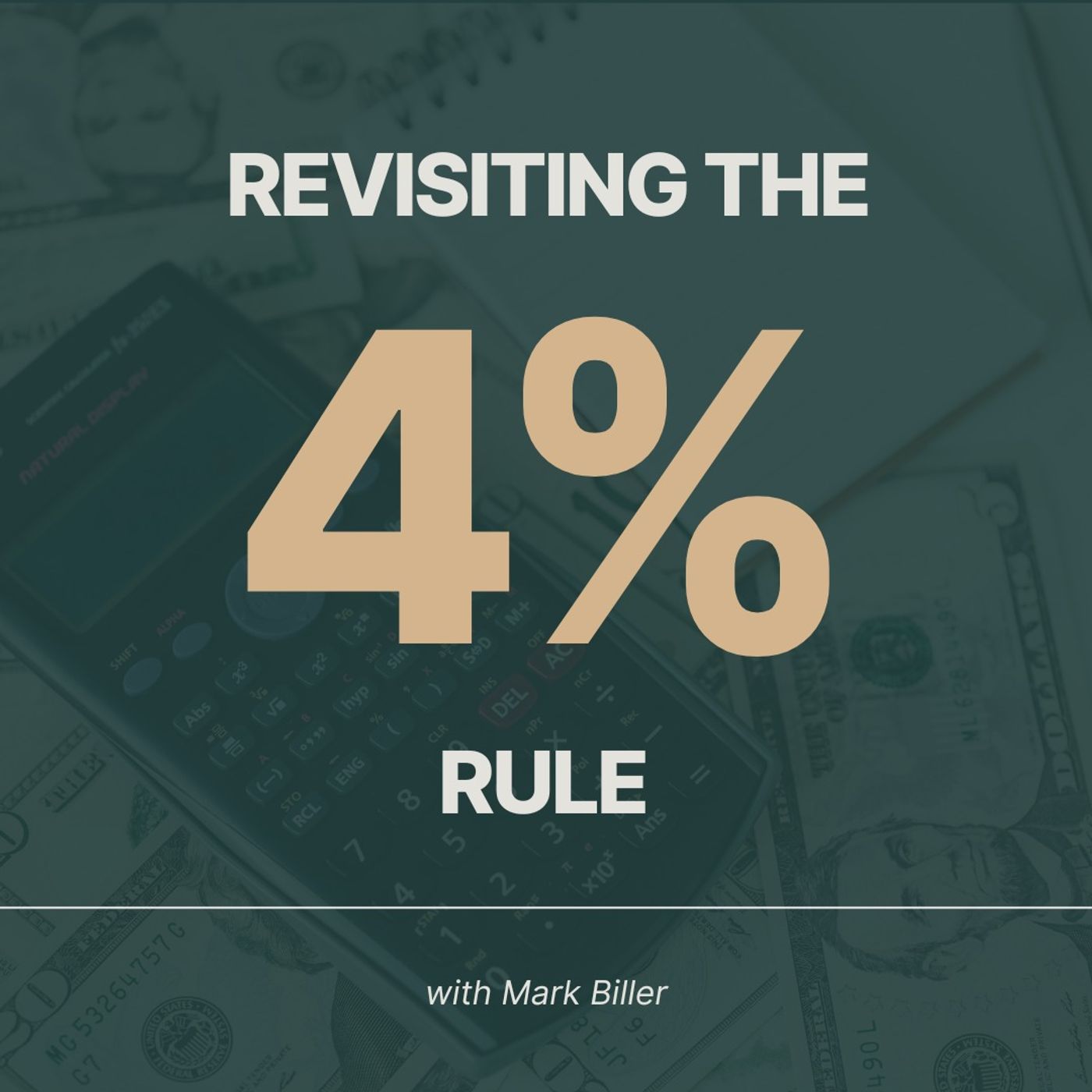
Revisiting the “4% Rule” with Mark Biller
Apr 21, 2026 · 24m
Prefer sermons downloaded automatically?
About this sermon
How much can you safely spend in retirement without running out of money?
It’s one of the biggest questions retirees face. For years, many people have looked to the well-known “4% rule” for guidance. But as helpful as that rule may be, it’s not as simple—or as reliable—as many assume.
Today, Mark Biller, Executive Editor and Senior Portfolio Manager at Sound Mind Investing, joined us to revisit this widely used guideline and explain why a more flexible, personalized approach may better serve retirees.
Why Retirement Spending Is More Complicated Than Saving
Saving for retirement is often more straightforward than spending in retirement.
During working years, many people invest consistently, contribute to retirement accounts, and let time and compound growth do their work. But retirement introduces a new challenge: no one knows exactly how long their money needs to last.
That uncertainty changes everything. Retirees must make decisions while facing several unknowns:
Future market returns
Inflation rates
Interest rates
Healthcare costs
Longevity
Because of those variables, determining a “safe” withdrawal rate becomes one of the most difficult parts of financial planning.
Where the 4% Rule Came From
The 4% rule originated with financial planner Bill Bengen in the early 1990s.
Instead of trying to predict the future, Bengen studied historical market data. He examined how retirees who began in difficult economic periods—such as the mid-1920s—would have fared over a 30-year retirement.
His conclusion: an initial withdrawal rate of 4.15%, followed by annual inflation adjustments, would have sustained every portfolio in his study for at least 30 years, even under the worst historical conditions.
That’s an important detail.
The 4.15% figure wasn’t intended to be the ideal spending strategy for everyone. It was the lowest common denominator—the floor that worked even in the toughest scenarios.
Over time, that finding was simplified into the “4% rule.” Many people began to treat it as the optimal answer for nearly every retiree. But according to Biller, that was never the point.
Rules of thumb can be helpful as rough planning tools, especially for someone years away from retirement who is trying to estimate future needs. But once retirement draws near, more precision is needed.
A single percentage cannot account for your income sources, goals, spending habits, tax picture, or life expectancy.
What New Research Suggests
Sound Mind Investing conducted its own analysis under different assumptions, including a 50/50 stock-and-bond portfolio that became more conservative over time. Their findings showed:
A 5% initial withdrawal rate still worked even under difficult conditions.
A 6% withdrawal rate succeeded in most cases, though some portfolios ran short near the end.
At 7%, the risk increased significantly.
Meanwhile, Bengen later revisited his original work with broader investment options and updated tools. His revised conclusions suggested:
4.7% may be a better minimum floor today.
Around 5.25% may be the “sweet spot” in many scenarios.
These updates reinforce an important truth: retirement planning is more dynamic than a single number can capture.
Rather than anchoring to one percentage, retirees should build a plan around their full financial picture. That includes:
Social Security timing and benefits
Pension income
Spousal benefits
Expected expenses
Lifestyle goals
Taxes
Healthcare needs
Legacy desires
Market conditions over time
Financial planning software or a trusted advisor can help run simulations, stress-test scenarios, and make adjustments as life unfolds.
Biblical Wisdom for Retirement Planning
Scripture often commends wise planning while reminding us to hold our plans with humility: “The plans of the diligent lead surely to abundance” (Proverbs 21:5).
Yet we also remember that ultimate security is never found in formulas, portfolios, or percentages. Our trust rests in the Lord, who provides faithfully in every season.
Retirement stewardship is not about discovering a perfect rule. It is about making wise decisions, remaining flexible, and managing God’s resources faithfully over time.
The 4% rule may still be a useful starting point—but it should not be the final word.
When it comes to retirement, wise stewardship requires both diligence and flexibility. A personalized plan will almost always serve you better than a one-size-fits-all formula.
On Today’s Program, Rob Answers Listener Questions:
I’m retired and have $30,000 to invest. Is it better to invest in gold and silver through the market or buy physical coins?
I’m 63 with a $200,000 401(k) from a former employer. How can I move it into investments that align with my faith?
Resources Mentioned:
Faithful Steward: FaithFi’s Quarterly Magazine (Become a FaithFi Partner)
Sound Mind Investing (SMI)
Revisiting the ‘4% Rule’ for Retirement Withdrawals by Joseph Slife (Article on SoundMindInvesting.org)
A Richer Retirement: Supercharging the 4% Rule to Spend More and Enjoy More by William P. Bengen
SPDR Gold Shares (GLD) | iShares Gold Trust (IAU)
Our Ultimate Treasure: A 21-Day Journey to Faithful Stewardship by Rob West
Wisdom Over Wealth: 12 Lessons from Ecclesiastes on Money
Look At The Sparrows: A 21-Day Devotional on Financial Fear and Anxiety
Rich Toward God: A Study on the Parable of the Rich Fool
Find a Certified Kingdom Advisor (CKA)
FaithFi App
Remember, you can call in to ask your questions every weekday at (800) 525-7000. Faith & Finance is also available on Moody Radio Network and American Family Radio. You can also visit FaithFi.com to connect with our online community and partner with us as we help more people live as faithful stewards of God’s resources.
Hosted by Simplecast, an AdsWizz company. See pcm.adswizz.com for information about our collection and use of personal data for advertising.
More from Faith & Finance
Passing On Relational Wealth with Sharon Epps
Nov 25, 2026 · 24m
When we think about leaving an inheritance, we often focus on financial assets—savings, investments, property, and other resources we hope to pass on to the next generation. But preparing the next...

Giving Within Your Means
Nov 24, 2026 · 24m
Scripture calls us to be generous, open-handed, and willing to sacrifice for others. But generosity should never become an excuse for neglecting the responsibilities God has already placed in our...

Love Good with Stephen Jackson
Nov 23, 2026 · 24m
Biblical stewardship reaches far beyond what we give away. It includes our work, our investments, and everything God has entrusted to us. But have you ever stopped to consider whether the money you're...

Count Your Blessings: The Power of Gratitude
Nov 20, 2026 · 24m
In 1897, hymn writer Johnson Oatman Jr. penned the words to a beloved gospel song that continues to encourage Christians more than a century later: Count Your Blessings.Throughout his lifetime, Oatman...

The Hidden Retirement Benefits of an HSA with Mark Biller
Nov 19, 2026 · 24m
Healthcare expenses can take a significant bite out of your budget. But what if there were a way to prepare for those costs while reducing your taxes and building savings for retirement? That's...
Thanksgiving All Year Long with Jeanne McMains
Nov 18, 2026 · 24m
Thanksgiving brings families together around familiar recipes, favorite stories, and the opportunity to reflect on God's goodness. But what if the gratitude we express around the Thanksgiving table...
Take these sermons with you.
Follow Faith & Finance in the Getsermons app to get every new sermon, build playlists, and pick up right where you left off.

