
Faith & Finance
The Meaning Behind A Christmas Carol With Jerry Bowyer
Dec 25, 2025 · 24m
Prefer sermons downloaded automatically?
About this sermon
Every Christmas season, A Christmas Carol returns to our screens and pages as a story of generosity, redemption, and hope. But beneath the familiar narrative, Charles Dickens was also making a powerful argument—one that challenges how society views the poor, children, and human worth itself.
In today’s Christmas episode of Faith & Finance, we sat down with Jerry Bowyer, our resident economist and president of Bowyer Research, to explore the deeper economic and theological message Dickens embedded in this classic tale.
The Meaning Behind “Surplus Population”
One of the most disturbing lines in A Christmas Carol comes from Ebenezer Scrooge, who suggests that the poor might be better off dying to reduce the “surplus population.”
Jerry explained that this phrase wasn’t casual or poetic—it was loaded with meaning in Dickens’ day. It reflected the influence of Thomas Malthus, an economist whose ideas shaped early 19th-century thinking. Malthus believed population growth would always outpace food and resources, making widespread poverty inevitable. His conclusion? Society should discourage the poor from having children.
Dickens deliberately places this language in the mouth of his villain. Scrooge isn’t just cruel—he’s the embodiment of a philosophy that treats people as economic problems rather than human beings made in God’s image.
Jerry noted that Dickens was, in effect, writing A Christmas Carol as a rebuttal to Malthus.
By the time Dickens wrote the story, Britain was entering what economists now call the Great Takeoff—a period of unprecedented growth in productivity, trade, and human flourishing. Malthus had predicted catastrophe just before abundance exploded.
Dickens highlights this abundance through scenes overflowing with food, trade goods, and celebration. The message is clear: people don’t merely consume resources—they create them.
Scarcity, Trauma, and Scrooge’s Past
Dickens doesn’t excuse Scrooge’s cruelty, but he does explain it. Through the Ghost of Christmas Past, we see a lonely boy shaped by hunger, cold, and deprivation.
Jerry pointed out that Scrooge’s scarcity mindset is rooted in trauma. His fear of lack leads him to believe that God—if He exists at all—is stingy. That fear shapes his economics, his relationships, and his resistance to generosity.
The turning point comes when Scrooge encounters the Ghost of Christmas Present. When told the spirit has over 1,800 brothers—each representing a Christmas—Scrooge responds, “What a large family to provide for.”
It’s another glimpse of his scarcity thinking. And it draws sharp rebuke.
Jerry emphasized that Dickens is confronting the idea that more people mean less provision. In contrast, Scripture reveals a God who is generous, creative, and abundant—and who commands humanity to fill the earth, not fear it.
No One Is Disposable
By the end of the story, Scrooge is transformed. He becomes generous, relational, and deeply concerned for others—especially children like Tiny Tim.
Jerry observed that in a Malthusian worldview, Tiny Tim is expendable. But Dickens—and the gospel—say otherwise. There are no surplus people.
Even Jesus Himself, Jerry noted, would have been classified as “surplus population” by such a system—born poor, dependent, and unwanted by the powerful.
The language may have changed, but the ideas persist. Whenever society treats children as burdens, the poor as problems, or human life as expendable in the name of efficiency or sustainability, we are hearing echoes of Scrooge before his redemption.
Dickens reminds us that economics is always moral—and theology always shapes how we view people.
Watching With New Eyes
As Jerry put it, A Christmas Carol isn’t just a holiday story. It’s a challenge to scarcity, fear, and dehumanization—and an invitation to generosity rooted in trust.
As families watch this story together, it becomes a powerful opportunity to talk with our children about God’s abundance, human dignity, and what it truly means to love our neighbor.
Because the real miracle of Christmas isn’t simply changed behavior—it’s a changed heart.
On Today’s Program, Rob Answers Listener Questions:
I have a substantial amount of savings sitting in the bank and want to protect it from inflation. I live primarily on Social Security, have no debt or investments, and need to keep some funds available for emergencies. What’s a wise way to invest the rest?
Resources Mentioned:
Faithful Steward: FaithFi’s Quarterly Magazine (Become a FaithFi Partner)
The Life of Our Lord: Written for His Children During the Years 1846 to 1849 by Charles Dickens
A Christmas Carol by Charles Dickens
The Sound Mind Investing Handbook: A Step-by-Step Guide to Managing Your Money From a Biblical Perspective by Austin Pryor with Mark Biller
The Maker Versus the Takers: What Jesus Really Said About Social Justice and Economics by Jerry Bowyer
Wisdom Over Wealth: 12 Lessons from Ecclesiastes on Money
Look At The Sparrows: A 21-Day Devotional on Financial Fear and Anxiety
Rich Toward God: A Study on the Parable of the Rich Fool
Find a Certified Kingdom Advisor (CKA)
FaithFi App
Remember, you can call in to ask your questions every weekday at (800) 525-7000. Faith & Finance is also available on Moody Radio Network and American Family Radio. You can also visit FaithFi.com to connect with our online community and partner with us as we help more people live as faithful stewards of God’s resources.
Hosted by Simplecast, an AdsWizz company. See pcm.adswizz.com for information about our collection and use of personal data for advertising.
More from Faith & Finance
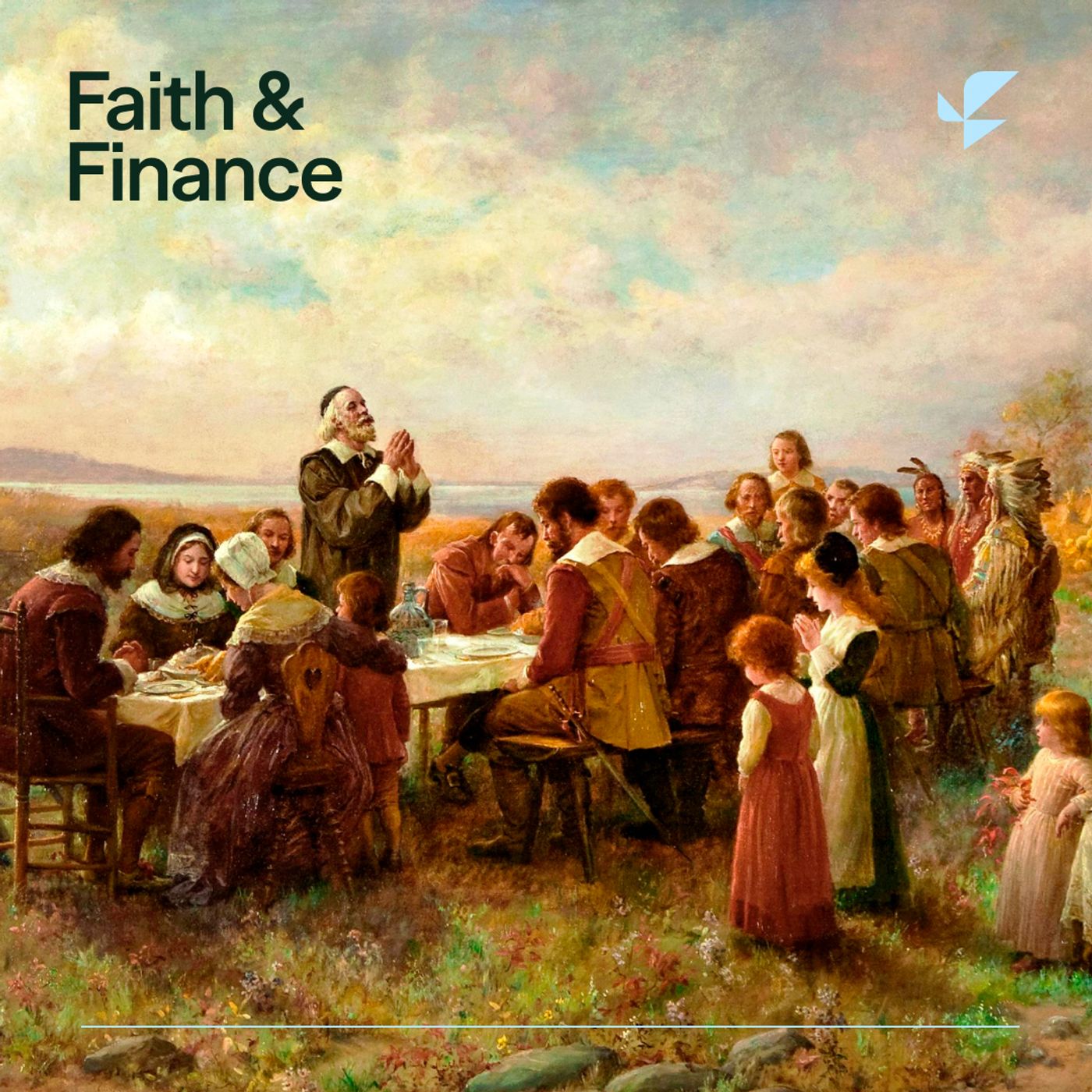
The Story of Thanksgiving
Nov 26, 2026 · 24m
Thanksgiving is a time to gather with family and friends, count our blessings, and thank God for His faithfulness. But the story behind one of America's most cherished traditions began not with...
Passing On Relational Wealth with Sharon Epps
Nov 25, 2026 · 24m
When we think about leaving an inheritance, we often focus on financial assets—savings, investments, property, and other resources we hope to pass on to the next generation. But preparing the next...

Giving Within Your Means
Nov 24, 2026 · 24m
Scripture calls us to be generous, open-handed, and willing to sacrifice for others. But generosity should never become an excuse for neglecting the responsibilities God has already placed in our...

Love Good with Stephen Jackson
Nov 23, 2026 · 24m
Biblical stewardship reaches far beyond what we give away. It includes our work, our investments, and everything God has entrusted to us. But have you ever stopped to consider whether the money you're...

Count Your Blessings: The Power of Gratitude
Nov 20, 2026 · 24m
In 1897, hymn writer Johnson Oatman Jr. penned the words to a beloved gospel song that continues to encourage Christians more than a century later: Count Your Blessings.Throughout his lifetime, Oatman...

The Hidden Retirement Benefits of an HSA with Mark Biller
Nov 19, 2026 · 24m
Healthcare expenses can take a significant bite out of your budget. But what if there were a way to prepare for those costs while reducing your taxes and building savings for retirement? That's...
Take these sermons with you.
Follow Faith & Finance in the Getsermons app to get every new sermon, build playlists, and pick up right where you left off.

