

Faith & Finance
What's a Donor-Advised Fund? (And Should You Use One?)
Aug 10, 2026 · 24m
Prefer sermons downloaded automatically?
About this sermon
If you have ever wished your giving could be both simpler and more strategic, there is a powerful tool worth considering: a donor-advised fund, often called a DAF.
A donor-advised fund can help you organize your charitable giving, make tax-efficient contributions, and thoughtfully support the ministries and causes you care about. But before considering any financial strategy, it is important to begin with the heart.
Paul writes in 2 Corinthians 9:7:
“Each one must give as he has decided in his heart, not reluctantly or under compulsion, for God loves a cheerful giver.”
Generosity begins in the heart, not in the tax code. At the same time, wise stewardship may include using financial tools that help us give more effectively. When used properly, a donor-advised fund can help you give joyfully while managing charitable resources efficiently.
What Is a Donor-Advised Fund?
You can think of a donor-advised fund as a charitable giving account designed to support the causes you care about.
You contribute cash, stocks, real estate, business interests, or other eligible assets to the fund. You may then receive an immediate charitable tax deduction and recommend grants to qualified ministries and charities over time. In other words, a donor-advised fund separates the act of contributing from the act of distributing.
You might make a larger contribution during a high-income year or before selling an appreciated asset. Then, rather than immediately deciding where every dollar should go, you can prayerfully consider which ministries or organizations to support.
The fund is administered by a sponsoring organization that handles recordkeeping, reviews grant recipients, issues grants, and provides tools for managing the account.
We often recommend the National Christian Foundation (NCF), one of the largest Christian charitable-giving organizations in the country. Its founders included Christian financial leaders Larry Burkett and Ron Blue.
How a Donor-Advised Fund Works
Suppose you are preparing to sell a business, a piece of real estate, or another asset that has significantly increased in value.
Selling the asset yourself could result in a substantial capital-gains tax. However, you may be able to contribute the asset to a donor-advised fund before the sale.
Because the contribution is an irrevocable charitable gift, you may receive a tax deduction based on the asset’s value and potentially avoid capital-gains taxes that otherwise would have been due. That can allow more money to be directed toward charitable purposes.
Once the asset is sold within the donor-advised fund, the proceeds can be granted to ministries immediately or invested for potential growth while you determine where to give.
When you are ready, you recommend a grant—perhaps $10,000 to your church, a missions organization, or another qualified charity. The sponsoring organization verifies the recipient and sends the gift either in your name or anonymously.
The Benefits of a Donor-Advised Fund
Donor-advised funds have become a popular charitable-giving tool because they combine flexibility with professional administration.
Simpler Record-keeping: Instead of collecting tax receipts from numerous organizations, you generally receive one receipt for your contribution to the donor-advised fund. You can then manage and track your charitable grants in one place.
Potential Tax Benefits: You generally receive the charitable deduction when you contribute to the fund, rather than when grants are later distributed. Contributing appreciated assets may also help reduce or eliminate capital-gains taxes, allowing more of the asset’s value to support ministry. Because tax situations vary, consult a qualified tax professional before making a significant contribution.
Flexibility in Giving: You can contribute now and recommend grants later. This allows you to practice generosity while taking time to pray, research organizations, and discern where the resources may have the greatest impact.
Legacy Planning: Many donor-advised funds allow you to name successor advisers, such as children or grandchildren. This can give your family an opportunity to continue recommending grants and participating in a legacy of generosity.
Greater Focus on Ministry: Because the sponsoring organization manages the administrative work, you can spend more time evaluating ministries, praying about opportunities, and discerning where God may be directing your giving.
Important Limitations to Consider
Although donor-advised funds can be helpful, they are not appropriate for every situation.
Contributions Are Irrevocable: Once an asset is contributed, the gift is complete. You cannot later withdraw the money for personal use. For that reason, you should never contribute resources that may still be needed for living expenses, emergencies, debt repayment, or other financial responsibilities.
Grants Must Go to Qualified Charities: Grants generally may only be made to eligible, IRS-approved charitable organizations. A donor-advised fund cannot normally be used to give money directly to an individual or to support political candidates.
Giving Can Be Delayed: Money can remain in a donor-advised fund for years before it is distributed. While that flexibility can be useful, it can also delay meaningful charitable impact. At FaithFi, we encourage believers to view a donor-advised fund as a tool for timely and intentional generosity—not as a place to indefinitely accumulate charitable assets. A donor-advised fund should help organize your generosity, not postpone it. Ministries and people have real needs today, and resources already committed to charitable purposes should ultimately be put to work.
Is a Donor-Advised Fund Right for You?
A donor-advised fund may be especially helpful when you:
Regularly give to several ministries or charities
Want to contribute appreciated assets
Expect an unusually high-income year
Are preparing to sell a business, property, or investment
Want to involve your family in long-term generosity
Prefer a simpler way to organize charitable giving
However, the strategy should always serve the greater purpose of faithful stewardship.
The goal is not simply to reduce taxes or create a more efficient financial plan. It is to use what God has entrusted to us in ways that reflect His priorities, care for others, and advance the work of the gospel.
Continue Growing in Biblical Stewardship
You can learn more about donor-advised funds in the latest issue of Faithful Steward magazine, an exclusive resource for FaithFi Partners.
FaithFi Partners receive Faithful Steward in their mailbox each quarter, along with additional resources designed to help them grow in biblical stewardship.
You can become a FaithFi Partner with a gift of $35 per month or $400 per year at FaithFi.com/Give.
On Today’s Program, Rob Answers Listener Questions:
I’m debt-free and have $100,000 in savings. Rather than leave it sitting in cash, how should I think about putting that money to work?
I’ve been paying $100 a month toward a hospital bill, but my statements aren’t showing the payments or reducing the balance. I’ve called twice without getting a response. What should I do next?
My son wants me to join a pooled investment account with him, some friends, and family members, and even roll my 401(k) into it. What are the risks of investing through a joint account like this, and what tax or penalty issues could come with moving money out of my 401(k)?
I’m encouraging my adult children to start Roth IRAs, even with small contributions. Where can they open accounts with low fees, and would a resource like Sound Mind Investing be a good place to start learning?
Resources Mentioned:
Faithful Steward: FaithFi’s Quarterly Magazine (Become a FaithFi Partner)
National Christian Foundation (NCF)
Sound Mind Investing (SMI)
Betterment | Schwab Intelligent Portfolios®
FaithFi Field Guide: How Much Money is Enough?
Our Ultimate Treasure: A 21-Day Journey to Faithful Stewardship by Rob West
Wisdom Over Wealth: 12 Lessons from Ecclesiastes on Money
Look At The Sparrows: A 21-Day Devotional on Financial Fear and Anxiety
Rich Toward God: A Study on the Parable of the Rich Fool
Find a Certified Kingdom Advisor® (CKA)
FaithFi App
Remember, you can call in to ask your questions every weekday at (800) 525-7000. Faith & Finance is also available on Moody Radio Network and American Family Radio. You can also visit FaithFi.com to connect with our online community and partner with us as we help more people live as faithful stewards of God’s resources.
Hosted by Simplecast, an AdsWizz company. See pcm.adswizz.com for information about our collection and use of personal data for advertising.
More from Faith & Finance
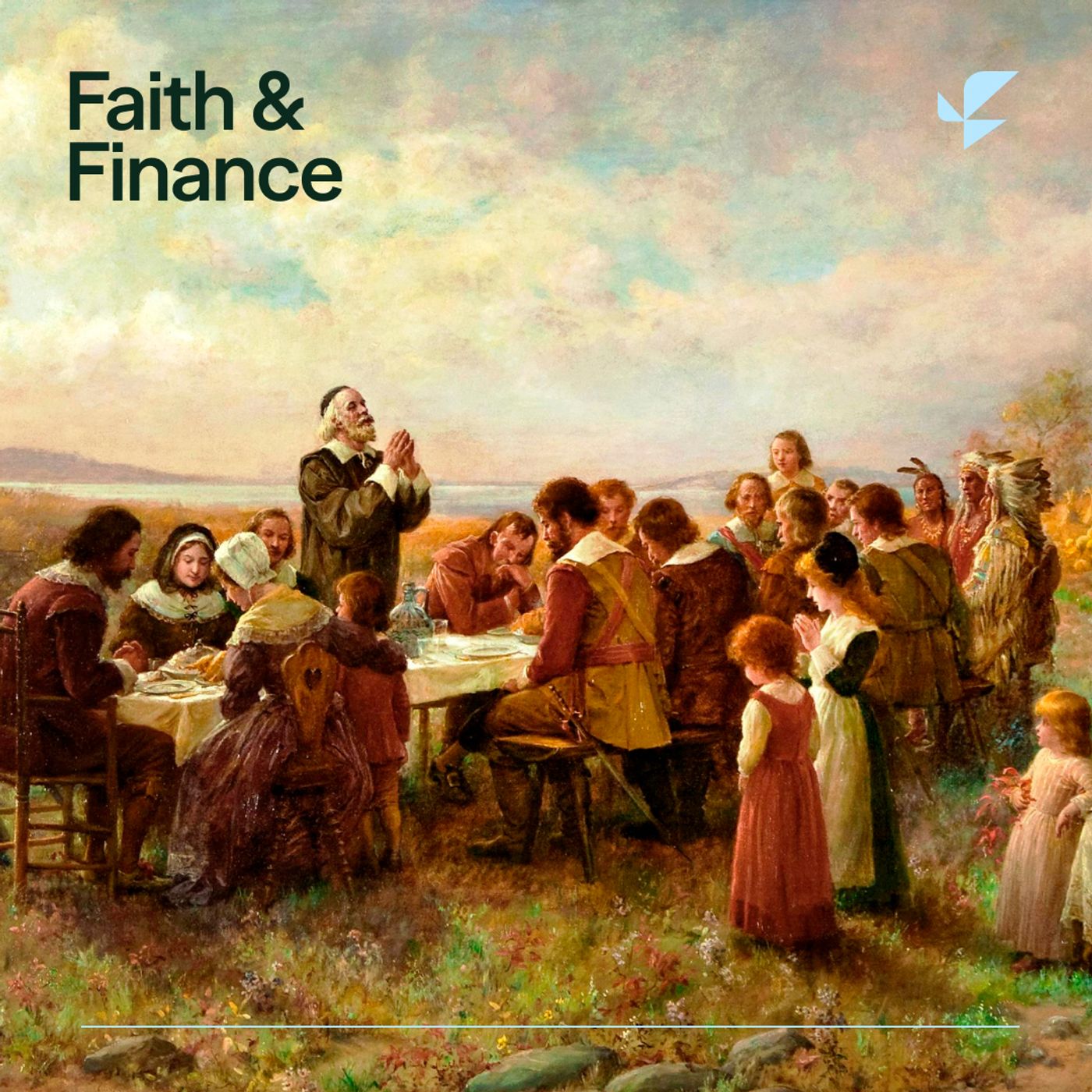
The Story of Thanksgiving
Nov 26, 2026 · 24m
Thanksgiving is a time to gather with family and friends, count our blessings, and thank God for His faithfulness. But the story behind one of America's most cherished traditions began not with...
Passing On Relational Wealth with Sharon Epps
Nov 25, 2026 · 24m
When we think about leaving an inheritance, we often focus on financial assets—savings, investments, property, and other resources we hope to pass on to the next generation. But preparing the next...

Giving Within Your Means
Nov 24, 2026 · 24m
Scripture calls us to be generous, open-handed, and willing to sacrifice for others. But generosity should never become an excuse for neglecting the responsibilities God has already placed in our...

Love Good with Stephen Jackson
Nov 23, 2026 · 24m
Biblical stewardship reaches far beyond what we give away. It includes our work, our investments, and everything God has entrusted to us. But have you ever stopped to consider whether the money you're...

Count Your Blessings: The Power of Gratitude
Nov 20, 2026 · 24m
In 1897, hymn writer Johnson Oatman Jr. penned the words to a beloved gospel song that continues to encourage Christians more than a century later: Count Your Blessings.Throughout his lifetime, Oatman...

The Hidden Retirement Benefits of an HSA with Mark Biller
Nov 19, 2026 · 24m
Healthcare expenses can take a significant bite out of your budget. But what if there were a way to prepare for those costs while reducing your taxes and building savings for retirement? That's...
Take these sermons with you.
Follow Faith & Finance in the Getsermons app to get every new sermon, build playlists, and pick up right where you left off.

