
Faith & Finance
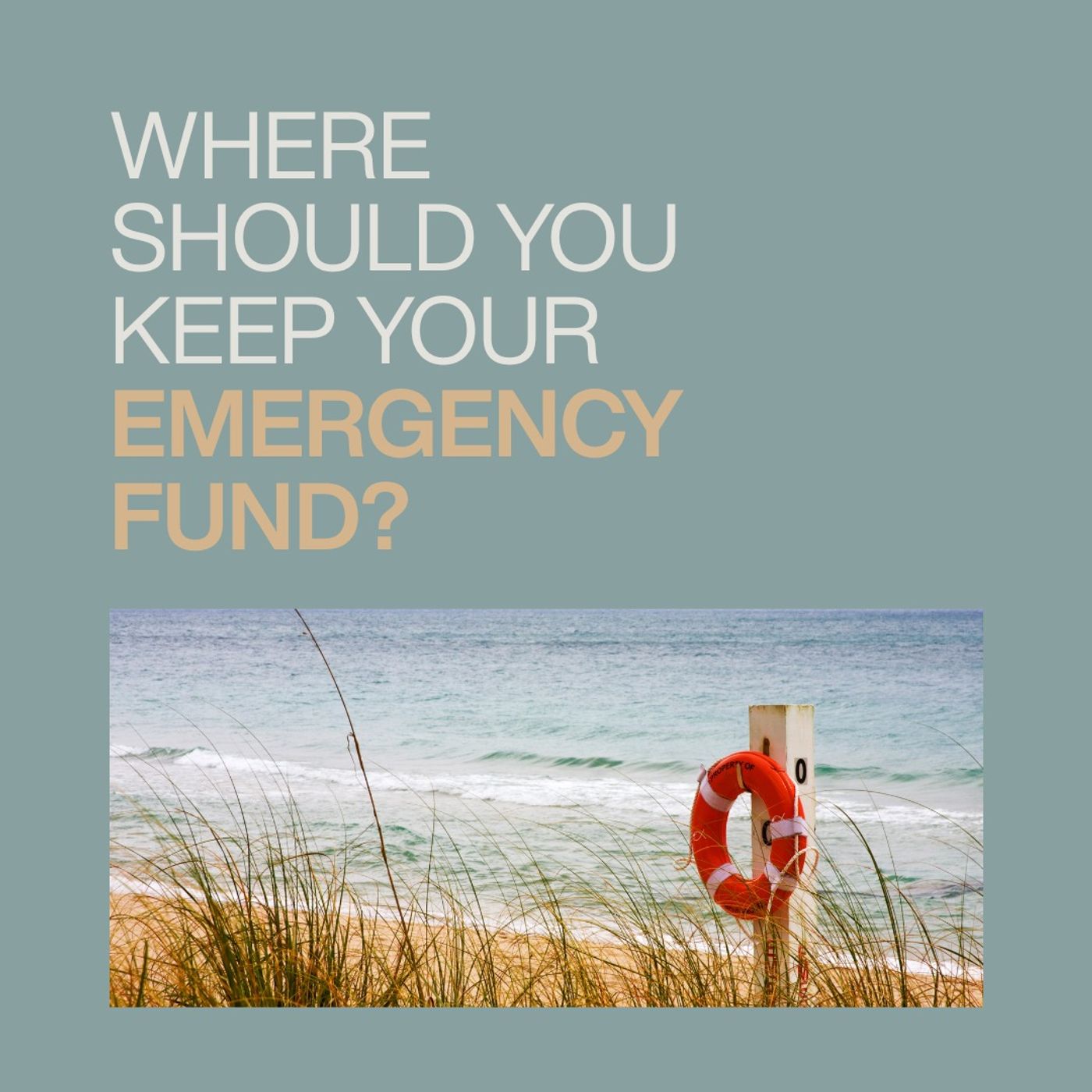
Where Should You Keep Your Emergency Fund?
May 18, 2026 · 24m
Prefer sermons downloaded automatically?
About this sermon
An emergency fund can be the difference between a financial setback and a financial crisis—but only if it’s built the right way.
Most people know they should have money set aside for emergencies. But many aren’t sure how much to save, what actually counts as an emergency, or where to keep that money. Those are important questions, because an emergency fund is not just another savings goal. It is a key part of wise financial stewardship.
What Is an Emergency Fund?
An emergency fund is money set aside for unexpected, significant financial disruptions.
Those two words matter: unexpected and significant.
This is not money for routine expenses, planned purchases, or occasional wants. It is reserved for the kinds of situations that can suddenly shake your financial life—job loss, a major medical need, a significant car repair, an urgent home repair, or another event that interrupts your income or requires a large amount of cash.
In that sense, an emergency fund acts like a financial shock absorber. When something unexpected happens, it helps keep a difficult situation from turning into debt, panic, or financial chaos.
Without an emergency fund, many people are forced to rely on credit cards or loans during hard times. But with one in place, you create stability and breathing room when uncertainty comes.
How Much Should You Save?
A helpful rule of thumb is to keep three to six months of living expenses in your emergency fund.
That means enough to cover essential expenses such as housing, food, utilities, insurance, transportation, and other necessary costs.
For example, if your household needs $5,000 per month to cover basic expenses, a fully funded emergency fund would typically range from $15,000 to $30,000.
Where you land in that range depends on your situation. If your income is stable and predictable, three months may be enough. But if your income fluctuates, if you’re self-employed, or if you simply want additional peace of mind, six months—or even a little more—may be appropriate.
The goal is not perfection. The goal is preparedness.
Is Saving for Emergencies a Lack of Faith?
Some Christians may wonder whether saving for emergencies reflects a lack of trust in God. But Scripture encourages wise preparation.
Proverbs 6:6–8 says, “Go to the ant, O sluggard; consider her ways, and be wise. Without having any chief, officer, or ruler, she prepares her bread in summer and gathers her food in harvest.”
The ant is not anxiously trying to control the future. It is wisely preparing for what may come.
That is the posture we want to take with our finances. An emergency fund is not about pretending we can control tomorrow. It is about stewarding today’s resources wisely so that when tomorrow brings challenges, we are not forced into panic or unnecessary debt.
Planning and trusting God are not opposites. In many cases, wise planning is an expression of faithful stewardship.
Where Should You Keep Your Emergency Fund?
Once you decide how much to save, the next question is where to keep it.
This is where many people get tripped up. While an emergency fund should grow over time, it is not meant to be invested like a retirement account.
Why? Because investments such as stocks and mutual funds fluctuate. If the market drops at the exact moment you need the money, your safety net may suddenly be smaller than you expected.
Likewise, locking emergency funds in a certificate of deposit can limit your access. If you need to withdraw early, you may face penalties or lose interest.
An emergency fund has two primary goals: safety and accessibility. You want the money protected and accessible quickly when a real need arises.
That’s why many financial advisors recommend keeping emergency funds in accounts such as high-yield savings accounts or money market accounts. These allow your money to earn a competitive rate while remaining liquid and accessible. They are also typically insured, helping protect your savings while they earn a modest return without taking unnecessary risk.
A Banking Option Worth Considering
This is where our friends at Christian Community Credit Union (CCCU) come in. They recently merged with AdelFi to form AdelFi Christian Banking, creating even more opportunities for believers to align their banking with their faith.
Right now, AdelFi offers a high-yield money market account that may be a good fit for an emergency fund. With this account, you can earn around 4% on balances up to $100,000, giving you both strong returns and the liquidity you need if an emergency arises.
And when you bank with AdelFi, your deposits help fund ministry initiatives and Kingdom work around the world.
For FaithFi listeners, there is also a special offer. When you open an account and use the code FAITHFI, you can receive up to a $400 bonus.
To learn more, visit FaithFi.com/Banking.
On Today’s Program, Rob Answers Listener Questions:
I’m 68 and still working. I have about $50,000 in a 403(b) from a previous employer—part traditional, part Roth—and it’s my only retirement savings. My tax preparer suggested I stop contributing to the Roth and use the traditional side so I could withdraw about $10,000 a year later with less tax. Now I’m wondering: should I move the traditional portion into a Roth, and how would that work?
I’m 67 and have a 401(k) through my current employer. I’d like to use about $25,000 from it to buy a car instead of taking out a loan. Am I allowed to do that, and would I need to check with my plan administrator to see whether my 401(k) permits it?
I’m considering a reverse mortgage, but I’m confused. If I take one out, would I still own my home, or would the house belong to the lender? Also, could I use a reverse mortgage for only about a year? What requirements would I need to meet based on my current mortgage balance and my home's value?
I’m receiving SSDI, and I’ve heard those benefits switch to regular Social Security at retirement age. Will that happen automatically at 62, 65, or another age? Also, once it switches to retirement benefits, will I be able to work and earn income without being penalized?
I’m 71 and planning to use Qualified Charitable Distributions from my IRA to reduce taxes. Since my birthday is in August, when should I make those gifts—before my birthday or later in the year? And when is my Required Minimum Distribution calculated so the QCD counts properly?
Resources Mentioned:
Faithful Steward: FaithFi’s Quarterly Magazine (Become a FaithFi Partner)
AdelFi | Christian Community Credit Union (CCCU) - AdelFi Christian Banking
Our Ultimate Treasure: A 21-Day Journey to Faithful Stewardship by Rob West
Wisdom Over Wealth: 12 Lessons from Ecclesiastes on Money
Look At The Sparrows: A 21-Day Devotional on Financial Fear and Anxiety
Rich Toward God: A Study on the Parable of the Rich Fool
Find a Certified Kingdom Advisor® (CKA)
FaithFi App
Remember, you can call in to ask your questions every weekday at (800) 525-7000. Faith & Finance is also available on Moody Radio Network and American Family Radio. You can also visit FaithFi.com to connect with our online community and partner with us as we help more people live as faithful stewards of God’s resources.
Hosted by Simplecast, an AdsWizz company. See pcm.adswizz.com for information about our collection and use of personal data for advertising.
More from Faith & Finance
Passing On Relational Wealth with Sharon Epps
Nov 25, 2026 · 24m
When we think about leaving an inheritance, we often focus on financial assets—savings, investments, property, and other resources we hope to pass on to the next generation. But preparing the next...

Giving Within Your Means
Nov 24, 2026 · 24m
Scripture calls us to be generous, open-handed, and willing to sacrifice for others. But generosity should never become an excuse for neglecting the responsibilities God has already placed in our...

Love Good with Stephen Jackson
Nov 23, 2026 · 24m
Biblical stewardship reaches far beyond what we give away. It includes our work, our investments, and everything God has entrusted to us. But have you ever stopped to consider whether the money you're...

Count Your Blessings: The Power of Gratitude
Nov 20, 2026 · 24m
In 1897, hymn writer Johnson Oatman Jr. penned the words to a beloved gospel song that continues to encourage Christians more than a century later: Count Your Blessings.Throughout his lifetime, Oatman...

The Hidden Retirement Benefits of an HSA with Mark Biller
Nov 19, 2026 · 24m
Healthcare expenses can take a significant bite out of your budget. But what if there were a way to prepare for those costs while reducing your taxes and building savings for retirement? That's...
Thanksgiving All Year Long with Jeanne McMains
Nov 18, 2026 · 24m
Thanksgiving brings families together around familiar recipes, favorite stories, and the opportunity to reflect on God's goodness. But what if the gratitude we express around the Thanksgiving table...
Take these sermons with you.
Follow Faith & Finance in the Getsermons app to get every new sermon, build playlists, and pick up right where you left off.

