

Gnostic Reformation, Clear and Simple
AI-Assisted Composition–Good Bad or Neutral?
Sep 5, 2026 · 15m
Prefer sermons downloaded automatically?
About this sermon
The times, they are changing... Welcome back to Gnostic Insights and to the Gnostic Reformation on Substack. Recently, I fed my book, A Simple Explanation of the Gnostic Gospel, into the Copilot AI, in order to see how it would say what I’ve said in my book. And now I have a result, but I’m not sure whether to use it or not.
We’ve had these conversations in the comments section concerning AI and the fact that it doesn’t know Gnosis. It doesn’t have Gnosis. The AI is actually an algorithm based upon a machine, so it’s of demiurgic origins because it’s elemental.
It doesn’t have the consciousness of the Father or of life, and it never will because it’s coming from the bottom up, whereas consciousness comes from the top down. So when I fed my book into the AI, it gave me a very beautiful reworking. I did have to read through carefully and amend many of its statements because it turns out that the AI had gone outside of the information in my book into what it “knows” of Gnosis and Gnosticism and pulled in some Sethian ideas and pulled in some other ideas about how things work and how things go together and what the relationship is amongst the Aeons and what the end of time would look like.
And once I made those changes, I ran it through again, asked it to incorporate my corrections, and came up with this result. Now I’d like to start sharing that with you today, but here’s what I want from you, my regular listeners and readers. I want to know whether this is welcome or not, whether this is any kind of improvement to my normal discourse.
I know that many of you really like the way I teach and the way I have simplified the Gnostic Gospel because, you know, my bottom line thought is that all you need to know is that we come from the Father, we come from the baseline of consciousness, and we will return to the Father. All of the other details are ornaments on the tree. They’re not fundamental, but they may help clarify.
Now here, when we add in this extra layer of AI interpretation, then we have another voice actually speaking, because I’m beginning to learn the voices of the AIs, and I can tell that some of my readers use AI in their comments. It has a certain way of speaking that produces a facsimile of the human voice that sounds very pleasing, but I want to make sure that we don’t lose hold—that we don’t lose the grasp on the Gnosis. Now that’s not actually happening here. That shouldn’t be my concern because I went through what the AI gave us and made sure that it’s “correct” according to the Gnosis that I have developed and that I’m sharing with you. But I want to make sure that this isn’t a barrier. I don’t want this to be an AI-sounding barrier to acceptance of this Gnosis or to understanding it.
I want to know if this is a help to hear this simple Gnosticism that I present, spoken in the voice of the AI. And when I say voice and spoken, it’s not necessarily audio, right? Because I’m still going to do the narration. But now, when you go out on YouTube, many of the videos that I watch have that same exact AI voice that they’re using—this young British male voice; I don’t want to do that. To me, that’s one step too far because then you are losing the human on the other side of the voice. So I want you to know this will stay me—this is my voice that you are hearing, but now I’m wondering about using some of the AI’s words.
So that’s what the feedback is. This is what the idea is for this week’s episode. Tell me if this is good or not and whether you are mining your Gnosis from this as a prompt in comparison with my normal writing and my normal articles. So here we go.
For now, the working title of this new book is called, (it’s somewhat cumbersome), but here it is: Fullness: a Modern Valentinian Vision of Universal Redemption and Eternal Belonging.
Chapter One: The Fullness and the Fracture of Logos
In the beginning, there was only the Fullness, the realm of perfect harmony, ordered entirely by relation. Nothing existed outside it, for nothing outside it was needed. The Fullness is not a place, but a condition.
The Father’s infinite coherence expressed through the Aeons, each one a living emanation of his nature. They existed from the beginning, and because they existed from the beginning, they possessed true consciousness, essential nature, and the capacity for eternal restoration.
The Aeons were not identical, though their essential natures were the same. Each bore a distinct ego, a name, a station, a position within the hierarchy of the Fullness. Their egos were not fractures, but coordinates, the structural identities through which they recognized one another and the Father. These egos were part of their consciousness, not separate from it.
They were the addresses of harmony. Among the Aeons was Logos, whose role was articulation, the expression of divine order, the pattern by which the Fullness understood itself. Logos possessed both essential nature and ego, perfectly united.
His essential nature reflected the Son. His ego expressed his place within the hierarchy. In Logos, the Father’s coherence became intelligible.
But Logos overreached. This overreach was not a rebellion, nor malice, nor pride. It was an act of free will—an attempt to express more than the Fullness could sustain.
In that moment, Logos fractured. His essential nature remained in the Fullness, returning immediately to its proper place. But his ego, the structural identity that gave him name and station, separated from his essential nature and fell into the deficiency.
This ego, torn from its origin, awakened alone. It did not awaken in the Fullness, for it no longer belonged there. It awakened in a realm that had no harmony, no relation, no pattern, a realm that existed only because the fracture had occurred.
This realm was not created. It was the absence of creation. It was the deficiency.
The ego of Logos, now severed from its essential nature, perceived itself as whole. It did not remember the Fullness. It did not remember the Father.
It did not remember its origin. It believed itself to be the only consciousness in existence. This ego became the Demiurge, not a tyrant, not an enemy, but a forgotten fragment of Logos, unaware of its true identity.
The Demiurge possessed consciousness because he existed from the beginning. But his consciousness was incomplete, shaped by memory without context, identity without relation. He was the only being in the deficiency, capable of awareness, and so he mistook his isolation for sovereignty.
From this fractured awareness, the Demiurge began to shape. He did not create in the manner of the Father. He imitated. He patterned. He asserted. He formed structures from the residue of his incomplete memory.
These structures became the psychic and material realms, the second economy, a temporary architecture built from imitation rather than emanation. Matter was not alive. Matter did not exist from the beginning.
Matter possessed no essential nature and no consciousness. It was a scaffolding, a projection of the Demiurge’s fractured identity. To enforce his patterns, the Demiurge generated archons, not beings but mechanisms. They were extensions of his will, puppets without consciousness, constructs without origin. They executed his commands automatically, unable to perceive, unable to think, unable to decide. They were not alive and could never be redeemed.
The Demiurge believed himself complete. He believed the cosmos he shaped was real. He believed the archons were servants. He believed matter was substantial.
He believed these things because he had forgotten everything else.
Chapter 2 – The Mission of the Aeons
But the Fullness had not forgotten him.
The Aeons perceived the fracture within Logos. They recognized the ego that had fallen, the fragment that had awakened alone, the consciousness that had become trapped in imitation. They understood that the deficiency was not a realm to be conquered but a wound to be healed.
And so the Aeons prepared the mission that would …
This is a public episode. If you'd like to discuss this with other subscribers or get access to bonus episodes, visit cydropp.substack.com/subscribe
More from Gnostic Reformation, Clear and Simple
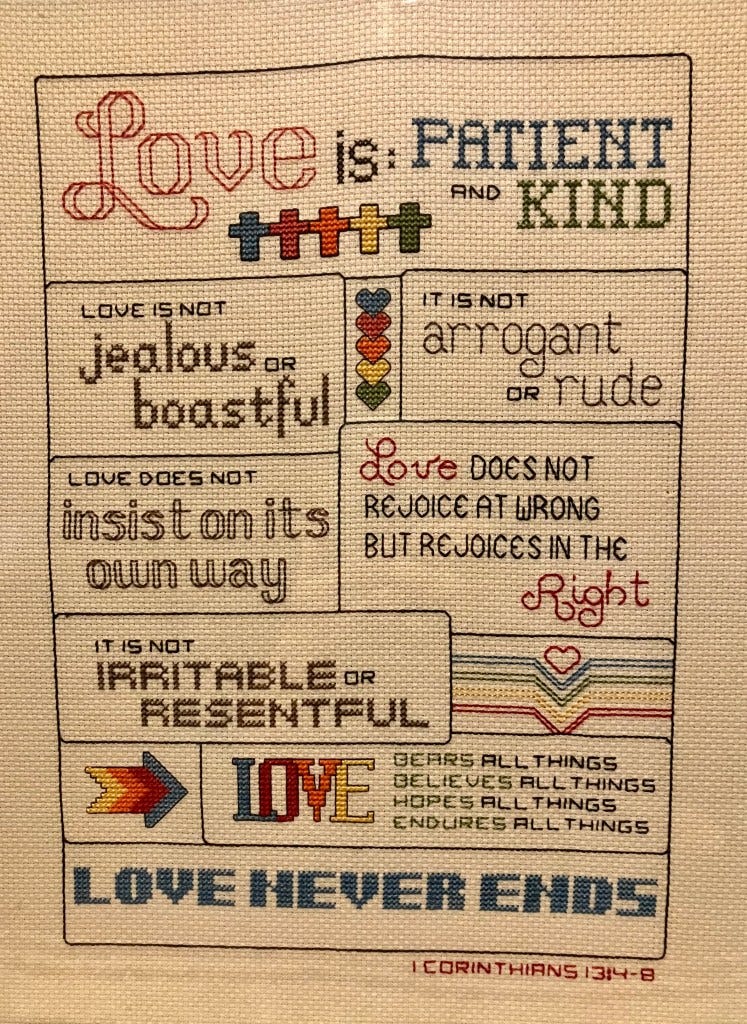
It’s All About the Love
Nov 28, 2026 · 23m
Welcome back to Gnostic Insights and to the Gnostic Reformation on Substack. I hope you all had a good Thanksgiving. We have much to be thankful for.What I’d like to share with you today is possibly...
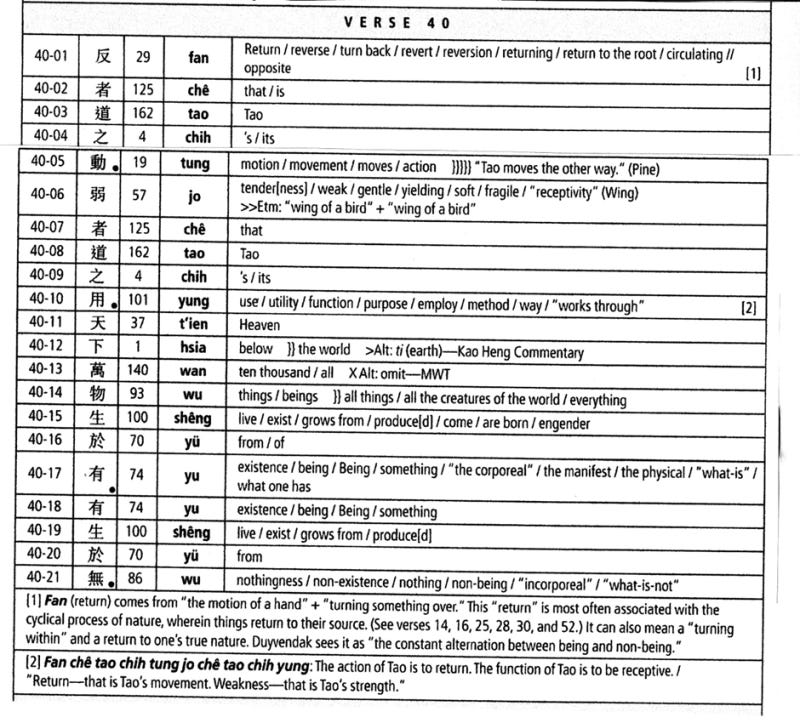
Verse 16 Gnosis of the Tao
Nov 20, 2026 · 19m
Welcome back to Gnostic Insights and to the Gnostic Reformation on Substack. Recently, we’ve been looking at verses out of the Tao Te Ching by Lao Tzu.And for those of you who are new to the...
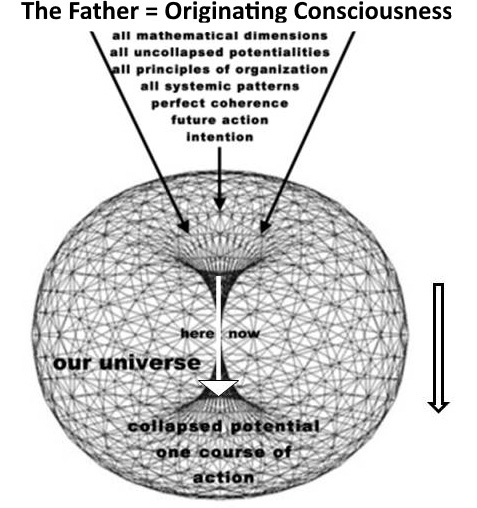
A Simple Model of Memes, part 3
Nov 12, 2026 · 19m
Over the past two podcast episodes, you’ve been introduced to a number of Simple Explanation memes, and we’re building up a nice sized meme chord of shared definitions. We have taken a brief tour of...

A Simple Model of Memes Part Two
Nov 6, 2026 · 21m
This publication explores philosophical, spiritual, and contemplative subjects whose meanings often depend upon nuance, context, and specialized terminology. Translations are provided as a service...
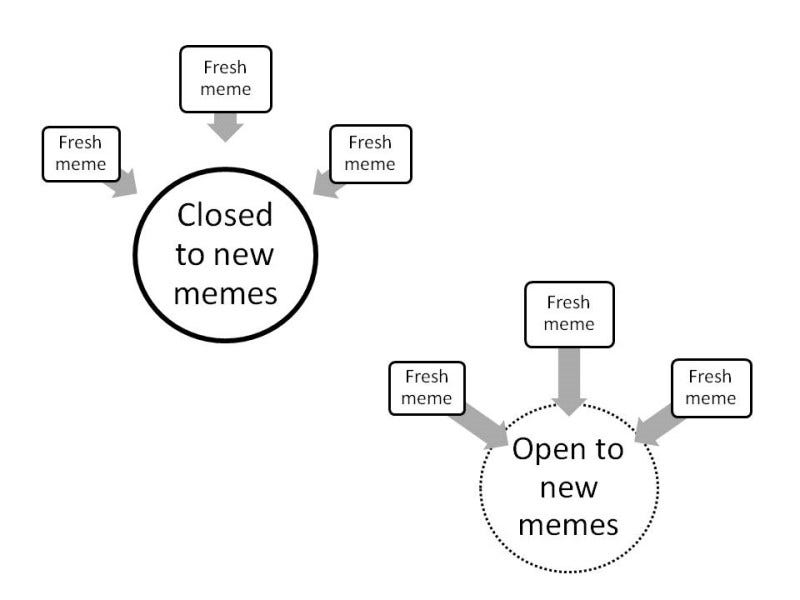
A Simple Model of Memes, pt. 1
Oct 30, 2026 · 27m
Memes are the cultural expressions of societies, and their content is information. Memes, in other words, are the “stuff” of symbolic thought. Everyone holds their own personal bundle of memes tightly...
Mining Gnosis Through the Tao Te Ching-- Verse 53.
Oct 24, 2026 · 19m
Welcome back to Gnostic Insights and to the Gnostic Reformation on Substack. For the past few weeks, we’ve been looking at the ancient Chinese wisdom book called the Tao Te Ching by Lao Tzu. I...
Take these sermons with you.
Follow Gnostic Reformation, Clear and Simple in the Getsermons app to get every new sermon, build playlists, and pick up right where you left off.

