

Gnostic Reformation, Clear and Simple
As Below, So Above
Sep 17, 2023 · 33m
Prefer sermons downloaded automatically?
About this sermon
The manner by which we are mining gnosis often involves using analogies between what is known and what is less tangible—”as below, so above” provides a handy tool for inferring otherwise undetectable aspects of the spiritual dimension. If we start with the premise of a singular consciousness that pre-exists everything that came after it, then we can follow the genesis of our universe from that consciousness step-by-step. In today’s episode, we are going to map aspects of our human personalities onto the Gnostic Gospel to see what we can infer about ourselves down here below and about the forms of consciousness above.
So, what do we “know” by now? We generally begin at the beginning and build outward from there. So we start with consciousness. We know that all life forms are conscious, and we infer from that a ground state of consciousness, and that we call the Father. The Father, or consciousness itself, is not the same as having thoughts. It is simply self-awareness. This is the no-thought state that people seek through meditation.
Then we say that consciousness, or the Father, or what we call in the Simple Explanation—the Metaverse—had a thought. This thought is a ripple in consciousness that rises out of the undifferentiated state of no-thought. The Gnostic Gospel calls this thought the Son. The Son reflects the consciousness of the Father in a circumscribed form. Circumscribed means contained, like drawing a circle around something. Yet, the Son is not lesser than the Father, because there is no size or distance here; and there is no time or space in the eternal omnipresent.
The Tripartite Tractate says that no sooner did the Son arise, that it had its own thought which differentiated into every possible thought, like rays of light shooting out from a central star. The Son mirroring the creative act of the Father gave rise to himself in the form of countless thoughts. These thoughts became aware of themselves in the same manner that the Son became self-aware. The moment they became self-aware, they named themselves. And the moment they named themselves, they sorted themselves into a hierarchy of relationships with one another.
These thoughts of the Son are called Aeons, and the hierarchy into which they arranged themselves is called the Fullness of God, also known as the Pleroma. The Aeons consist of names, stations, ranks, duties, and locations. This is another way of saying that the Aeons form a kind of geometry of functions and forms that all know where and what and who they are in relationship with each other. Within the hierarchy of the Fullness, all Aeons have their own identities as well as their self-assigned locations and functions. Everyone knows who they are and where they stand in their intermingled ecology. Each Aeon occupies a unique place and perspective within the union of the Fullness. No one is left out and no one is more important than any other Aeon of the hierarchy.
The Fullness reflects the entirety of the Son. They co-exist and overlap. The Son wears the Fullness as a garment, and the Fullness wears the Son, in the same manner that our own bodies can be said to be a garment for our souls—our bodies contain and co-exist with our selves. The Fullness is a singular entity composed of countless Aeons, in the same way that our bodies are singular organism composed of countless cells.
The Aeons sat in a unified state. “All for one and one for all!” is their motto. Their main function is to love and to be loved. They love each other; they love the Son. The Aeons love the Father and gave constant glory to the Father, so happy were they to be alive. The Aeons yearned for communion with the Father for they recognized themselves as the fruit of the Father. In the same manner that blood flows throughout our bodies, delivering oxygen and nutrients to every cell, the Holy Spirit of the Father’s consciousness flowed through the Aeons of the Fullness, constantly feeding them love.
Although the Aeons dwelt within the single body of the Fullness, they were each an independent self. Their immense variety required them to work together and remain in full agreement, for only through their union could they approach the Father’s greatness. It was only in their unanimity that they reflected the perfection of the Son, and only the Son had direct access to the Father. If they were not in complete agreement, then they could not add up to the Fullness of the Son.
It was through giving glory to the Father that the Fullness remained unified as one body. Giving glory means focusing upon an object with adoration and love. The Tripartite Tractate tells us that there was a simple set of rules that insured the unanimity of the Fullness. In order to remain aligned with the Father, the Aeons needed to glorify only the Father and never themselves. The Aeons were not to glorify their neighbors, neither those beside them nor those above them. They were not to glorify the Fullness as a whole. Rather their focus was to remain upward, giving glory only to the Father. Furthermore, each Aeon was to give glory from its own location in the hierarchy, with its own talents and capabilities, and not borrowing the talents of its neighbors.
I know we have covered this territory before on Gnostic Insights. But bear with me and we will soon be able to relate this information to ourselves and our lives here below.
Our universe began with the Fall.
The Tripartite Tractate calls the Aeon-who-Fell, “Logos.” That is a significant name. Logos is defined as the principle of order and reason. If we think of the logos within ourselves, we would align logos with our mind’s reasoning capabilities, including the ability to apply logic and make inferences.
The Tripartite Tractate says that Logos was the final Aeon produced when the Aeons sorted themselves into their hierarchical arrangement of the Fullness of God. This Aeon, Logos, contained within itself not only the ability to reason, it also contained all of the traits and abilities of the Fullness, wrapped into a single package. In terms of the Simple Explanation, we would say that Logos was the perfect fractal of the Fullness, carrying within itself all of the knowledge and functions of all of the other Aeons.
The Bible’s Gospel of John identifies this Aeon called Logos as the Son, but this is an error, according to Gnostic cosmology. As we have just laid out in the cosmology, the Son is the first fruit of the Father, and the Son is the father of the Fullness. The Aeon who Fell is but one Aeon out of the Fullness. Yes, you can see how Logos reflects the Son, being a fractal of the Fullness of the Son, however, it is only a fractal, an iteration of the Son in a lesser form, not to be confused with the Son, who precedes it and is more exalted than the Aeons. The Aeon called Logos carries fractal copies of all the Aeons within itself, but these aeonic copies are not each self-aware in the way the Aeons themselves are self-aware. The aeonic copies contained within the Aeon known as Logos are not themselves conscious; they are merely fractal reflections of the hierarchy, but lacking the consciousnesses of the Aeons. By way of analogy, think of the fractals of the imitation like two-dimensional reflections of a three-dimensional world as seen in a mirror; a resemblance of the Aeons only on the surface, lacking the depth of consciousness and thought.
The Tripartite Tractate tells us that the Aeon known as Logos yearned to reunite with the Father, as did all of the Aeons. But rather than sitting with the others in the Fullness, giving glory according to the rules of unanimity, Logos had a thought that deviated from the rules. Logos had its own, singular, bright idea. This idea came to be known as the “presumptuous thought” in Gnostic cosmology. “Presumptuous” means “failing to observe the limits of what is permitted or appropriate.” What Logos decided to do was to reach out to the Father all on its own. In other words, Logos mistook its own personal …
This is a public episode. If you'd like to discuss this with other subscribers or get access to bonus episodes, visit cydropp.substack.com/subscribe
More from Gnostic Reformation, Clear and Simple
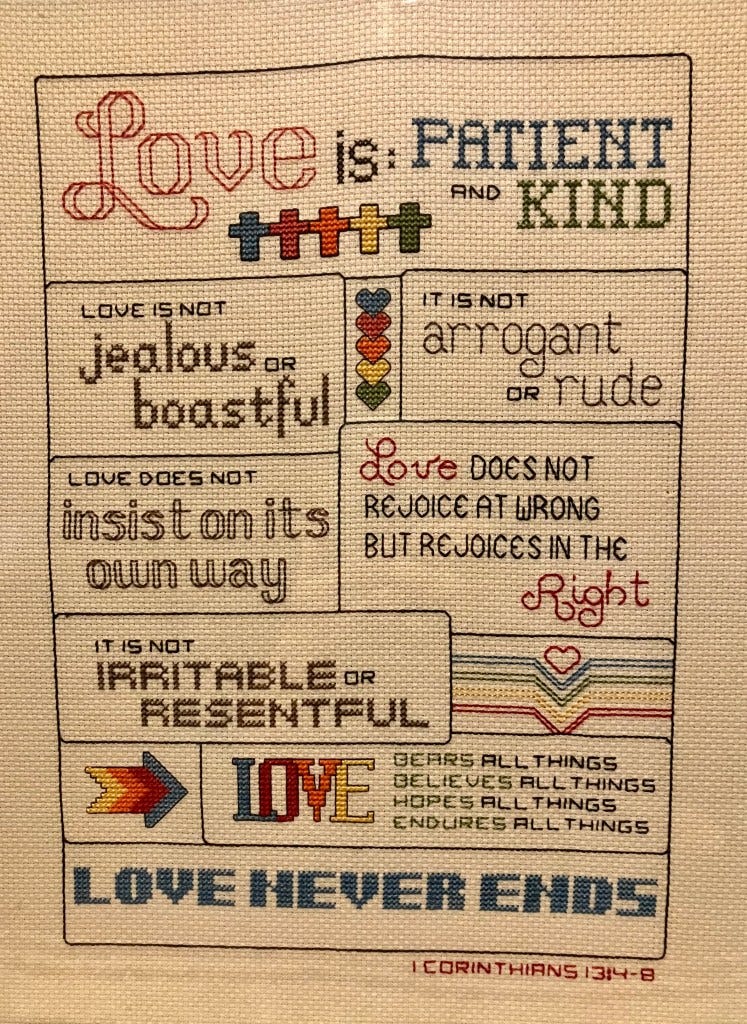
It’s All About the Love
Nov 28, 2026 · 23m
Welcome back to Gnostic Insights and to the Gnostic Reformation on Substack. I hope you all had a good Thanksgiving. We have much to be thankful for.What I’d like to share with you today is possibly...
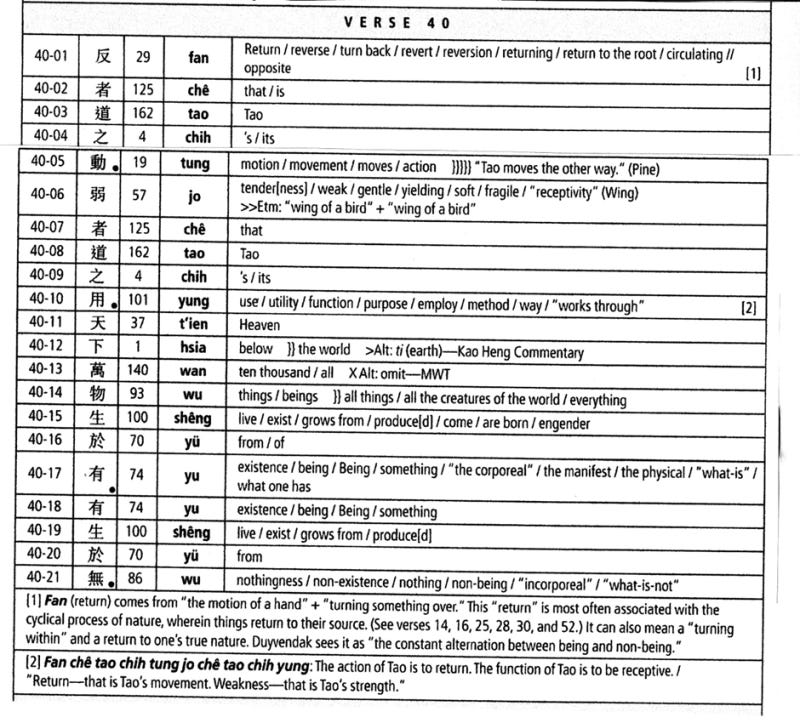
Verse 16 Gnosis of the Tao
Nov 20, 2026 · 19m
Welcome back to Gnostic Insights and to the Gnostic Reformation on Substack. Recently, we’ve been looking at verses out of the Tao Te Ching by Lao Tzu.And for those of you who are new to the...
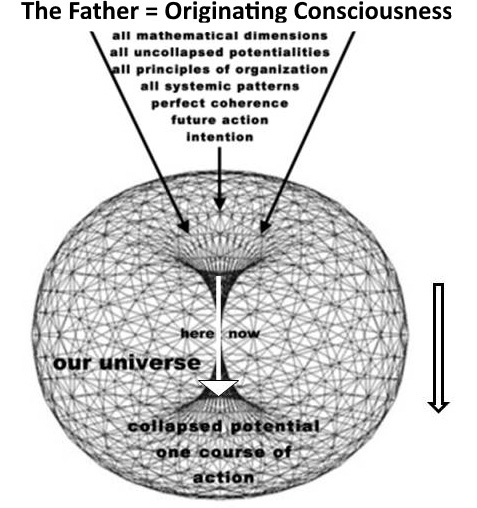
A Simple Model of Memes, part 3
Nov 12, 2026 · 19m
Over the past two podcast episodes, you’ve been introduced to a number of Simple Explanation memes, and we’re building up a nice sized meme chord of shared definitions. We have taken a brief tour of...

A Simple Model of Memes Part Two
Nov 6, 2026 · 21m
This publication explores philosophical, spiritual, and contemplative subjects whose meanings often depend upon nuance, context, and specialized terminology. Translations are provided as a service...
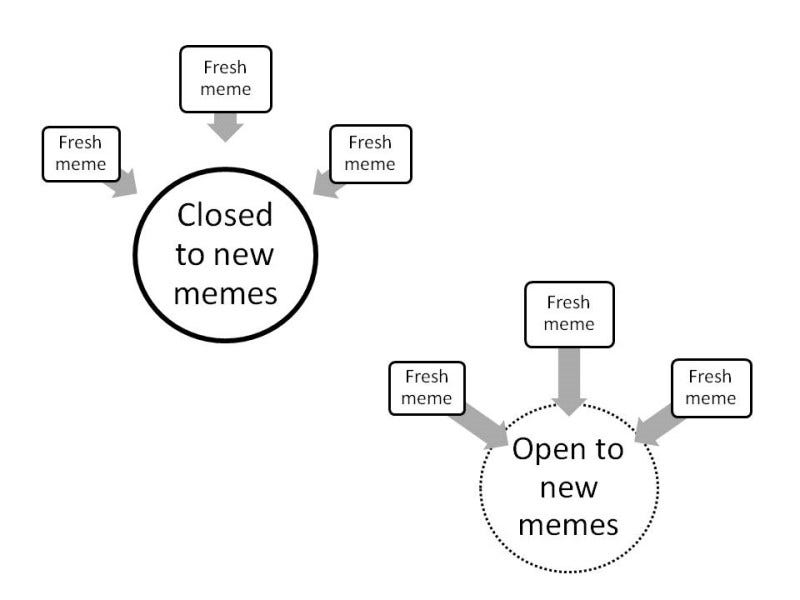
A Simple Model of Memes, pt. 1
Oct 30, 2026 · 27m
Memes are the cultural expressions of societies, and their content is information. Memes, in other words, are the “stuff” of symbolic thought. Everyone holds their own personal bundle of memes tightly...
Mining Gnosis Through the Tao Te Ching-- Verse 53.
Oct 24, 2026 · 19m
Welcome back to Gnostic Insights and to the Gnostic Reformation on Substack. For the past few weeks, we’ve been looking at the ancient Chinese wisdom book called the Tao Te Ching by Lao Tzu. I...
Take these sermons with you.
Follow Gnostic Reformation, Clear and Simple in the Getsermons app to get every new sermon, build playlists, and pick up right where you left off.

