
Gnostic Reformation, Clear and Simple
Ego, Self, and Body
Apr 26, 2025 · 28m
Prefer sermons downloaded automatically?
About this sermon
Today’s episode will discuss the difference between ego and Self. These terms are often used interchangeably, but at least as far as I use them in my writing, the ego is very much different from what we call the Self, and that’s a Self with a capital S. This episode reviews a couple of articles from the Simple Explanation blog from 2018 and 2019 during the time period I began realizing my gnosis and before launching this Gnostic Insights podcast. A version of this episode was first broadcast in 2021.
This episode clears up some confusion about our various sub-selves. We are not just one big clump of consciousness but are made up of different sub-selves. In other words, who are you? When you say “I” what is that I? Who is that me? What is the difference between your ego and your Self or what people call your soul and spirit? Who runs the show? What’s the difference between being selfish and selfless? How is ego related to selfishness? And finally, is having a strong ego a bad thing?
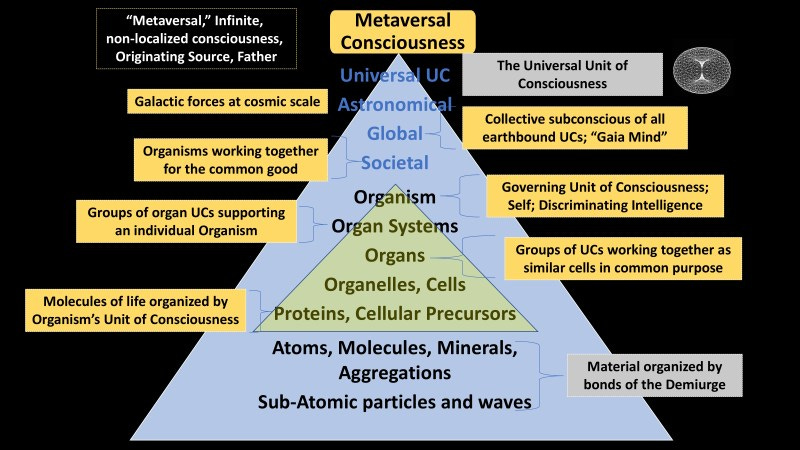
According to the Simple Explanation, our bodies are comprised of countless units of consciousness that are all working to keep us alive. Every particle and molecule, every cell and body organ from your skin on in works to keep you alive and functioning. Every piece of you knows how to do its job, and all of your pieces coordinate their work to keep you up and running. In Gnostic terms we say that these units of consciousness are all Second Order Powers from the Fullness above. At least, that’s true of the living, meat portion—the cells, the body organs. Below that the particles, molecules, elements, and minerals are not independently conscious—they are extensions of the Demiurge. They lack life. The Demiurge controls and runs the material portion of our cosmos, but the cells on up are part of our Second Order Powers that bring life into the universe.
When any part of you breaks down and no longer does its job, it either has to be replaced by fresh parts through cell regeneration or by other means, like surgery. When major body parts fail, your physical body dies. This article that I’m reading from has a diagram of a pyramid, and the pyramid is broken down into the ascending order of the hierarchy, up from the material particles of the Demiurge, on up through the cells and you, and then on up through the Father in Heaven. It’s a meta-diagram of existence that shows how your body is comprised of countless units of consciousness that work to keep your body alive and running smoothly.
You are not only that sole person you usually identify yourself with, but you are also every particle, molecule, cell and organ that makes up your body. The ego is the mind that arises from and watches over the trillions of parts that make up your physical body. The ego is only aware of the needs of your body, not the needs of others.
Our egos are inherited from the Aeons that make each of us a unique individual. You see, Aeons also have egos. The Tripartite Tractate says that the Aeons awakened to themselves by giving glory as One to the Father because it was the Father’s will that every unit of his consciousness should be self-aware. When the Aeons awakened to themselves they sorted themselves into a hierarchy of names, stations, positions, and duties. This identity within the Hierarchy of the Fullness is their Aeonic ego. Ego is not a negative term; it is only a signifier of who, how, and where they fit in with their neighboring Aeons. Their egos are their identities. We also gain our personal identity by way of our egos because that is what differentiates us from our shared and identical Selfs. It is our ego that bears our inherited and individual personality and talents, and we are each unique because we are each a unique combination of the Aeons that make us up.
Where our egos run into trouble is that, unlike the Aeons, we are plugged into this Demiurgic, material cosmos. This environment affects our otherwise pure, Aeonic inheritance with vices and other memes we pick up along the way and by the karma of our actions in this world. Our egos become shrouded by a collections of memes and karma that confuse us and throttle back our ability to connect with the Father and our Self.
The Self, on the other hand, is a singular unit of consciousness attached to your body, like the Raja riding atop an elephant. Unlike the ego, the Self identifies with the Universal Unit of Consciousness rather than with the body, and in Gnostic terms we would call that the Fullness of God. The Self is a perfect singular fractal of the Universal Unit of Consciousness and is oriented to the universe at large. After much contemplation and discussion with my brother, Bill, we have identified this Universal Unit of Consciousness to be identical with the Son of God. In Gnostic terms, the Son is the first extension of the originating Source of Consciousness known as the Father. And while the Father is illimitable and unapproachable, the Son is a monad who brings that consciousness forward out of the Father and into a form we can begin to relate to and understand. It is the Son who differentiates into variables and individuated thoughts and plans.
Your Self is interested in others and works according to the Simple Golden Rule. We have discussed the Golden Rule many times here at Gnostic Insights. You can review all of the seminal articles of the Gnostic Gospel at the homepage for Gnostic Insights under the tab “A Simple Explanation of the Gnostic Gospel.” If you are new to Gnostic Insights, I urge you to either buy the book or go to the tab to learn the terms we use here, including a full discussion of the Simple Golden Rule. Briefly, the Simple Golden Rule is reaching out to others with information, with assistance, and with love to build something together that no one can build on their own, working together on a single project that forms the next level up.
The reason your ego appears so selfish is that it is entirely concerned with you and your body’s needs. The ego functions at your organ level of consciousness. The ego helps you to translate the body’s physical needs into action. The body’s organ systems have their own mind, and that mind is your ego. Does your sexual organ system want sex? The ego will bring that about in the most selfish way. Does your digestive system want food? Your ego will make sure it gets food in the most selfish way possible. Does your nervous system crave excitement and stimulation, or perhaps quiet and rest? Your ego will make sure it gets it. The ego’s job is to care for and to feed the body whatever it wants, and too bad for everyone else. That’s their own ego’s job, to take care of their needs, not yours.
The Self, on the other hand, is other-oriented. The Self reflects a character of love called agape in Greek, or godly love. The Self, as I mentioned earlier, is like the raja sitting atop the elephant. It is not the elephant and all of its moving parts, but rather a singular unit of consciousness, me, I. The Self is a perfect fractal of the Universal Unit of Consciousness that ties our entire universe together into one organism. Your Self is akin to a single cell of the universe itself. Your Self‘s job is to connect to others following the law of the Simple Golden Rule.
And again, this is the Simple Golden Rule, which states that in order for units of consciousness to join and work together for the greater good, they need relevant information, they need to be willing to channel coherence from the metaverse, and they need to love one another. Selfless love comes from your Self fractal, which is a perfect reflection of the Universal Unit of Consciousness—the Son. We can also think of the Self fractal as the pleroma of the Father, or the Fullness of God. This is th…
This is a public episode. If you'd like to discuss this with other subscribers or get access to bonus episodes, visit cydropp.substack.com/subscribe
More from Gnostic Reformation, Clear and Simple
It’s All About the Love
Nov 28, 2026 · 23m
Welcome back to Gnostic Insights and to the Gnostic Reformation on Substack. I hope you all had a good Thanksgiving. We have much to be thankful for.What I’d like to share with you today is possibly...
Verse 16 Gnosis of the Tao
Nov 20, 2026 · 19m
Welcome back to Gnostic Insights and to the Gnostic Reformation on Substack. Recently, we’ve been looking at verses out of the Tao Te Ching by Lao Tzu.And for those of you who are new to the...
A Simple Model of Memes, part 3
Nov 12, 2026 · 19m
Over the past two podcast episodes, you’ve been introduced to a number of Simple Explanation memes, and we’re building up a nice sized meme chord of shared definitions. We have taken a brief tour of...

A Simple Model of Memes Part Two
Nov 6, 2026 · 21m
This publication explores philosophical, spiritual, and contemplative subjects whose meanings often depend upon nuance, context, and specialized terminology. Translations are provided as a service...
A Simple Model of Memes, pt. 1
Oct 30, 2026 · 27m
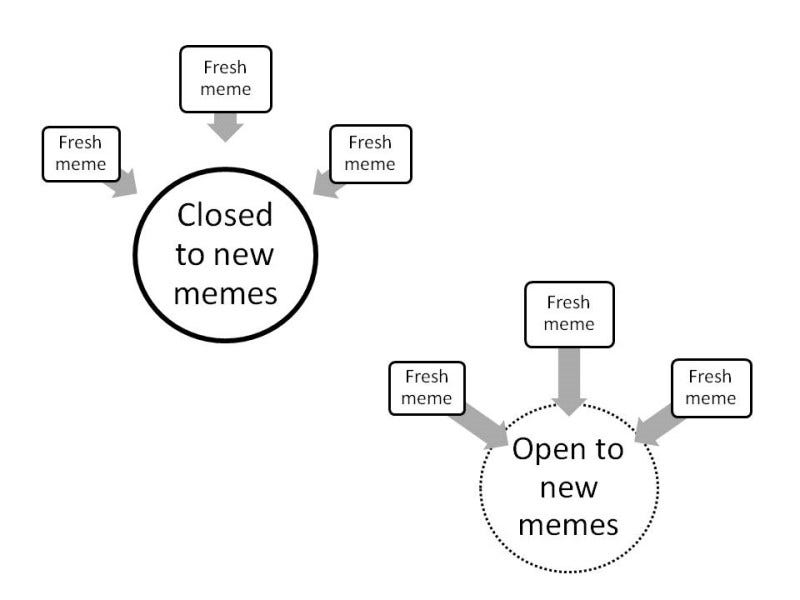
Memes are the cultural expressions of societies, and their content is information. Memes, in other words, are the “stuff” of symbolic thought. Everyone holds their own personal bundle of memes tightly...
Mining Gnosis Through the Tao Te Ching-- Verse 53.
Oct 24, 2026 · 19m
Welcome back to Gnostic Insights and to the Gnostic Reformation on Substack. For the past few weeks, we’ve been looking at the ancient Chinese wisdom book called the Tao Te Ching by Lao Tzu. I...
Take these sermons with you.
Follow Gnostic Reformation, Clear and Simple in the Getsermons app to get every new sermon, build playlists, and pick up right where you left off.

