
Gnostic Reformation, Clear and Simple
Gnostic Easter Message 2025
Apr 19, 2025 · 29m
Prefer sermons downloaded automatically?
About this sermon
In evangelical Christian circles, people have had a born-again experience where they have asked Jesus into their hearts to take over their lives. In our Gnostic terminology, we would say that this is a person’s acknowledgement of the Christ, and an invitation that invites the Third Order of Powers—the pleroma of the Christ—to come into ourselves to correct the mistakes that we have gained through the memes of the culture that surround us and clutter up our souls. Now, I know this all sounds like funny talk. It’s a little different than how we normally speak of Jesus Christ in evangelical circles, but I hope that if you’ve been following Gnostic Insights for any period of time, or if you’ve read the book, A Simple Explanation of the Gnostic Gospel, that you will understand what I’m saying. All I’m saying is exactly what is said in Christian doctrine about asking Jesus to come into your heart. It’s just a deeper explanation of how the process works.
It is not necessary to understand all of the steps in the Gnostic Gospel, because the only thing you really need to know is that we come from the Father and we will return to the Father. Christ is the mechanism by which that is accomplished. The Bible puts it this way:
11 For it is written:
“As I live, says the Lord,Every knee shall bow to Me,And every tongue shall confess to God.”
12 So then each of us shall give account of himself to God. (Romans 14:10-12)
On the one hand, Christians acknowledge that every knee shall bow and every tongue confess that Jesus Christ is Lord. Yet, on the other hand, church doctrine says that only those people who, before death, have repented and invited Jesus into their hearts will be saved. And to them, being saved only refers to being saved from damnation, being saved from hell. I’m safe. But that is not really the goal of inviting the Christ to dwell in your heart. We Gnostics say that the purpose of asking the Christ in is to replace your flawed Second Order pleroma with your redeemed Third Order pleroma.
That is, you ask the Fullness of God to wipe away all of the misunderstandings, all of the doubts, all of the sin. Sin simply means straying from the path of virtue. When you invite the Christ in, you’re asking for the correcting algorithm of the Christ, we might say, to remove confusion from your life so that you only operate out of truth and love rather than ego. Being saved by Christ means that every moment of your waking life, until the time that you pass away and move on from this life to the next, will be for the glory of God, in order to demonstrate God’s love to the world and this cosmos. Therefore, thinking that being saved from hell is the goal and stopping there, entirely misses the point of salvation. Going to church on Sunday mornings yet acting unloving the rest of the time is not what Jesus meant by salvation.
Salvation is meant to bring you back into alignment with the glory of God. Jesus is our exemplar of a blameless life. Jesus is the first of the Second Order Powers that came fully loaded with the Third Order of Powers. That’s why he’s called Jesus the Anointed. He walked with the truth and spirit and love of the Father at all times, and through the power of the Christ we are to emulate Jesus. It’s become popular in academic circles, such as the Jesus Project, to say that there was no such human being on the planet as Jesus of Nazareth. But more and more evidence is actually arising that it’s true. There are both Jewish and non-Judaic historians of the period of time when Jesus was on the planet that testify to his presence. The presence of Jesus is not simply a fairy tale as so many people claim, plugging Jesus into history in the creation of a false religion. It’s really not even possible in my mind because there’s too much truth and beauty in the New Testament to be a fable constructed by a pack of religious liars.
There is also much truth and beauty in the Old Testament, although I have reservations about the character of God presented in Old Testament. We Gnostics think that the God of the Old Testament is not the God Above All Gods but the Demiurge. There is a definite split between Judaism and Christianity, between the Old and the New Testament and the old and new covenant between God and humankind. When Jesus was crucified, the New Testament says that the great curtain that hung in the Temple in Jerusalem that separated the Holy of Holies section of the Temple from the more public aspect of the Temple was torn in half, was rent in two from the top to the bottom when Jesus was crucified. Now that symbolically symbolizes that there is a tear, a break, between the Judaism of the Temple and Christ crucified, and a whole new way of walking with God from then on, based upon the principles that Jesus shared, based upon his example.
Last week I researched the movement called the deconstruction of Christianity. Although as a PhD in rhetoric, I certainly learned what deconstruction was, I didn’t realize that Christianity was one of the big targets of deconstruction. This was a concept invented by one of the founders of what’s called post-modernism, Jacques Derrida. Derrida said that meaning is always mediated by language, and that we need to deconstruct the meaning of the words, because what the person who originally said it meant is probably not what we interpret it to mean.
Well, I actually say that quite a bit. I always point out that we speak from our own point of view. We’re born in a particular place and time, we have particular lifestyles and lives and experiences. And therefore, when you say something, I hear it through my lens, and vice versa. So the Gnostic gospel that I am teaching is a form of the deconstruction of modern Christianity, but I don’t think it’s a deconstruction of what Jesus meant to bring into the world, or what I would call true Christianity or proto-Christianity.
I think that the Nicene Council which institutionalized and repackaged Christianity to serve the needs of the Roman Empire in the 300s AD, was the first deconstruction of Jesus and that what we have learned as the religion of Christianity presents a complete misunderstanding of the purpose and mission of Christ because the gnosis was stripped from the gospel by the Council of Nicaea, as they were tasked with putting together the Christian religion. So while I would, let’s say, advocate deconstruction of modern Christianity, I’m only trying to deconstruct it back to the original meaning that Jesus left with the disciples and with the early followers of the church.
On the other hand, atheists and academics who deconstruct Christianity have a different goal in mind. Their goal is to, in a sense, prove that there is no such thing as God or Jesus or Christ. They want to deconstruct it all the way back to atheism. They sometimes call themselves naturalist religionists, or religion without God. They worship creation, or they don’t worship at all, or they worship the good intent of humanity, and that is what humanism is. So I can understand a certain mistrust of deconstructing Christianity because it means different things to different people and their goals are quite different than our Gnostic deconstruction. Is the goal to remove belief in the higher Power and take everything back to atheism? Is it to take everything back to worshiping the creation rather than the creator? As a Gnostic, my goal is not to lessen people’s faith in God or to lessen people’s acceptance of the Christ. It’s just exactly the opposite.
I would like the people that listen to my podcast and that read my books to have a deeper, broader, wiser relationship with the Father and with Christ. If what I’m teaching leads to what is called a crisis of faith, well that’s okay, because many, many spiritual people have had a crisis of faith, particularly if they are confronted with some reality about the fallibility of the church they attend, perhaps a church split or some scandal within the church that causes them to d…
This is a public episode. If you'd like to discuss this with other subscribers or get access to bonus episodes, visit cydropp.substack.com/subscribe
More from Gnostic Reformation, Clear and Simple
Verse 16 Gnosis of the Tao
Nov 20, 2026 · 19m
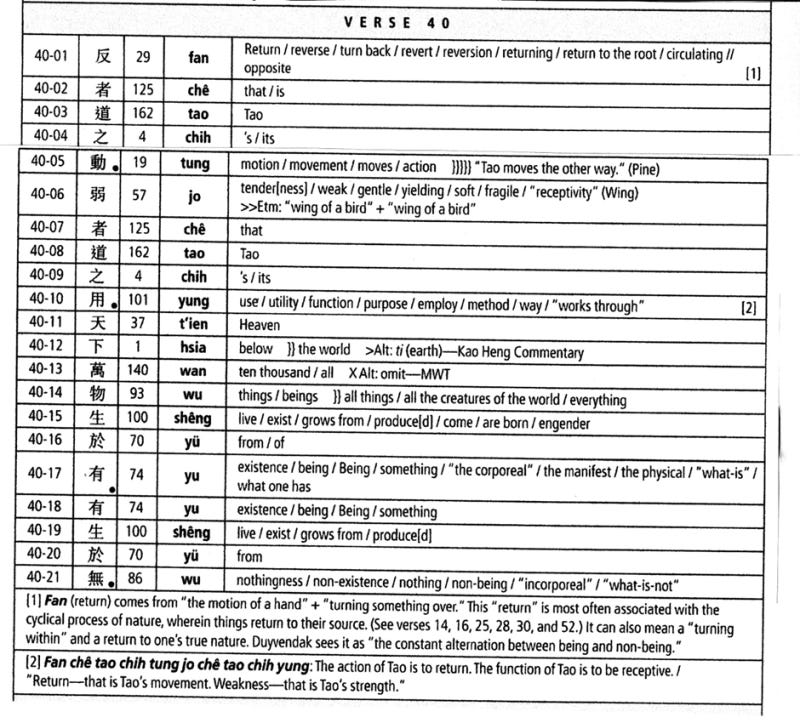
Welcome back to Gnostic Insights and to the Gnostic Reformation on Substack. Recently, we’ve been looking at verses out of the Tao Te Ching by Lao Tzu.And for those of you who are new to the...
A Simple Model of Memes, part 3
Nov 12, 2026 · 19m
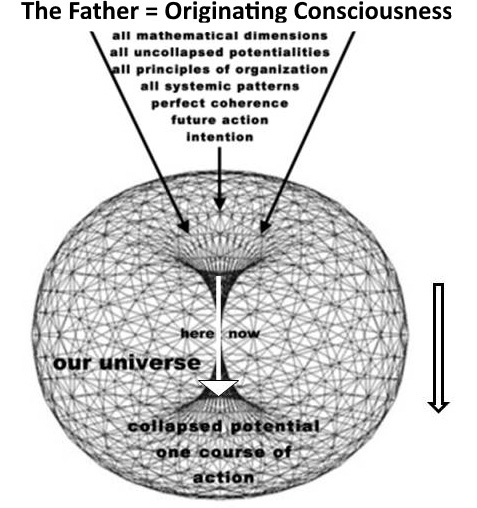
Over the past two podcast episodes, you’ve been introduced to a number of Simple Explanation memes, and we’re building up a nice sized meme chord of shared definitions. We have taken a brief tour of...

A Simple Model of Memes Part Two
Nov 6, 2026 · 21m
This publication explores philosophical, spiritual, and contemplative subjects whose meanings often depend upon nuance, context, and specialized terminology. Translations are provided as a service...
A Simple Model of Memes, pt. 1
Oct 30, 2026 · 27m
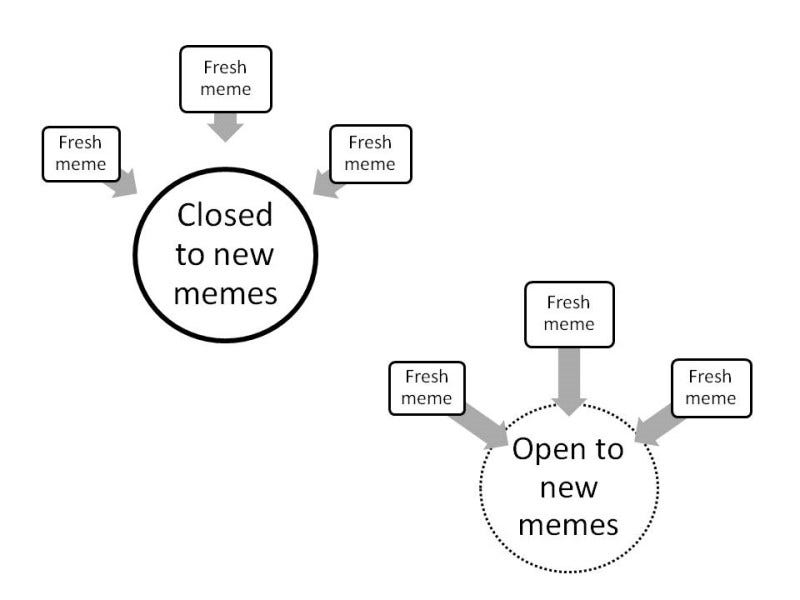
Memes are the cultural expressions of societies, and their content is information. Memes, in other words, are the “stuff” of symbolic thought. Everyone holds their own personal bundle of memes tightly...
Mining Gnosis Through the Tao Te Ching-- Verse 53.
Oct 24, 2026 · 19m
Welcome back to Gnostic Insights and to the Gnostic Reformation on Substack. For the past few weeks, we’ve been looking at the ancient Chinese wisdom book called the Tao Te Ching by Lao Tzu. I...

Mining Gnosis Through the Tao Te Ching, verse 6
Oct 17, 2026 · 21m
Welcome back to Gnostic Insights and to the Gnostic Reformation on Substack. We’re proceeding through a study of the Tao Te Ching and how it relates to our Gnostic beliefs. Today we’re going to have a...
Take these sermons with you.
Follow Gnostic Reformation, Clear and Simple in the Getsermons app to get every new sermon, build playlists, and pick up right where you left off.

