
Gnostic Reformation, Clear and Simple
Interview with a Gnostic Bishop
Jun 20, 2026 · 26m
Prefer sermons downloaded automatically?
About this sermon
Welcome back to Gnostic Insights and to the Gnostic Reformation on Substack. This week I interviewed Bishop Nathan Wilson of the Gnostic Union, and it was a good long interview, so I’ll be breaking it up probably into three segments for the next three weeks here. Bishop Wilson earned a diploma of ministry from The Gnostic Catholic Union, and then he later went on to create The Gnostic Union, and he’ll tell you about that in this week’s episode. Here I’ll read you the intro from their website.
“The Gnostic Union is an independent sacramental assembly of Gnostic Christian communities and individuals. It exists to uphold the Gnostic Christian traditions and to encourage and promote the work of Christ and the Holy Sophia in the world.As an international, independent, autonomous, non-political organization, The Gnostic Union is in no way dependent upon any other authority outside of its own administration. We are neither Roman Catholic, Orthodox, nor Protestant. We are Gnostic Christians that encourage self-development and connecting with the spirit within to build a personal relationship with God, the Monad, the Father.
Our bishops, priests, and deacons are merely guides to help you on your spiritual journey. The Gnostic Union aligns itself with the history and teachings of the first Christians of early first century Christianity and the teachings of Jesus Christ as found in the Gospel of Thomas. We encourage new members to read from the Nag Hammadi and to understand how different early Christianity is from modern mainstream Christianity.
We welcome all people, regardless of past religious backgrounds or faiths. Gnosis means knowledge, not just simple intellectual knowledge, but deep spiritual knowledge within you. Knowledge from the Spirit, from the Holy Spirit, and from and of God.”
You see, I felt that that really went along with what we talk about here at Gnostic Insights, and so when Bishop Wilson reached out to me via our Substack Gnostic Reformation site, I was more than happy to engage in conversation with him, and I thought that having a talk with him along with you and then broadcasting it would be helpful to all of us. Here’s the last little bit that it says on their Gnostic Union homepage, which is only one page long. It’s still in development. It says,
“Gnostic Christian theology differs greatly from Roman Catholicism and Eastern Orthodoxy. Gnostic Christianity does not depend upon the authority of a Pope or the Church. Instead, it emphasizes being reborn in Spirit, building a personal spiritual relationship with God, and becoming Christ-like by enacting the teachings of Jesus Christ in our lives.
Gnostic Christianity began from earlier Gnostic traditions, such as Hermeticism and Mysticism, which arose from Jewish mystics. Gnosticism itself is much older than Judaism, and traces back to the Hermetics of ancient Egypt, the Druids, and the ancient Greeks. Although many Gnostic Christian theologies differed, they shared a common theme of a trapped spiritual essence within the material body, the divine spark, the soul, or the spark of Sophia.
The ultimate goal for Gnostic Christians was to become like Jesus, to be reborn in Spirit, through the baptism of the Holy Spirit, Sophia, and to know thyself, reflecting the divine essence within.”
As you know, here at Gnostic Insights and the Gnostic Reformation, I stay away from the histories, because it seems to me that what is important is the here-and-now relationship we have with the Christ and with the Fullness of God. And so, I’m just not all that interested in history, but as you’ll hear from these ongoing interviews with Bishop Wilson, he’s all about history. So, for those of you who have been missing that strain of thought in our Gnostic Insights here, you’ll get an earful for the next three weeks.
So without further ado, here’s part one of my interview with Bishop Nathan Wilson of The Gnostic Union.
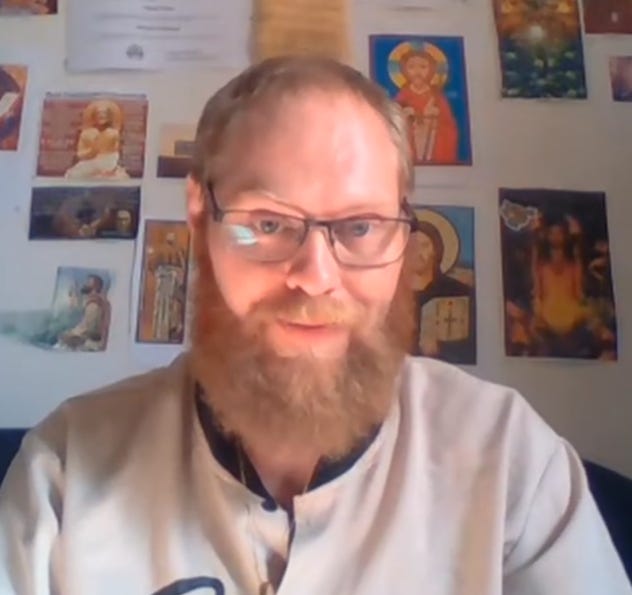
Cyd: Well, such a pleasure to see you. You have such a nice smile.
Bishop Nathan Wilson:Thank you. Thank you. Thanks for having me. It’s a pleasure. It’s always lovely to meet other Gnostics, other spiritual people, all those with open hearts and open minds. It’s always lovely to see.
Cyd:Yes. Yes. Yes, it’s true. I wish I had more of these people close around me. Do you have neighbors who are Gnostic? Do you have people you can actually face-to-face with?
Bishop Nathan Wilson:I’ve met a priest that I can now speak face-to-face, which was really good. So, it was the first real Gnostic I got to speak to face-to-face. Mostly, I was speaking to many online in other parts of the world, and I kind of felt like I was the only one here in Adelaide, Australia. So, I kind of felt like the one odd villager out. So, it was lovely to meet some other people. I’ve trained people, and other people have done what they wanted. Other people carried on as undercover Gnostics in this world. So, yeah.
Cyd:Let me get a formal introduction to you here going. This is Bishop Nathan Wilson of the Gnostic Union, and we have connected through Substack, although you don’t have a Substack presence, do you? You don’t have a site?
Bishop Nathan Wilson:No, no. We have got a website in the works, but it’s still in development. I’m not too tech-savvy, but we’ve got other people that are. So, we’re mostly on Facebook and YouTube at the moment.
Cyd:Well, wonderful. Now, tell me the difference between the Gnostic Catholic Union and just the Gnostic Union.
Bishop Nathan Wilson:Well, we used to be the Gnostic Catholic Union as well until I basically got in charge, and then I removed the Catholic part, which they only had for the Latin reasons, meaning universal, but not everyone knows that Latin subject. They’re just going to see Catholic, and usually today’s world, when you have a Catholic Union, it’s mostly those who have been brought up with a Catholic background that have now found Gnosis, and in turn, carry on those old traditions, which I don’t find anything wrong with. I think there’s many different ways to experience Gnosis.
Gnosis doesn’t belong to any religion. It’s something you find within. It’s what you experience, spiritual knowledge gifted to you by what’s divine, by God, by the Father, by the Mother-Father, whichever term you like. The Source. It could even be referenced to, given you to by divine beings, by angels, angelic forces. So, Gnosis is something that you experience. So, it’s yours. It’s personal. It’s intimate. So, it’s a beautiful thing.
So, with the Gnostic Union, we are more open to different Gnostic schools of thoughts. So, you could be a Sethian, a Valentinian. You could be a Carpucratian Gnostic, whichever. It doesn’t matter. You could be a Jewish Christian. Whichever the path is—we’re not really dogmatic. So, we appreciate all those who come into this spiritual life, seeking answers, and respecting each other’s beliefs, which is also rare. We have to remember, when we looked at the ancient schools of thought regarding Gnosticism, the ancient Gnostics got along. They didn’t kill each other. They didn’t fight. They had some disagreements, but they shared each other’s writings, which is fantastic. So, that’s very rare when you see that in a religious or even a spiritual school of thought. Many people can be my way only. So, that’s where Gnosis comes in, that inner spiritual experience. So, one’s own personal relationship with what’s divine.
The Gnostic Union wants to encourage that, not to be bound by traditions. That’s mostly the difference between the Gnostic Union and the Gnostic Catholics, where they will be more bound by tradition, more bound by a dogmatic experience. We’re not really about that, not dissing any of that. We don’t mind, but we’re more open.
Cyd:So, the Gnostic Catholics are still going on? That church is still active, but you have stepped away from them then, in that sense?
Bishop Nathan Wilson:Yes, pretty much. So, we’ve done our own independent thing. So, that way we can have more schools of thought. I pr…
This is a public episode. If you'd like to discuss this with other subscribers or get access to bonus episodes, visit cydropp.substack.com/subscribe
More from Gnostic Reformation, Clear and Simple
It’s All About the Love
Nov 28, 2026 · 23m
Welcome back to Gnostic Insights and to the Gnostic Reformation on Substack. I hope you all had a good Thanksgiving. We have much to be thankful for.What I’d like to share with you today is possibly...
Verse 16 Gnosis of the Tao
Nov 20, 2026 · 19m
Welcome back to Gnostic Insights and to the Gnostic Reformation on Substack. Recently, we’ve been looking at verses out of the Tao Te Ching by Lao Tzu.And for those of you who are new to the...
A Simple Model of Memes, part 3
Nov 12, 2026 · 19m
Over the past two podcast episodes, you’ve been introduced to a number of Simple Explanation memes, and we’re building up a nice sized meme chord of shared definitions. We have taken a brief tour of...

A Simple Model of Memes Part Two
Nov 6, 2026 · 21m
This publication explores philosophical, spiritual, and contemplative subjects whose meanings often depend upon nuance, context, and specialized terminology. Translations are provided as a service...
A Simple Model of Memes, pt. 1
Oct 30, 2026 · 27m
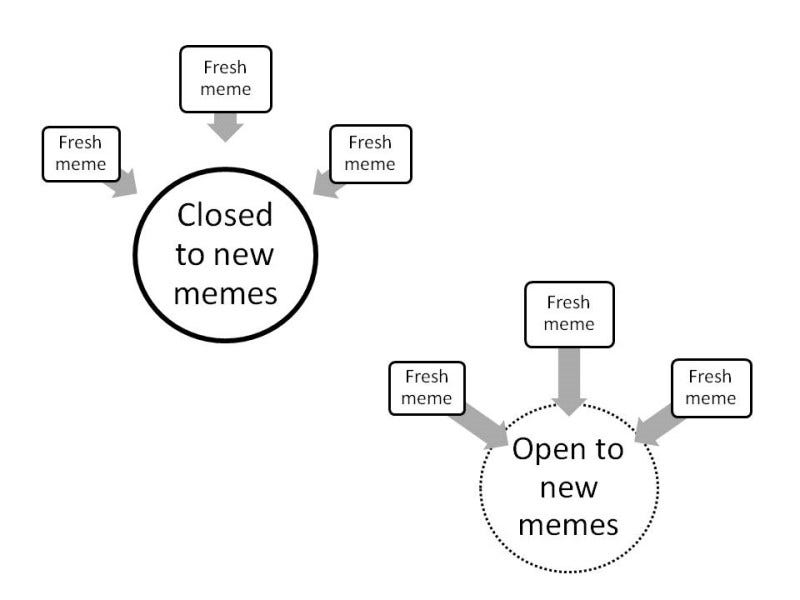
Memes are the cultural expressions of societies, and their content is information. Memes, in other words, are the “stuff” of symbolic thought. Everyone holds their own personal bundle of memes tightly...
Mining Gnosis Through the Tao Te Ching-- Verse 53.
Oct 24, 2026 · 19m
Welcome back to Gnostic Insights and to the Gnostic Reformation on Substack. For the past few weeks, we’ve been looking at the ancient Chinese wisdom book called the Tao Te Ching by Lao Tzu. I...
Take these sermons with you.
Follow Gnostic Reformation, Clear and Simple in the Getsermons app to get every new sermon, build playlists, and pick up right where you left off.

