
Gnostic Reformation, Clear and Simple
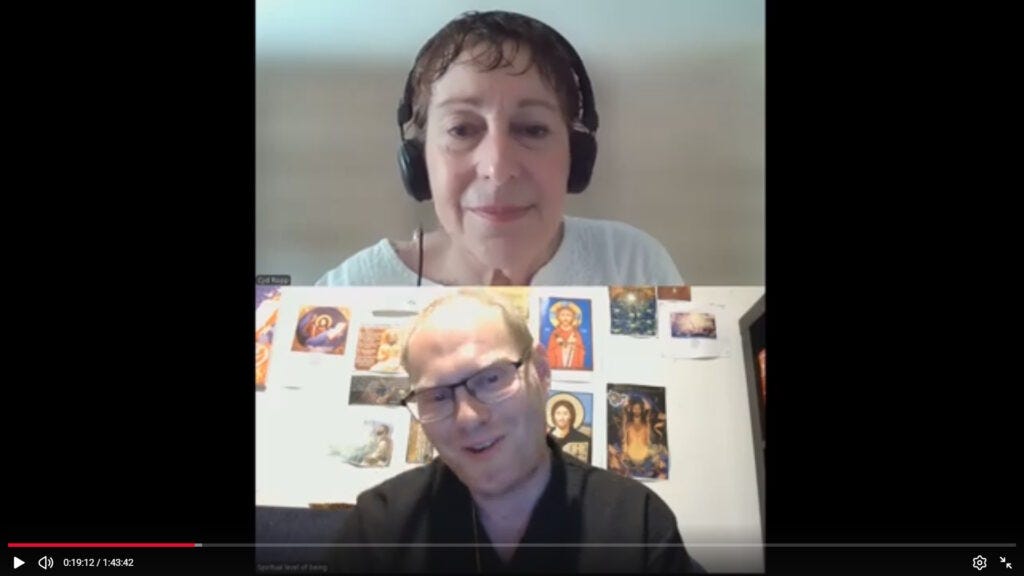
Interview with Bishop Wilson, pt. 2
Jun 26, 2026 · 36m
Prefer sermons downloaded automatically?
About this sermon
Welcome back to Gnostic Insights and to the Gnostic Reformation on Substack. Last week was part one of my interview with Bishop Nathan Wilson of the Gnostic Union, and he explained to us a bit about who the Gnostic Union is and what they believe in.
At the beginning of that episode, I read from the Gnostic Union website their history and mission statement. And my brother Billy called me up and said, “Oh, but there’s a point of their theology that’s all wrong. I know they’re ecumenical and all, but we mustn’t fall into the error of wrong teaching.” And, you know, I totally agree with that concept, not teaching anything that is incorrect or that doesn’t make sense, according to the Gnosticism that I share with you here. And it created a very large discussion between my brother and me. And I don’t even have enough time in this short introduction to go into the point that Bill brought up out of their statement of beliefs. So we’ll wait and we’ll do that when these interviews are all over and that way we can go into depth and give the topic the attention it deserves.
You see, the Gnosticism that I share with you here mostly comes from the Tripartite Tractate of the Nag Hammadi. And the Tripartite Tractate is a very unusual book. It is not a book of mythology. It is not a book of ancient myths concerning angels and demigods and great battles in heaven and so forth. It’s not that kind of book. We think of it as physics. It’s literally a book that describes the cosmology and the cosmogony, that is, how consciousness came to be transmitted from the base state of consciousness that we call the Father or the Source, and all the way downstream into, ultimately, us. We’re sitting here talking and thinking about it.
This is pure consciousness we’re talking about. It’s not particularities. You understand? Gnosis itself we think of as that river of consciousness. That’s what gnosis is. So, I often say, if my dog can’t understand the gnosis, it’s not really gnosis—it’s a knowledge claim. If a blade of grass or a tree in the forest can’t bask in the gnosis, then it’s not really gnosis. It’s a human knowledge claim. This is the reason why here at Gnostic Insights and on the Gnostic Reformation, we do not dwell in the history of things. We dwell in the understanding or the gnosis itself.
The cosmogony and cosmology of Gnosticism that I share with you here is a logical step-by-step rollout of the consciousness of the Father or the Source. It doesn’t really matter what you call it. It’s the base state. It’s the matrix of consciousness itself and how it flows down to us. There are necessary steps described in the Tripartite Tractate for how that consciousness is differentiated and particularized and then rolled down. And how it is that we material beings are different than the ethereal beings. How could that have possibly happened? It’s like that. It’s a logical progression that necessarily comes out of an a priori statement of consciousness as the ground state. That’s quite a bit different than mythologies of how these angels fit in with these gods and goddesses down here on earth and so forth. Because those particularities definitely come out of the mind of humans. They can be inspired. Okay, I’ll give you that. But they are knowledge claims. They’re not necessarily gnosis and because of that they can go wrong. They can be wrong.
Whereas starting with this a priori notion of consciousness ending up in us and how does that occur? By what means does that possibly happen? And how is it that we earthlings plug into that illimitable consciousness? That’s a different thing. That’s a description of process. That’s an understanding or a gnosis of what it is that we are part of.
So I’m not knocking the history or the particularities that Bishop Wilson shares with us. But the gnosis that leads you to enlightenment is simply this:
We come from the Father [El Elyon] or from the Source or from the Mother-Father or from the Great Mother—whatever you want to call it. We come from that Source, that unlimited well of consciousness and life and power and might and love. And then we will return to that.
That’s all you have to know. We come from Above and we return to Above. And with that knowledge, that’s your base state. That’s what the blades of grass and the dogs and the trees all understand. All the rest of the particularities of who and why and how, those are just details being filled in. Some of them out of gnosis, but most of them out of tradition or history.
So we’ll be proceeding now into part two of my interview with Bishop Nathan Wilson of the Gnostic Union. And later on, we’re going to talk some more about the difference between mythology and the process of gnosis. That is what this podcast specializes in. That’s what my brother Bill and I have parsed out and discovered out of direct mining of the Tripartite Tractate. Our gnosis comes from that and it proceeds in an orderly fashion that doesn’t require any extra research. It’s all about gnosis and what must be.
But here, let’s go back to this interview with Brother Wilson.
Cyd:
Well, tell me more about your Bible that you wrote. What do you call it? You call it…
Bishop Nathan Wilson:
I call it The Gnostic Christian Truth Bible. I actually asked one of the older bishops that trained me, Bishop Jason, and he started that. So, I like the name. So, I thought, okay, I want to put Gnostic Christian in there. So, I was going to call it first the Truth Bible. He requested that, but I thought, well, Gnostic Christian makes it less likely for the Catholics to come after me as well, and the Protestants.
Many do not like my translations. They are quite upset that I’ve done this, but they don’t put too much light on me. So, it’s best not to give me too much attention, basically. So, the less attention I have, the less people know about this, but which is something unique about mine. I don’t just offer my translations. I offer the original Koine Greek with it, so they can look at the actual text.
So, even if my translation, say, could be wrong, they could look straight at that text and go argue with the text that they see, which I also wanted to include for their own reason, and when I included the alternative English, it’s so I might read it one way, but someone else is going to read it another way, and that can teach me something new. I feel, oh, I didn’t understand it like that. So, that’s why I wanted to keep that in there too, and a couple of words I kept in there were Greek.
So, I kept Logos. I kept Kosmos, Zoe, Sophia, Archon. Magus. I kept all these words. So, very, very Gnostic, and you won’t find these in the English translations. They have gone out of their ways to censor them. I also kept the word daemon or daimon, daemon, so I did not put that down as demon because that’s not what it means. So, I kept the original Greek context of use, and I also add a Greek, Koine Greek, index in my translation so people can actually look at little snippets of what these words mean.
So, I have some things in here. So, this is just on one page on basically all Greek with English meaning. So, there’s Logos, which I explained means God’s word, God’s authority, God’s reasoning, song, and speech, and utterance. So, when you see Christians speak that Jesus is speaking the Word, or in the beginning there was Word, they are doing a disservice to what’s being implied. This is the word of God. Very different, and even the word God we use is very English. I did keep up, but for the English sake of things. So, English people wouldn’t freak out too much on me, and another thing is also a safer mouthful, because this Word means supreme deity, deity of deities, which is very interesting. Otherwise, we would go into a god, which is lesser gods as well. So, we have a pantheon. So, it was very different, like even monotheism would evolve into what we think it is today, but in the ancie…
This is a public episode. If you'd like to discuss this with other subscribers or get access to bonus episodes, visit cydropp.substack.com/subscribe
More from Gnostic Reformation, Clear and Simple
It’s All About the Love
Nov 28, 2026 · 23m
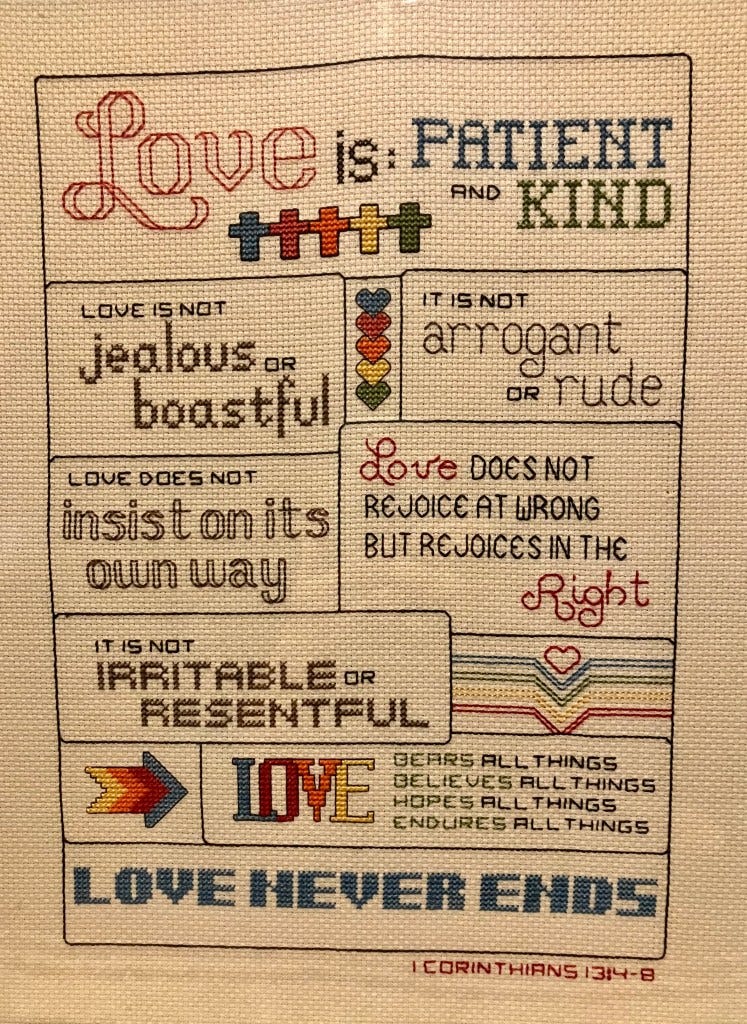
Welcome back to Gnostic Insights and to the Gnostic Reformation on Substack. I hope you all had a good Thanksgiving. We have much to be thankful for.What I’d like to share with you today is possibly...
Verse 16 Gnosis of the Tao
Nov 20, 2026 · 19m
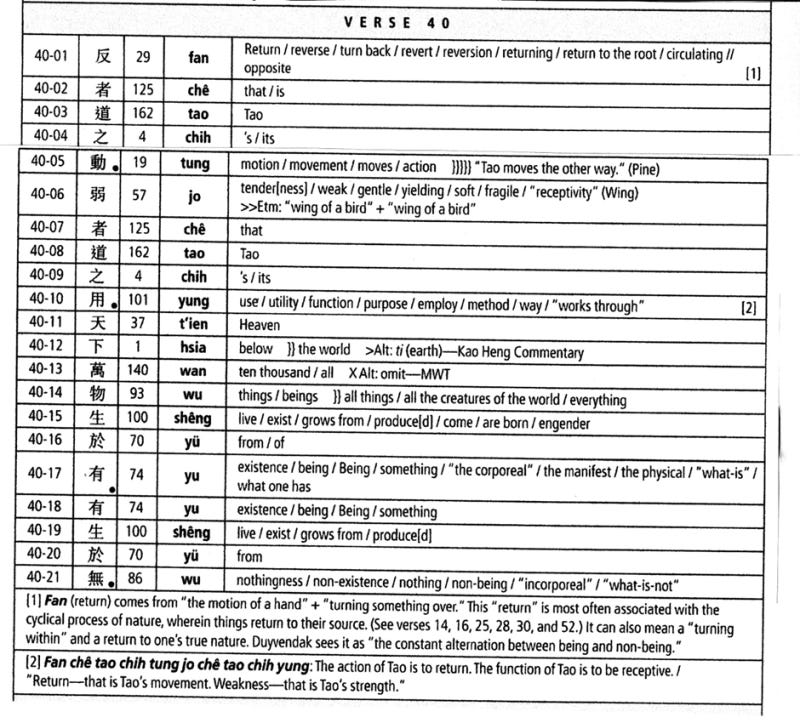
Welcome back to Gnostic Insights and to the Gnostic Reformation on Substack. Recently, we’ve been looking at verses out of the Tao Te Ching by Lao Tzu.And for those of you who are new to the...
A Simple Model of Memes, part 3
Nov 12, 2026 · 19m
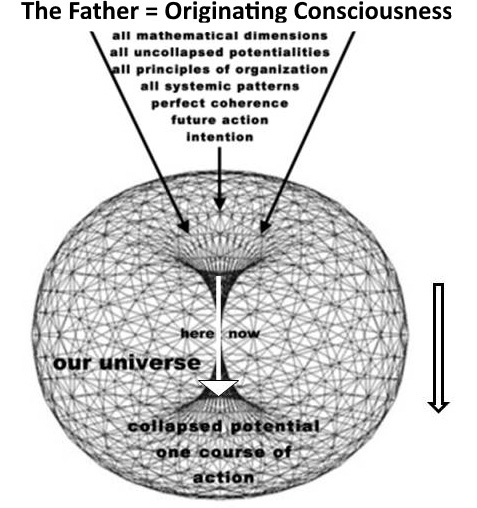
Over the past two podcast episodes, you’ve been introduced to a number of Simple Explanation memes, and we’re building up a nice sized meme chord of shared definitions. We have taken a brief tour of...

A Simple Model of Memes Part Two
Nov 6, 2026 · 21m
This publication explores philosophical, spiritual, and contemplative subjects whose meanings often depend upon nuance, context, and specialized terminology. Translations are provided as a service...
A Simple Model of Memes, pt. 1
Oct 30, 2026 · 27m
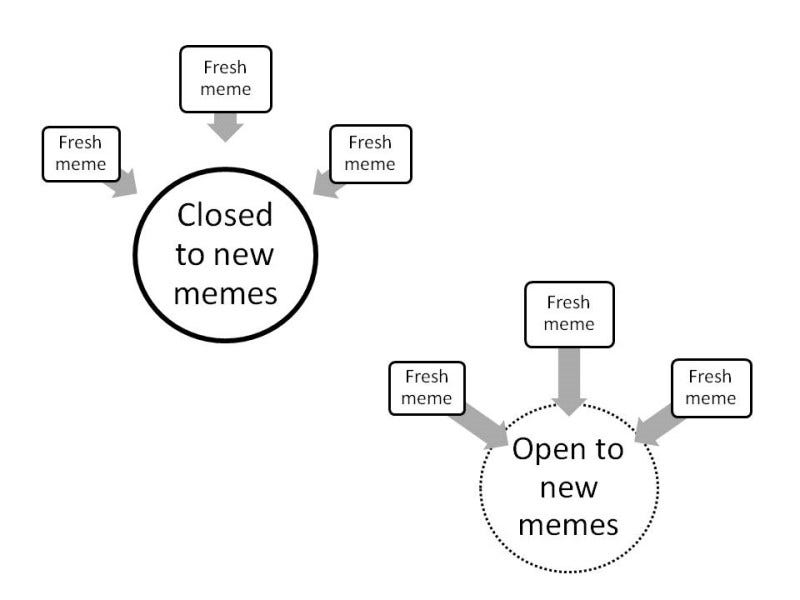
Memes are the cultural expressions of societies, and their content is information. Memes, in other words, are the “stuff” of symbolic thought. Everyone holds their own personal bundle of memes tightly...
Mining Gnosis Through the Tao Te Ching-- Verse 53.
Oct 24, 2026 · 19m
Welcome back to Gnostic Insights and to the Gnostic Reformation on Substack. For the past few weeks, we’ve been looking at the ancient Chinese wisdom book called the Tao Te Ching by Lao Tzu. I...
Take these sermons with you.
Follow Gnostic Reformation, Clear and Simple in the Getsermons app to get every new sermon, build playlists, and pick up right where you left off.

