
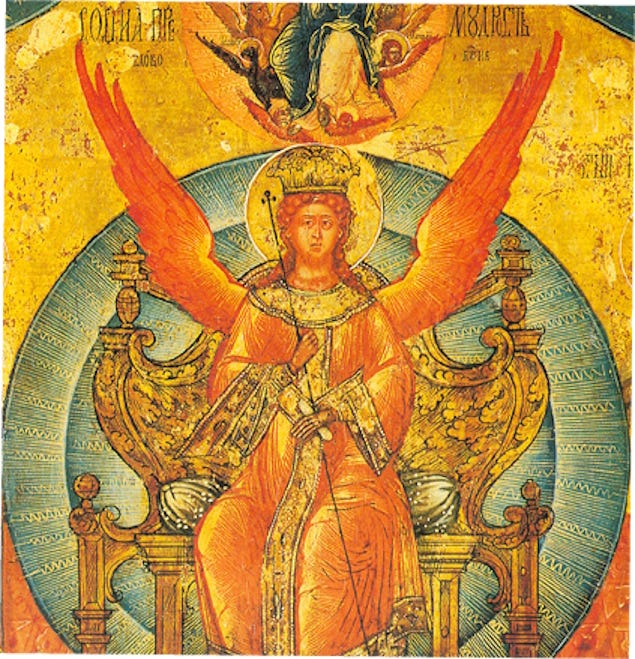
Gnostic Reformation, Clear and Simple
Interview with Bishop Wilson pt. 3
Jul 3, 2026 · 31m
Prefer sermons downloaded automatically?
About this sermon
Welcome back to Gnostic Insights and to the Gnostic Reformation on Substack. We’re continuing this week with part three of my long interview with Bishop Nathan Wilson of the Gnostic Union. We don’t usually talk about this sort of thing here at Gnostic Insights, and so this is a special treat for those of you who like this sort of thing. This week we’re going to hear Brother Nathan speaking about why he chose the words he decided to use in his translation of the New Testament and the Gnostic Gospels.
He calls his translation The Gnostic Christian Truth Bible, and that’s because it includes the original Gnostic words that were chosen and were used by the writers of the Gospels that have been changed and Latinized and Anglicized and don’t have the same Gnostic meanings as the actual original writers used.
So in the old days, in the beginning, the Christian religion was much more Gnostic. There were many sects of practicing Gnostics who were Christians and accepted as Christians. Now they were all taken away, and they were all wiped out during that Nicene Council phase in the 300’s when the Catholic Church took over the preaching of the Gospel, and they got rid of the competition, i.e. the Gnostics and others. So what Brother Nathan has done is plugged back in those original Gnostic words, and we’re going to hear many of these familiar passages now with the original Gnostic translations, the original Koine Greek in them, and see if those subtle differences make a difference in what the Gospels say and mean. So here’s Brother Nathan.
Cyd:
You know, in the Tripartite Tractate, it is unique in that the Aeon who fell is not Sophia, but Logos. And so, because that is the book that I resonate to, I’m always talking about Logos. And it seems to me, Bishop, this is a question for you—I’ve always thought that making the Aeon who fell a female character is just another way of demonizing, in the bad sense of the word, of maligning women. To say that the Aeon who fell had this, you know, illegitimate child, and here we have the fallen world. This doesn’t seem right to me. What do you think of that? So I prefer Logos because it’s just a neutral Logos.
Bishop Nathan Wilson:
Well, I think some of it was to rip on to women as well, but I think a lot of it comes from a misunderstanding of Simon Magus and then also with some with the Logos in a sense, I don’t mind it, but I’ll see that as another Gnostic interpretation. I go back to the original idea and I reckon this is where the misidentification of the full and feminine comes from, and it’s from Simon Magus’ work of the Great Declaration. We don’t have the original, we only have the quotations by the Church Fathers.
So that’s the only text we know for 100% that was written by someone who actually knew the disciples and was baptized by them. We don’t have any other text we can guarantee that for a fact. So the Catholics wanted to burn that before, well, they made sure to whinge about it before burning it. So it’s lucky they whinged about it, otherwise we wouldn’t have access to it at all. And it mentions about the feminine falling in a sense, but not what people think it is. It meaning that feminine aspect is the qualities of life basically. So meaning that this life we see now is a fallen state.
So what that really is meaning is that the feminine aspect of God is the birthing of creation and it’s the creation of that birth that has fallen. So that’s very different and that’s the first thought, so the very first form comes from the female. So that’s the first physical form coming from the feminine mind of God basically. So it’s not that God’s fallen or any part of divine or divinity is falling, but rather how we live in this material world that’s fallen. So we’ve strayed from our divine purpose basically is what Simon is stating. So he states that there’s the mental mind of the universe. So what he’s talking about is also the Father being basically the seed, the forethought of all things and the Mother is the feminine power of the creation. So what births, what you can touch and see, experience around you, while the Father is the spirit what you can’t see.
So it’s very interesting. So you have a God beyond sex. So that’s what Simon is describing and he also believed in a demiurge, but he believed it was Yahweh. He believed that Yahweh was the leader of the fallen angels, but he believed that he was the creator of this material world and that the spiritual Father created the spiritual world.
But I think he [Simon Magus] misunderstood the disciples and Jesus as well. I think he carried on his own teaching. He was still accepted by the disciples, but I think he was slightly confused. When I was looking at the text, I don’t think Jesus believed that this world was created by the devil, but rather the devil ruled it—so what corrupted this world, so what led it away from God. So rather what he’s [Jesus] speaking about is heaven within and returning to God. So that meaning of repentance is to change your mind, change the inner human, change within and return to God. So that’s all what it obviously all really means. So he’s speaking about heaven within, finding God within and returning to God and that the archon of this world is falling.
And I’ll read that as well from some of the text as well. So we can go into some of those. I was going to let you choose what you’d like me to choose from first. I can also go into the original gospel of John, so I can go into the feminine aspect there.
Cyd:
That’s very good. Yeah. Whatever you’d like to share. This is great.
Bishop Nathan Wilson:
Okay. And then after that, I’ll mention about the archon of the world and I can go into where some of the texts of Sophia, where gnosis is also mentioned, because sometimes we have Jesus having gnosis and understanding what everyone’s thinking around him, which has also been hidden, they want you to see anything to do with that.
But if you go to the gospel of John, for instance, in the beginning, and this is what I kept because it’s been obviously censored and this is a Carpocration belief. So they believed in Theos being the Monad and Logos being the Word of God, and that was basically being Jesus, and they believed in Zoe—so that was their Sophia. So, and you see this mentioned “In the beginning.” So in chapter one, 1:1 to 1:4,
“In the beginning, there was Logos and Logos was to God and Logos was God. This one was in the beginning with God. All things were made through him. And without him, not one thing was made. With him was Zoe and the Zoe was a light of mankind.”
So men, so whenever you see men, it is actually mankind, not just men in general. No.
Cyd:
So the feminine humanity, I use the word humanity.
Bishop Nathan Wilson:
Yes. It’s much better. It’s much better.
So I found it interesting. So as a divine feminine, that’s the light of all mankind—of humanity. And that’s fascinating.
Cyd:
So the indwelling of the Holy Spirit, you, you translate as Sophia?
Bishop Nathan Wilson:
Yes. Sophia and Zoe, I’ll put that as well. It’s usually referenced to, but I like the word Sophia.
Cyd:
What we generally think of as the Holy Spirit. See, I think of the Holy Spirit as the, well, the Tripartite Tractate has first order of powers being the Aeons in the Fullness that we’re the second order of powers. And the third order of powers is the “Army of Christ” that came after—that’s that Pentecost kind of indwelling. You know, when you accept, when you move your ego away and you accept the Christ, that is the third order of powers coming in. But it’s the first order of powers I think of as the original Holy Spirit, when the Christians think of Holy Spirit. And that I think is what you’re calling Sophia is the Fullness of God.
Bishop Nathan Wilson:
Yes. So what brings you to God basically as well, that divine presence you experienced within yourself or what gives you the divine spiri…
This is a public episode. If you'd like to discuss this with other subscribers or get access to bonus episodes, visit cydropp.substack.com/subscribe
More from Gnostic Reformation, Clear and Simple
It’s All About the Love
Nov 28, 2026 · 23m
Welcome back to Gnostic Insights and to the Gnostic Reformation on Substack. I hope you all had a good Thanksgiving. We have much to be thankful for.What I’d like to share with you today is possibly...
Verse 16 Gnosis of the Tao
Nov 20, 2026 · 19m
Welcome back to Gnostic Insights and to the Gnostic Reformation on Substack. Recently, we’ve been looking at verses out of the Tao Te Ching by Lao Tzu.And for those of you who are new to the...
A Simple Model of Memes, part 3
Nov 12, 2026 · 19m
Over the past two podcast episodes, you’ve been introduced to a number of Simple Explanation memes, and we’re building up a nice sized meme chord of shared definitions. We have taken a brief tour of...

A Simple Model of Memes Part Two
Nov 6, 2026 · 21m
This publication explores philosophical, spiritual, and contemplative subjects whose meanings often depend upon nuance, context, and specialized terminology. Translations are provided as a service...
A Simple Model of Memes, pt. 1
Oct 30, 2026 · 27m
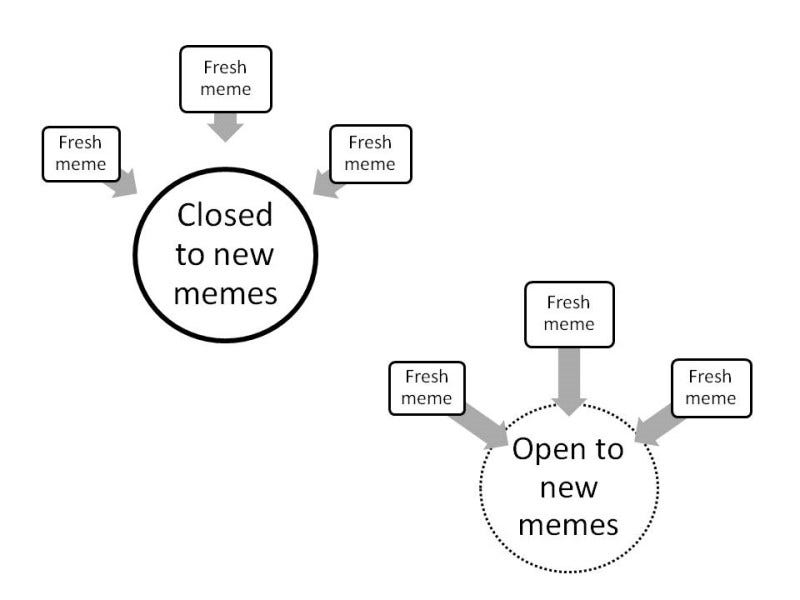
Memes are the cultural expressions of societies, and their content is information. Memes, in other words, are the “stuff” of symbolic thought. Everyone holds their own personal bundle of memes tightly...
Mining Gnosis Through the Tao Te Ching-- Verse 53.
Oct 24, 2026 · 19m
Welcome back to Gnostic Insights and to the Gnostic Reformation on Substack. For the past few weeks, we’ve been looking at the ancient Chinese wisdom book called the Tao Te Ching by Lao Tzu. I...
Take these sermons with you.
Follow Gnostic Reformation, Clear and Simple in the Getsermons app to get every new sermon, build playlists, and pick up right where you left off.

