
Gnostic Reformation, Clear and Simple
Reforming Gnosticism
Feb 28, 2026 · 23m
Prefer sermons downloaded automatically?
About this sermon
Last week, I started talking about the nature of this Gnostic Reformation that I’m describing here. It turns out that the approach to Gnosticism that I am sharing with you here at Gnostic Insights is a reformation of what is understood to be Gnosticism. If you haven’t listened to last week’s episode yet, it would be really good for you to start there. Go back and listen to or read the episode called, This Gnostic Reformation.
I didn’t read any books about Gnosticism; I actually read the Nag Hammadi itself. I used my own method of discernment, my own model building method called the Simple Explanation to understand what I was reading. We all do that. We all have internal structures that help us to interpret what we understand about the world around us, what we understand about the nature of anything, whether it’s God or people or oneself.
I had already previously come up with a very coherent system for understanding the things around me. That’s what I call A Simple Explanation of Absolutely Everything. That book is available. You can check it out. I’ll put the link here in the transcript.
When people say, “My goodness, your Gnosticism is so different than what I have come to understand Gnosticism to be,” that’s because I didn’t take it from secondary sources. I took it from the original sources. Then of course, Valentinian Gnosticism is an early form of what has come to be called Christianity. Christianity diverged immensely from the original message around the 300’s and on up, when the gnostic books were taken out of Orthodoxy. Those folks that are called heresiologists are the people that went around slapping heresy labels on the early Christianity—the early Valentinian Gnosticism. They weeded it out of the official sacred texts that made their way into the New Testament.
The main book of the Nag Hammadi that I relate to is called the Tripartite Tractate. I believe it to be the purest form of gnosis. It has very little in the way of mythologies, of extraneous characters, of the names of things and the numbers of things and the astrology of it all.
Valentinian Gnosticism from the Tripartite Tractate is unique in that the fallen Aeon is not called Sophia, a female character. In the Sethian mythology, the female character—and by the way, that presupposes that there’s genders among the Aeons in the Fullness of God, but that really doesn’t make much sense because there’s no sex. That is not the way that Aeons procreate. Aeons procreate by giving glory to the Father in various combinations, and it’s those various combinations of giving glory that produce amalgamations of those combinations. It’s a logarithmic progression of Aeons. It keeps growing as various Aeons recombine with one another and give glory to the Father and the Son—upstream, as I like to call it. That has nothing to do with gender. It has to do with giving glory to God with your friends and neighbors.
See, we have gender because it has to do with procreation, and this is what is causing all the gender confusion going around now. Differences among us—what we typically call masculine or feminine—these are personality traits. They don’t have to have anything to do with your sex. So the idea that you have to change your physical sex to reconceive of your gender or reconceive of who you are or your personality—this is a false teaching. You are who you are. You are a combination of various Aeons. You are the fruit of those Aeons, and it really has nothing to do with gender.
The Father is not a male figure. Barbelo is not the mother. These are gendered identifications, but they are not truly gender because they’re not sexed. Does that make any sense?
So last week we talked about the first emanation. In Sethianism, it’s Barbelo, the mother figure, the womb of all, the matrix of divine life. In Valentinian Gnosticism, that first figure is the Son, and in most of the Valentinian texts, the Son is conflated with the Christ.
Oh, by the way, Christians get very bent out of shape about calling Christ the Christ. They say, if anybody—and I heard this from a radio preacher not long ago—“If anyone says ‘the’ Christ, you know right off they’re not saved. You know right off they’re not Christians, because ‘the’ Christ is a made-up figure, whereas Jesus is Christ, and Jesus is the Son of God.” Well, Jesus is a human being, so we know that Jesus is not the originating Son of God, which an ethereal figure. The Son, in Valentinian Christianity, was the immediate self-expression of the Father. The Father emanated the Son, and the Son entirely represents the Father. Jesus is way downstream here, along with the rest of us humans.
He was called the perfect human because he expressed the Father and the Son in his human personality. Jesus came to be well downstream, along with the rest of us humans.
In Sethianism, the Barbelo, the first expression, isn’t the Savior. She’s the source of the Savior. She’s the mother of Autogenes, whom they call the Christ.
In Valentinianism, the Son is the immediate self-expression of the Father. There’s no Barbelo figure, and the Son is the primary mediator of divine knowledge. The Son is fully expressive and representative of the Father, and he stays plugged into the Father—or it stays. It’s difficult when speaking English not to use gendered pronouns, because that’s the way our grammar works. So, forgive me for saying “he” when I speak of the Son or the Father, but “it” just seems so impersonal. And the Son is personal to us. The Son is our Father, our Abba.
In Sethianism, Christ, also known as Autogenes, is not the initial revelation of the Father. He’s the restorative agent who repairs the damage caused by the fall of the Aeon. And in Sethianism, the Aeon who fell was a female figure, Sophia. Christ is often paired with Seth, and Seth is a character out of the mythology of Sethianism that is the heavenly archetype of the Gnostic race.
Sethianism has distinctions amongst humans. There are the elect and there are those who are not elect. There are those who are called hylic-only, which is material only. And so, if you’re a Sethian Gnostic, you don’t believe that all of the people that you see around here are carriers of divinity. You believe that only Gnostics are carriers of divinity, much like Christians only believe that those who have come forward and professed belief in Jesus Christ are the elect, and they’re the only ones who are saved. Gnostics have the same type of distinction, only they think only the Sethians are those who are saved. And that really doesn’t have to do with Jesus. It has to do with Christ and Seth—that Christ’s role is to descend and rescue the elect, and the elect would be Sethians. Now, in Valentinian Christianity, you don’t have that kind of distinction. Christ is the direct image of the Father.
Most of the books of the Nag Hammadi, the Valentinian as well as the Sethian, still identify Sophia as the fallen Aeon; they still have a gendered pleroma of the Fullness of God. This is one of the big, big differences between the Gnosticism that I share with you and these more ancient Gnostic strains of thought. I do not think that Aeons are gendered. It’s an unnecessary step of confusion, the idea of syzygies and marriages and pair bonds. No, that’s not necessary. At least in the Tripartite Tractate, if you read it, nowhere is anything like that mentioned. There’s no gender identification mentioned at all.
In Valentinian Christology, which is what it’s called when you study Christ, outside of the Tripartite Tractate the rest of the books that talk about Christ say that Christ is the direct image of the Father. His incarnation is intentional, therapeutic, and as a teacher, and he brings knowledge of the Father, not merely rescue from the Fall.
Christians generally believe that Christ brings knowledge of the Father because he talked about the Father, or he taught—that he’s a pedagogical character. He’s a teacher, but that his actual salvation came from dying on the cross, from …
This is a public episode. If you'd like to discuss this with other subscribers or get access to bonus episodes, visit cydropp.substack.com/subscribe
More from Gnostic Reformation, Clear and Simple
It’s All About the Love
Nov 28, 2026 · 23m
Welcome back to Gnostic Insights and to the Gnostic Reformation on Substack. I hope you all had a good Thanksgiving. We have much to be thankful for.What I’d like to share with you today is possibly...
Verse 16 Gnosis of the Tao
Nov 20, 2026 · 19m
Welcome back to Gnostic Insights and to the Gnostic Reformation on Substack. Recently, we’ve been looking at verses out of the Tao Te Ching by Lao Tzu.And for those of you who are new to the...
A Simple Model of Memes, part 3
Nov 12, 2026 · 19m
Over the past two podcast episodes, you’ve been introduced to a number of Simple Explanation memes, and we’re building up a nice sized meme chord of shared definitions. We have taken a brief tour of...

A Simple Model of Memes Part Two
Nov 6, 2026 · 21m
This publication explores philosophical, spiritual, and contemplative subjects whose meanings often depend upon nuance, context, and specialized terminology. Translations are provided as a service...
A Simple Model of Memes, pt. 1
Oct 30, 2026 · 27m
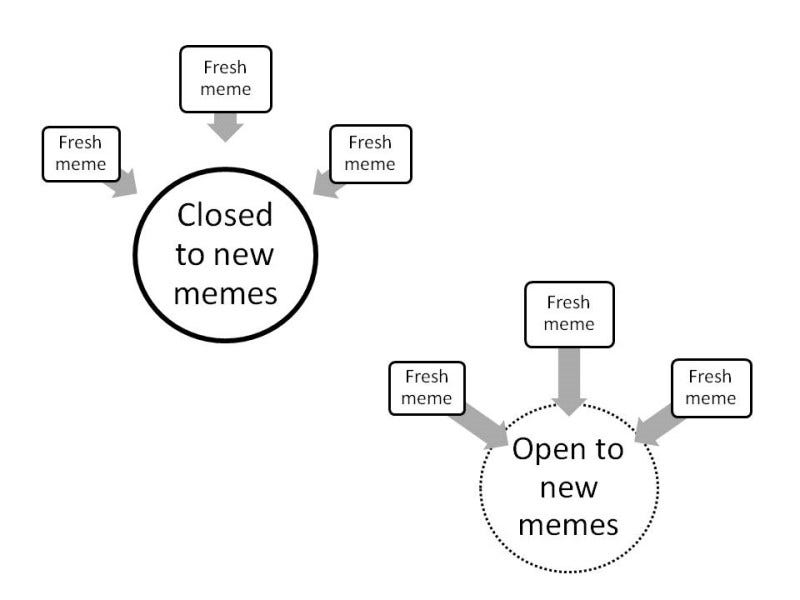
Memes are the cultural expressions of societies, and their content is information. Memes, in other words, are the “stuff” of symbolic thought. Everyone holds their own personal bundle of memes tightly...
Mining Gnosis Through the Tao Te Ching-- Verse 53.
Oct 24, 2026 · 19m
Welcome back to Gnostic Insights and to the Gnostic Reformation on Substack. For the past few weeks, we’ve been looking at the ancient Chinese wisdom book called the Tao Te Ching by Lao Tzu. I...
Take these sermons with you.
Follow Gnostic Reformation, Clear and Simple in the Getsermons app to get every new sermon, build playlists, and pick up right where you left off.

