

Gnostic Reformation, Clear and Simple
The Radiant Answer
Feb 7, 2026 · 34m
Prefer sermons downloaded automatically?
About this sermon
Welcome back to Gnostic Insights. I’m going to do my best to wrap up this review of David Bentley Hart’s book, That All Shall Be Saved, Heaven, Hell, and Universal Salvation. And I hope you understand, particularly those of you who are Christians that are listening to this, that I do all of this in the name of the Father. It’s not to tear down Christianity. It’s to uphold the mission of the Messiah, which has been lost over the past several hundred years of Christianity.
And so this talk of universal salvation is a necessary component of believing in the glory of God. Because universal salvation of all souls, not only all humans, but the dogs, the cats, the birds, the grasses, all living things, have to return to the Father, or else the Anointed loses power. The Father loses parts of himself.
Okay, let’s get back to David Bentley Hart. So we’re going to run through these four meditations that are the body of his book. The first meditation is, Who is God? He says,
The New Testament, to a great degree, consists in the eschatological interpretation of Hebrew Scripture’s story of creation, finding in Christ as eternal Logos and risen Lord, the unifying term of beginning and end.
There’s no more magnificent meditation on this vision than Gregory of Nyssa’s description of the progress of all persons towards union with God in the one pleroma, the one fullness of the whole Christ. All spiritual wills moving, to use this loving image, from outside the temple walls to the temple precincts, and finally beyond the ages into the very sanctuary of the glory as one.
Okay, let me jump in here to say, do you notice that the New Testament words, when you use the correct translations, are the same as the translations in our Tripartite Tractate of the Nag Hammadi? Logos is the eternal spirit of humanity and the risen Lord. The Fullness is the one pleroma, the whole Christ. And in this statement, it’s saying that all that is spiritual, which includes the spirits that reside within each of us, will all move as one into the pleroma of the Christ. That’s who Christ is to us. He’s the head of our pleroma. And when I speak of pleromas, I always picture that pyramidal shape, that hierarchical shape, and the capstone is the head.
We 2nd order powers are children of the 1st order powers. The 3rd order powers are the Army of Christ that have come to redeem us.
When Paul spoke of this, he was applying it literally to the temple in Jerusalem, where there were the walls of the temple, and most of the people were outside of the walls, and some of the people were in the temple precincts. And finally, the very sanctuary of the glory, where only the priests were allowed. These are the three parts that were mentioned, and these are archetypal of the movement of humanity, Hart is saying, from the outside of the pleroma of the Christ, into the pleroma of the Christ, and then into the very glory of God through the Christ.
On page 90, Hart says,
If one truly believes that traditional Christian language about God’s goodness and the theological grammar to which it belongs are not empty, then the God of eternal retribution and pure sovereignty proclaimed by so much of Christian tradition is not and cannot possibly be the God of self-outpouring love revealed in Christ. If God is the good creator of all, he must also be the savior of all without fail, who brings to himself all he has made, including all rational wills, and only thus returns to himself in all that goes forth from him.
And that’s the end of the chapter, Who is God? And that pretty much states my basic belief on why everyone is going to heaven, because we all come from the Father, and therefore we all must return to the Father because the Father cannot be diminished in any way. And if he lost us, he’d be diminished. Do you see?
The second meditation is, What is Judgment? And the subtitle is A Reflection on Biblical Eschatology. And eschatology, that’s one of those big theological words that just means the end times, the end of time. On page 93, Hart says,
There’s a general sense among most Christians that the notion of an eternal hell is explicitly and unremittingly advanced in the New Testament. And yet, when we go looking for it in the actual pages of the text, it proves remarkably elusive. The whole idea is, for instance, entirely absent from the Pauline corpus as even the thinnest shadow of a hint, nor is it anywhere patently present in any of the other epistolary texts.
There is one verse in the Gospels, Matthew 25-46 that, traditionally understood, offers what seems the strongest evidence for the idea, but then now Hart’s going to explain how that can’t be true. And then he says there are also perhaps a couple of verses from Revelation, and he says nothing’s clear in Revelation, so he’s not going to go there. But,
What in fact the New Testament provides us with are a number of fragmentary and fantastic images that can be taken in any number of ways, arranged according to our prejudices and expectations, and declared literal or figural or hyperbolic as our desires dictate.
It’s why people can make the case for eternal damnation, but you can also make the case for not eternal damnation, because it’s so metaphorical. On page 94, Hart says,
Nowhere is there any description of a kingdom of perpetual cruelty presided over by Satan, as though he were some kind of Chthonian god. On the other hand, however, there are a remarkable number of passages in the New Testament, several of them from Paul’s writings, that appear instead to promise a final salvation of all persons and all things, and in the most unqualified terms.
How did some images become mere images in the general Christian imagination, while others became exact documentary portraits of some final reality? If one can be swayed simply by the brute force of arithmetic, it seems worth noting that, among the apparently most explicit statements on the last things, the universalist statements are by far the more numerous.
And then he lists a number of verses from the New Testament that speak of universal salvation, over 20 of them at least, and I’ll give you just a couple.
Romans 5.18 says,
So then, just as through one transgression came condemnation for all human beings, so also through one act of righteousness came a rectification of life for all human beings.
And jumping in from the Gnostic sense, he doesn’t say the fall of one human, he doesn’t say through Adam, he says one transgression—and we would call that one transgression the Fall of Logos, the fall of the Aeon, which is a higher order being than we are.
Or Corinthians 15.22 says,
For just as in Adam all die, so also in the anointed Christ all will be given life.
I would say where it says for just as in Adam all die, it’s not because Adam ate the apple, it’s that we humans who are outside of the Christ, we’re outside of the walls of the temple, we are in the pleroma of Adam—we are in the pleroma of human beings. When you accept the anointed, then you move into the pleroma, or you nest up higher into the pleroma of the Christ. That would be the Gnostic way of saying that.
Second Corinthians 5.14 says,
For the love of the anointed constrains us, having reached this judgment, that one died on behalf of all, all then have died.
And of course that one is the Anointed, and He died on behalf of everyone.
Or even Romans 11:32,
For God shut up everyone in obstinacy, so that he might show mercy to everyone.
And there’s a long discussion in the chapter about how God’s chosen—the original elect, that being the Hebrew nation—has been obstinate about accepting Jesus of Nazareth as the Anointed. And so he’s saying that everyone is shut up in obstinacy, that’s the Hebrews, so that he might show mercy to everyone. And that is, they’re temporarily set up in obstinacy so that the message of the Anointed can be preached far and wide, before death and after death, we Gnostics would say, and not be just constrained to only the Hebrews. That’s why the Hebrews are set…
This is a public episode. If you'd like to discuss this with other subscribers or get access to bonus episodes, visit cydropp.substack.com/subscribe
More from Gnostic Reformation, Clear and Simple
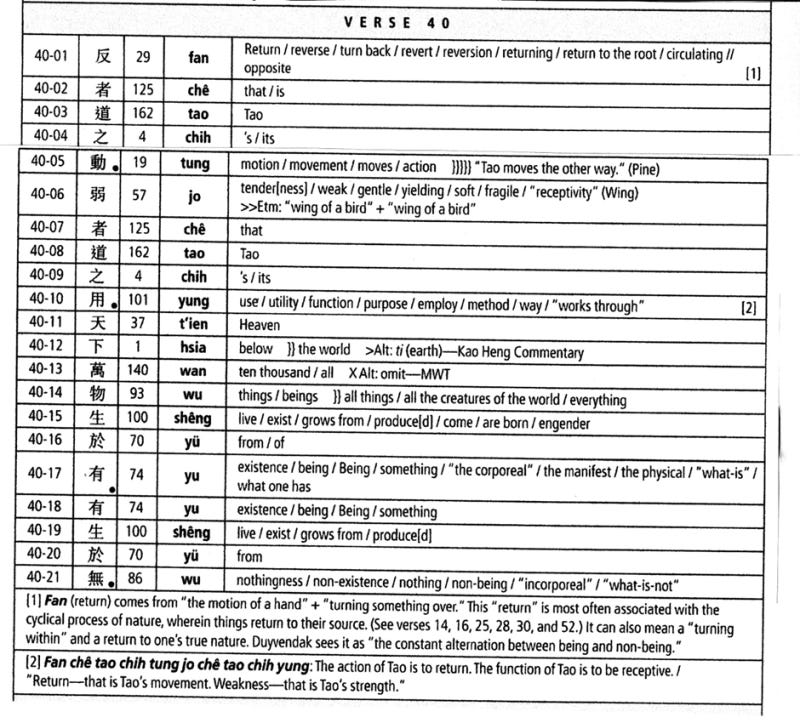
Verse 16 Gnosis of the Tao
Nov 20, 2026 · 19m
Welcome back to Gnostic Insights and to the Gnostic Reformation on Substack. Recently, we’ve been looking at verses out of the Tao Te Ching by Lao Tzu.And for those of you who are new to the...
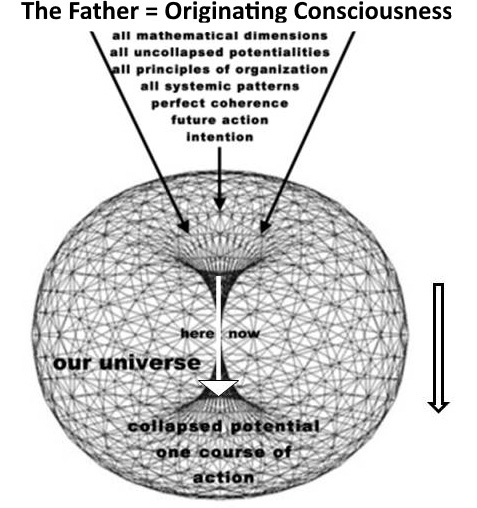
A Simple Model of Memes, part 3
Nov 12, 2026 · 19m
Over the past two podcast episodes, you’ve been introduced to a number of Simple Explanation memes, and we’re building up a nice sized meme chord of shared definitions. We have taken a brief tour of...

A Simple Model of Memes Part Two
Nov 6, 2026 · 21m
This publication explores philosophical, spiritual, and contemplative subjects whose meanings often depend upon nuance, context, and specialized terminology. Translations are provided as a service...

A Simple Model of Memes, pt. 1
Oct 30, 2026 · 27m
Memes are the cultural expressions of societies, and their content is information. Memes, in other words, are the “stuff” of symbolic thought. Everyone holds their own personal bundle of memes tightly...
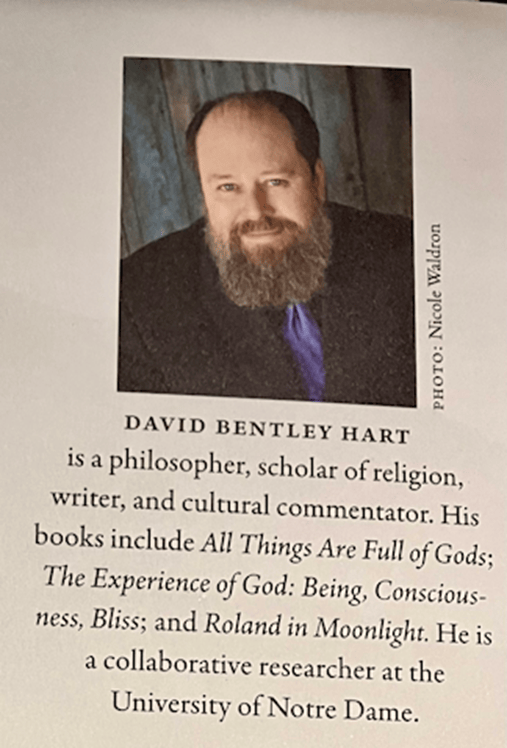
Mining Gnosis Through the Tao Te Ching-- Verse 53.
Oct 24, 2026 · 19m
Welcome back to Gnostic Insights and to the Gnostic Reformation on Substack. For the past few weeks, we’ve been looking at the ancient Chinese wisdom book called the Tao Te Ching by Lao Tzu. I...

Mining Gnosis Through the Tao Te Ching, verse 6
Oct 17, 2026 · 21m
Welcome back to Gnostic Insights and to the Gnostic Reformation on Substack. We’re proceeding through a study of the Tao Te Ching and how it relates to our Gnostic beliefs. Today we’re going to have a...
Take these sermons with you.
Follow Gnostic Reformation, Clear and Simple in the Getsermons app to get every new sermon, build playlists, and pick up right where you left off.

