
Gnostic Reformation, Clear and Simple
Understanding Complex Archetypes as Fractals
Apr 11, 2026 · 18m
Prefer sermons downloaded automatically?
About this sermon
On today’s episode, we’re going to talk some more about fractal stories and archetypes. These fractal stories make up our lives. We have very little original material in our lives. It’s as if we are each a character in a play. And this play was written by the Aeons of the Fullness before time began. These are archetypal stories. And when Logos fell and broke open all these stories into the world, and then we came down and populated the world from the Fullness, it is these stories we are reenacting.
Everyone’s life is different and unique because we each have our own point of view in the entire scheme of creation. We are monads, which means a singular point of view. We are monads out of the Fullness of God. And each of us, with our own point of view, are like actors cast in a play. We have free will. Everything in the universe does have free will. Well, all second order powers have free will. And we are free to react within the stories we find ourselves freely. We can go with the flow of the story and fully embody the archetype that is cast, such as a scorned woman screaming and railing at her man who has done her wrong. We can do that. Or we could choose, and this is the difficult part, to break the story and step back and observe the story unfolding without such active participation on our part. These are called complexes in Jungian psychology, these complicated interactions of archetypes and wills and powers that we find ourselves in.
And you know you’re in an archetypal fractal story by the tremendous force and power it seems to have all on its own. There you are, just cruising along, minding your own business, and suddenly you turn a corner and here you are in a fractal story. And you can feel the difference in the power. Or you can just blindly go along and play your part and then wonder why you’re so miserable. Oftentimes I have thought, boy I’m really doing well. I’m really cruising along here. Everything’s going great. Boy aren’t I enlightened or whatever. And then boom, I walk right into a fractal story and complexes are stirred up.
One fractal story that is very popular right now, because it is being pushed upon us, is this notion of victimhood. Victimhood is a fractal story. It’s an archetype. But the deal is, it causes powerlessness in the person who then takes on the mantle of being the victim. Oh everything’s against me. How am I supposed to get ahead? What can I do? I’m just a victim here. Oh man I’m so upset. I’m so frustrated. But if you refuse the title of victim, then you’re no longer constrained by the requirements of being a victim. You’re no longer weak and powerless with no freedom of will and no ability to move forward. You can reject that box. Step outside of it and then carry on without being a victim. Have a more powerful life.
I had a marriage of 38 years that seemed to be absolutely a wonderful marriage. And it was consecrated as far as I could tell. We actually spent every morning, first thing, doing yoga together. We would open up a holy book, either the Bible or the Tao Te Ching, and we would read out loud. We would discuss the principles involved and we would pray out loud together. And then I came to find out around the 30th year of that long marriage that this husband was actually cheating on me the whole time. Now being a cheater is a fractal archetype. And when I say a woman scorned is a fractal archetype, believe me, I understand it from the inside out. Because one minute I’m this calm, happily married wife doing all of my wifely duties in a most happy way. Dutiful, yet happy. And then come to find out about the cheating. And then it was nothing but outbursts and fights and tears and screaming for the next eight years. And just on the flip of a switch, this husband and I were plunged into the midst of this maelstrom of the fractal of the scorned woman and the cheating man. And the scripts are already written, the words that come out of your mouth when you are in the midst of one of these things.
You see it in movies, you read it in literature, you hear other people doing this. And once you are in that complex, then it is quite easy to recognize the complex when you see it in other people.
When I had my bed and breakfast in Ashland, I had a number of repeat guests, right? They’d come every single year to come to the Oregon Shakespeare Festival in Ashland. And they’d stay for a week or two at the bed and breakfast. One year, this couple came up in separate cars. And they stayed in the same room, but they never sat with each other at breakfast. And all she ever did was shoot daggers at him whenever she looked at him. And I couldn’t understand then what was going on. But now, having been in that particular complex myself, I can look back and say, ah, he must have cheated on her in that year. And they had still carried on, they had their reservations, they had their tickets to the theater, they had their reservation to the bed and breakfast, but they were no longer in harmony whatsoever. They were in the midst of this archetypal story of the scorned woman. That is what I imagine as I look back upon that situation, having been in that situation myself.
So you may be finding yourself in the midst of some sort of fractal story, not of your choosing. Victimhood, addiction, bad marriage, disappointing children, whatever it is—just realize that these are gigantic forces that were written before you came along. You do not need to completely inhabit that story. You can step out of it.
Okay, after having revealed all of that about myself, let’s take a look at some of these typical fractal stories. These stories are typically referred to as archetypal, and they’re generally credited to Carl Jung and his concept of Jungian archetypes. However, I don’t know if you know this yet or not, but Carl Jung actually purchased one of the first books out of the Nag Hammadi after they were discovered in the 1940s. He purchased one and had it translated into German, and it is from his reading of this ancient Gnostic text that he came up with his notions of archetypes, from the Aeons of the Fullness.
So what it is, is that there are major events and characters that appear in all of humanity’s different stories of origins in their different mythologies. Common archetypes are birth, death, leaving home, initiation into a new thing, marriage, the union of opposites. Archetypal characters include mother, father, child, God, the wise old man or the wise old woman, the trickster, and the hero. Some of the archetypal motifs are apocalyptic visions, the flood, and creation. We actually enact these stories, these gigantic world-embracing stories, in our little lives over and over and over again.
Here are some of the archetypal characters of literature. The caregiver, often a parent character, desiring to protect and care for others, usually associated with compassion and generosity, sometimes martyrdom. The creator is a creative and imaginative character, could be an artist, an inventor, a writer, a musician, an innovator, a visionary. The explorer, who wants to experience new things and freedom, self-discovery explorations or physical journey explorations, seeking a more authentic life, not conforming to the status quo. Adventure around every corner, could be pilgrims, an individualist, or a physical wanderer about the earth or the cosmos.
The hero character is very common in our movies and television and stories. That is a person who seeks to prove their worth through courageous and heroic acts. I think here of the American Ninja Warrior television program, and the incredible feats of physical prowess those ninja warriors exhibit as they go through the obstacle course, that each time they go through the obstacle course, it’s a hero’s journey. Warriors, rescuers, soldiers, police, team members, these are heroes.
There is a character called the innocent, an optimistic person whose worst fear is doing something bad. T…
This is a public episode. If you'd like to discuss this with other subscribers or get access to bonus episodes, visit cydropp.substack.com/subscribe
More from Gnostic Reformation, Clear and Simple
It’s All About the Love
Nov 28, 2026 · 23m
Welcome back to Gnostic Insights and to the Gnostic Reformation on Substack. I hope you all had a good Thanksgiving. We have much to be thankful for.What I’d like to share with you today is possibly...
Verse 16 Gnosis of the Tao
Nov 20, 2026 · 19m
Welcome back to Gnostic Insights and to the Gnostic Reformation on Substack. Recently, we’ve been looking at verses out of the Tao Te Ching by Lao Tzu.And for those of you who are new to the...
A Simple Model of Memes, part 3
Nov 12, 2026 · 19m
Over the past two podcast episodes, you’ve been introduced to a number of Simple Explanation memes, and we’re building up a nice sized meme chord of shared definitions. We have taken a brief tour of...

A Simple Model of Memes Part Two
Nov 6, 2026 · 21m
This publication explores philosophical, spiritual, and contemplative subjects whose meanings often depend upon nuance, context, and specialized terminology. Translations are provided as a service...
A Simple Model of Memes, pt. 1
Oct 30, 2026 · 27m
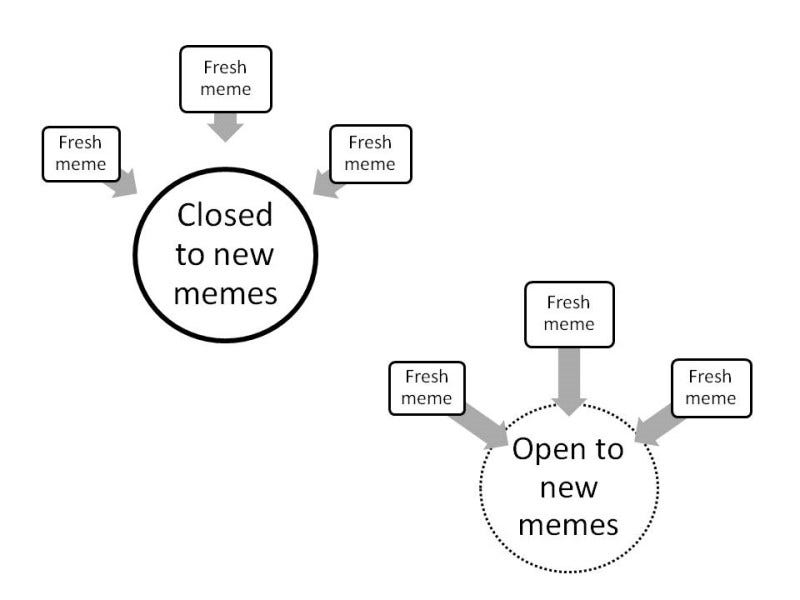
Memes are the cultural expressions of societies, and their content is information. Memes, in other words, are the “stuff” of symbolic thought. Everyone holds their own personal bundle of memes tightly...
Mining Gnosis Through the Tao Te Ching-- Verse 53.
Oct 24, 2026 · 19m
Welcome back to Gnostic Insights and to the Gnostic Reformation on Substack. For the past few weeks, we’ve been looking at the ancient Chinese wisdom book called the Tao Te Ching by Lao Tzu. I...
Take these sermons with you.
Follow Gnostic Reformation, Clear and Simple in the Getsermons app to get every new sermon, build playlists, and pick up right where you left off.

