
Gnostic Reformation, Clear and Simple
Understanding Pleromas
May 2, 2026 · 25m
Prefer sermons downloaded automatically?
About this sermon
Let’s talk about pleromas. Pleroma is a common word in gnostic scriptures, and it has a particular meaning that only relates to Gnosticism. Today, I’d like to take another look at pleromas because they describe the flow of consciousness from the origin and tell us where we all came from, where we are, and where we will wind up at the end of days.
I know that when I run through these various pleromas, people can get confused because it all sounds so complicated. But believe me, it isn’t complicated. All you really need to know is that we come from the Father and will return to the Father. That is the essential message of gnosis. What do we mean by the Father? The Father is the originating consciousness we all share. You could go with that and spend the rest of your life contemplating nothing more than its meaning and consequences. All of this detail I’m about to share with you is only an explanation meant to help you to understand the nature of the Father and then how that fundamental consciousness is packaged and distributed to the point that we can be sitting here today thinking about it.
You see, the originating Father of us all is not simply empty awareness. The Father is not the null void. The Father consists of recognizable characteristics, with love being the foremost character of the Father. This love implies belonging. This love implies virtues like kindness and caring, truthfulness and fidelity, and a host of other virtues. These characteristics flow in an unending stream from the originating consciousness into every living receptacle of life, from the aeons and the angels down to the creatures that populate the cosmos. And each one of us who receives this gift of life, love, and consciousness also receives the gnosis of the One Who Gives and our relationship and responsibilities here within the structure of creation.
Pleroma is a Greek word for “all that which is contained within a body or organization.” The Pleroma called the Fullness of God is the one we most often refer to here at Gnostic Insights. The Pleroma of the Fullness of God equals the sum total of all the individual characteristics and powers of the originating consciousness of the Father as manifested in the monad called the Son. Here is how the Pleroma of the Fullness is described in the Tripartite Tractate:
“Each one of the aeons is a name, , each of the properties and powers of the Father, since he exists in many names, which are intermingled and harmonious with one another. It is possible to speak of him because of the wealth of speech, just as the Father is a single name, because he is a unity, yet is innumerable in his properties and names…”
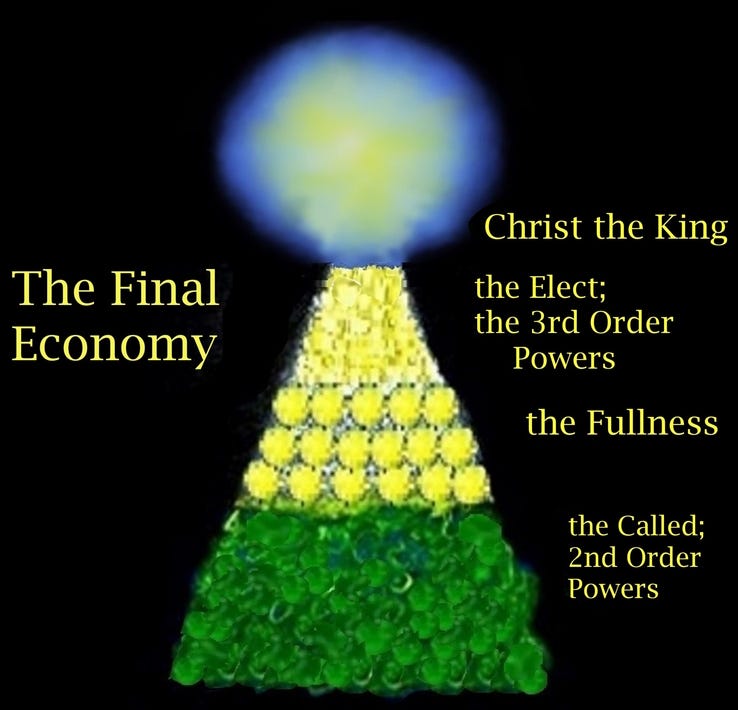
This first differentiation of the properties contained in the Son is known as the ALL or the Totalities. I picture the Pleroma of the ALL as a central star with rays going out in all directions, because the ALL is described as existing without personal identity within the single body and will of the Son. It is by giving glory to the Father that the Totalities of the ALL become self-aware and are able to name themselves and sort themselves into what is called the hierarchy of the Fullness of God.
“… the aeon of the Truth, since it is a unity and multiplicity, receives honor in the small and the great names according to the power of each to grasp it – by way of analogy – like a spring which is what it is, yet flows into streams and lakes and canals and branches, or like a root spread out beneath trees and branches with its fruit, or like a human body, which is partitioned in an indivisible way into members of members, primary members and secondary, great and small.”
This passage tells us that the aeon of the Truth—which is another word for the Fullness, or Pleroma, of God goes forth by way of fractal branching. You may review the concept of fractals by looking back to the Gnostic Insights episode called, “A Fractal Model of Human Nature,” posted May 18, 2021. which you can find at gnostic insights dot com under the tab, “Complete Episodes Library.” I’m also linking it in the transcript of this episode.
The next pleroma is contained within the Aeon called Logos. Logos was the final Aeon produced when the entire Fullness gave glory to the Father all together. The Aeon Logos contains fractal copies of all of the other Aeons. The entirety of the Aeons of the Fullness exist as fractal iterations within the Pleroma of the Aeon known as Logos. The Tripartite Tractate describes Logos this way:
“This aeon was among those to whom was given wisdom, so that he could become pre-existent in each one’s thought. By that which he wills, will they be produced. Therefore, he received a wise nature in order to examine the hidden basis, since he is a wise fruit; for, the free will which was begotten with the Totalities was a cause for this one, such as to make him do what he desired, with no one to restrain him.”
My illustration for the Pleroma of Logos shows Logos as a miniature copy of the Pleroma of the Fullness of God, sitting at the top of the Fullness. The Tripartite Tractate says:
“This aeon was last to have brought forth by mutual assistance, and he was small in magnitude. And before he begot anything else for the glory of the will and in agreement with the Totalities, he acted, magnanimously, from an abundant love, and set out toward that which surrounds the perfect glory…”
Logos, being full and complete, carried the all of the characteristics of the Father and Son and Fullness and brought the entire glorious package of consciousness, love, free will, and gnosis along within itself on a journey, abandoning its position and place within the Fullness. This solo effort, this presumptuous thought, resulted in a Fall away from harmony with the other Aeons and created a new pleroma of shadows and ignorance.
Here at Gnostic Insights I have identified the character that is known as the Demiurge in Gnosticism to be the wayward Ego of Logos, propelled away from its proper position and place in the Fullness. When Logos struck out on his own, his Ego took control and it was his Ego that caused the Fall into ignorance. The Self at the center of the Pleroma of Logos lost its authority and chaos ruled.
“The Logos himself caused it to happen, being complete and unitary, for the glory of the Father, whom he desired, and (he did so) being content with it, but those whom he wished to take hold of firmly he begot in shadows and copies and likenesses. For, he was not able to bear the sight of the light, but he looked into the depth and he doubted. Out of this there was a division – he became deeply troubled – and a turning away because of his self-doubt and division, forgetfulness and ignorance of himself and which is.”
The Pleroma of the Demiurge consists of the inversions of the Pleroma of Logos, broken out of the hierarchical pattern and scattered willy-nilly throughout the cosmos. The Pleroma of the Demiurge is not an orderly hierarchical stack, but rather a chaotic jumble of dark shadows.
“Like the Pleromas are the things which came into being from the arrogant thought, which are their (the Pleromas’) likenesses, copies, shadows, and phantasms, lacking reason and the light, these which belong to the vain thought, since they are not products of anything. Therefore, their end will be like their beginning: from that which did not exist (they are) to return once again to that which will not be…”
“They thought of themselves that they are beings existing by themselves and are without a source, since they do not see anything else existing before them. Therefore, they lived in disobedience and acts of rebellion, without having humbled themselves before the on…
This is a public episode. If you'd like to discuss this with other subscribers or get access to bonus episodes, visit cydropp.substack.com/subscribe
More from Gnostic Reformation, Clear and Simple
Verse 16 Gnosis of the Tao
Nov 20, 2026 · 19m
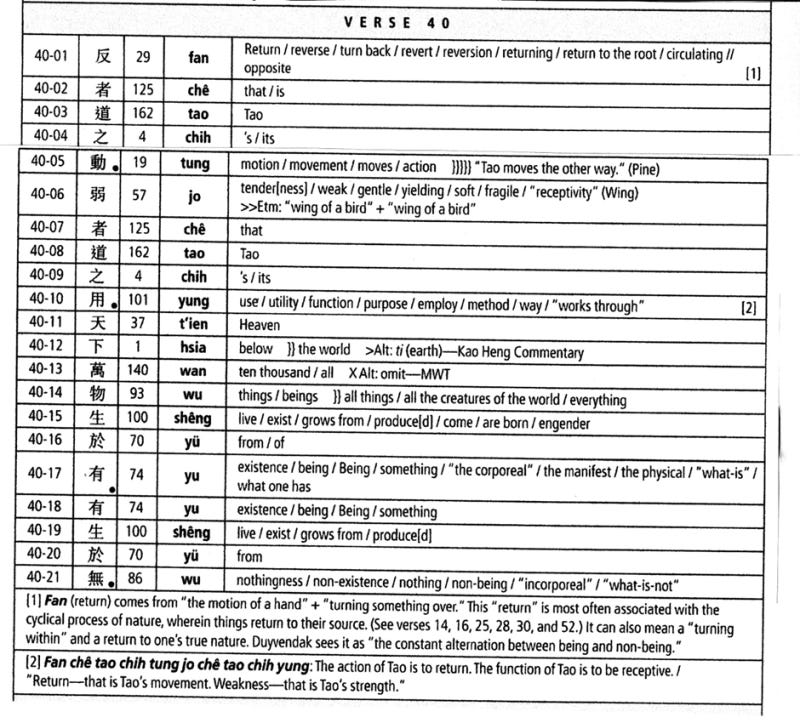
Welcome back to Gnostic Insights and to the Gnostic Reformation on Substack. Recently, we’ve been looking at verses out of the Tao Te Ching by Lao Tzu.And for those of you who are new to the...
A Simple Model of Memes, part 3
Nov 12, 2026 · 19m
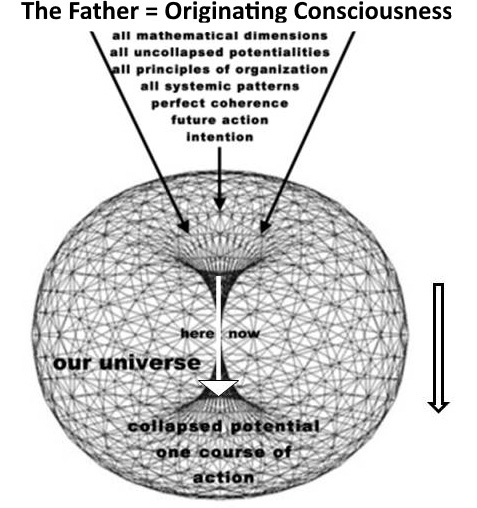
Over the past two podcast episodes, you’ve been introduced to a number of Simple Explanation memes, and we’re building up a nice sized meme chord of shared definitions. We have taken a brief tour of...

A Simple Model of Memes Part Two
Nov 6, 2026 · 21m
This publication explores philosophical, spiritual, and contemplative subjects whose meanings often depend upon nuance, context, and specialized terminology. Translations are provided as a service...
A Simple Model of Memes, pt. 1
Oct 30, 2026 · 27m
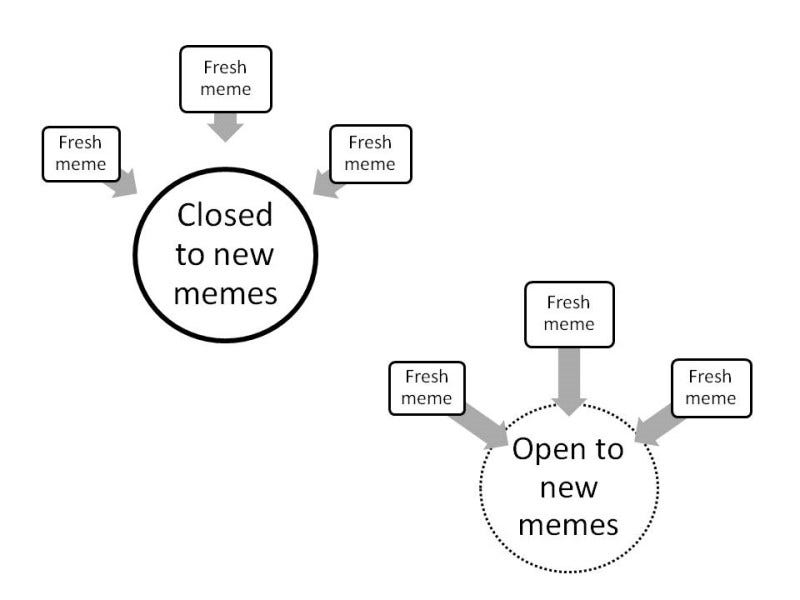
Memes are the cultural expressions of societies, and their content is information. Memes, in other words, are the “stuff” of symbolic thought. Everyone holds their own personal bundle of memes tightly...
Mining Gnosis Through the Tao Te Ching-- Verse 53.
Oct 24, 2026 · 19m
Welcome back to Gnostic Insights and to the Gnostic Reformation on Substack. For the past few weeks, we’ve been looking at the ancient Chinese wisdom book called the Tao Te Ching by Lao Tzu. I...
Mining Gnosis Through the Tao Te Ching, verse 6
Oct 17, 2026 · 21m
Welcome back to Gnostic Insights and to the Gnostic Reformation on Substack. We’re proceeding through a study of the Tao Te Ching and how it relates to our Gnostic beliefs. Today we’re going to have a...
Take these sermons with you.
Follow Gnostic Reformation, Clear and Simple in the Getsermons app to get every new sermon, build playlists, and pick up right where you left off.

