
Gnostic Reformation, Clear and Simple
Universal Salvation, pt. 2
Nov 9, 2024 · 27m
Prefer sermons downloaded automatically?
About this sermon
Welcome back to the Gnostic Reformation on Substack. Last week I began sharing with you what is essentially a book report on the book called That All Shall Be Saved, Heaven, Hell, and Universal Salvation by David Bentley Hart, and he's the translator of the New Testament that I've been using. So, last week we got up to page 21 out of this book, and now I'm all the way up to page 85, so we'll see what happened in this latest round of reading.
Now, David Bentley Hart's style of writing may not be for everyone. It's very academic, very high-minded and educated and erudite—difficult to follow if you're not accustomed to reading scholastic writing. But I believe his heart's in the right place, and I agree with pretty much everything he says. I will do my best to reinterpret what he is saying in simpler words, in case you're interested in the content, but not in its delivery method.
So, picking it up on page 21, Hart says,
And what could be more absurd than the claim that God's ways so exceed comprehension, that we dare not presume even to distinguish benevolence from malevolence in the divine, inasmuch as either can result in the same endless excruciating despair? Here the docile believer is simply commanded to nod in acquiescence, quietly and submissively, to feel moved at a strange and stirring obscurity, and to accept that, if only he or she could sound the depths of this mystery, its essence would somehow be revealed as infinite beauty and love. A rational person capable of that assent, however, of believing all of this to be a paradox concealing a deeper, wholly coherent truth, rather than a gross contradiction, has probably suffered such chronic intellectual and moral malformation that he or she is no longer able to recognize certain very plain truths, such as the truth that he or she has been taught to approve of divine deeds that, were they reduced to a human scale of action, would immediately be recognizable as expressions of unalloyed spite.
And he's talking about the idea that most everyone and everything is going to hell and will suffer eternal torment. That is an interpretation or misinterpretation of the word brought about by incorrect translation of the original Coptic Greek. Most of our Bible translations come off of old Latin Vulgate translations, and then they've been modernized. But that's how errors are brought forward. And what Hart has done in his New Testament translation is go back to the original, very oldest transcripts, still in Greek, before they were translated to Latin. And he did what he called a pitilessly accurate translation, where Hart was not trying to make the words that are being translated fit into a predetermined doctrine, like everyone going to hell, or like the Trinity, or eternal damnation.
These things we've been taught to believe are in the Scripture, but when you actually go back to the original Scriptures prior to the Latin translations, they are not in the Scripture. And so this book that I'm doing the book report on here, That All Shall Be Saved, this is about universal salvation, and doing away with the idea. And he says in this section I just read you, that it is a malevolent idea, unalloyed spite, unalloyed meaning pure spite on the part of God, that's going to send everyone to hell that doesn't get it.
And that we have been commanded by the Church over the last 2,000 years to just nod our heads and say, oh, well, it's God's will, or oh, well, how can I presume to distinguish benevolence from malevolence, good intention from bad intention on the part of God, because God is so great and good. We're supposed to be docile believers, to acquiesce, that is, to go along with, to quietly and submissively accept that we don't get it, that we don't understand the depths of the mystery, and someday we will, and that God is good, and God is just, and therefore everyone's going to hell, except for those few preordained elect from before time began. So this book is entirely against that proposition. So moving on, what I did was I read the book through, and I've highlighted the parts that seem worth sharing or very interesting.
Now we're jumping to page 35, where he says that certain people,
of my acquaintance who are committed to what is often called an intellectualist model of human liberty, as I am myself, [he says], but who also insist that it is possible for a soul freely to reject God's love with such perfect perpiscuity of understanding and intention as to merit eternal suffering.
And we can tell from the context that perpiscuity means you get it. So he's saying, how is it even possible for a soul to freely reject the love of God and consign oneself into eternal torment? It just doesn't work. It's not possible. He says,
this is an altogether dizzying contradiction. In simplest terms, that is to say, they, [that is, the intellectualists], want to assert that all true freedom is an orientation of the rational will toward an end that the mind takes in some sense to be the good, and so takes also as the one end that can fulfill the mind's nature and supply its desires. This means that the better the rational will knows the good, and that's a capital G, good, for what it is, the more that is that the will is freed from those forces that distort reason and lead the soul toward improper ends. The more it will long for and seek after the true good in itself, and conversely, the more rationally it seeks the good, the freer it is.
He says that in terms of the great Maximus the Confessor, who lived from 580 to 660,
the natural will within us, which is the rational ground of our whole power of volition, must tend only toward God as its true end, for God is goodness as such, whereas our gnomic or deliberative will can stray from him, but only to the degree that it has been blinded to the truth of who he is and what we are, and as a result has come to seek a false end as the true end. In short, sin requires some degree of ignorance, and ignorance is by definition a diverting of the mind and will to an end they would not naturally pursue.
So, in other words, we all want what's best for ourself, even in the most selfish sense, even in the most egoic sense. The ego wants what is best for this person that it is part of, that that is the rational end of the ego's striving, what is best, and that there is a thing called good in the absolute sense, and if we realize that, then we would strive toward the good, by definition. Carrying on, page 37,
I'm not saying that we do not in some very significant sense make our own exceedingly substantial voluntary contributions to our estrangement from the good in this life.
And, see, he's just saying we all screw up. Even if we are seeking the good, we often fall backwards into the bad, okay?
Up to a certain point, [he says], it is undeniable, but past that point it is manifest falsehood. There is no such thing as perfect freedom in this life, or perfect understanding, and it is sheer nonsense to suggest that we possess limitless or unqualified liberty. Therefore, we are incapable of contracting a limitless or unqualified guilt. There are always extenuating circumstances.
Well, in a sense, that's true of all of us and all of our circumstances. We are a product of our environment, to some extent. But don't forget that in the Gnostic view, we also contain the pure goodness of God, the capital S Self, that reflects the Fullness of God. So we do know what goodness is, even if we are surrounded by badness.
Quoting Hart again, page 40,
Here though, I have to note that it is a thoroughly modern and wholly illogical notion that the power of absolutely unpremised liberty, obeying no rationale except its own spontaneous volition toward whatever end it might pose for itself, is either a real logical possibility or, in any meaningful sense, a proper definition of freedom.
See? He's saying it's thoroughly modern and wholly illogical to think that we have complete freedom of will, and that we can choose to follow any unethi…
This is a public episode. If you'd like to discuss this with other subscribers or get access to bonus episodes, visit cydropp.substack.com/subscribe
More from Gnostic Reformation, Clear and Simple
It’s All About the Love
Nov 28, 2026 · 23m
Welcome back to Gnostic Insights and to the Gnostic Reformation on Substack. I hope you all had a good Thanksgiving. We have much to be thankful for.What I’d like to share with you today is possibly...
Verse 16 Gnosis of the Tao
Nov 20, 2026 · 19m
Welcome back to Gnostic Insights and to the Gnostic Reformation on Substack. Recently, we’ve been looking at verses out of the Tao Te Ching by Lao Tzu.And for those of you who are new to the...
A Simple Model of Memes, part 3
Nov 12, 2026 · 19m
Over the past two podcast episodes, you’ve been introduced to a number of Simple Explanation memes, and we’re building up a nice sized meme chord of shared definitions. We have taken a brief tour of...

A Simple Model of Memes Part Two
Nov 6, 2026 · 21m
This publication explores philosophical, spiritual, and contemplative subjects whose meanings often depend upon nuance, context, and specialized terminology. Translations are provided as a service...
A Simple Model of Memes, pt. 1
Oct 30, 2026 · 27m
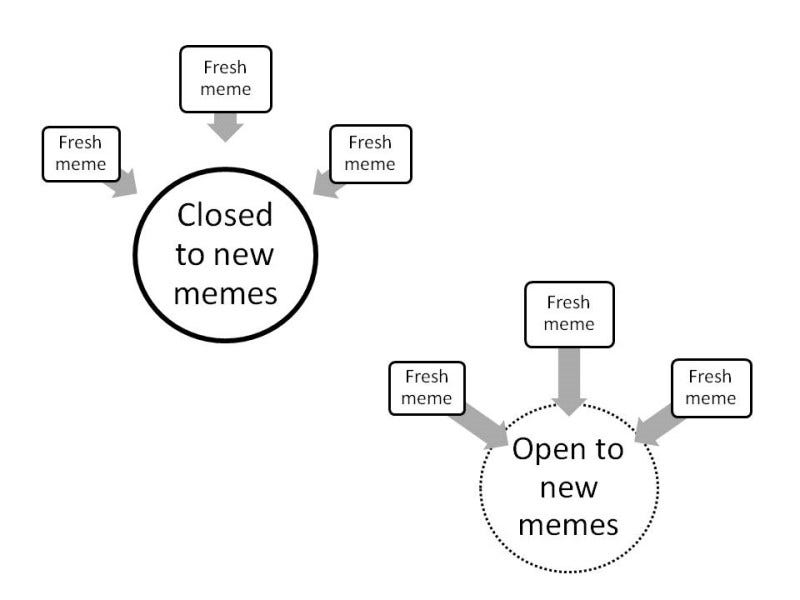
Memes are the cultural expressions of societies, and their content is information. Memes, in other words, are the “stuff” of symbolic thought. Everyone holds their own personal bundle of memes tightly...
Mining Gnosis Through the Tao Te Ching-- Verse 53.
Oct 24, 2026 · 19m
Welcome back to Gnostic Insights and to the Gnostic Reformation on Substack. For the past few weeks, we’ve been looking at the ancient Chinese wisdom book called the Tao Te Ching by Lao Tzu. I...
Take these sermons with you.
Follow Gnostic Reformation, Clear and Simple in the Getsermons app to get every new sermon, build playlists, and pick up right where you left off.

