
Gnostic Reformation, Clear and Simple
What Are Archons
Aug 2, 2025 · 32m
Prefer sermons downloaded automatically?
About this sermon
Welcome back to Gnostic Insights and the Gnostic Reformation on Substack. This is a repeat of an earlier podcast. It’s the most complete explanation I’ve ever given on archons, and since I mentioned archons in last week’s episode, I wanted to give the full explanation of what are archons, because archons are mentioned quite often in Gnostic circles.
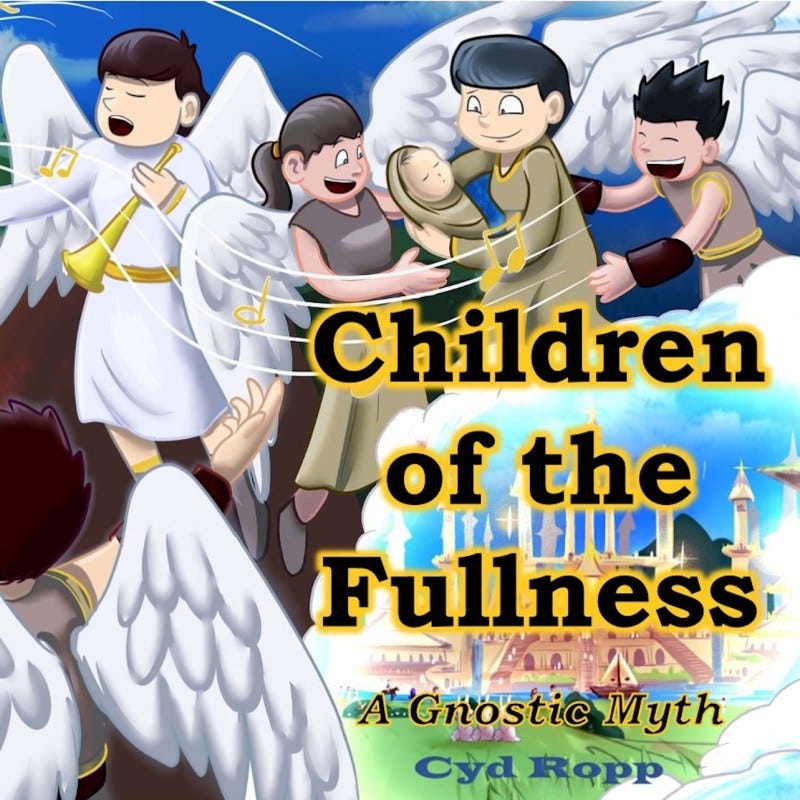
Also, a piece of news, the children’s book is completed. It’s gorgeous. It’s exciting. It’s for the little ones. It’s for you to read to your children or grandchildren, ages two to six, probably. Beautiful illustrations, and it’s the very simplest rendition of our Gnostic Gospel possible. Imagine—I’ve simplified the Christian Gnostic Gospel, although I don’t mention Jesus or Christ. I talk about the Prince of Peace in this book, and it’s the nugget of Gnosis.
So if you’re struggling with Gnosis at all, I’m sure you can understand this children’s book. I’ve published it to Amazon. It probably won’t appear for about a week. They need to do their thing on their end with it. It’s only $9.99, which is the very cheapest Amazon would let me sell it for. The name of the children’s book on Amazon is Children of the Fullness: A Gnostic Myth.
Okay, onward and upward, and here’s What Are Archons.
This episode is about archons. It’s kind of a long episode because what I’m going to do is read to you directly out of the Tripartite Tractate and then make explanations about that, and that’s a long process. Also, if this becomes too thick and too difficult to understand just by the hearing of it, go to GnosticInsights.com and read the transcript. And in the transcript, I’m going to put links to other episodes that have spoken on this sort of topic before so that you can have a bigger review or a more in-depth study on this topic, okay?
So reading from the Tripartite Tractate, and this version is translated by Einar Thomassen out of the book, The Nag Hammadi Scriptures, edited by Marvin Meyer. I’m reading you three different sections out of the book. The first is called The Word Divided, and that’s verses 77:11–36.
“Now on the one hand, The word gave birth to himself as a perfect single one, to the glory of the Father who had desired him and was pleased with him. The things he had wished to grasp and reach, however, he produced as shadows, phantoms, and imitations. For he could not bear to look at the light, but looked at the depths, and he faltered. Because of this, he suffered a division and a turning away. From the faltering and the division came oblivion and ignorance of oneself and of that which is.”
So when this section says the word gave birth to himself as a perfect single one, the word is Logos. That’s another way of saying the Aeon named Logos.
And “the perfect single one” is the name for the overarching personality of the Aeon known as Logos. Here at The Simple Explanation of things, we call that the governing unit of consciousness. For example, my body has billions of little units of consciousness in the form of cells and organs and whatnot, but my single one is named Cyd, and that’s my governing unit of consciousness.
Within the overarching personality of Logos, was a fractal iteration of every Aeon, one level down from Logos, housed within his perfect single self.
Logos was a product of the entire Fullness giving glory to the Father in unison, and all together they fruited this final combinatory Aeon. He was the last Aeon to be born, and he was the sum of all of the Aeons. And those smaller images of the Aeons that were contained within the single one named Logos were all fractals of the Fullnesses of God, one level down. And Logos birthed himself in the sense that his personality, his unified governing unit of consciousness, became aware of itself in relation to this fractal pleroma that he contained.
“It was the will of the Father that brought Logos forth as the cause that made an ordained economy come to pass.”
And that ordained economy, that’s our material universe, and that includes time and space. And then it says,
“The things he had wished to grasp and reach, however, he produced as shadows, phantoms, and imitations.”
You see, what Logos wanted to do was create Paradise, basically, all by himself, because he had fractals of the entirety within himself. But he didn’t realize that they were only fractals, and the fractals couldn’t get the job done. It needed to be Logos in combination with the real Aeons that were up there at his level. And so when he reached for the Father, that’s what caused the Fall. And the deficient things that issued forth from the Fallen Logos were patterned after his ego, not his one undivided self. “They were shadows, phantoms, and imitations.”
In other words, they were not real, and they were not true fractals of the Fullness. Logos mistook himself for the entire Fullness because his Pleroma contained fractals of all the Fullnesses. And due to the fact that he so closely resembled his Aeonic parents, who, when you think about it, all together amounted to the totality of the Son. Logos thought he could directly connect to the originating Father in the same manner that the Son does. But the Father can only be directly touched by his true emanation, the Son, and no other, not even Logos, although he resembled the Son. But he, see, was a fractal level down.
All consciousness is funneled through the Son and then on down from there. If Logos had touched the Father directly as he wanted to, he would have been annihilated due to the extreme voltage of the power of the Father. Logos found he could not look into the high voltage light, which is the life of the Father, nor grasp it, and so he faltered and fell into the depths.
“Because of this, he suffered a division and a turning away. From the faltering and the division came oblivion and ignorance of oneself and of that which is.”
Now, this division refers both to the separation of Logos from the Fullness and the division within himself between his better part, that is his self-governing unit of consciousness, which is a reflection of the Son, and his presumptuous thought, that is, the ego that prompted the overreach in the first place. This division brings oblivion, forgetfulness, and ignorance of one’s true self and the originating consciousness of the Father.
The next section is called The Perfect Part of Logos Re-Enters the Fullness, and that’s verse 77:37 through 78:28.
“That which he had brought forth from himself as a unitary Aeon hastened upward to that which was his and to his kin in the Fullness. He abandoned that which had come into being from the deficiency and what had issued from him in an illusion, since they did not belong to him. However, the one who had brought him forth with superior perfection from himself became weak after bringing him forth, like a female nature deprived of masculinity. For what issued from his presumptuous thought and his arrogance had existence from something that itself was deficient. Because of that, what was perfect in him left him and went upward to his own. He remained in the Fullness, and the fact that he had been saved from the,” [and here there are some missing words] “. . . served for him as a reminder. The one who hastened on high and the one who drew him to himself did not remain idle, but they brought forth a fruit in the Fullness with a view to overthrowing what had come into being because of the deficiency.”
Now I’ll explain what that means.
“That which he had brought forth from himself as a unitary Aeon,” was the governing unit of consciousness of Logos. The unitary Aeon known as Logos “hastened upward to that which was his,” that is, Logos returned to his place and duties in the Fullness, and to his kin in the Fullness, that is, his fellow Aeons in the Fullness.
It says “he abandoned that which had come into being from deficiency” and what had “issued from him in an illusion, since they did not be…
This is a public episode. If you'd like to discuss this with other subscribers or get access to bonus episodes, visit cydropp.substack.com/subscribe
More from Gnostic Reformation, Clear and Simple
It’s All About the Love
Nov 28, 2026 · 23m
Welcome back to Gnostic Insights and to the Gnostic Reformation on Substack. I hope you all had a good Thanksgiving. We have much to be thankful for.What I’d like to share with you today is possibly...
Verse 16 Gnosis of the Tao
Nov 20, 2026 · 19m
Welcome back to Gnostic Insights and to the Gnostic Reformation on Substack. Recently, we’ve been looking at verses out of the Tao Te Ching by Lao Tzu.And for those of you who are new to the...
A Simple Model of Memes, part 3
Nov 12, 2026 · 19m
Over the past two podcast episodes, you’ve been introduced to a number of Simple Explanation memes, and we’re building up a nice sized meme chord of shared definitions. We have taken a brief tour of...

A Simple Model of Memes Part Two
Nov 6, 2026 · 21m
This publication explores philosophical, spiritual, and contemplative subjects whose meanings often depend upon nuance, context, and specialized terminology. Translations are provided as a service...
A Simple Model of Memes, pt. 1
Oct 30, 2026 · 27m
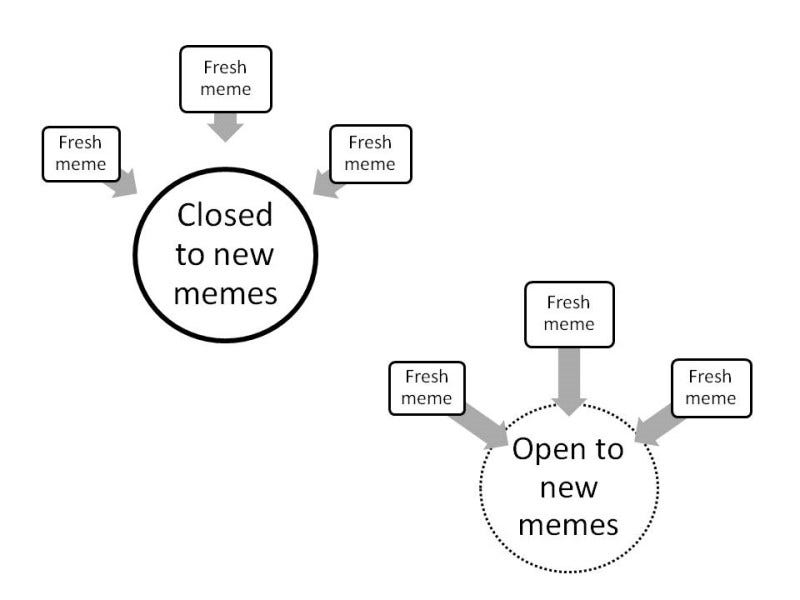
Memes are the cultural expressions of societies, and their content is information. Memes, in other words, are the “stuff” of symbolic thought. Everyone holds their own personal bundle of memes tightly...
Mining Gnosis Through the Tao Te Ching-- Verse 53.
Oct 24, 2026 · 19m
Welcome back to Gnostic Insights and to the Gnostic Reformation on Substack. For the past few weeks, we’ve been looking at the ancient Chinese wisdom book called the Tao Te Ching by Lao Tzu. I...
Take these sermons with you.
Follow Gnostic Reformation, Clear and Simple in the Getsermons app to get every new sermon, build playlists, and pick up right where you left off.

