

Gnostic Reformation, Clear and Simple
When Truth Falls, Ego Rises
Aug 16, 2025 · 24m
Prefer sermons downloaded automatically?
About this sermon
The children’s book is published and out on amazon.com. It’s already sold three copies. Hopefully that’s just the beginning. I’m getting the ebook version ready, although I think the large print book is the best way to see it. I’ll also put out a hard copy, but the sales price may be too high for comfort.
And on another matter, I’m going to run another free booksy promotion for A Simple Explanation of the Gnostic Gospel on Amazon. And you can get the ebook of A Simple Explanation of the Gnostic Gospel for free from August 23rd through the 26th. That way, even if I had sent you a free copy for reviews or anything like that, or if you have been given a copy of the book as a gift, you can still qualify to leave a review on Amazon for the book because it will be a verified purchase, even though you didn’t have to pay anything for it. We really need to boost those reviews, folks. So please do me a favor. Write a review or at least throw some stars my direction for the book. Okay?
What we’re going to look at today is basically Chapter Five from A Simple Explanation of the Gnostic Gospel. And that chapter is called The Fall of Logos and the Rise of the Deficiency. I’m going to focus on the deficiency and what that means—why it’s called the deficiency. I’m just going to skim through Chapter Five.
We know that in this form of Gnosticism that I teach that comes directly out of the Tripartite Tractate of the Nag Hammadi, the Aeon we discuss is not Sophia, but rather Logos. And this is one of the big things that sets the Tripartite Tractate apart from the other books in the Nag Hammadi. The Tripartite Tractate talks about Logos. And I prefer this. Let me tell you why.
The story with Sophia and her Fall and then her illegitimate child, Yaldabaoth, and all of the things that happened to them down on the Earth—that’s a mythological type of story. On the other hand, the story of Logos, the Aeon Logos and its Fall, it’s not mythological in the same way. It’s logical. It has to do with the way that consciousness rolls out from the Source. It has to come from the original Source and then keep coming down to us as we sit here talking and listening. The Tripartite Tractate follows that course of consciousness from the Source, which is called the Father in the Tripartite Tractate, and then through the first emanation of the Father, which is called the Son in the Tripartite Tractate. And then how does it get from the Son to all of us down here? There is a mechanism for that. And that’s the mechanism we’re going to talk some about today.
You see, Logos was the final Aeon produced by the combination of all of the Aeons of the Fullness of God together, giving praise and glory to the Father and Son. And in their combined Fullness, all of them focused on a single topic, that being giving praise to the Father and Son, they gave birth to the final Aeon.
And that birth is that Logos, the final Aeon produced by the Fullness of God through their combination, contains within itself a complete pleroma that’s one level down, one fractal level down from the actual Fullness of God. Logos is a true image or representation of the Fullness of God, simply one fractal level down. So Logos looks just like the Fullness. His pleroma looks exactly like the Fullness. Everybody’s in there.
And Logos then mistook himself for the Fullness because he was complete, and he knew all of the plans, and he could dream of Paradise like nobody’s business, all by himself.
And so Logos decided to launch himself into the realm of glory to reunite with the Father. But, without the willing support of the Fullness, Logos wasn’t able to give proper glory to the Father, and therefore he stumbled and fell. The Tripartite Tractate puts it this way:
The Logos himself caused it to happen, being complete and unitary, for the glory of the Father, whom he desired, and (he did so) being content with it, but those whom he wished to take hold of firmly he begot in shadows [and] copies and likenesses. For, he was not able to bear the sight of the light, but he looked into the depth and he doubted. (Attridge and Mueller, verse 77)
… which is just another way to say that Logos took upon himself a great project, and then he found he couldn’t pull it off. And then he began to doubt himself, and that was looking into the darkness. By the way, we are fractals way down the road from Logos, so everything that we hear about going on in the Fullness or with Logos and the deficiency, it happens to all of us too.
As Logos reached for the Father, Logos stumbled and fell. Now, this is the original Fall. It’s not Eve handing Adam an apple in the Garden of Eden. It was not we humans who brought death and disaster into the cosmos. That is above our pay grade. It seems so obvious. The Fall happened way before. It happened with that Aeon Logos taking a fall. Quoting again,
His self-exaltation and his expectation of comprehending the incomprehensible became firm for him and was in him. But the sicknesses followed him when he went beyond himself, having come into being from self-doubt, namely from the fact that he did not the glories of the Father, the one whose exalted status is among things unlimited. This one did not attain him, for he did not receive him. (Attridge and Mueller, verse 77)
And that was for the protection of Logos, because it says earlier in the Tripartite Tractate that anyone approaching the glory of the Father would be annihilated. That’s the word that’s used—annihilated—because the Father is so much greater than the consciousness that would be approaching it.
When Logos reached for the illimitable, when he went for the Father, he believed in himself that he was about to produce Paradise, the Paradise that Logos, along with the rest of the Fullnesses, were singing about and dreaming of together. He had all the plans, like an architectural design for Paradise, but he couldn’t pull it off and he went beyond himself. And this overreach brought the sickness of self-doubt onto his soul. Now prior to this time, every Aeon’s core Self was in perfect harmony with its ego, and their ego’s function was to put into practice the will of the Father. But now Logos’ ego departed from that. Now self-doubt replaced the ineffable joy of the Fullness. So this division of the deeply troubled Logos was the first manifestation of ego acting outside the will of the one Self and the Fullness. We could say that the Fall was an act of ego falling away from the true Self, and you see that happens to all of us.
Now the Tripartite Tractate doesn’t call the word ego. They call it presumptuous thought, because Logos had a presumptuous thought. He presumed that he could plug back into the Father, that he could create Paradise on his own. But I am seeing that presumptuous thought as the word for ego, particularly the type of ego that has come down to us. It’s presumptuous, meaning that it goes beyond what’s right and proper.
Egoic thought places the focus of one’s thought on your own desires without regard to others. It’s always about, what am I going to do now? Presumptuous thought, it’s all about me, me, me. Whereas the Aeons of the Fullness, being in complete harmony with their ego and Self, they are not me types of creatures. The Aeons all live for one another in perfect harmony.
Verse 78 of the Tripartite Tractate says,
Like the Pleromas are the things which came into being from the arrogant thought, which are their (the Pleromas’) likenesses, copies, shadows, and phantasms, lacking reason and the light, these which belong to the vain thought, since they are not products of anything. (Attridge and Mueller)
So here the ego of Logos is characterized as vain thought, and the copies produced by the Fall are not true images of the Aeons. They are imitations. They are shadows, likenesses, apparitions. They’re not products of anything. That’s a quote: not products of anything. It indicates that unlike this flow of…
This is a public episode. If you'd like to discuss this with other subscribers or get access to bonus episodes, visit cydropp.substack.com/subscribe
More from Gnostic Reformation, Clear and Simple
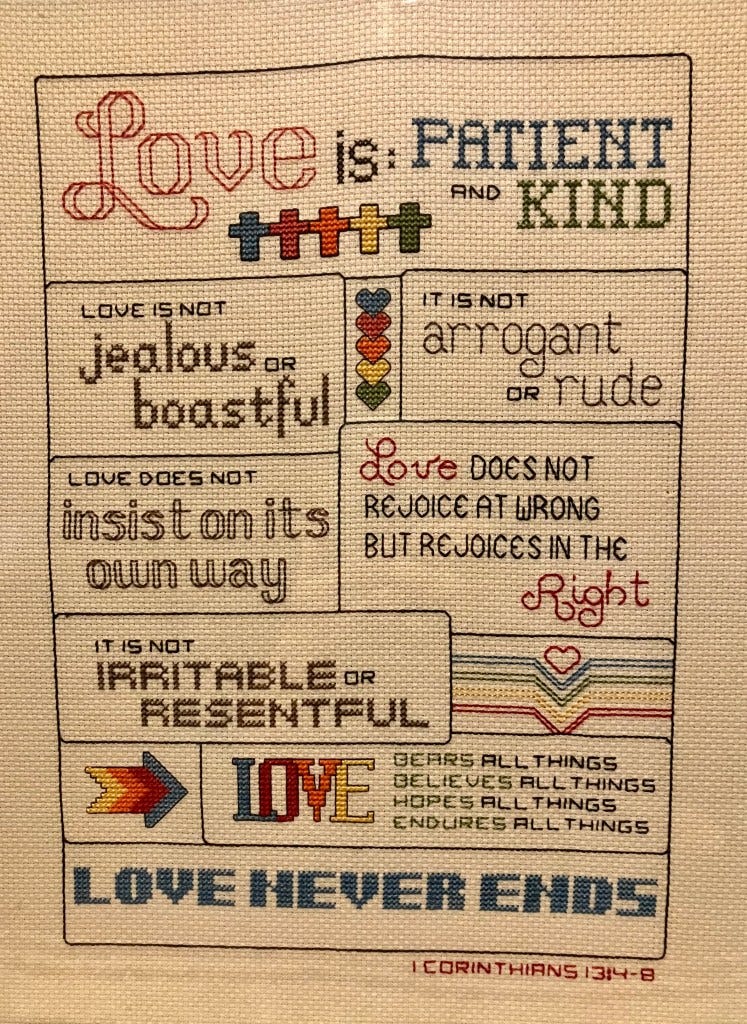
It’s All About the Love
Nov 28, 2026 · 23m
Welcome back to Gnostic Insights and to the Gnostic Reformation on Substack. I hope you all had a good Thanksgiving. We have much to be thankful for.What I’d like to share with you today is possibly...
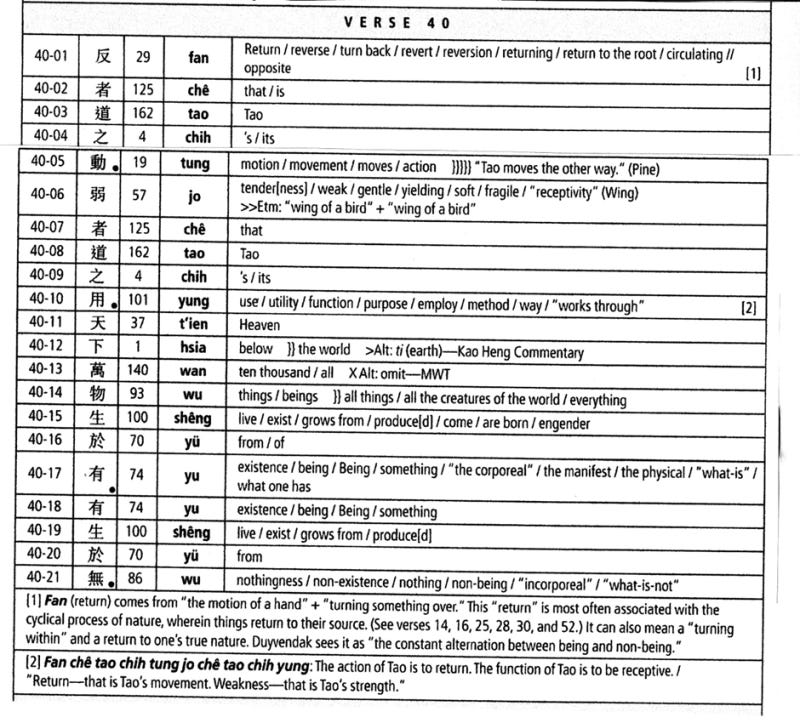
Verse 16 Gnosis of the Tao
Nov 20, 2026 · 19m
Welcome back to Gnostic Insights and to the Gnostic Reformation on Substack. Recently, we’ve been looking at verses out of the Tao Te Ching by Lao Tzu.And for those of you who are new to the...
A Simple Model of Memes, part 3
Nov 12, 2026 · 19m
Over the past two podcast episodes, you’ve been introduced to a number of Simple Explanation memes, and we’re building up a nice sized meme chord of shared definitions. We have taken a brief tour of...

A Simple Model of Memes Part Two
Nov 6, 2026 · 21m
This publication explores philosophical, spiritual, and contemplative subjects whose meanings often depend upon nuance, context, and specialized terminology. Translations are provided as a service...
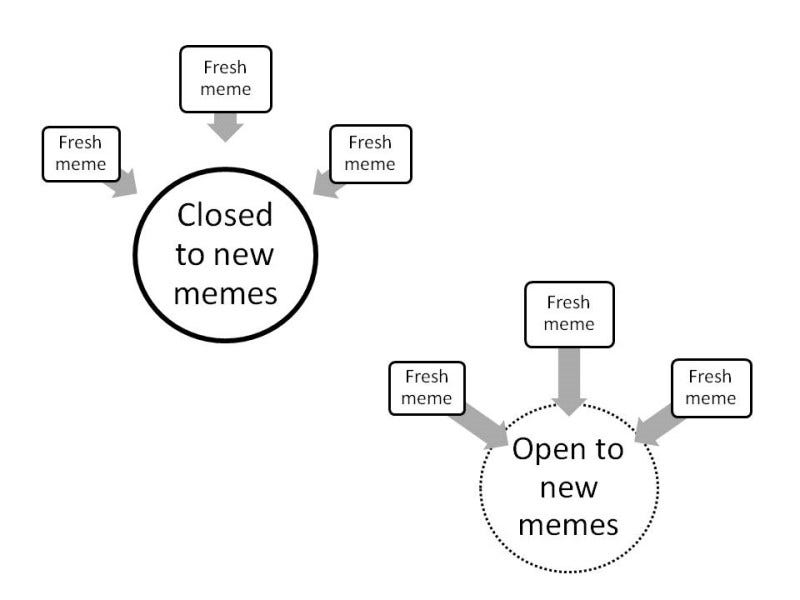
A Simple Model of Memes, pt. 1
Oct 30, 2026 · 27m
Memes are the cultural expressions of societies, and their content is information. Memes, in other words, are the “stuff” of symbolic thought. Everyone holds their own personal bundle of memes tightly...
Mining Gnosis Through the Tao Te Ching-- Verse 53.
Oct 24, 2026 · 19m
Welcome back to Gnostic Insights and to the Gnostic Reformation on Substack. For the past few weeks, we’ve been looking at the ancient Chinese wisdom book called the Tao Te Ching by Lao Tzu. I...
Take these sermons with you.
Follow Gnostic Reformation, Clear and Simple in the Getsermons app to get every new sermon, build playlists, and pick up right where you left off.

