
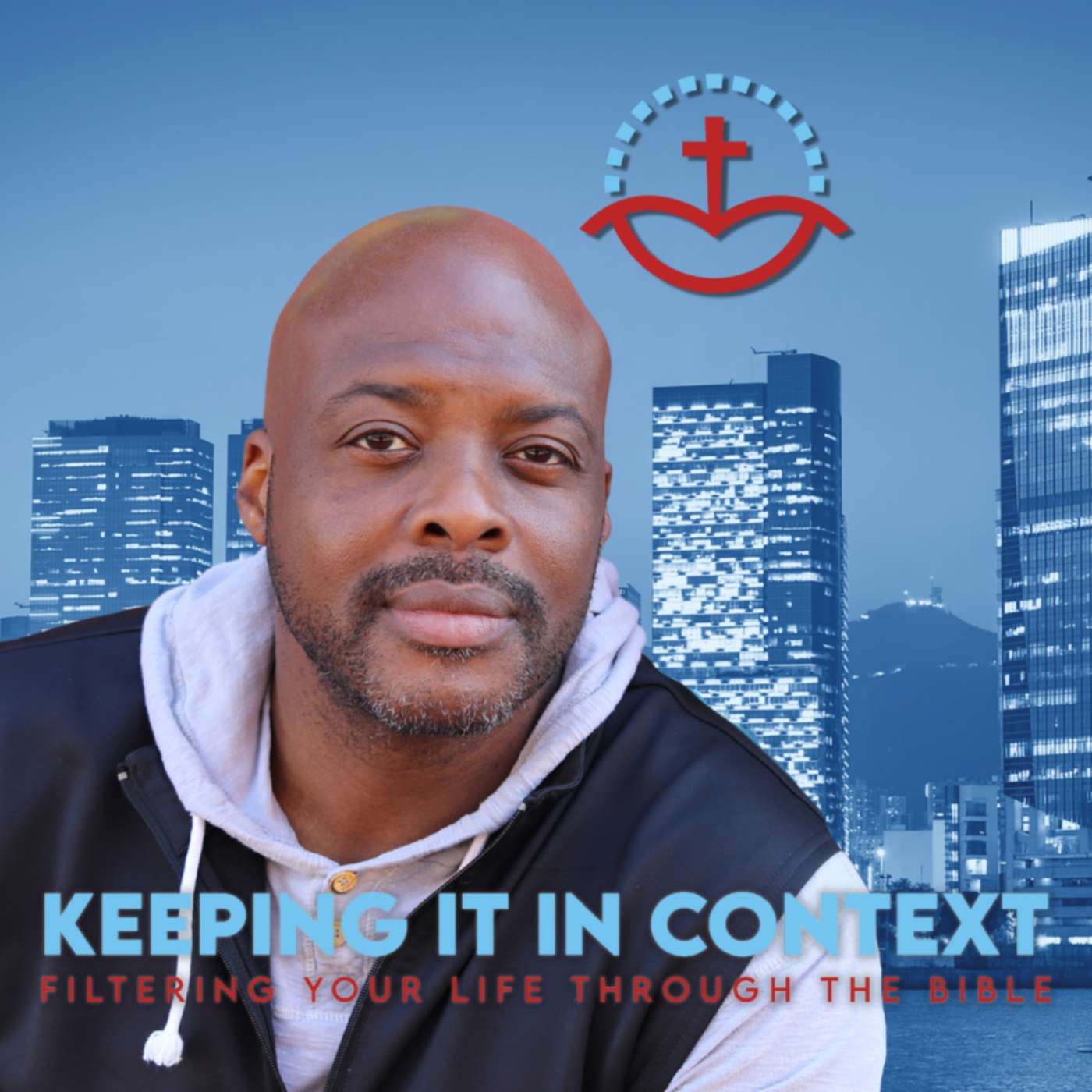
Keeping it in Context
What Does It Take to CHANGE Your Mind?
Sep 1, 2026 · 1h 24m
Prefer sermons downloaded automatically?
About this sermon
Keeping It in Context is finally live.
After years of delays, loss, family challenges, and life getting in the way, host Robert Morris is back with a Bible show that stays on the text. The “IT” is the Bible. The goal is simple: help you filter your life through Scripture in its literary, historical, religious, and cultural context.
This is not a politics show. It is not self-help. It is not entertainment. And it is not a homework dump. Robert introduces a deeper way of reading the Bible and gives you enough to keep going on your own.
In this first live episode, he starts with a Kickstarter on Genesis 1:1. Should it read as an independent clause (“In the beginning God created…”) or a dependent clause (“When God began to create…”)? That grammar fight often centers on protecting creation-from-nothing. Using Hebrew, Logos Bible Software, Vine’s Dictionary, Genesis 2, and a question from the comments about the Septuagint, Robert argues you do not have to force the grammar to protect God’s sovereignty. Bara is richer than “made from nothing.” God formed man from the dust and still created him.
Then the real question of the episode: what does it take to change your mind?
Beliefs get embedded like DNA. Robert uses flat-earth experiments, a conversation with Dr. Michael Heiser about the communion cup, the camel-through-the-eye-of-a-needle myth, snake handling, and “I’m spiritual, not religious” language to show why evidence alone often is not enough. Honesty and humility are required.
From there he opens the big picture: a graph of more than 63,000 biblical cross-references. The New Testament is a commentary on the Old. Scripture is a matrix of ideas, not a private interpretation. Reading 2 Peter 1:12–21, he lays down the only standard he will accept before changing his mind:
WHAT do you want me to believe?
WHY do you believe it?
HOW did you reach that conclusion from the text?
If you cannot show the literary, historical, and cultural context, plus the connections inside Scripture, he will not hand that teaching to his family.
Scripture & tools in this episode
Genesis 1:1–3 • Genesis 1:26–27 • Genesis 2:4–7 • 2 Peter 1:12–21 • Logos Bible Software (not a sponsor) • Logos Research Commentary • Vine’s Complete Expository Dictionary • Lexham English Septuagint
Timestamps
0:00 Welcome to Keeping It in Context
1:08 Why this live took eight years
5:15 The “IT” is the Bible
6:27 Literary, historical, religious, and cultural context
10:02 Kickstarter: Genesis 1
17:29 Does bara mean creation from nothing?
25:50 The Septuagint question
34:40 What does it take to change your mind?
47:34 When beliefs feel like DNA
51:23 63,000 cross-references
59:32 WHAT, WHY, and HOW
1:14:45 The only standard I’ll change my mind on
1:18:02 Merch and how to support the show
1:22:14 Fridays and Sundays at 7 PM CST
1:24:21 Filter your life through the Bible
All links: https://linktr.ee/keepingitincontext
Support the show: https://keepingitincontext.com
More from Keeping it in Context
Is Peter the Rock? The Catholic Argument Explained | Matthew 16:18 (Part 3)
Nov 23, 2026 · 1h 11m
What if Catholics have a stronger biblical argument for Peter being the rock than many Protestants realize?In Episode 009 of Keeping It in Context, we continue our Matthew 16:18 series by examining...
Are You Really Spiritual? What the Bible Actually Says
Nov 16, 2026 · 1h 18m
Are you really spiritual, or have you confused religious experiences with genuine biblical faith?Can someone preach passionately, speak in tongues, become emotional during worship, or claim to hear...
Is Peter the Rock? Matthew 16:18 Explained (Part 2)
Nov 9, 2026 · 1h 14m
Did Jesus build His church on Peter? Or does Matthew 16:18 allow for another interpretation?In Part 2 of our series, Who Is the Rock?, Robert Morris continues examining one of Christianity's most...
What Is the Rock in Matthew 16:18? Why Christians Disagree (Part 1)
Nov 2, 2026 · 1h 23m
What did Jesus mean when He said, "On this rock I will build my church" in Matthew 16:18? Was He referring to Peter, Peter's confession, Himself, or something in the geographical setting of Caesarea...
Why Bible Study Makes You Question What Your Church Taught You
Oct 12, 2026 · 1h 20m
What happens when studying the Bible changes what you believe—but your church isn't ready for the questions you're asking?Can you question your church's teachings without questioning your faith in...
Why Do Christians Disagree About the Bible?
Sep 28, 2026 · 1h 8m
Why can two sincere Christians read the same Bible and come away with completely different interpretations?In this episode of Keeping it in Context, Robert Morris explores one of the most important...
Take these sermons with you.
Follow Keeping it in Context in the Getsermons app to get every new sermon, build playlists, and pick up right where you left off.

