
King's Cross Church South Bay
Saints Like Us
Sep 20, 2020 · 47m
Prefer sermons downloaded automatically?
About this sermon
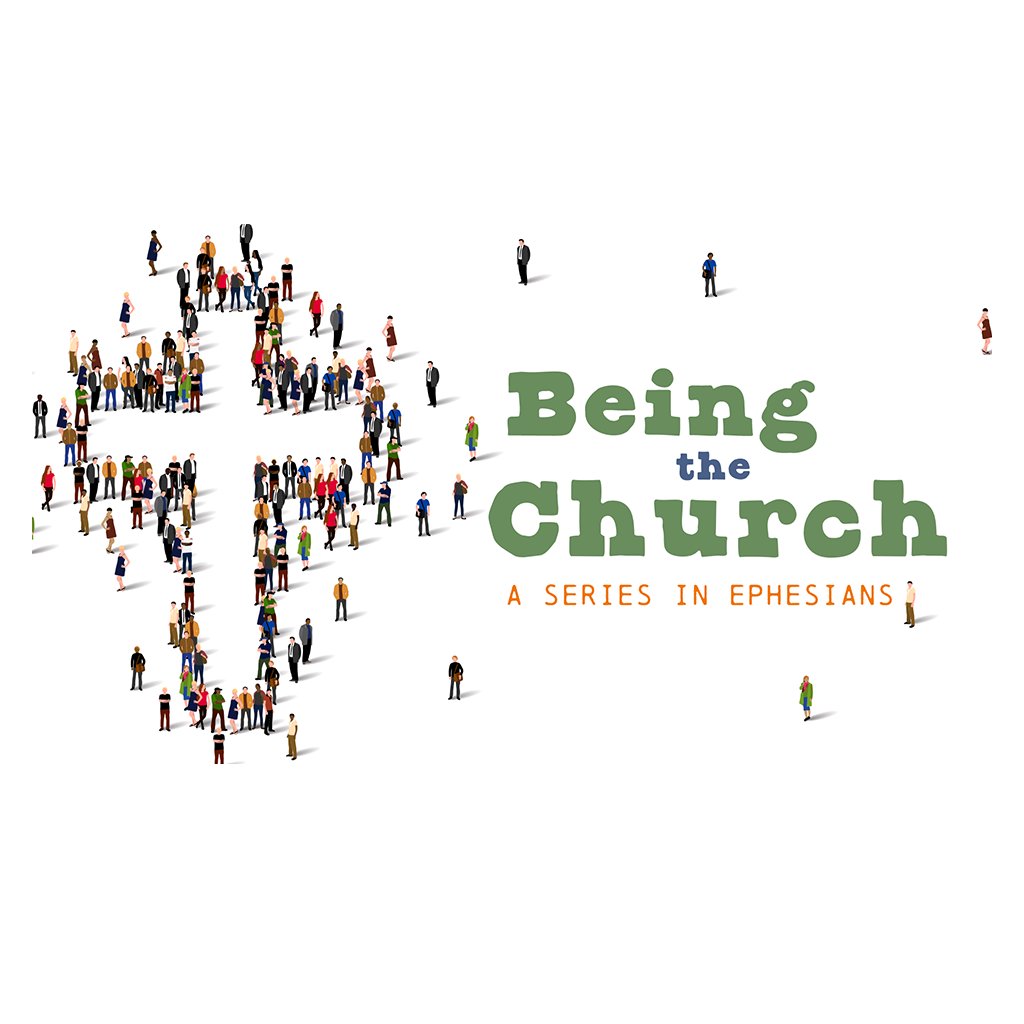
We are starting a new series in the book of Ephesians - a letter of Paul all about Being the Church. At a time when many are wrestling with whether churches should meet, if they are a necessity, and how they might help, this topic seems incredibly relevant. What does it mean to be "the Church" right now? And notice, that's not simply a question Christians alone are asking, but many who do not consider themselves part of the Church are discussing what constitutes a church and whether or not it matters to society. So, let's genuinely ask those very sorts of questions - and hear the answers from God's Word. Who are we as the Church, and why does it matter so much right now?
Discussion Questions
When you hear the word 'saint', what normally comes to mind? How do you casually use the word, or where do you hear it most often in normal life?
To whom is the letter addressed?
Who is the target audience here (v.1), and who does Paul appear to have in mind?
Notice how the New Testament uses the term 'saint': Letter introductions (1 Corinthians 1:2; Romans 1:7; Colossians 1:2; Philippians 1:1), Casual usage (1 Corinthians 6:1-2; 16:1-2; Romans 16:15; Philippians 4:21-22; Colossians 1:12,26), Ephesians (1:15,18; 2:19; 3:8; 4:12; 5:3-4; 6:18). According to the Scriptures, who gets that label? "Saints" literally means 'holy ones/holies." Why might we tend to be reticent to receive that label?
"Church" (ekklesia) literally means "called-out ones." Who gets credit for being called - the caller or the one called? On what basis is one 'called'? People commonly say they were “called” to something, about which they are passionate. How does Ephesians 4:1 put a twist on our calling?
From whom does the letter come?
Who is the author of this letter? Recall what his “qualifications” are (good and bad) from the sermon. Read Acts 7:54-8:1. How might Saul's (Paul's) story encourage his readers? What does Paul claim about himself in Ephesians 1:1? Read Acts 9:1-19. How does God change Paul's life? Can you point out any massive change in your life and direction, due to God’s new calling on your life?
At what point do you think Paul became comfortable with terms like "saint" & "apostle"? Can a murderer find a greater identity or label for him/herself? Considering how great an evil that is, why do we tend to think our worst failures define us? What does it take to change that sense of identity? Are you a sinner or a saint? (i.e., Luther)
What does Jesus mean by "sick" in Mark 2:17? Why is this idea so jarring? In light of what Jesus says here, how might we define spiritual health? At what point do we no longer need "the physician"? How have you tried to perform your way out [of this]? Get specific.
How does that help us?
Knowing Paul's story, what is so incredible about what he is saying and assuming in Ephesians 1:2? Is he claiming to speak on God's behalf? What does it look like to speak from a position and posture of “grace and peace” to others? Can you speak with this kind of confidence or authority to another person about God’s ability to transform? (i.e., cheer up, be encouraged, don’t listen to those negative voices, etc.)
For our sake he made him to be sin who knew no sin, so that in him we might become the righteousness of God. (2 Corinthians 5:21) How do "sinners" become "righteous"? What is the trade Christ is making? Word this as if you’re explaining it to someone who doesn’t understand.
GOSPEL: Jesus was treated like the sinner that I am, so that I could be treated like only He deserves. Even though I do not deserve it, taking shelter under his grace makes me a saint - even while I am still a sinner, upon whom he continues to work.
Consider the analogy of a tree falling through a home, yet a tarp is placed over the roof. Why does the tarp feel insufficient? Is God's agenda just to "tarp over" our brokenness? What more needs to be done? And I am sure of this, that he who began a good work in you will bring it to completion at the day of Jesus Christ. (Philippians 1:6) How might that be encouraging to us when it feels the renovations are incomplete?
Application:
Read the below CS Lewis quote.
“It is a serious thing to live in a society of possible gods and goddesses, to remember that the dullest most uninteresting person you talk to may one day be a creature which, if you saw it now, you would be strongly tempted to worship, or else a horror and a corruption such as you now meet, if at all, only in a nightmare. All day long we are, in some degree helping each other to one or the other of these destinations. It is in the light of these overwhelming possibilities, it is with the awe and the circumspection proper to them, that we should conduct all of our dealings with one another, all friendships, all loves, all play, all politics. There are no ordinary people. You have never talked to a mere mortal. Nations, cultures, arts, civilizations - These are mortal, and their life is to ours as the life of a gnat. But it is immortals whom we joke with, work with, marry, snub, and exploit - immortal horrors or everlasting splendors.”
Since God's design is to complete our holiness as humans, how then should we treat one another? What about the above quote makes that idea more vivid for you? How might you implement those changes at home or work - or when looking in the mirror?
From now on, therefore, we regard no one according to the flesh. Even though we once regarded Christ according to the flesh, we regard him thus no longer. Therefore, if anyone is in Christ, he is a new creation. The old has passed away; behold, the new has come. (2 Corinthians 5:16-17) If the cross makes us revalue everything, what needs to change (be revalued) in your life? What new joys does that realization bring into your life, which helps make those changes possible?
More from King's Cross Church South Bay
Life in the Spirit: Self-Control
Nov 22, 2026 · 50m
This week we finish our series on the fruit of the Spirit with self-control. There is no lack of popularity for this topic in our society. "Become CEO of yourself." "Every habit is an investment in...
Life in the Spirit: Gentleness
Nov 15, 2026 · 51m
This Sunday as we continue our series on the Fruit of the Spirit we come to gentleness. As a society, we love images of Jesus gently welcoming the weak, caring for the grieving, or embracing children....
Life in the Spirit: Faithfulness
Nov 8, 2026 · 50m
Faithfulness is not something that tends to draw our attention... until it is lost or violated. Then suddenly, it matters immensely to us. Our tendency to overlook ongoing faithfulness could be a...
Life in the Spirit: Goodness
Nov 1, 2026 · 50m
When I was a child, E.T. said, "Be good." It was Spielberg reflecting the cultural zeitgeist. We hear the same messaging all the time, even in candy commercials. 'Be a good person. Goodness is...
Life in the Spirit: Patience
Oct 25, 2026 · 45m
Patience. Some adults want to have it. No child wants to learn it. Candy? 'Now, please.' Nine days from now might as well be nine weeks. And nine weeks? Well, just ask a child how far away Christmas...
Life in the Spirit: Kindness
Oct 18, 2026 · 44m
This Sunday we continue our series on the Fruit of the Spirit with kindness. There's an old cliche, "Kill them kindness" - which tacitly admits the goal is not really to be kind but rather to...
Take these sermons with you.
Follow King's Cross Church South Bay in the Getsermons app to get every new sermon, build playlists, and pick up right where you left off.

