
Lectionary.pro
Lectionary.pro for the Fourth Sunday after Pentecost, Proper 7, Year A
Jun 14, 2026 · 52m
Prefer sermons downloaded automatically?
About this sermon
This guide covers the readings appointed in the Revised Common Lectionary for the Fourth Sunday after Pentecost (Proper 7), Year A, falling on June 21, 2026. We are well into the green season now — the long, ordinary stretch of Sundays during which the church listens, week by week, to the long witness of Scripture.
This Sunday’s readings are not gentle. The Gospel continues last week’s account of Jesus sending out the Twelve, but where last week was the calling, this week names the cost. Jesus tells the disciples three times not to be afraid, then warns them that the message will divide families, that they will be hated, and that those who try to hold on to their lives will lose them.
The Old Testament tracks each offer their own difficult companion. Track One follows Hagar and her son into the wilderness after they are cast out at Sarah’s demand — one of the most painful scenes in Genesis. Track Two gives us Jeremiah’s famous lament, in which the prophet accuses God of having tricked him into a vocation that has cost him everything. The Epistle, from Romans 6, sets the baptized at the heart of this difficulty: we have died with Christ, and so what could ordinarily destroy us no longer has the final word.
This is a Sunday that asks the preacher for both courage and tenderness. The Gospel in particular has been used in some of the most damaging ways in the church’s history — to justify family estrangement, to coerce loyalty, to bless suffering that people did not choose. The guide names those misuses plainly in the cautions, because the texts will preach better when their misuses are named than when those misuses are left to lurk.
The Readings
Genesis 21:8–21
First Reading (Track One) — Hagar and Ishmael in the Wilderness
Summary
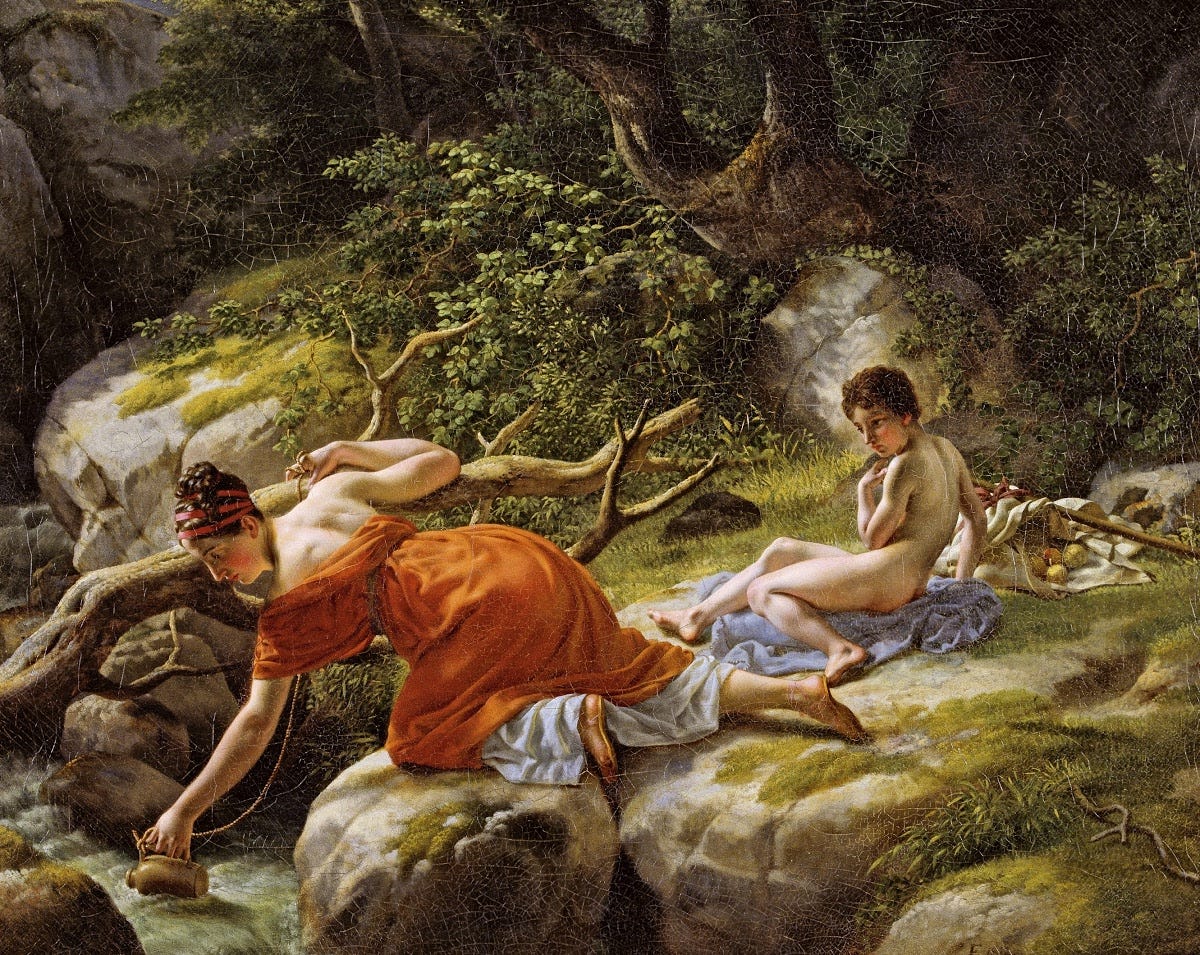
The day Isaac is weaned, Abraham throws a great feast. Sarah looks across the celebration and sees Ishmael — the son Hagar bore to Abraham years earlier — and something hardens in her. She tells Abraham to send Hagar and the boy away, so that Ishmael will not inherit alongside Isaac. The text says the matter is very distressing to Abraham, but God tells him to do as Sarah says, with the promise that God will also make a nation of Ishmael. The next morning Abraham sends Hagar out with bread, a skin of water, and the boy. The water runs out in the wilderness. Hagar puts the child under a bush so she will not have to watch him die, and she lifts up her voice and weeps. God hears the boy’s voice. An angel speaks to Hagar — do not be afraid, God has heard him where he is. God opens her eyes, and she sees a well that was there all along. The boy grows up in the wilderness and becomes the ancestor of a great nation.
Key Ideas for Preaching
* The text says God heard the voice of the boy — and the name Ishmael means “God hears.” The story is its own argument: there is no one whose voice God does not hear, including the ones the official story has cast out. Where does your congregation tend to assume that some voices reach God and others do not, and how might Ishmael’s name interrupt that assumption?
* Hagar does not see the well until God opens her eyes. The water was already there. What might it mean for your people that the help they have been pleading for may already be present, waiting to be seen rather than waiting to be made?
* God’s promise expands rather than narrows. Isaac receives the promise, and Ishmael will also become a great nation. The text refuses to make this an either/or. Where in your congregation has the assumption taken hold that God’s blessing is a finite resource — that someone else’s portion must come out of ours?
* The story sits uncomfortably with us, and it should. There is real cruelty here, and real grief. What might it look like to preach this scene without rushing toward a moral, letting your people sit with the painful complexity of a family text that does not resolve neatly?
Significant Cautions
* Hagar’s story has been used in the church to claim that one religious people has displaced another — most painfully in claims that Christianity has replaced Judaism, or that the Arab descendants of Ishmael are outside God’s care. The text itself refuses this reading. God’s blessing extends to both lines.
* Sarah’s demand and Abraham’s quick compliance are easy to moralize — to make Sarah a villain or Abraham a coward. The text is more honest than that. They are real, flawed people inside a real, flawed family system, and the story does not ask us to pick sides among them.
* The line that God told Abraham to listen to Sarah has sometimes been used in troubling ways. Read in context, it is God’s particular guidance about this particular moment — not a general endorsement of any voice that arrives within a family.
* This is a Genesis story that Muslims also hold as sacred — Ishmael is the ancestor of the Arab peoples, and the well in this text is foundational to Islam. Be particularly careful with any language that would imply Christians have an exclusive claim on the material.
Hagar and Ishmael in the Desert by Christoffer Wilhelm Eckersberg
Psalm 86:1–10, 16–17
The Psalm (Track One) — Incline Your Ear, O Lord
Summary
This is a psalm of supplication from someone in deep need. “Incline your ear, O Lord,” it begins; “I am poor and needy.” The psalmist names God’s character — good and forgiving, abounding in steadfast love — and pleads for an answer. The middle of the psalm widens the view: God is unique among all the gods of the nations, the maker of all peoples, the one to whom every people will one day come. The selected verses close with another plea: turn to me, give me strength, save me, show me a sign of your favor.
Key Ideas for Preaching
* The psalmist names himself “poor and needy” — and names it to God, not hides it. What does it look like for your congregation to bring their actual need to God without first trying to dress it up?
* The psalm holds together a private cry and a cosmic vision. In the same breath the psalmist asks God to listen to him and reminds himself that all the nations will one day come and bow down. How might your sermon hold those two together — the intimate and the vast — without flattening either?
* The plea is grounded in who God is, not in who the psalmist is. God is good and forgiving, abounding in steadfast love. Where in your congregation has prayer started to feel like throwing words into a void, and how might naming who God is steady that?
Significant Cautions
* The psalmist asks God to act so that “those who hate me may be put to shame.” That is honest prayer, but it can also become a weapon. Be careful about preaching this verse in a way that licenses contempt for those we disagree with.
* “I am devoted to you” can be heard as the psalmist claiming exceptional faithfulness. Read in the context of the whole psalm, it is relationship language, not a boast about merit.
Jeremiah 20:7–13
First Reading (Track Two) — A Fire Shut Up in My Bones
Summary
Jeremiah turns to God in something close to anger. You have tricked me, he accuses; you have overpowered me. He has become a laughingstock. Everyone mocks him; his message of judgment has cost him friends and reputation. He has tried to keep silent — but the word of God, he says, is like a fire shut up in his bones, and he cannot hold it in. Even his closest acquaintances are watching for him to stumble. And then, in the middle of the lament, the tone turns. He remembers that God is on his side, that the Lord is with him like a dread warrior. He calls on the assembly to sing to the Lord. The lament does not erase itself, but it ends — for now — in praise.
Key Ideas for Preaching
* Jeremiah accuses God of trickery and gets away with it. The text does not punish him for the accusation; it preserves it as Scripture. What might it mean for your congregation to hear that even rage toward God can be a faithful prayer?
* The word inside Jeremiah is “like a fire shut up in my bones.” He cannot keep it in even when keeping it in would be easier. Where in your congregation is there a truth that needs …
This is a public episode. If you'd like to discuss this with other subscribers or get access to bonus episodes, visit lectionarypro.substack.com/subscribe
More from Lectionary.pro

Lectionary.pro for the First Sunday of Advent, Year B
Nov 23, 2026 · 25m
It’s not too late! Two great resources for getting your Advent and Year B preaching off to a great start: Guide to The Arc of Advent, Year BPersonal Study Edition of the Lectionary Texts for Year...

Lectionary.pro for The Reign of Christ, Year A
Nov 16, 2026 · 24m
This Sunday closes both the year and the long walk through Matthew. The last three parables move from readiness (the bridesmaids) to faithfulness with what we have been given (the talents) to...

Just in Time for Year B: A Brand New Resource
Nov 11, 2026 · 5m
From the team at The Lectionary Lab comes the best time-saving, study-enhancing project we have ever designed. The Personal Study Edition of the Lectionary Texts for Year B -- every single one of...

Lectionary.pro for the Twenty-Fifth Sunday after Pentecost, Proper 28, Year A
Nov 9, 2026 · 50m
The Gospel is the parable of the talents — the second of three parables in Matthew 25 that close the Matthew arc. A man going on a journey entrusts his property to three slaves. Two invest what they...

Lectionary.pro for the Twenty-Fourth Sunday after Pentecost, Proper 27, Year A
Nov 2, 2026 · 49m
We are just about ready to wrap up another church year (liturgically speaking, that is) and our texts for this week send us into Jesus’ own musings about how things get wound down (or up, depending on...

Lectionary.pro for the Twenty-Third Sunday after Pentecost, Proper 26, Year A
Oct 25, 2026 · 46m
A note on the calendar coincidence: November 1 is All Saints’ Day, which falls on a Sunday this year. Congregations observing All Saints with its own propers will use those readings. This guide covers...
Take these sermons with you.
Follow Lectionary.pro in the Getsermons app to get every new sermon, build playlists, and pick up right where you left off.

