

Michael J. Lilly Podcast
Divine Scales
May 6, 2026 · 10m
Prefer sermons downloaded automatically?
About this sermon
It’s incredibly common in modern church culture to hear people say that “all sin is the same to God” or “sin is just sin.” It usually comes from the good intention of emphasizing that everyone needs grace. We want to level the playing field to show that nobody is beyond the need for salvation. While the motivation behind the phrase is understandable, the theology behind it is fundamentally flawed.
Philosophically, the idea that all sins are equal actually originates not in Scripture but in ancient Stoicism. The Stoics taught a paradox that all moral failures were exactly equal because any failure was simply a departure from perfect reason. To them, missing the mark by an inch was the same as missing it by a mile. But biblical Christianity rejects this flattened view of morality.
The reality is, there is in fact a distinction between the status of being a sinner and the degree of the sin committed. An analogy, if you’ll allow:
* A single drop of poison makes a glass of water undrinkable. That speaks to its status.
* Drinking a single drop of poison doesn’t have the same physical consequence as drinking a whole gallon. That speaks to the degree.
While every sin ruptures our relationship with God and makes us guilty in some sense, the Scriptures and the historical practice of Christians over the last 2,000 years consistently demonstrate that sins differ in severity, guilt, and judgment according to intent, knowledge, and the harm they cause.
Old Testament Witness
The Old Testament sacrificial system wasn’t a blind bureaucracy. It was a relational framework that categorized sins by the posture of the human heart. God makes clear distinctions between a genuine mistake and calculated rebellion.
We see this in the law regarding unintentional sin: “And if one soul sins unintentionally, he will bring a yearling female goat for a sin offering” (Numbers 15:27). A sin committed out of ignorance still requires atonement because God is holy, but the required sacrifice is less costly. It acknowledges human frailty without destroying the person.
On the other hand, willful and defiant rebellion carries a distinctly heavier weight and a fundamentally different consequence. The very next passage outlines this severity: “And the soul, whoever acts with a hand of arrogance, whether he is native-born or a foreigner, this one provokes God; and that soul will be cut off from among his people” (Numbers 15:30). To sin with a “hand of arrogance” is to act with premeditated defiance. For such a rebellion, there is no routine sacrifice offered; only severance from the community. God’s own law proves that the severity of the sin is connected to the sinner’s intent. God’s justice is proportional.
New Testament Witness
If anyone was going to flatten morality into a single standard, we might expect it to be Jesus. Yet, we see the exact opposite in his teaching. He actively calibrates the divine scales to show that certain offenses matter far more than others.
Jesus explicitly uses comparative language when discussing the law: “Woe to you, scribes and Pharisees, hypocrites, because you tithe mint and dill and cumin, and have neglected the weightier matters of the law: justice and mercy and faithfulness” (Matthew 23:23). He mocks the religious elite for obsessing over microscopic infractions while ignoring bigger moral failures. To God, neglecting justice and mercy is infinitely heavier on the scales than failing to tithe garden herbs. St. John Chrysostom, preaching on this specific verse, taught that while all sin is an offense against God, the punishment and severity vary wildly. He noted that Christ is showing us how God judges our actions not just by the rule broken, but by the intent and the specific harm caused.
Jesus also teaches that a person’s awareness of God’s will directly impacts the severity of their judgment: “And that slave who knew the will of his master and did not prepare or act according to his will, will be beaten with many blows. But the one who did not know, yet did things worthy of blows, will be beaten with few blows” (Luke 12:47-48). Accountability scales with revelation. A person who sins in ignorance will face judgment, but the believer who knows the Master’s will and intentionally disobeys will face a far more severe consequence.
Later, during his trial, Jesus clarifies to Pilate that guilt isn’t distributed equally among those involved in his crucifixion. He tells the Roman governor: “Jesus answered him, ‘You would have no authority against me at all, unless it had been given to you from above; because of this, the one handing me over to you has a greater sin’” (John 19:11). Pilate was a cowardly pragmatist sentencing an innocent man to die, which was terribly sinful, while the religious leaders were intentional orchestrators of the execution. Jesus looks at two groups participating in the same event and declares one to have a “greater sin.”
The apostles carried this teaching forward, recognizing that certain sins give rise to distinct spiritual realities and require different pastoral responses. The Apostle John explicitly divides sins into two categories regarding their outcome: “If anyone sees his brother sinning a sin not unto death, he will ask, and God will give life to him, to those who are sinning not unto death. There is a sin unto death; I do not say that he should ask concerning that” (1 John 5:16). Different spiritual realities require different approaches.
James also warns that those who teach will be judged with greater strictness: “Do not become many teachers, my brothers, knowing that we will receive a greater judgment” (James 3:1). Actions have weighted consequences based on a person’s position and influence. A leader leading people astray carries more weight than someone struggling with a personal sin.
Early Church Practice and Ancient Canons
The historical record shows that Christians have always recognized that not all sins are created equal, a belief deeply embedded in early church practice.
At the Council of Nicaea in 325 AD, the bishops explicitly codified degrees of guilt into canon law. In Canon 11, they established distinct canonical penalties for those who denied the faith. They carefully distinguished between those who lapsed under extreme coercion or torture and those who fell away without any compulsion at all, assigning much heavier penances to the willful betrayals. Canon 12, dealing with Christians who returned to the pagan military, the council instructed bishops to adjust the length of penance based on the person’s inward intent, fear, and sorrow. St. Basil’s canonical letters clearly demonstrate the same framework. He prescribed vastly different periods of repentance and exclusion from the Eucharist based on the severity of the sin. For example, he made strict, measured distinctions between intentional murder and involuntary manslaughter.
The Council of Constantinople in 381 AD demonstrates that the early church even saw degrees of severity in false teaching. Canon 7 outlined that certain heretics needed to be rebaptized to re-enter the church, while others, whose errors were deemed less severe, only required chrismation. Canon 102 of the Quinisext Council in 692 AD explicitly instructs bishops to weigh the “quality of the sin” and the sinner’s disposition. The canon states that not all spiritual illnesses are the same, and they require different degrees of spiritual medicine. Measuring the weight of a sin wasn’t just a theological theory for the early church; it was standard pastoral practice.
The Justice and Mercy of True Proportionality
From the logic of natural law to the explicit teachings of Jesus, the Apostles, and the historic Church Fathers, the verdict is consistent: All sin separates us from God, but not all sin is created equal.
If we teach that all sin is the exact same, we inadvertently make God out to be an unjust judge who lacks the nuance to distinguish between a momentary lapse in judgment and premeditated evil. It also breed…
Get full access to Test Everything at testeverything.substack.com/subscribe
More from Michael J. Lilly Podcast

The Triune God and His Divine Council
Jun 11, 2026 · 15m
If you were to sit down with a modern Christian, hand them a Bible, and ask them where the story begins, almost all of them would immediately turn to Genesis 1:1. We tend to open the book, look at the...

The House Church Myth Revisited
May 30, 2026 · 24m
In their video response to my article, “The House Church Myth,” Matt Dabbs and Tom Wadsworth attempt to defend the modern “organic” house church movement. They argue that the first-century church...

A Supernatural Worldview for a Supernatural Book
May 25, 2026 · 11m
We like to think we read the Bible exactly as it was written. We open the text, read the words, and assume our modern brains are perfectly capturing the original intent of the authors. But the truth...

Preachers for Hire
May 12, 2026 · 10m
Today’s church pulpits often feel more like corporate seminar stages than sacred spaces. Many focus on polish, production, and engaging speakers. We look for someone who can keep an audience’s...
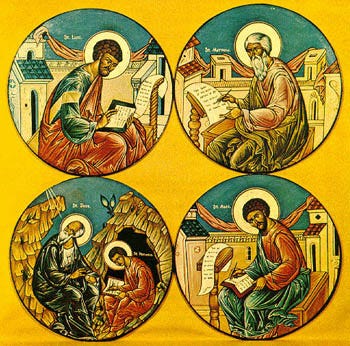
Oral Tradition and the Synoptic Problem
Apr 29, 2026 · 8m
Have you ever noticed how similar Matthew, Mark, and Luke are? They share a tremendous amount of material, often word-for-word. Scholars call this the “Synoptic Problem,” and they have debated for...

The Liturgical Life of the Text
Apr 17, 2026 · 10m
In modern academia, especially at the pop-level or lower tiers of textual scholarship, there is a pervasive tendency to treat textual criticism as a purely empirical science. Scholars often attempt to...
Take these sermons with you.
Follow Michael J. Lilly Podcast in the Getsermons app to get every new sermon, build playlists, and pick up right where you left off.

