
Misreading Literature Podcast
Ora et Labora
Oct 27, 2026 · 18m
Prefer sermons downloaded automatically?
About this sermon
During our Cultivating Intention class we have been focusing on identity and calling. This week we took a more focused look at the role of work - even the mundane and tedious - and how work is a way to act out our calling as image bearers and to bring small bits of order where it might be easy for chaos to rule and reign.
“Whatever you do, work at it with all your heart, as working for the Lord, not for human masters, since you know that you will receive an inheritance from the Lord as a reward. It is the Lord Christ you are serving.” - Colossians 3:23-24
As we are reminded in Colossians, there is no task that falls outside of this scope, and, in a sense, ALL of our work can be unburdened from toil when we make it about working for the LORD. We can live within our limits, hold boundaries, avoid letting task create our identity and purpose… and we can be free to simply do what is in front of us. It’s a strange thing - on first read of that verse I’ve always thought that the pressure to perform was exponentially added to, but in the context, I know that none of my work will ever replace the work of the cross - and it will never need to. The simplicity of doing the work can be done with the hope that the cross will transform it, just as it has transformed me.
Fascinatingly, I have come to think of how we work, even how we view work, is a reflection of our deeply rooted theology. And I do not mean that this is only for Christians or only for those who claim to believe in a god or higher power - this applies to ALL people. I am more and more convinced of the reality that everyone holds to a faith worldview, even if that faith is in themselves and the material world. Our work becomes a reflection of what we hold to be true about the ultimate in reality because work is often dictated by our purpose and aim - by our telos.
And no wonder so many of us find work to be the great void Tyler Durden speaks into - we live in fragmented times. Our lives are fragmented into different social groups, and we are consumed with code switching from place-to-place, never settling on living out of a single reality, but trying to hold multiple realities as equal and valid - except not. We void each of those realities the second we move from one compartmentalized segment to the next - and this is its own post-modern theology in and of itself. I think this is the heartbeat of David Foster Wallace’s Infinite Jest - who am I really? Addict? Tennis player? Traumatized nonverbal floating head? We don’t know. That’s why we are struggling, in our time, to find meaning, purpose, and place.
“A Cosmic philosophy is not constructed to fit a man, it is constructed to fit a cosmos. A man can no more possess a private religion than he can possess a private sun and moon.” - GK Chesterton, “The Book of Job”
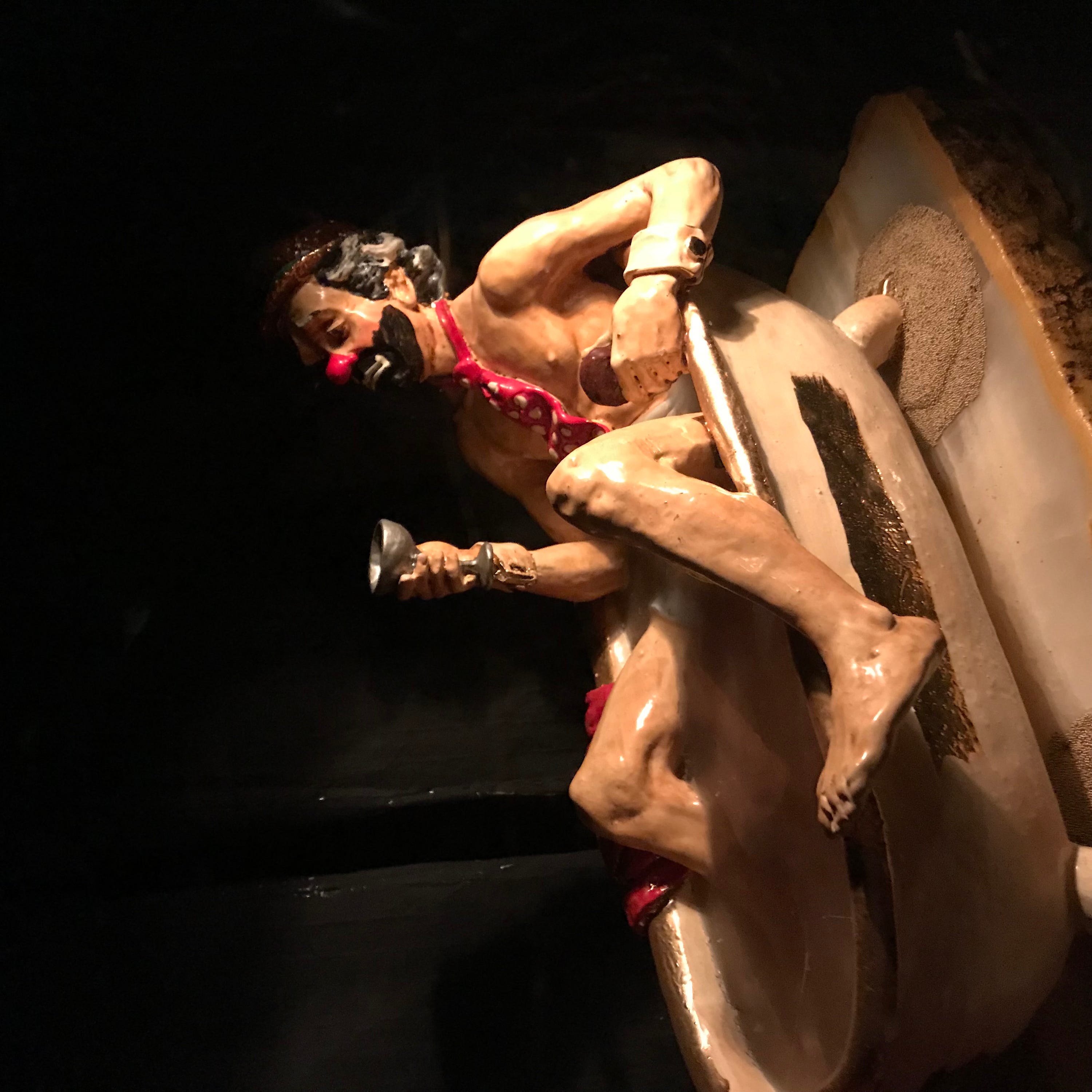
We’ve become enamored with this sense of each of us as our own unique island and cosmos unto ourselves, with unique ways of seeing the world, that we’ve forgotten that we also share a world and fit within a cosmos. I’ll have more to write on that particular topic when I get into reviewing Heinrich Böll’s The Clown, and other existentialist pursuits of authenticity. For now, these brief fragments of there own, will need to suffice.
Get full access to Misreading Literature at brianjcooper.substack.com/subscribe
More from Misreading Literature Podcast
Stabilitas
Nov 21, 2026 · 12m
As we continue to Cultivate Intention and develop a Rule for Life, our class turned towards Stabilitas. It is easy to think of stability as a thing more like James Clear’s Atomic Habits - small, daily...
What Leisure Reveals
Nov 8, 2026 · 14m
“Deficiencies can be overcome if you work hard enough. A missed opportunity, however, can never be regained.” – Haruki Murakami from an essay in his book Novelist as a VocationThis week in Cultivating...
Purpose, Place, and Incarnational Narratives
Oct 16, 2026 · 15m
“In the matter of reforming things, as distinct from deforming them, there is one plain and simple principle; a principle which will probably be called a paradox. There exists in such a case a certain...
Heart Posture vs. Performative Christianity
Oct 10, 2026 · 18m
Without fail, at least once during class, one of my high school teachers would mention her core philosophy: “It’s ALL connected.” There is a lot of truth in that statement, and as storytelling...
Take these sermons with you.
Follow Misreading Literature Podcast in the Getsermons app to get every new sermon, build playlists, and pick up right where you left off.

