
Modern Mind, Ancient Book | Bible Study in Jewish Context
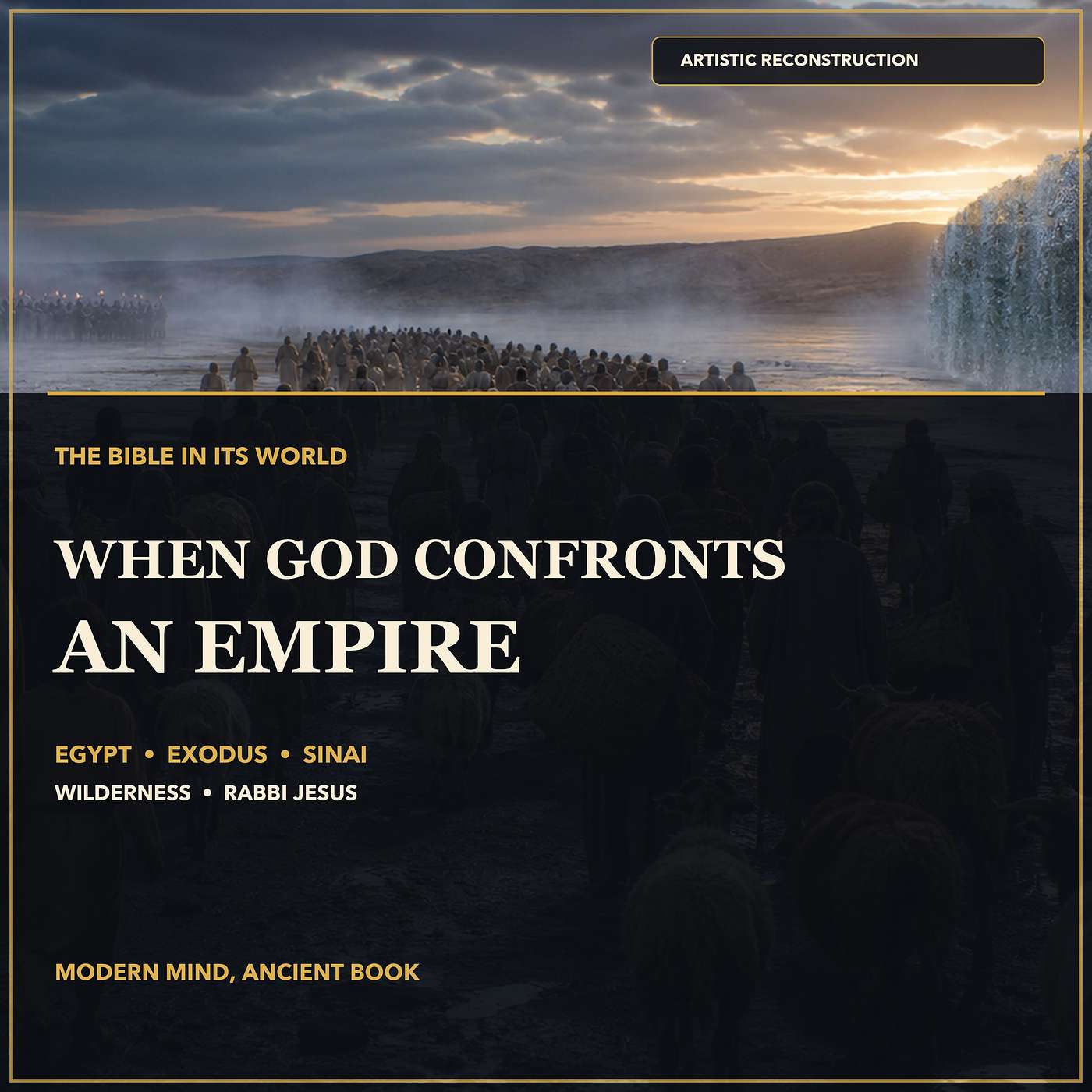
When God Confronts an Empire: Egypt, Exodus, and the Wilderness
Aug 28, 2026 · 29m
Prefer sermons downloaded automatically?
About this sermon
Send us Fan Mail
Why does God bring His people out—and what happens when an empire acts as if
it owns their bodies, children, and future?
Enter the world of Egypt's Eighteenth Dynasty and follow one covenant movement:
a cry rises, God remembers Abraham, Isaac, and Jacob, Pharaoh's power is
confronted, Israel passes through the sea, Torah is given, God's presence comes
near, and the wilderness reveals the heart.
Modern Mind, Ancient Book follows the responsible conservative high-date model
and places the Exodus around 1446 BC. We set Exodus beside Egyptian royal
claims, New Kingdom ideals of justice, a fifteenth-century brickmaking scene,
and the wider ancient legal world. Egypt's sources illuminate the setting, but
Scripture tells us what the Exodus means: God brings Israel out of slavery,
brings Israel to Himself, forms a covenant people by His word, and dwells among
them.
Passover joins judgment and mercy at the household door. The Song of the Sea
makes remembered theology musical. Sinai teaches that redemption comes before
command. The tabernacle shows that divine presence is a purpose of rescue, and
the wilderness teaches dependence, perseverance, and whole-life holiness.
The road then leads to Rabbi Jesus: the Son called out of Egypt, faithful in
the wilderness, our Passover sacrifice, and the Messiah whose departure at
Jerusalem confronts the deeper slavery of sin and death. Jesus fulfills
Israel's vocation; He does not erase Israel.
Scripture
Genesis 15:7; Exodus 2:23–25; Exodus 5:1–6:8; Exodus 12:1–15:21; Exodus
19–20; Exodus 29:45–46; Deuteronomy 8:1–5; Matthew 2:15; Matthew 3:13–4:11;
Luke 9:28–31; 1 Corinthians 5:7; 1 Corinthians 10:1–14.
Scripture quotations are from the Berean Standard Bible (BSB). The Berean
Bible and Majority Bible texts are dedicated to the public domain.
Explore the evidence
- The Metropolitan Museum of Art: Brickmakers, Tomb of Rekhmire: https://www.metmuseum.org/art/collection/search/544649
- Miriam Lichtheim, Ancient Egyptian Literature, Volume II: the installation
of the vizier Rekhmire and the Poetical Stela of Thutmose III.
- T. Desmond Alexander and David W. Baker, eds., Dictionary of the Old
Testament: Pentateuch: “Exodus, Date Of” and “Law.”
- Douglas K. Stuart, Exodus, New American Commentary.
- Kenneth A. Kitchen, “Exodus, The,” Anchor Yale Bible Dictionary.
- BDAG, ἔξοδος; HALOT, גאל and פסח, consulted in context with grammar,
Scripture, and the wider literary argument.
The Rekhmire facsimile belongs to the correct fifteenth-century Egyptian world
and depicts brickmaking, but it does not identify the workers as Israelites.
That boundary protects the difference between evidence and illustration.
Find the Way—Meet Rabbi Jesus.
Walk the Way — Modern Mind, Ancient Book.
All our teaching remains free. Support Modern Mind, Ancient Book
More from Modern Mind, Ancient Book | Bible Study in Jewish Context
Does Spiritual Power Prove Character? | Switched On | Bible Study
Nov 27, 2026 · 21m
Does spiritual power prove character? Scripture gives a clear answer through Gideon, Jephthah, Samson, Saul, David, and Jesus: a real gift can serve God’s purpose without certifying every desire,...
One King. One People. One Way. | The Way Back Together | Bible Study
Nov 26, 2026 · 7m
What can bring us together when agreement about every doctrine cannot? Jesus’ prayer for unity and Ephesians’ account of reconciliation point to shared allegiance and tangible love. We read the...
What Stands Between Us and Jesus? | Tradition and Mercy
Nov 24, 2026 · 9m
When does a helpful tradition begin to displace what God asks? Jesus’ words about parents, mercy and judgment help us examine our own barriers. We keep discernment, correction and accountability...
What Does God Hear When Worship Ignores Justice? | Amos 5–6
Nov 23, 2026 · 31m
What does God hear when worship ignores justice? Walk through Amos 5:1–6:14 and explore why the LORD calls His people to seek Him and live—and why religious confidence cannot excuse harm to...
Abraham: A New Name and a Promised Son | Genesis 17
Nov 23, 2026 · 4m
God gives Abram and Sarai new names—and promises a son when they are old. Follow Abraham through the covenant promises of Genesis 17, the blessing of Ishmael, the promise of Isaac, and the household’s...
He Said, Follow Me | Hearing Jesus and Doing His Words
Nov 22, 2026 · 10m
What does calling Jesus Lord ask of our actual lives? The two builders show why hearing his teaching must become a response. We hear Jesus within Israel’s Torah and prophets, consider love of God...
Take these sermons with you.
Follow Modern Mind, Ancient Book | Bible Study in Jewish Context in the Getsermons app to get every new sermon, build playlists, and pick up right where you left off.

