
Mosaic Boston - Sermons
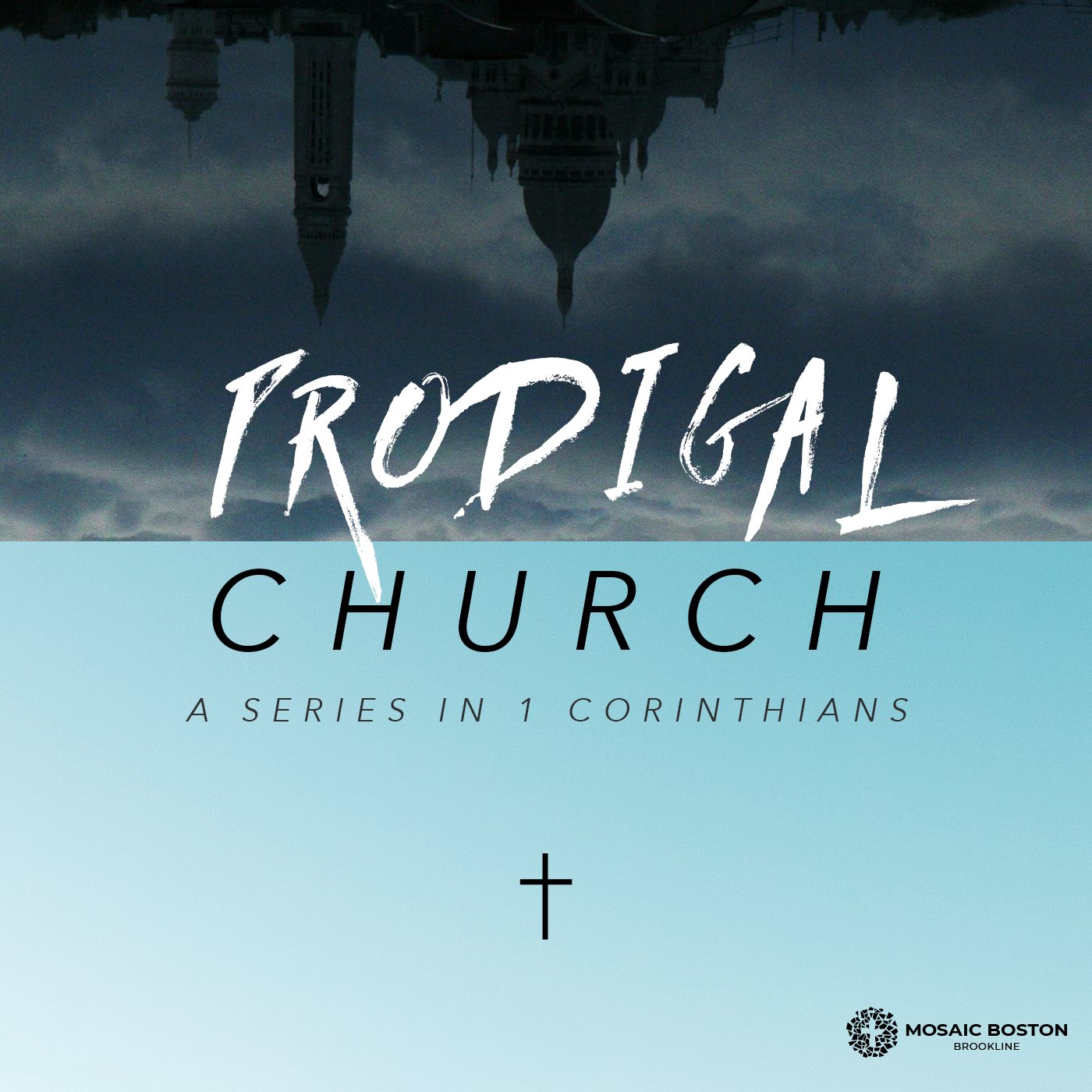
Prodigal Church
May 5, 2019 · 50m
Prefer sermons downloaded automatically?
About this sermon
Summary:
The church in Corinth was going through an identity crisis, comprised of people going through their own identity crises. We too live in a culture that obsesses over identity. Who am I? How do I fit in this world? "Identity" language is the heart language of our culture. We base our identity on our sexuality, politics, dietary preferences, work out routine. We want to be known for our education, career accomplishments, where we live, what we own. The Apostle Paul addressed the Corinthians with relevant lessons for us as well.
Audio Transcript:
This media has been made available by Mosaic Boston Church. If you'd like to check out more resources, learn about Mosaic Boston and our neighborhood churches, or donate to this ministry, please visit Mosaicboston.com.
Hello, welcome to Mosaic church. My name is Jan, I'm one of the pastors here at Mosaic. If you're new, if you're visiting, welcome. We're so glad you're here, and we'd love to connect with you if you'd like to connect with us. We do that officially through the connection card in the worship guide. If you fill it out legibly and then toss it into the offering basket after, we'll be sure to get in touch with you over the course of the week.
Also, if you today for the very first time, respond to the gospel and choose to become a Christian, you can check that off and let us know. If you're interested in baptism, if you have any prayer requests, that's the place to do it.
One announcement I will highlight, we have a members meeting today. If you are a member of Mosaic or becoming a member today and you've been notified by us, we have the meeting from 1:00 to 3:00 PM. If you had no idea, then you clearly haven't been listening for awhile.
But still, glad you're here and you have time at the end of the service. It's a potluck, really important. You got to bring a meal. If you don't have one, you can run to Whole Foods. Five minute walk, rotisserie chickens, $7.99. If you choose, there's an organic version for $9.99 and people would really appreciate that. With that said, would you please pray with me over the preaching of God's word?
Heavenly Father, I pray that you today remind us that if we are your children, if we are Christians, if we are blood-bought, sanctified, set apart for you, that you have given us your name, the name above all names, the name of Jesus Christ, that we carry Christ in our name, that we are Christians.
I pray, Lord, that you remind us that though the world bombard us with ideas of who we are, who we should be, how we should live and try to form and shape our identity, I pray that you remind us that your voice is authoritative over all voices. Because we are yours. We are defined by you. You love us. Therefore, when you tell us how we are, to live who we are, it's because you want the best for us.
I pray Holy Spirit, as we hear perhaps some hard truths, that we do wrestle instead of just rejecting it and perhaps walking out. I pray that we wrestle with these truth, and wrestle with the foundation what is truth? Whose truth is more authoritative than another's truth, and that all trues are not equal. I pray that you show us that your truth is above all truth, and that we are to walk in a manner worthy of the gospel of Jesus Christ.
Holy Spirit, come prepare our hearts to hear, to think, to meditate, to ruminate, and to be transformed by your word. We pray this in Christ's name. Amen.
So we're beginning a sermon series, which will take us through the end of the summer, in the epistle to the Corinthians, First Corinthians, and we are calling this series Prodigal Church. Why Prodigal Church, why that name? It's because the church in Corinth is a brand new church that Saint Paul had planted in the year 49 AD. His strategy was to go to city centers. He believed that if you reach the city center, which is most influential, you can actually transform not just the city, but all of society. As the city goes, so does the nation. So does the society, the culture.
So he planted that church. Then he goes to Ephesus, spends three years in Ephesus. As he's in Ephesus, he hears that the church in Corinth isn't doing well. They have begun to capitulate to the culture. The voices of the culture have begun to become authoritative in the church. Instead of creating a new culture, and transforming and redeeming the culture from within, they're beginning to look like the culture. So he writes this letter.
Just to set the context. Corinth, though millennia removed from us, is very similar to Boston. Why? Because though we have advanced in technology, education and medicine, the human heart has not changed. The human heart still has the same sinful tendencies and proclivities. Something about Corinth that we are to know, it's incredibly diverse, incredibly influential.
It's thriving into world-class city. It's the center of education, of commerce, of educational and technological advancement. It's very sophisticated. It's a place of excellence, where people go, and because of the high level of competition, they need to up their game and level up. It's also a place of mobility and transients. People come and go. People coming from all over the world, and bringing new ideas that vie for the attention of the people that live there.
One ancient visitor described the city of Corinth by saying, "The sordidness of the rich and the misery of the poor were extraordinary. Abounding in luxuries, but inhabited by an ungracious people." That sounds familiar. It's people from all over the Roman Empire, coming to make a name for themselves, to make a life for themselves. Like Boston, there's only a small percentage of Christians. It's largely a Godless city.
It's a city that is, has been inundated with materialism and consumerism, worship of sports and entertainment. There's games very similar to the Olympic games. There's lots of competing religions and ideas. There's a postmodern pragmatism there, were universals don't matter. That truth doesn't matter, it's all relative as long as you make a living for yourself, make a name for yourself. When people have affluence, when they have money and they have margin in their life, what happens is, they sometimes are prone to substance abuse and drunkenness. We see that in this city, and even in the church itself.
It's also a city that was largely dominated by sexual morality and all kinds of debauchery, sensuality of city life. There's a great temple of Aphrodite at the top of the Hill, where the priestesses were actually prostitutes. Below was a temple to Apollo that celebrated homosexuality. The word Corinthianize became a verb, to describe all kinds of perversion.
So, the Christians are under immense pressure. "How do we live out our faith in this place? Do we leave? Do we move out?" Saint Paul says, "No, I want you to stay here. I want you to influence the city. But first of all, you need to be influenced by something other than the city, other than the voices around you. You need to be influenced by God's word. Let God's word shape you, transform you from the inside."
So, today we're going to look at First Corinthians chapter one, verses one through nine. Would you look at the text with me?
"Paul, called by the will of God to be an apostle of Christ Jesus, and our brother Sosthenes, to the church of God that is in Corinth, to those sanctified in Christ Jesus, called to be saints together with all those who in every place call upon the name of our Lord Jesus Christ, both our Lord and theirs:
"Grace to you and peace from God our Father and the Lord Jesus Christ. I give thanks to my God always for you because of the grace of God that was given you in Christ Jesus, that in every way you were enriched in him in all speech and all knowledge. Even as the testimony about Christ was confirmed among you, so that you are not lacking in any gift, as you wait for the revealing of our Lord Jesus Christ, who will sustain you to the end, guiltless in the day of our Lord Jesus Christ. God is faithful, by whom you were called into the fellowship of his Son, Jesus Christ our Lord. "
This is the reading of God's word, is inerrant, infallible, authoritative word. May He write these truths upon our hearts. We'll frame up our time with three points. We'll talk about an identity of received, not achieved. Then an identity received, not attained. And then finally, Identity received, but not alone.
First, identity received, not achieved. We live in a culture that obsesses with identity. Identity language is the heart language of our society. We begin to look at desires within, and as we express those desires, begin to think that's who I am and take on a certain label. Be it our sexuality, our politics, dietary preferences, workout routine, straight, gay, bi, male, female, other, liberal, libertarian, environmentalist, vegetarian, vegan, carnivore, runner, CrossFitter, what have you.
We want to be known for our education bumper sticker. We want to be known for our career. Check out my resume, the companies I work for or have worked for. Where we live, my zip code. What I own, the car, the brand that I drive. The brand name clothes that we wear. How many followers we have on social media. How big our cloud and our platform.
After a while we become products of the names that we attached to ourselves. Like your neighbors Subaru, with all the bumper stickers on the back. You don't even know what half of them mean. They define us. We long not just to make a name for ourselves, we long to name ourselves. We long to define ourselves. Why? Where does that impulse come? It's from our culture.
Our culture says, "Repudiate any oppressive voices that tell you who you are and how you should live. Reject all that you find your identity by looking deep inside of yourself. Construct your own identity." By the way, this starts really early. I've got four daughters and they watch the Disney movies. Sometimes you sit through them with a worldview analysis, and you're like, "Huh."
Hey, look, every single one of these new Disney movies, the message is, "Don't listen to Mom and Dad, listen to yourself. Listen to the voices within. You do you. You become what you want to be." Frozen, Moana and et cetera, et cetera. "Don't listen to mom and dad. Listen to us, Disney. Buy more." That's really the goal.
It doesn't matter what your community says. It doesn't matter what your loved one say. If you read stories and watch movies from even a couple of decades ago, the narrative of a heroic story, the heroic narrative was a person sacrifices themselves for a group of people, for family or a team or a community. Now the heroic narrative is, "I'm going to sacrifice my family, and my relationships and my community to be the person who I want to be to express myself."
That's one of the reasons why families, communities and the country is eroding. In the past, people would have sex and make a lot of money in order to build a family in the community. Now you do in order to express yourself, at the expense of whatever. Be true to yourself, be your authentic self. What do you want to do? Who do you want to be? You do you, unless you're a serial killer. That's always the big unless, don't be that person.
You can be anything you want to be. I used to listen to that in elementary school. I'm like, "Yeah, I'm going to be anything I want to be." Then I found out that to be president of the United States, you've gotta be born here. I was like, "What else is left?" Vice-president, can't do that either. I can't be Tom Brady. You cannot be anything you want to be, that's a lie. So we set out on a path to find ourselves, obeying our desires.
I told my dad when I was in college, said, "Pop, I think I'm going to take a year off and go find myself in Europe. I'm going to backpack through Europe." My dad's super old school. He's from the Soviet union. His name's Vladimir. He said, "Find yourself? What you say? You right here, I found you and I save you the $30,000. Get back to work." That's my dad. My dad, Vlad, and I worked in Vlad's painting, his company. "If your house looks bad, don't get mad. Call Vlad."
Here's the problem. The problem with finding yourselves by looking within, and looking at the desires within, "What do I want to do," is we have competing desires. Often contradictory, incompatible, they don't harmonize. On the one hand, you want to be married. On the other hand, you want to be single. On the one hand, you want to have kids. On the other hand, you want to travel the world. Those don't mesh together.
If you have this pipe dream of traveling the world with your kids, I'll give you my youngest. Drive around with her around Brookline for 20 minutes. You'll come back and like, "No. No more contradictory desires. I only have one, not kids." I want to be fit. I also want to eat pizza. I want a six-pack and I want a six-pack of beer. Contradictory, they don't work together.
Then also, our desires are not stable. They change with time. Who am I? Who am I now? Who do I want to be in five years? In 10 years? When I was 20, I would look back at myself when I was 15 in high school. There was this whole thing about being a skater or a rollerblader. Later the skaters wore JNCO jeans, the rollerbladers wore tighter jeans. I was like, "Yeah, I'm a rollerblader, that's the way it is." That's I look back, I'm like, "What an idiot. That's such a terrible idea."
When I was in college, I looked back on myself when I was in high school. My high school senior picture, it's a picture of me with frosted tips, because that was all the rage. I look back and like, "What an idiot." When I was 25, I looked back at myself in college. I'm like, "No, what were you thinking?" Some of you, do that experience, you look back just five years. That keeps going.
When you're 30, you look back at your time in college. I'm like, "Why did I major in art history? Why did I take on so much debt, et cetera, et cetera." That doesn't stop. You know what the common denominator in all of those is? It's you, and you're an idiot. You're your own problem. I'm my own problem. Therefore, we can't find the identity by looking within. You can't attain a stable identity.
Here's what happens when we look to something for our identity, to answer the question, who am I? When we idolize an identity, it becomes an idol. You would get to sacrifice everything there is: time, money, health, relationships. In order to get that thing, attain that thing, it becomes a tyrant over your life. You're enslaved to it.
Here's the problem. Problem is, if you get it, you realize it's dissatisfying. This is the whole midlife crisis. What's that all about? It's a lot of people, who have given themselves to pursue an idol that is an identity. when they get it, they realize it doesn't satisfy. "Now I need to upgrade my spouse, my car, my career." It doesn't satisfy. If we don't get it, then we are absolutely crushed, and we exchange one yoke for another.
This is where the gospel of Jesus Christ comes in and says, "Your truest identity, who you are, can never be achieved. You can't do enough. It must be received as a gift by the grace of God. You can't name yourself. You're not autonomous. You're not an island unto yourself. You are derived. This is what 1 Corinthians 1:1 begins with. "Paul, called by the will of God to be an apostle."
Who's Paul? Was that his birth name? No, his birth name was Saul. He used to be Saul of Tarsus, and he worked hard to build an identity in two cultures. He was a citizen of the Roman Empire, and then he was also a Hebrew of Hebrews, as he says. He was Jewish, and he pursued an identity through education. Ends up getting the highest form of PhD that you possibly can, studied under Professor Gamaliel in Jerusalem. He looked at culture for his identity, his nation, his achievements, his education.
Philippians 3:4-6, he says, "Though I myself have reason for confidence in the flesh," I can look within to justify myself, to build an identity. He says, "If anyone else thinks he has reason for confidence in the flesh, I have more: circumcised on the eighth day," So, fulfilled all the laws, "Of the people of Israel, of the tribe of Benjamin, a Hebrew of Hebrews; as to the law, a Pharisee; as to zeal, a persecutor of the church; as to righteousness under the law, blameless." That's my identity.
Then he persecutes Christians terrorizes the church. Jesus Christ meets him on the road to Damascus, saves him. Says, "You are mine." "Saul, Saul, why are you persecuting me?" Not just my church, but me. That's how intimately Jesus connects Himself to the church. Saves him. Blinds them for three days, so Saul has time to think and repent. Finally, gives him vision, both spiritually and physically. He named him and then he renamed him. This is what God does.
Whom are we allowed to name? I can't just walk around to you guys and be like, "I got a new name for you. I got a nickname," to you. You'd be like, "You have no authority over me." We get to name dogs and children, that's about it. In the Bible God names people, and then He renames them. Abram, your Abraham. Sarai, you're Sarah, Jacob, you're Israel. Peter, you're no longer Simon. Now you're Peter. Saul, you are Paul.
Which shows us that the most significant question when it comes to identity, is not, "Who am I?" but, "Who's am I? To whom do I belong?" John 10:3, Jesus said, "The sheep, my sheep, hear his voice. The voice of the good shepherd, and he calls his own sheep by name and leads them out." Our names matter to God. God knows our names. God says that our names, once we are his children, once we are saved by grace through faith, our names are graven on his hands with what? With nail marks. That our names are written in the Book of Life, in pencil? No, in the blood of Jesus Christ. He knows our names.
He changes our identity when we come to Him. I can't wait in heaven to know when my real name is. I despise my name. It's Jan, spelled J-A-N. It's bad in any culture, it's so bad. I would go Dunkin donuts, they don't ask your name. But the coffee's terrible, so I got to keep going to Starbucks, and they keep butchering my name. The mobile ordering is really helping, but still.
Scripture says that salvation and a rightful relationship with God, is allowing God to define you. It says, "I define you. I'm your Lord." Therefore, sin? Sin is when I defined myself. Søren Kierkegaard, the Danish theologian, he said this, that sin is building your identity, your fundamental identity, the core of who you are. You build it on anything, other than God.
What it means is, you find your greatest meaning, significance, security, worth and value in something other than God. Your whole life revolves around that, and you're willing to sacrifice anything to get that. Scripture says when we come to God, we can throw off our functional saviors.
We all have, and have had, functional health. A functional hell of joblessness. If I get this job, it becomes a functional savior. It becomes your ultimate. A functional hell of singleness. If I find a relationship, a spouse, then that's a functional savior. You can fill in the blank.
God says, "Stop. Stop pursuing things that won't satisfy. Receive a name." When we come to Jesus Christ by grace through faith, we received the name above all names, an everlasting name, the name of Christ. We are now called Christians. When we're born again, we're adopted into the family of God. If you're adopted, whose family do you take? The family name. Jesus is the bridegroom, we are the bride. Whose name do we take? His name. We weren't a people. Now we become God's people.
1 Corinthians 1:2-3, he reminds them what happened to them. "To the church of God that is in Corinth, to those sanctified in Christ Jesus," and the word here for sanctified isn't referring to sanctification, progressive holiness. It's referring, to you've been set apart. Therefore, he calls them to be saints. "You're saints together with all those who in every place call upon the name of our Lord Jesus Christ, both their Lord and ours."
So how our sins forgiven, how are we redeemed? How are we justified and sanctified? How does God atone for our sins? How does He make us his? Through the call upon Jesus Christ. "Call upon Christ, "he says. It doesn't take much work to call. He says, "Just look to Christ in prayer. Call out to him, ask for forgiveness, repent of sins. Then He gives you grace, and he gives you peace." And now we're saints.
It used to take work to call people. You watch movies from the '50s and '60s, it took a lot of work to call people. I remember growing up with a rotary phone, with the little circle, and you hated the people with the zero in their phone number. Like, "Yeah, yeah." you gotta go all the way. Nowadays, you open your phone, you hit the app. Call, got it.
He says, "Call." Look to the Lord Jesus Christ. This is how salvation happens. He redeems us from all our sins. Gives us a brand new heart. Once he gives us that new heart, then the next process comes at this point too: identity received, but attained. We can't achieve salvation. We can't redeem ourselves. We can't pay for our sins. He gives it to us by grace through faith.
Scripture talks about the fact that we're born of a sinful nature, and apart from Jesus Christ, we have a rock of stone. It's numb toward God, desensitized toward God. When we come to Him, through repentance and faith, He gives us a brand new heart. He fills it with the Holy spirit. Then the rest of the teaching is, that we are to allow that heart to permeate, to transform every aspect of our being.
The Psalmist says in Psalm 119:32, "I will run in all of your commandments, if you enlarge my heart." This is the next step. What's the basic human problem? What's wrong with us, basically? whatever. Whatever you think is fundamentally wrong with us, and it's absolutely clear that something is, then your solution is an answer to that question.
If you think that the basic problem with us is intellectual, then the basic solution to that problem is education. If you think that the problem is psychological, then it's counseling or therapy that's the answer. If you believe that basic problem is physical, we need a prescription, we need some pills. If you believe that the basic problem is ethical, well, we need to teach people morality. If you think it's circumstantial, that it's a person circumstance that shapes who they are fundamentally, then we just change all of that.
We just need a little TLC, a slap on a fresh coat of paint, change the law, fix the curb appeal. Scripture says from a biblical perspective, no, it's deeper. That our house, the house of our life, is rotten to the core. We don't just need a paint job. We need to be transformed from the inside out. We need to be gutted down to the studs. We need a rewiring from the very inside. We need a new heart.
God gives us that new heart, and then He says, "Now allow it to take over. Fill it with the Holy Spirit. Fill it with God's word." How? How are we transformed? Biblically speaking, it's by knowing Christ, loving Christ, deepening our affections for Christ. That's ultimately what allows us to attain who we are, be who we are.
How does St. Paul help the church in Corinth be who they are? Live out their new identity. If you read the epistle to Corinthians, and we will read it, there's some really crazy stuff that goes on. You're like, "I can't believe that's going on in the Bible." You get to chapter five, and a guy is sleeping with his mom. You get to chapter 11, and he says people are getting drunk at the communion table.
What is going on in this church? St. Paul from the get-go, he doesn't start by giving them a list of how to fix themselves. He's not saying, "Cut it out. Stop it, period!" He says, "No." He says, "You haven't understood who you are. You haven't allowed the gospel to take root in your heart." I don't know if you noticed, in the first nine verses, he uses the name of Jesus Christ nine times.
He flips it around every once in a while, so it's not too redundant. It's Jesus Christ, Christ Jesus, Lord Jesus Christ over and over. The first chapter, 21 times. Because, what's he saying? He's saying, "Your problems are within. Your solution is outside of you." We live in a therapeutic age, more so than any other age. I'm not knocking therapy. Therapy often is needed, and counseling is needed.
But fundamentally, the solution to our problems is not within, no matter how complex, no matter how intractable. Sometimes our greatest need is to take our gaze off our needs, and we looked at Jesus Christ. So God's agenda in this book, is to strip out all the old tangled, confused wiring that the world has implanted. And rewire our spiritual systems entirely, with the clear truth of the gospel.
Who was Christ? He is God. He's man. He's come down, lived the perfect life that we could not live, would not live. Then he goes to a cross to atone for our sins, comes back from the dead to verify that his atonement was accepted. When we realize that's what it took to save us from our sins, to save us from everything that's going on. And that God's willing to take it, his love fills our hearts, begins to melt away the hardness.
What he's saying here in the very beginning is, it's pointing to their identity. "You've been sanctified. You are saints. You have called upon God, continue to call upon God. Therefore, dear Christian, you are not fundamentally a sinner. You are fundamentally a Saint." Martin Luther encapsulated by saying, "[foreign language 00:26:27]." You're simultaneously justified, though a sinner.
He doesn't start with the center part. Fundamentally, our nature has changed. Now, be who you are. Before St. Paul gets into the criticism, he spends time just thanking God for them. Verse four, "I give thanks to my God always for you because of the grace of God that was given you in Christ Jesus, that in every way you were enriched in him in all speech and all..." He's giving thanks to God, even for the Christians who are not living like Christians. We'll get to them later.
As I was preparing, I was like, is that like saying, "No offense," and then you proceed to say something really offensive. Or, "With all due respect," then, here's the insult. Or down South it's, "Bless your heart." Is that what he's doing? No, he starts off with saying, "Look, I thank God for you. I just want to recognize the work of God in you. I see God's fruit." Before the criticism comes.
This is a huge lesson here. Every time after I preach, my wife comes up to me. She comes to the first day, comes up to me with a list. I'm like, "Baby, I know the list. I can tell you the list myself. I already..." She said, "It's great sermon." I'll take that. But before we go in with criticism, "I love you. I care about you. That's why I'm saying this."
That's how God speaks into us. His love is not diametrically opposed to his truth. They're together, it's a loving truth and a true love. He begins by saying, "God saved you. The grace of God was given to you in Christ, in every way. You are enriched in Him. You're not lacking in any gift whatsoever."
In verse eight, he says one of the most profound truths in all of Holy scripture. He says, "God will sustain you to the end. God will sustain you to the end, guiltless in the day of our Lord Jesus Christ." It's a doctrine of perseverance of the saints. Once you're saved, you're always persevering to the end. That God will not let you go. God, the Father, doesn't lose any children. Jesus Christ, the bridegroom, doesn't lose his bride. Even when she goes wayward, He continues to pursue.
How does he do this? Well, he begins by saying in verse six, "The testimony about Christ was confirmed among you." What's the testimony about Christ? It's God's word. It's the gospel. It was confirmed among you, meaning it self-authenticates. So sometimes people ask, "How do you know that the Bible is God's word?" Well, if you read it with a receptive heart, the Holy Spirit speaks to you, self-authenticates. He confirms that among you.
Then verse eight he says, "Who will sustain," the word confirm and sustain is the same word in the Greek. So what are you saying St. Paul? Paul is saying, the same word that God used to save you, is the same word that God uses to sustain you, to keep you in the faith. That's how faith came in, the implanted Word of God, and that's what sustains our faith. Jesus Christ said, "Man shall not live by bread alone, but by every word that proceeds from the mouth of God."
In Roman Catholicism, what's at the center of the worship service? It's mass. Why? Because they believed that's what changes you, that's what transforms you. You go to a charismatic church, what's at the center of the worship service? It's worship song, after worship song after worship song, and then there's a 15 minute sermon, and then more worship. Why? Because they believe what transforms you is an ecstatic experience.
At Mosaic, if you haven't noticed, and in like-minded churches, we believe that person is transformed by the living word of God. This is why we focus on the preaching of God's word. Holy Scripture says, this is the emphasis, God is at work by his word. Be transformed by the renewing of your mind. Jesus Christ said, "Sanctify them with the truth. Your word is truth."
The Westminster Larger Catechism and point 155 says this, "The spirit of God makes the reading but especially the preaching of the word an effectual means of enlightening, convincing, and humbling sinners, of driving them out of themselves, drawing them into Christ, of conforming them to his image. Subduing them to his will, strengthening them against temptations and corruptions, of building them up in grace, establishing their hearts in holiness and comfort through faith unto salvation.
He uses the word to save and to sustain. And, what's the basis for the promise that once you're a Christian, God will get you to the end. God is going to save us in the end. 1 Corinthians 1:9, "God is faithful, by whom you were called into the fellowship of his Son, Jesus Christ our Lord."
Why is the faithfulness of God at stake in the perseverance of those whom he calls? If the call to Christ is an open invitation, like coming to a wedding, then God isn't obliged to keep you from leaving if you don't like it. He connects the call with God's faithfulness, because his call is the outworking of his choice that we should be brought to his glory. His call is an effectual call. When He calls you, we can't but respond. Because he has sovereignty over the call, he has sovereignty over sustaining us.
This is Romans 8:29-30, "For those whom he foreknew he also predestined to be conformed to the image of his Son." Before the foundation of the world, Ephesians says. That God predestined us, He elected us, "In order that we might be the firstborn among many brothers. And those whom He predestined," past tense. "He also called," past tense. "Those whom He called the also justified," past tense. "And those whom he justified, he also glorified," past tense.
When does glorification happen? It happens in heaven. Why is it used the past tense? Because he says it's that sure. When God saves us, he saves us for life and that's an incredible word of blessing. Jesus Christ is our Lord. He defines us. He owns us. He loves you. He knows you. He knows what's best for you. Therefore, when He speaks with an authoritative voice, it's a voice of a father. It's a voice of a father who has given everything, in order to pour out his love in you.
How does God tell us what he wants? How does God help us attain who we are? By his Holy spirit, through his Holy scriptures? Case in point, verse one, 1 Corinthians 1:1, what does Paul begin with? And he doesn't begin every epistle like this. He says, "Paul called by the will of God to be an apostle of Christ Jesus, and our brother Sosthenes."
First thing he begins with, is his credentials. He contrasts his credentials, "Called to be an apostle by the will of God," with a brother named Sosthenes. Meaning we're both Christians, on the same level as Christians, but God has different levels of authority. Why Paul, are you an apostle? Who made you an apostle? It's the will of God. He's saying, "God told me who's I am, who I am and what I am to do."
What he's saying is that, "As I speak to you, my words are not equivalent to the words of just a friend in an email, where it's just an opinion." It's not a text message from a guy named Paul. What he's saying is, "I am a mouthpiece for God himself. Therefore, be careful in just rejecting it as an opinion. Rejecting it as an interpretation."
I say this, because this is important. When I, when I get up to preach God's word and Boston, Massachusetts, 2019 I know that many of you do not agree with me. I know some of the first service people got up during the service. Now my question to you is, when you say, "I don't agree with what Pastor Jan said," was that pastor Jan's opinion, or was that from God's word?
If it's from God's word, then we need to humbly submit that's the ultimate authority. If we don't want to submit, you're submitting to some other voices, the voices of the culture, we're all being discipled by some... There's actually a lot of churches, and I say this, there's a lot of Christians and there's a lot of so-called churches that that reject Paul's writings.
Case in point, there's a church on St. Paul Street, called St. Paul's Episcopal Church. I know they reject Saint Paul's writings, because the Reverend, Reverend... I won't say names, you can Google it later. It says that the Reverend there and his husband live in Brookline. It's clear that that church rejected the writings of St. Paul, and instead has replaced it with authoritative voices from the culture, from society.
So the question, whatever sins you're wrestling with, be it same sex attraction or any kind of sin. When we talk about looking inside to develop your identity, to figure out who you are, if you are not taking God's word as authoritative to filter which desires are from God and which aren't, which desires are to be commended and followed, and which art to be repented of, than something else is more authoritative. This is why Saint Paul begins there.
Then finally, an identity received, not alone. Here's what I mean. Sometimes we don't realize how much our culture has impacted us, because it happens unbeknownst to us. Our community affects our identity much more than we think. Sometimes we think that we develop our own identity, and we don't realize that we're actually influenced by the people around us. Since we have many desires, competing, contradictory, why are we choosing to express some and suppress others, and who gets to decide.
Case in point, Tim Keller wrote this book recently called Preaching to a Skeptical Culture. He's got this example about how culture influences the desires that we pursue. He says, "Imagine a Viking in the year 800 AD living in a warrior honor-shame culture." Whenever I imagine Vikings, I imagine beautiful beards, flowing locks, walking around with a sword.
"And he's got two contradictory impulses inside. One is aggression. The culture that he's in says, "Yes, that's who we are. We raid, we pillage, we're Vikings," Then he's got another desire and impulse, and it's same sex attraction. His culture says, "No, that's not who we are. We suppress that.
"Now imagine the same person in Boston, Massachusetts, 2019." Same beard, probably same outfit, same hairstyle, lumbersexual. "Imagine that person has the same two impulses, aggression on the one end and our culture says, 'No, that's wrong. You need therapy and counseling for that.' And same sex attraction on the other hand. The culture says, 'No, that's who you are.' And he says, 'That's who I am.'"
We are not authoritative when we say, "This is who I am." Actually, when we looked into ourselves, we're influenced actually more by the culture and our peers. This is why peer groups, friend groups, often look very similar. Why? Because we're social beings. and our identity is shaped by our community.
This is the irony. In an attempt to find our unique, authentic self, we begin looking like everybody else. We began thinking like everybody else. Thinking the same about sexuality, gender, politics, finances, et cetera, et cetera. Meaning, life and death. that's what happened with the church in Corinth, and that's why Saint Paul writes this letter, not to individuals.
He writes the letter to a church and he's saying, "You have been individually influenced, and as a church you've been influenced by the culture. You've been influenced by the people around you, instead of helping one another be accountable to the teaching of Holy scripture."
That's why in verse two, he says, "The church of God that is in Corinth, to those sanctified in Christ Jesus, called to be saints together with all those who in every place call upon the name of Jesus Christ." He talks about the church, universal. He says, "The church, all those who call on the Lord." This is all Christians that have ever existed, will ever exist and currently exist.
But then he also says, "There's a church locally," express locally. He says it by saying, "That church of God in Corinth," in this particular city, "And the saints who are in every place." What he's trying to say is, that our identity needs to be shaped by the gospel and by one another. As Christians covenant together, they hold one another accountable to God's scriptures.
So the question that's before us is, do we love God's church universally? But then also, in the local expression uses the word ecclesia. This is the assembly, this is the church. He doesn't say the church of St. Paul and Corinth, the church of the leaders in Corinth, the church of the members in Corinth. No, it's God's church. Therefore, God gets to set the agenda.
And they're called to be Holy. Separately, yes, but also together. "You together call upon the name of grace." If some Christians believe that they were Christians in Corinth, and were not part of this congregation in a meaningful covenantal way, they would've missed God's word for themselves, would have missed this letter.
The doctrine of the church is called ecclesiology. Many of us don't have a good ecclesiology because we actually don't even know what that word means. It's doctrine of the church. At Mosaic, we believe in teaching theology as we teach Holy scripture, and using hard words because you guys are wicked smart. Then, also, if Starbucks can teach you to order a frappuccino, then we can teach you some words like propitiation and ecclesiology.
What does ecclesiology? It's the study of the church, and this is really important. Why should the church locally and universally be important to us? Because Jesus is important to us. What's important to Jesus, what Jesus loves, should be important to us. Jesus Christ, the scripture says, founded the church. Jesus Christ didn't just found the church, he marries the church.
There's a lot of Christians who today say, "I love Jesus. I don't love his bride. I don't love his wife." Can you imagine anything more insulting? That's like saying, "Jesus, you're the man. Let's hang out. Your wife, what were you thinking? I know it seemed like a good idea at the time, but man, she's got personality issues. No." Jesus says, "I know, working on it."
Purchased with his blood, it's intimately identified with him. "Saul, Saul, why are you persecuting my... no. Why are you persecuting me?" The church is the body of Christ. The church is the dwelling place of the spirit. It's the instrument to which God gets the gospel out, and glorifies him. Jesus prays for the church. He sacrifices himself for the church. He serves the church. He attends the church, Revelation says that he attends through the gospel ministry in every church, and he builds it up. Do you?
Is the church as important to you, as it is to Jesus Christ? If I'm a child of God, then I have brothers and sisters who are different than me. Regardless of worldly status, gender, race, nationality. Christian formation cannot happen, apart from Christian community. If you're not growing in your faith, you say, "I'm really having a hard time." I'll ask you a couple questions. "Are you reading God's word on a regular basis, and are you plugged into a gospel proclaiming church?"
Community isn't optional, it's essential. I've never met a healthy, maturing, strong Christian who cares nothing for God's church locally. I've never met that person. God gives us the church, in order to form our personal and corporate identity. One of the problems with talking about church, and talking about the identity that's formed corporately, the disservices from the English language when we read the gospels for the word you, there's only one word. You singular, you plural, it's one word.
Other languages, Russian, the romance language, it's helpful, that differentiates. When you read the gospel, you're like, "Oh, God's talking to everybody." Other parts of the country are really helpful here. Here we have you, down South we've got all y'all. Other parts of the country, you've got yous guys. When St. Paul is writing this letter, it's plural you, plural you, plural you. If he wants to call someone out, he calls someone out by name, plural you.
He's writing this letter to you who are being sanctified. To you, who together call upon the name of God. Jesus Christ said, "I will be with you in the great commission, when you together go baptizing, preaching the name of Jesus Christ." Christian proclamation makes the gospel audible. But the gospel community, the church makes it visible.
I hear this, people come to Mosaic. You look around, you're like, "There are so many Christians, and they look sane. They look normal. They're not crazy. They're worshiping Jesus. Huh." It's one of the greatest apologetics, that we have in our culture.
If you say, "Look, I'm just looking for a good church, I'm just shopping around." My question is always, "What do you mean by a good church?" Usually people mean a church without defects. Whenever I go into a church, I've got this problem and perhaps you do too. You go in, and you notice the defects immediately. If that defect is all that you focused on, obviously you're going to have to go somewhere else, and there's defects there too.
You don't do this with human being. You don't go up to a human being, and there's a glaring defect. You're like, "Yeah, I don't like you because of that. When people go up to me after the service, and they say, "Oh Pastor Jan, can you pray for me?" Or, et cetera, et cetera. The very first thing that they noticed, and I can tell because they're staring at it, is my huge crooked nose.
I've got a massive nose, and it's crooked because of rugby accident in college. It didn't look better before that. My youngest daughter has inherited the same nose, and my wife said, "Do not elaborate that theme, so I won't." But, that would be rude. In the same way, God knows our glaring faults. But God is a good God, and he's working on that.
Finally, I'll ask the question, "What qualifies as a church?" Perhaps you're here in the city, your church shopping or you're gonna move somewhere else. What qualifies as a church? Kanye West, I don't know if you noticed recently, he's holding up pop-up church service experiences. He called it Sunday Service. He had one on Easter Sunday, the last day of the Coachella Music Festival. His wife Kim Kardashian describes it like this. "There's no praying, there's no sermon, there's no word. There's just music, and it's just a feeling."
Obviously, he's promoting his new album. It's more promotion than piety. NPR had this thing on him, and this is what they said. "There's always the sense though, that he might worship God but never serve him. He always seemed like God in the end, would always serve him. He is the church. He is the text of the sermon. It's just his songs. He is the worship. He is creating a church in himself, and selling it."
Selling Holy scripture gives us marks, of what a true church is. Does the church systematically preach God's word? Does the church attempt to live out God's word, not read it and say, "Yeah, we don't agree with that." Does the church practice the sacraments, baptism and the Lord's Supper? Does the church have qualified leadership? 1 Timothy 3, Titus 1.
Hebrews 13:17 "Obey your leaders, submit to them, for they are keeping watch over your souls, as those who will have to give an account. Let them do this with joy and not with groaning, for that would be of no advantage to you." Now, he's not saying obey every spiritual authority. Because we've got to test the spirits, and discern if that authority is from God.
But every Christian needs to be under spiritual authority, every single Christian. If you're not under spiritual authority, I would ask, why? Usually, when people don't want to commit to a church, and don't want to commit to a community of believers, it's because they know that their sin will be exposed. But that's God's grace, to expose our sin, and to give grace to help us repent and be transformed. Are you your own spiritual authority? If so, you've usurped God's authority, and you are speaking as God.
Then finally, an objection that I hear often about joining a church and committing is, "I don't learn anything new. I don't learn anything from the people in the community group. I don't need them. I've grown past that point." Well, first of all, if you have grown in your maturity in the faith, the most important thing you could do is help someone else mature in the faith the most. You're like, "They're not meeting our needs." Sometimes our greatest needs is to lose focus, and stop being preoccupied with our needs.
Then finally, we do need community. Every single one of us, no matter how mature you are. Hebrews 3:12-13, "Take care, brothers," he's talking about Christians, brethren. "Less there be in any of you an evil, unbelieving heart," Christians, "Leading you to fall away from the living God." How do we fight that evil, unbelieving heart? "Exhort one another every day, as long as it's called "today" that none of you may be hardened by the deceitfulness of sin."
God knows where week, and in his grace, in his kindness, He says, "Well, you don't have to do it alone." So what's your next step in growing in greater community involvement, and perhaps at Mosaic. Now, Mosaic will help you find a great church here, or wherever you're moving. Perhaps it's regular attendance. We need God's word and we need fellowship with other Christians. Perhaps it's joining a community group, perhaps it's serving and perhaps it's membership.
I'll close with this. John Calvin said, "Nearly all wisdom we possess, that is to say true and sound wisdom, consists of two parts. The knowledge of God, and the knowledge of ourselves." Some of us, we can't get over what's happened to us in our past, and our past is defining our present. Some of us willing to live in the present, and who we are, is who am I today? Then the future catches me off guard.
The way that we establish a true, robust, solid, stable identity, is by knowing God, and knowing ourselves as we know God. He says, "I am who He says I am. 1 Corinthians 1:7, "So that you are not lacking in any gifts, as you wait for the revealing of our Lord Jesus Christ." Don't look to your past, don't look to your present.
Look to your future, when Jesus Christ will be revealed. When he's revealed, we'll see him face-to-face, know himself perfectly and ourselves. But in the meantime, he's given us his Holy Spirit, his Holy scriptures and his Holy Church, for to know him and to know our selves. Amen.
At this time, we're going to transition to celebrating Holy Communion. Holy communion, we celebrate once a month on the very first Sunday of the month. This is a celebration for Christians, to remind ourselves and commemorate that Christ died for our sins. His body was broken, symbolized by the bread. His blood was shed symbolized by the cup.
If you are not a Christian, if you're not sure where you are on your relationship with God, call out to God today, and then you're welcome to partake. If you're not a Christian, we ask that you refrain from this part of the service. It'll do nothing for you. This isn't some kind of magic. We're saved by grace through faith, and this is a way we remind ourselves of what happened.
When you receive the elements, please hold onto them. Then we'll partake together we pass out the elements through little dishes, trays. Once you get the tray, take the element and then pass it on to someone next to you. With that said, would you please pray with me over Holy Communion.
Heavenly Father, we thank you for the reminder that we by grace through faith are yours, and that you empower us by the spirit through grace to live out the calling that you have upon us. Jesus, we thank you for dying a gruesome death, and bearing an infinite weight of God's wrath upon yourself to save us, to make us yours, to put your name upon each one of us.
I pray that you bless our time in Holy communion, send us deep repentance for all of our sin. We're all sinners. We all need grace. We all need you. We pray this in Christ's name. Amen.
More from Mosaic Boston - Sermons
Jesus Prepares His People to Feast
Nov 22, 2026 · 56m
To Whom Shall We Go?
Nov 15, 2026 · 50m
Faith Is Work
Nov 8, 2026 · 47m
I Am, Do Not Be Afraid
Nov 1, 2026 · 48m
Jesus Feeds Needs
Oct 25, 2026 · 51m
We Are All Witnesses
Oct 18, 2026 · 48m
Take these sermons with you.
Follow Mosaic Boston - Sermons in the Getsermons app to get every new sermon, build playlists, and pick up right where you left off.

