
Musically Speaking
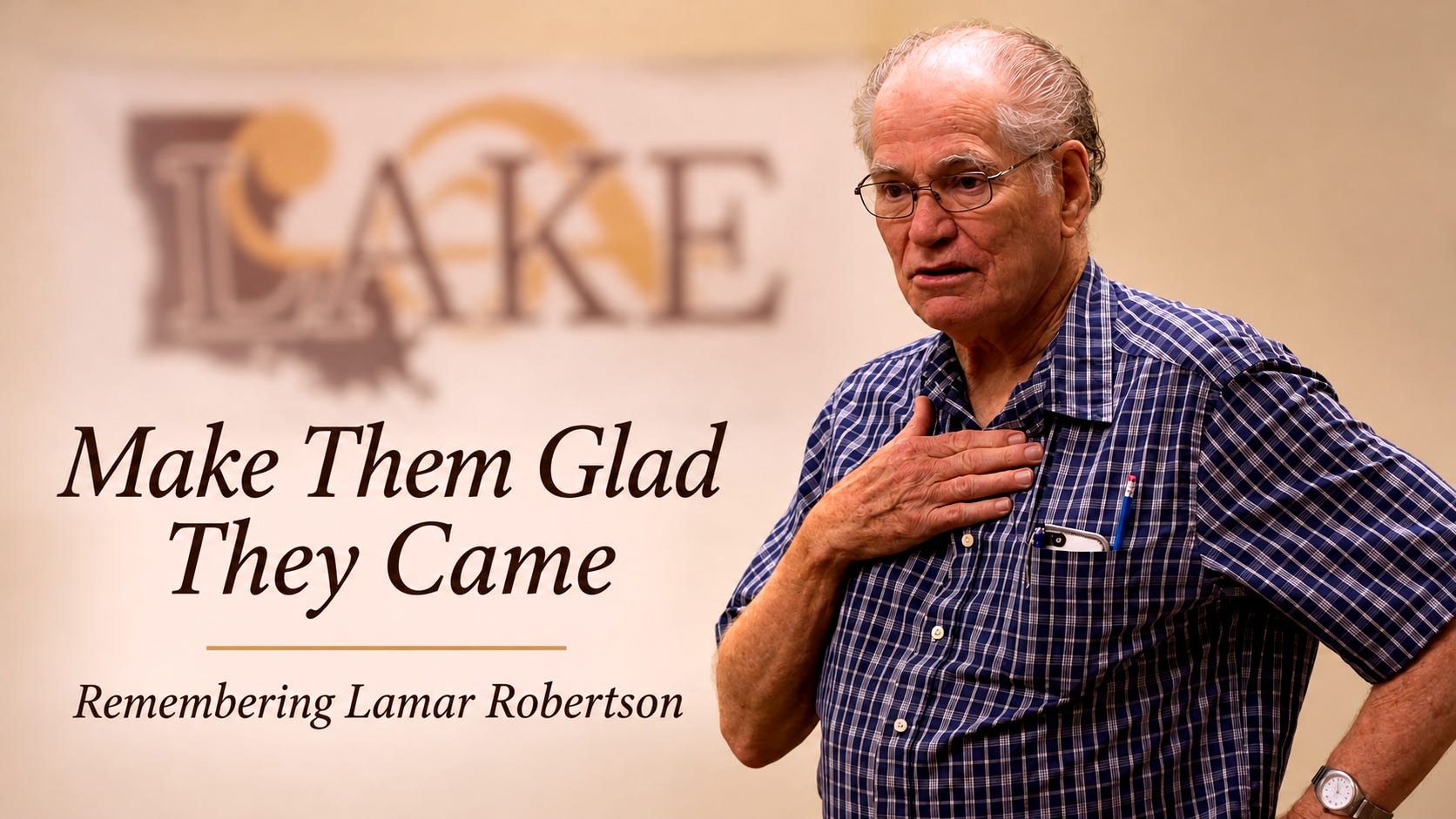
“Make Them Glad They Came”
Nov 21, 2026 · 8m
Prefer sermons downloaded automatically?
About this sermon
Last week, we lost an icon in my profession. Emmett Lamar Robertson, Jr. went to be with the Lord after a full life of joyful service and humble example.
Lamar was a gifted musician and music educator who was a pioneer in the early decades of Kodály music education in America. Many music educators today have Lamar Robertson to thank for much of their success in the music classroom. Likewise, countless Louisiana children developed a love of music through Lamar’s instruction and training over decades in southeast Louisiana.
Lamar was like a grandfather to me. I had the opportunity to travel with him to conferences and teach alongside him at a summer course for a number of years in Idaho. I got to fly with him, room with him, and bring him his coffee in the mornings when we were roommates at our summer course. I got to hear him tease me, and I would tease him right back.
What I loved about Lamar was that he was a giant in our field, but with the most humble posture and loving spirit. He was a jokester. I’ll never forget surprising him in Chattanooga when I showed up where he was teaching on my way to different event. I remember the inside jokes and his wonderful teasing idioms like, “You’re about as useless as a screen door on a submarine,” or “You’re as nervous as a long-tailed cat in a room full of rockers.” Or maybe my favorite, “You’re busier than a one-legged man in a rump-kicking contest.”
Lamar was thoughtful, and he never presented himself with an air of showiness. He made you comfortable. In between our jokes and teasing, Lamar would often say some profound things that would catch you off guard.
What strikes me even today, as I think back on him, is how he never stopped learning. Lamar helped train countless music teachers over the years, yet he would say, “Jarrod, I need to take your musicianship class,” or “I want to sign up for more solfège.” When he taught with us, he would sit in the classes and take notes. He never arrived. He was always learning.
He was a child at heart and a gentle soul. He was playful, and Lamar had the ability to speak to adults in a way that reminded them of what it meant to be a child. It was as if he never grew up in all the best ways, and his mission was to remind all of us what it was like for children to experience the wonder and joy of music.
Lamar would often tell of his beloved wife Joanne’s reminder to him when he would leave the house to teach elementary music in the morning. She would tell him, “Make them glad they came.”
That has become my motto, and the motto of many a music teacher, because of the example and instruction of a great man packaged in an ordinary body.
Zoltán Kodály, the Hungarian composer and namesake of the Kodály Methodology, was well known for saying that he cared little about who the local opera director was in Hungary because, if he was bad, they would fire him. But a bad music teacher could ruin the love of music in thirty batches of children.
Well, Lamar did just the opposite. He fostered the very joyful music literacy that Kodály was aiming at, and all who knew him are better off for it.
I thought I would share a few clips of the fun that was Lamar Robertson. He didn’t take himself too seriously, and you would soon realize that his antics and jokes in the music classroom came from a place of storytelling, fun, and benevolent distraction as he took his students on a journey toward a more joyful and skillful music literacy.
Lamar lived a long life, trained countless teachers, and helped generations of children discover the joy of music. But perhaps his greatest lesson was not merely how to teach music, but how to love the children we teach.
May the Lord comfort his children, Chris, Trudy, and Laurie, whom he bragged on continually, with fond memories of a life well lived.
In his honor, may those of us who work in music and music education continue in his footsteps by “making them glad they came.” I know I sure am.
This is a public episode. If you would like to discuss this with other subscribers or get access to bonus episodes, visit jarrodrichey.substack.com
More from Musically Speaking
Friday FIVE: November 27 - Bach to Thankfulness
Nov 27, 2026 · 11m
This Thanksgiving weekend, a bonus Friday FIVE from the archives. Originally recorded for Redeemer Talk, “BACH to Thankfulness” begins with the hymn “Now Thank We All Our God” and follows it through...
Friday FIVE: November 20 - Out of Silence
Nov 20, 2026 · 5m
On this day in 1889, Gustav Mahler conducted the premiere of his First Symphony in Budapest. It begins not with a grand melody or a brass fanfare but with a barely audible sustained sound that...
Friday FIVE: November 13 - The Concert Hall at Home
Nov 13, 2026 · 5m
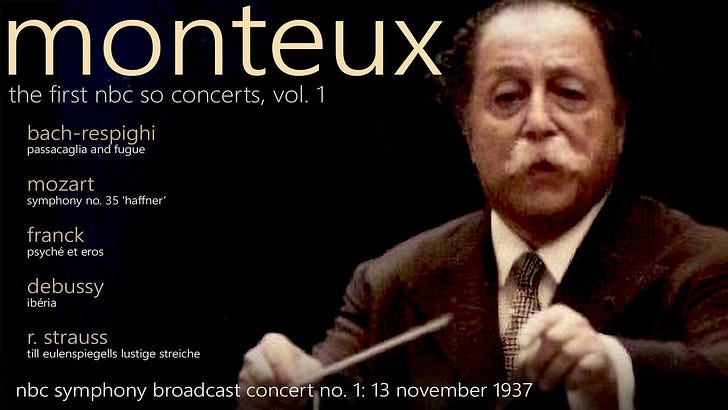
On this day in 1937, NBC gave its first full symphony broadcast from Studio 8H in New York City, with conductor Pierre Monteux leading more than 90 musicians through Bach, Mozart, Franck, Debussy, and...
Friday FIVE: November 6 - The Piano Bench
Nov 6, 2026 · 5m
On Monday I opened the piano bench to get the choir’s singing vitamins, forgot to close it, and promptly sat back down into it in front of a room full of elementary singers. It immediately reminded me...
Friday FIVE: October 30 - Set Apart
Oct 30, 2026 · 5m
We still understand formality at weddings and funerals. We dress differently, speak differently, behave differently. But when the living God calls His people into His presence each Lord’s Day, we seem...
Friday FIVE: October 23 - Irrigating Deserts
Oct 23, 2026 · 5m
Someone once asked me how you get a person to love Bach when they would rather listen to Taylor Swift. In this episode, I reflect on why that question is framed the wrong way and how C.S. Lewis’s...
Take these sermons with you.
Follow Musically Speaking in the Getsermons app to get every new sermon, build playlists, and pick up right where you left off.

