
Practical Apologetics: Clear Answers for the Everyday Christian
Episode 21: Does the Bible Condone Slavery?
Jul 23, 2026 · 17m
Prefer sermons downloaded automatically?
About this sermon
Does the Bible condone slavery?
It's one of the most common objections raised against Christianity. Skeptics often argue that because the Bible regulates slavery, it must therefore endorse it. But is that what Scripture actually teaches?
In this episode of Practical Apologetics, we examine one of the Bible's most difficult topics by looking at the historical context of the ancient Near East, the different forms of servitude found in Scripture, and the distinction between regulating an existing institution and declaring it to be God's moral ideal. We'll also examine key passages like Exodus 21 and Leviticus 25, explore how the New Testament reshapes the relationship between master and servant, and ask whether the Bible ultimately points toward human dignity and freedom rather than oppression.
Rather than avoiding the difficult passages, we'll read them carefully, compare Scripture with Scripture, and let the Bible define its own terms.
Bible passages referenced:
Genesis 1:27
Exodus 21:2-6
Exodus 21:16
Exodus 21:26-27
Leviticus 25:39-46
Matthew 19:3-9
Galatians 3:28
Philemon 1:15-16
Colossians 4:1
1 Timothy 1:10
Sources referenced:
The Holy Bible (ESV)
Is God a Moral Monster? Making Sense of the Old Testament God by Paul Copan
Hard Sayings of the Bible by Walter C. Kaiser Jr., Peter H. Davids, F. F. Bruce, and Manfred T. Brauch
The IVP Bible Background Commentary: Old Testament by John H. Walton, Victor H. Matthews, and Mark W. Chavalas
The IVP Bible Background Commentary: New Testament by Craig S. Keener
The New International Dictionary of Old Testament Theology and Exegesis, edited by Willem A. VanGemeren
The New International Dictionary of New Testament Theology and Exegesis, edited by Moisés Silva
Amazing Grace: William Wilberforce and the Heroic Campaign to End Slavery by Eric Metaxas
Support the ministry:
https://ko-fi.com/practicalapologetics
Practical Apologetics will always be free. But if this content has helped you and you'd like to support the work, your generosity is greatly appreciated.
More from Practical Apologetics: Clear Answers for the Everyday Christian
Episode 34: Why Does God Allow Pain and Suffering?
Nov 19, 2026 · 12m
If God is all-powerful, all-knowing, and perfectly good, why does He allow pain and suffering?The problem of evil is one of the oldest and most challenging objections to Christianity. For skeptics,...
Episode 33: Should Christians Be Involved in Politics?
Nov 12, 2026 · 16m
Should Christians keep their religious beliefs out of politics? Does the separation of church and state mean Christians shouldn't allow their faith to influence public policy? And what does the...
Episode 32: What Does the Bible Say About Immigration?
Nov 5, 2026 · 13m
Immigration is one of the most controversial issues in American politics, and Christians often find themselves on opposite sides of the debate. Some argue that Scripture commands us to welcome...
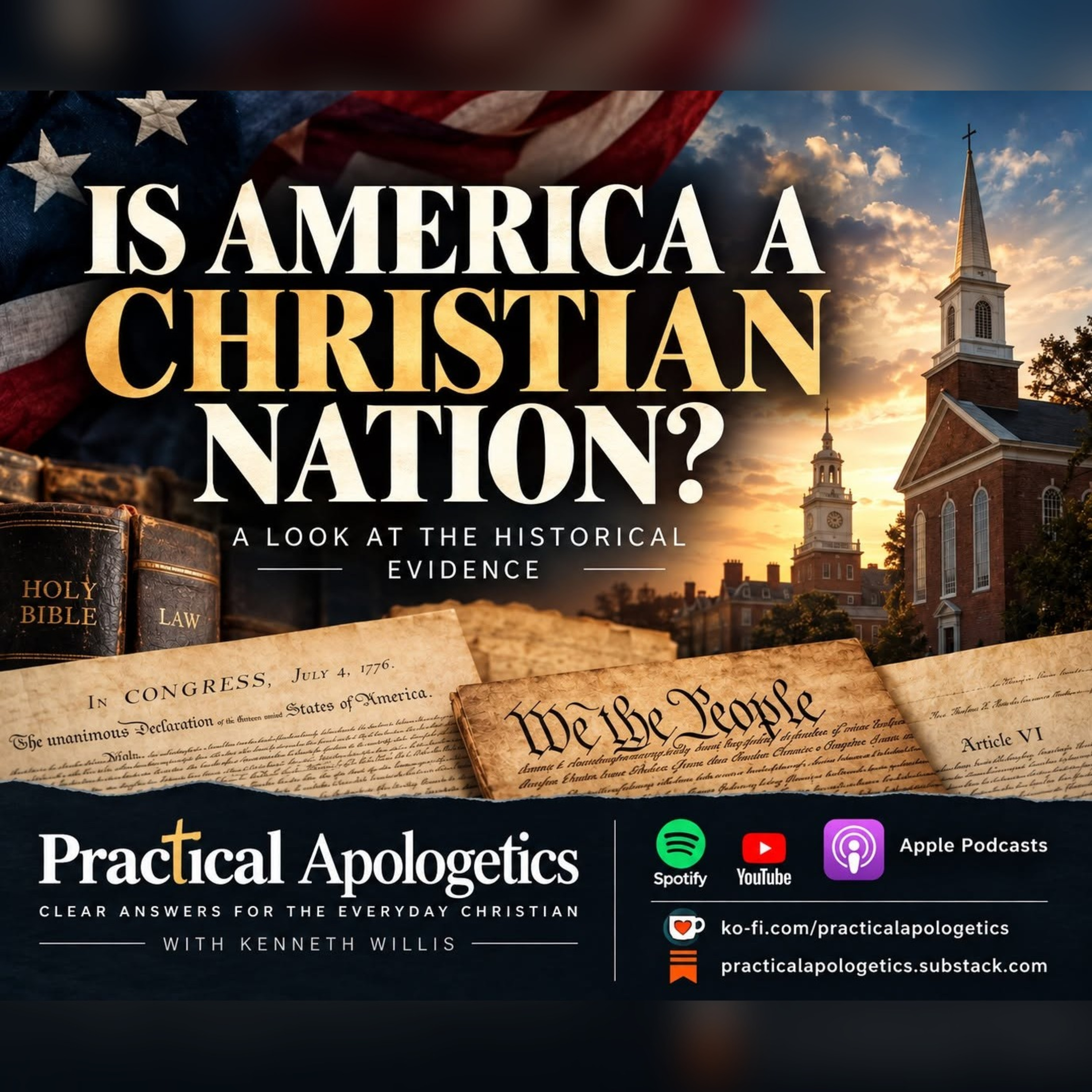
Episode 31: Is America a Christian Nation?
Oct 15, 2026 · 15m
Was America founded as a Christian nation, or was Christianity just one of many influences on its founding?In Episode 31 of Practical Apologetics, Kenneth Willis examines the historical evidence...
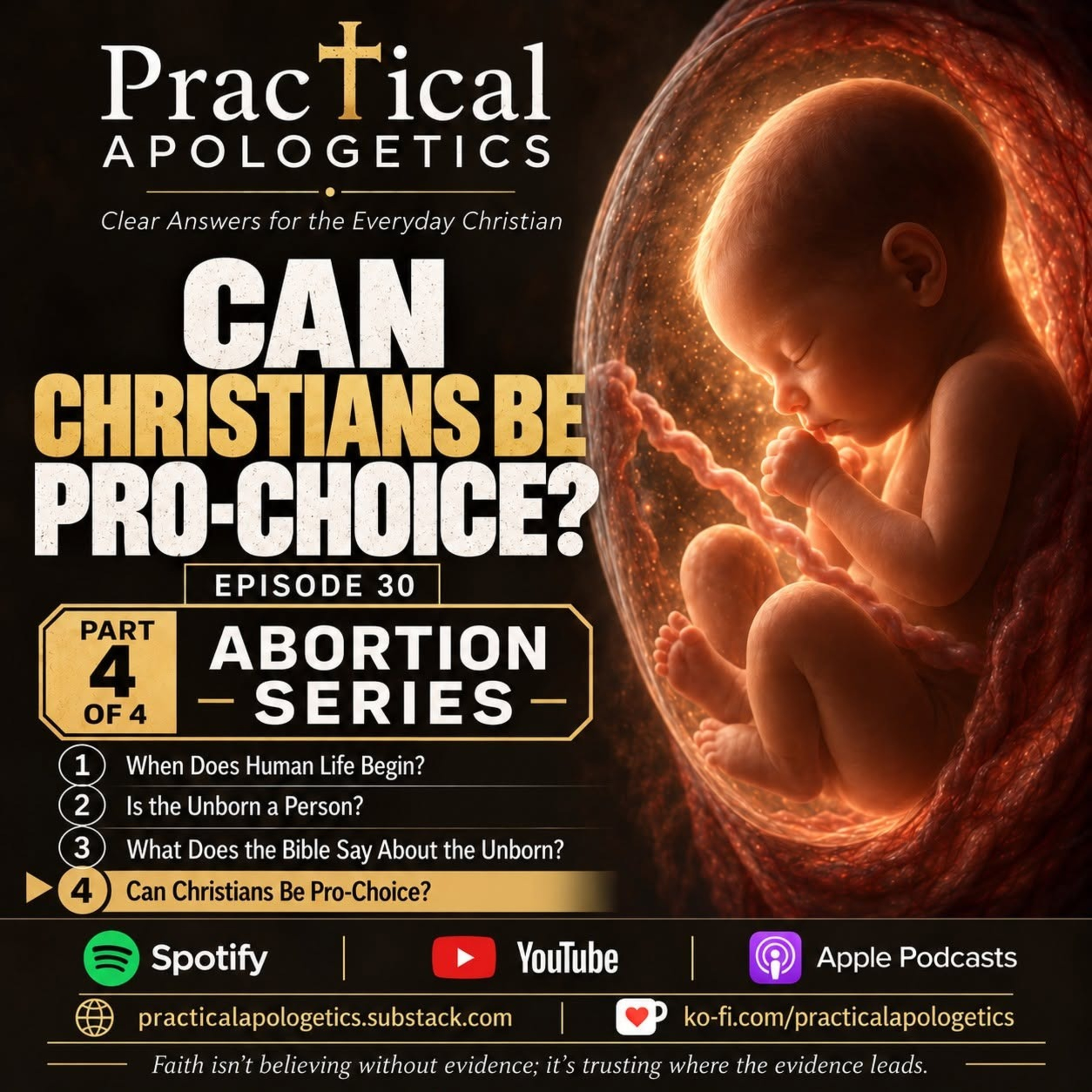
Episode 30: Can Christians Be Pro-Choice?
Oct 8, 2026 · 10m
For the last three episodes, we’ve been building toward one question.In Episode 27, we established that the unborn is biologically human and alive.In Episode 28, we asked whether differences in...
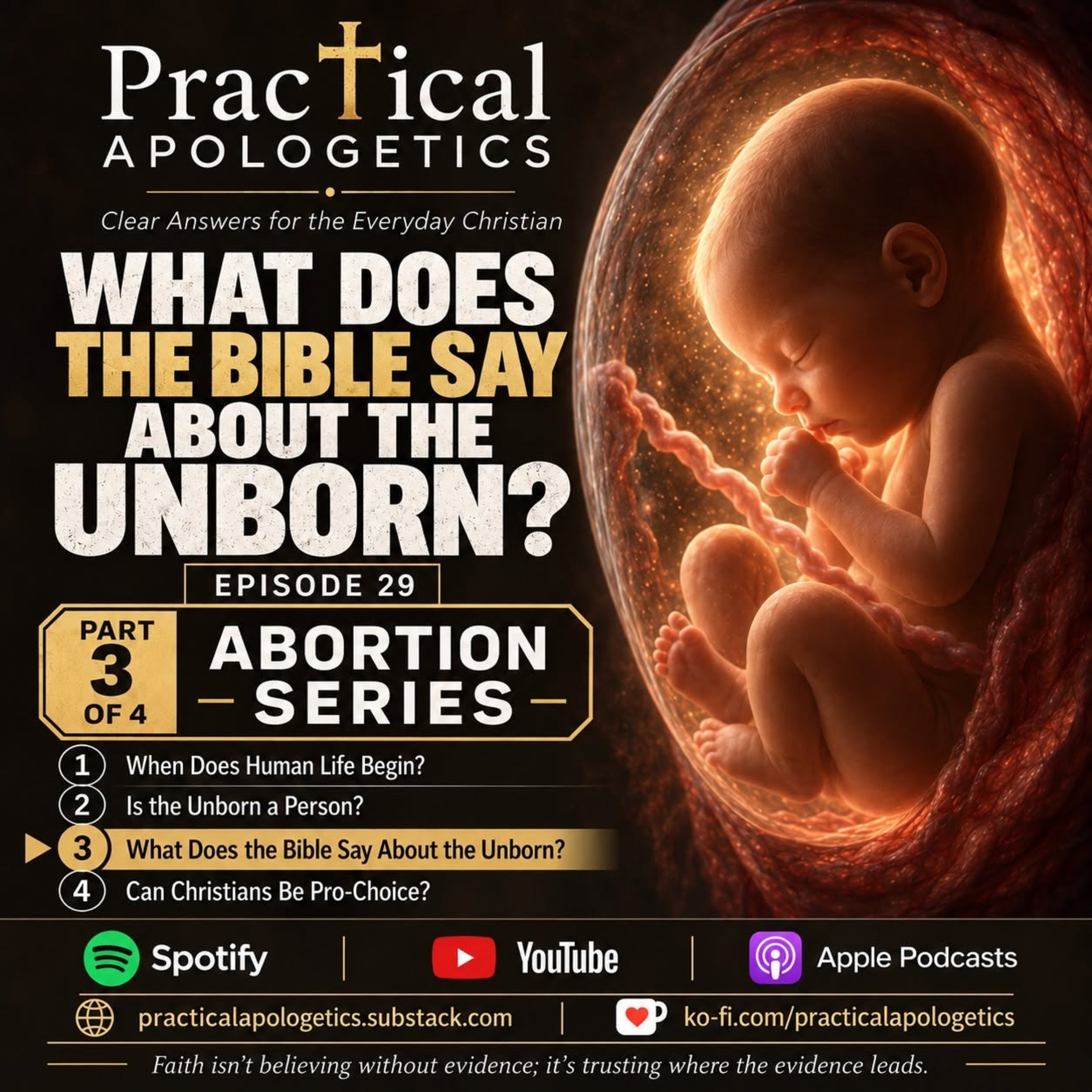
Episode 29: What Does the Bible Say About the Unborn?
Sep 25, 2026 · 10m
In Episodes 27 and 28, we started with science and philosophy.We established that the unborn is biologically human and alive, then asked whether differences in size, development, environment,...
Take these sermons with you.
Follow Practical Apologetics: Clear Answers for the Everyday Christian in the Getsermons app to get every new sermon, build playlists, and pick up right where you left off.

