
Reasoning Through the Bible
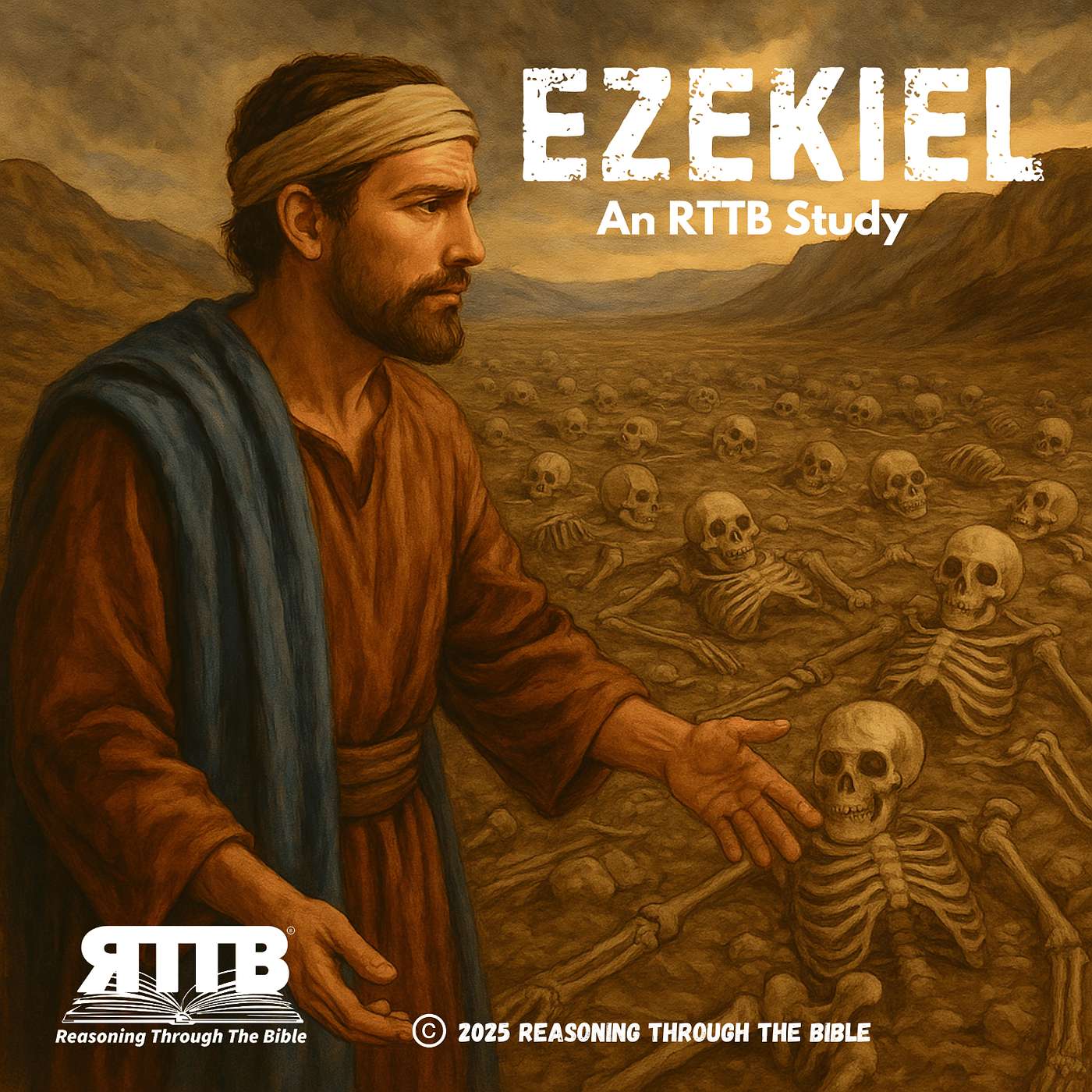
S47 || Gog’s Defeat and Israel’s Future || Ezekiel 39:1-29 || Session 47
Oct 29, 2025 · 37m
Prefer sermons downloaded automatically?
About this sermon
A single chapter can reset how you read prophecy, and Ezekiel 39 does exactly that. We trace the defeat of Gog, the shocking aftermath in Israel, and the unmistakable claim that God will end the profaning of His name and make Himself known among the nations. The language is concrete, the timeline is pointed, and the implications touch how we understand Israel’s future, the church age, and the character of God.
We start with the text itself—God’s stacked “I will” statements, the scale of the coalition, and the seven-year and seven-month cleanup that follows. From there we explore the core question: has there ever been a time when the nations stopped profaning God’s name and Israel knew the Lord from that day onward? History says no, which pushes the promise forward. That conclusion gathers strength from Ezekiel 36–37, where God promises to put His Spirit within Israel, unite them under “David,” and settle them in the land given to Jacob forever. If “forever” holds its plain sense, then the restoration is durable, visible, and God-driven—not earned by Israel but anchored in His name.
We also confront the common pushback about horses, bows, and wooden shields. Ezekiel wrote with the vocabulary of his age; the point is not the exact hardware but the totality of the defeat and its public witness. Keeping our hermeneutics consistent—letting “Israel” mean Israel across adjacent verses—protects the logic of the chapter and keeps grace at the center. And for clarity, we map the key differences between Ezekiel’s Gog and Magog war and the revolt in Revelation 20: different timing, leadership, objectives, and outcomes. One precedes the messianic reign with extended aftermath; the other concludes the millennium with instant judgment.
If you’re ready to see how Ezekiel 39 shapes a coherent, future-facing hope—where God vindicates His name, restores Israel, and confronts the nations—this conversation is for you. Subscribe, share with a friend, and leave a review telling us where you land on the timing and why.
Support the show
Thank you for listening!! Please give us a five-star rating to help your podcast provider's algorithm spread RTTB among their listeners.
You can find free study and leader resources at the following link - Resource Page - Reasoning Through the Bible
Please prayerfully consider supporting RTTB to help us to continue providing content and free resources. You can do that at this link - Support RTTB - Reasoning Through the Bible
May God Bless you!! - Glenn and Steve
More from Reasoning Through the Bible

Why Was Paul Glad He Baptized So Few? - 1 Corinthians 1:11-16 (Session 3)
Nov 25, 2026 · 30m
Why was Paul thankful he had baptized so few people in Corinth? In this verse-by-verse Bible study of 1 Corinthians 1:11–17, Glenn and Steve examine the connection between church division,...

Why Do Churches Divide Over Leaders? - 1 Corinthians 1:4-10 (Session 2)
Nov 24, 2026 · 27m
Why do churches divide over their favorite leaders? In this verse-by-verse Bible study of 1 Corinthians 1:4–13, Glenn and Steve look at how Paul moves from thanking God for a troubled congregation...

Why Does Paul Call a Messy Church Holy? - 1 Corinthians 1:1–3 (Session 1 )
Nov 23, 2026 · 30m
Why does Paul call the Corinthian believers saints when their church has so many problems? Glenn and Steve begin this verse-by-verse Bible study of 1 Corinthians with the background of ancient...

Can We Really Trust the New Testament? - Historical Evidence Explained
Nov 20, 2026 · 19m
Can the New Testament really be trusted as history?Skeptics often dismiss the Bible as legend, religious fiction, or a collection of stories written long after the events they describe. In this...

Do Christians Have to Keep the Mosaic Law? - Law vs. Grace Explained
Nov 19, 2026 · 1h 12m
Are Christians still required to keep the Mosaic Law?In this topical Bible study, Glenn and Steve examine a question that appears in Hebrew Roots movements, some Messianic groups, certain...

What Does the Bible Really Say About Hell - Eternal Punishment Explained
Nov 18, 2026 · 57m
What does the Bible actually say about hell?This topical Q&A study begins with a listener’s question about “eternal separation from God” and asks what that really means. Is hell eternal conscious...
Take these sermons with you.
Follow Reasoning Through the Bible in the Getsermons app to get every new sermon, build playlists, and pick up right where you left off.

