
Reflections on the Proverbs Podcast
By Wisdom a House Is Built
Oct 24, 2026 · 8m
Prefer sermons downloaded automatically?
About this sermon
By Wisdom a House Is Built
Reflections on Proverbs 24:3–5: Building, Ruling, and Filling in the Grammar of Genesis
“By wisdom a house is built, and through understanding it is established; through knowledge its rooms are filled with rare and beautiful treasures.”
(Proverbs 24:3–4, NIV)
“The wise prevail through great power, and those who have knowledge muster their strength.”
(Proverbs 24:5, NIV)
There is a great deal of wisdom packed into these few verses. The first thing that comes to mind is something very practical. If you are going to build a house, you had better know what you are doing.
These proverbs appear in the collection commonly called the Thirty Sayings of the Wise. There are interesting parallels between this collection and the ancient Egyptian Instruction of Amenemope. We cannot necessarily attribute these particular sayings to Solomon himself. They belong to the larger wisdom tradition that Israel received, preserved, and developed under the fear of the LORD.
But consider what the proverb is saying. By wisdom a house is built. Through understanding it is established. Through knowledge its rooms are filled.
You can build a house quickly, or you can build it correctly. Those are not necessarily the same thing.
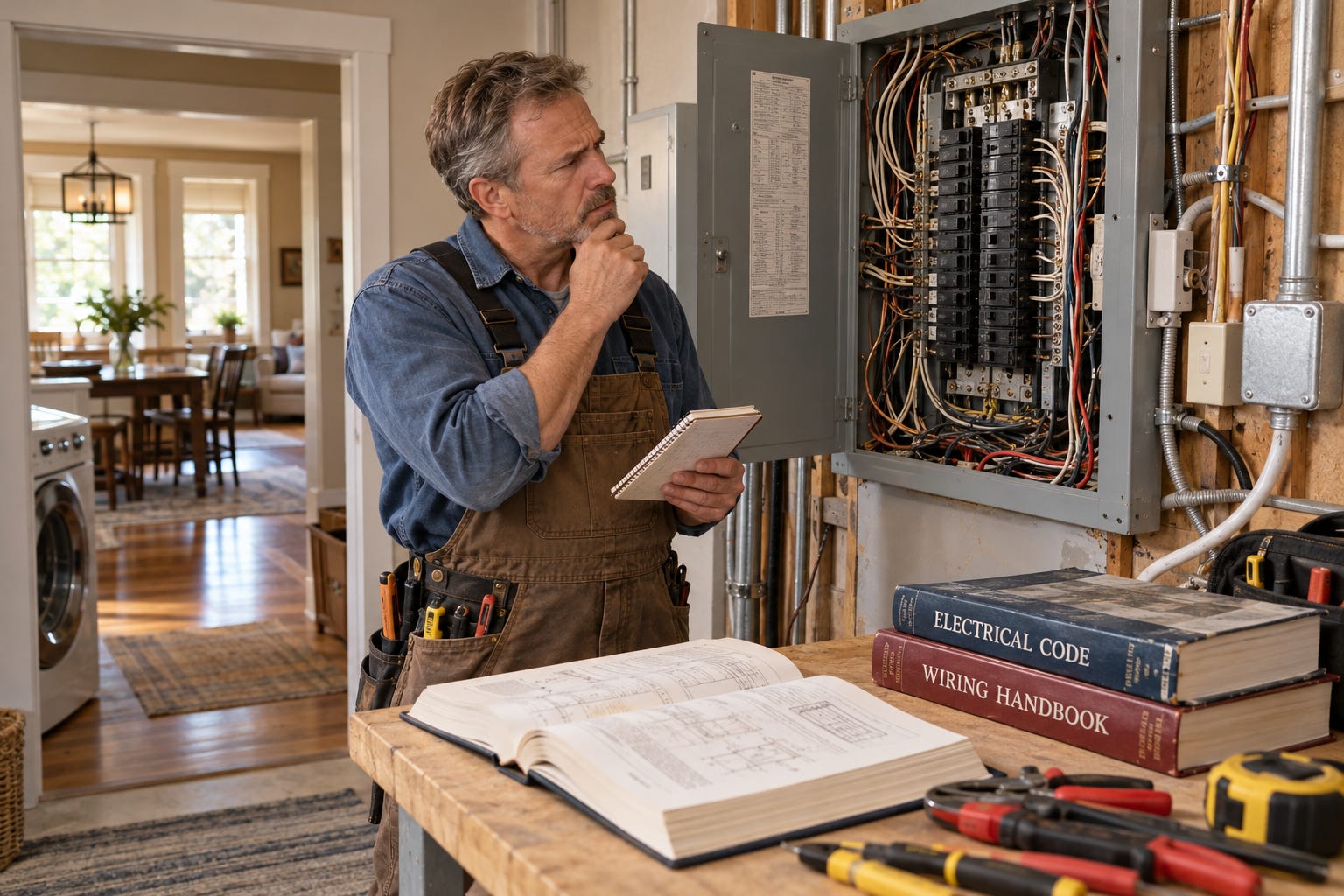
Consider modern construction. You have to worry about foundations, plumbing, electrical systems, and building codes. Building codes are not simply regulations invented to make construction more difficult. They have a purpose. They establish standards for safety, reliability, and repeatability. They also make it possible for somebody who comes along later to understand what was done.
Take electrical wiring, for example. There are standards for identifying wires and installing electrical circuits. Those standards matter because the next electrician needs to know what he is looking at. If somebody runs wires wherever he pleases, without following the established standards, the system may work for a while. But eventually somebody else has to figure out what was done.
I know something about this because I live in a house where additional wiring was installed by an “electrician” who knew about the basics but not the code. He knew something but that is not the same thing as a certified electrician. There is a difference.
Some of what he did worked. But some of it was not done according to proper standards. Consequently, we have a couple of electrical circuits with faults that have been disconnected. Eventually, those wires will have to be rerun, which is not going to be a small undertaking.
The lesson is simple. Wisdom is not merely knowing how to make something work. Wisdom is knowing how to do it correctly, safely, and in a way that can be maintained by those who come after us.
That is what it means to build a house through wisdom.
The Wisdom That Was Offered in Eden
But I want to go back to the beginning of the Bible, because I have developed a habit of looking at the rest of Scripture through what I call the Genesis grammar.
I believe that Genesis provides us with patterns that continue throughout the Scriptures. We see them repeated in the law, the prophets, the wisdom literature, and ultimately in Christ.
Consider the tree of the knowledge of good and evil.
I do not believe that God placed that tree in the garden merely as a test to determine whether Adam and Eve would obey him and thereby earn some reward. I believe the tree was placed there for their blessing. God intended to teach them wisdom and prepare them for their calling as his vice-regents over creation.
Adam and Eve were created to rule. They were to exercise dominion over the earth, cultivate the garden, classify the creatures, and learn about the world God had made. That calling required wisdom.
The tree of the knowledge of good and evil was not evil. God is not the creator of evil. Knowledge was not the problem. God had always intended for humanity to grow in knowledge and understanding.
The question was how that knowledge would be received.
Would Adam and Eve receive wisdom from the Lord, in dependence upon him and according to his instruction? Or would they seize it for themselves, independently of his word?
They were called to trust the Lord and wait upon him. That is precisely what they failed to do.
The fear of the LORD is the beginning of wisdom.
That principle did not suddenly appear in the book of Proverbs. It was already present in the garden.
Wisdom was to be received in communion with God. It was never intended to be acquired through independence from him.
This is why I see the wisdom tradition of Israel as something of a continuation of what God intended to teach humanity in Eden.
God intended us to learn how to build, how to govern, how to cultivate, how to classify the creation, and how to understand the world around us. None of these things is opposed to faith. They are expressions of the calling God gave humanity in the beginning.
But they must be pursued in the fear of the LORD.
Building, Ruling, and Filling
Now return to Proverbs 24.
“By wisdom a house is built, and through understanding it is established; through knowledge its rooms are filled with rare and beautiful treasures.”
Notice the movement.
First, the house is built.
Then it is established.
Then it is filled.
This is where I see something of the Genesis grammar emerging again.
On the fourth day of creation, God appointed the sun, moon, and stars to govern the day and the night. He established rulers over the ordered creation. The lights were given their places and their responsibilities.
Ruling is part of the fourth-day pattern.
Then, on the fifth and sixth days, we see the creation being filled. The waters are filled with living creatures, the heavens with birds, and the land with animals and humanity. God blesses his creatures and commands them to be fruitful and multiply.
There is an order to this.
God establishes the ordered world, appoints its rulers, and fills it with life.
Now consider the proverb again.
A house is built through wisdom. It is established through understanding. Its rooms are filled through knowledge.
We see the same kind of movement from establishment to fullness.
The connection is not that Proverbs is explicitly explaining the fourth day of creation. Rather, the proverb reflects the same wisdom of ordered creation that we encounter in Genesis.
A wise ruler does not merely exercise power. He governs according to knowledge and understanding. His work is directed toward establishing something that can flourish.
That is why verse 5 is so important.
“The wise prevail through great power, and those who have knowledge muster their strength.”
Wisdom produces strength. Knowledge enables a person to exercise power properly.
A man may have tremendous physical strength and still be a fool. He may have the power to build something, but without wisdom he may build something that eventually falls apart.
The wise man understands how things work. He understands their purpose. He knows how they ought to be ordered.
He does not merely build. He builds so that what he establishes can be filled with good things.
Building on the Rock
This brings us to the words of Jesus.
At the conclusion of the Sermon on the Mount, Jesus tells us about two builders. One builds his house upon the rock, and the other builds his house upon the sand.
Both men build houses. Both houses may look perfectly adequate for a while.
But when the rain falls, the floods come, and the winds blow, the difference becomes apparent.
The wise man built upon the rock.
Jesus tells us that the wise builder is the one who hears his words and does them.
Here again, wisdom is not merely possessing information. It is hearing and obeying. It is receiving the word of God and ordering our lives accordingly.
That was the calling in Eden. It was the calling of Israel. It remains our calling today.
God has not abandoned his purpose to fill his creation with wisdom, knowledge, and understanding. In Christ, the true and faithful Son, that purpose is being brought to its fulfillment.
We were create…
This is a public episode. If you would like to discuss this with other subscribers or get access to bonus episodes, visit proverbs2026.substack.com
More from Reflections on the Proverbs Podcast

The Rime of the Lonely Mariner
Oct 25, 2026 · 5m
The Rime of the Lonely MarinerReflections on Proverbs 25:17, Loneliness, and the Gift of Fellowship“Seldom set foot in your neighbor’s house—too much of you, and they will hate you.”(Proverbs 25:17,...
By Wisdom a House Is Built
Oct 24, 2026 · 8m
By Wisdom a House Is BuiltReflections on Proverbs 24:3–5: Building, Ruling, and Filling in the Grammar of Genesis“By wisdom a house is built, and through understanding it is established; through...

The Magic Stone
Oct 17, 2026 · 3m
Proverbs 17: The Magic StoneBribery, Witchcraft, and Phantom ProsperityThis is Reflections on the Proverbs for October 17, 2026.We come to Proverbs 17:8:A bribe is like a magic stone in the eyes of...
Proverbs 16: Solomon and the Silver Mines of Demas
Oct 16, 2026 · 8m
Solomon and the Silver Mines of DemasBeware of DemasThis is Reflections on the Proverbs for October 16, 2026.Going down to verse 16:How much better to get wisdom than gold! To get understanding is...
Solomon, His Wives, and His Wisdom
Oct 12, 2026 · 4m
Solomon, His Wives, and His WisdomToday is the 12 of October, so we are in Proverbs chapter twelve. When reading Proverbs 12, I want to read it consciously remembering that Solomon was the primary...
Reading Proverbs Through the Life of Solomon
Oct 11, 2026 · 5m
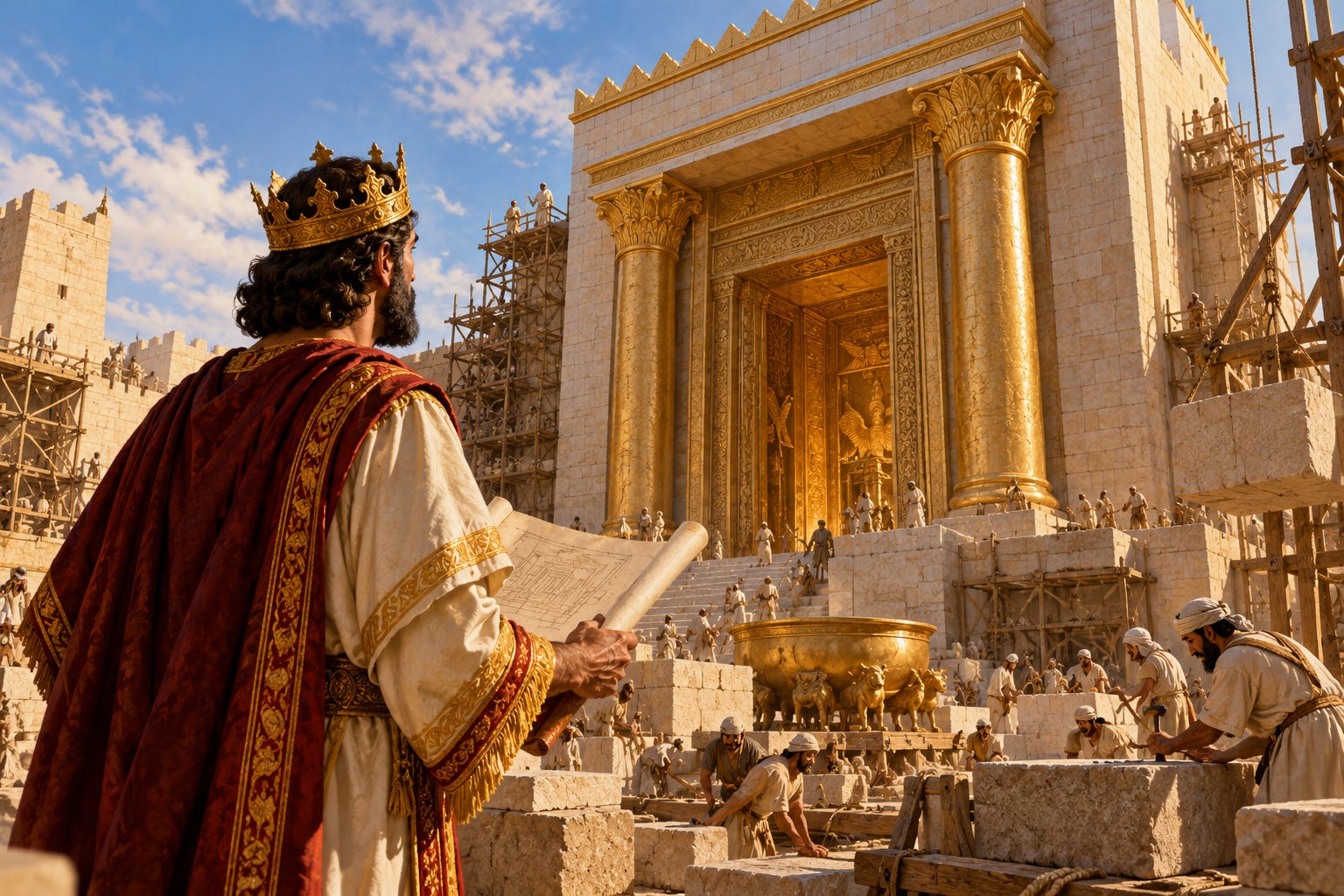
Today’s Reflections of the Proverbs is from chapter 11. I have titled it “Reading Proverbs Through the Life of Solomon.” One of the things I think we forget when we read the Proverbs is that these are...
Take these sermons with you.
Follow Reflections on the Proverbs Podcast in the Getsermons app to get every new sermon, build playlists, and pick up right where you left off.

