
Reflections on the Psalms Podcast
Today, If You Hear His Voice
Nov 19, 2026 · 8m
Prefer sermons downloaded automatically?
About this sermon
Psalm 95: Today, If You Hear His Voice
Psalm 95 is actually part of the daily prayers in the Book of Common Prayer. It is known as the Venite and is repeated in Anglican churches throughout the world.
It begins with a call to worship:
“Oh come, let us sing to the LORD; let us make a joyful noise to the rock of our salvation! Let us come into his presence with thanksgiving; let us make a joyful noise to him with songs of praise!” (Psalm 95:1–2)
The psalm is about celebrating God, praising him, giving thanks, and making a joyful noise. It is a call to worship.
Then we read:
“Oh come, let us worship and bow down; let us kneel before the LORD, our Maker! For he is our God, and we are the people of his pasture, and the sheep of his hand.” (Psalm 95:6–7)
But then, in the middle of all this worship and celebration, we suddenly encounter a warning:
“Today, if you hear his voice, do not harden your hearts, as at Meribah, as on the day at Massah in the wilderness.” (Psalm 95:7–8)
Some Anglican traditions have omitted this latter portion of the psalm from the regular recitation of the Venite. It is sometimes called the imprecatory portion, although it is really more of a warning than an imprecation. You can understand why some might find it uncomfortable. Here we are celebrating God, singing praises, giving thanks, and suddenly we are confronted with judgment.
But notice that little word today.
Today, if you hear his voice.
This is a forever today. As long as you can hear his voice, you can say today. The invitation is always in the present. Today, if you hear his voice, do not harden your hearts.
The psalm then uses the wilderness wanderings as an example of what we should not do. We should not be like that first generation of Israelites who did not heed the word of God spoken through Moses. They did their own thing.
The psalm concludes:
“For forty years I loathed that generation and said, ‘They are a people who go astray in their heart, and they have not known my ways.’ Therefore I swore in my wrath, ‘They shall not enter my rest.’” (Psalm 95:10–11)
That sounds rather final, doesn’t it? God swore in his wrath that they would never enter his rest. It almost sounds as though the entire generation was condemned, that they were eternally lost.
When we turn to Hebrews 3, the writer picks up precisely this story:
“For who were those who heard and yet rebelled? Was it not all those who left Egypt led by Moses? And with whom was he provoked for forty years? Was it not with those who sinned, whose bodies fell in the wilderness? And to whom did he swear that they would not enter his rest, but to those who were disobedient? So we see that they were unable to enter because of unbelief.” (Hebrews 3:16–19)
Then he continues in chapter 4:
“Therefore, while the promise of entering his rest still stands, let us fear lest any of you should seem to have failed to reach it. For good news came to us just as to them, but the message they heard did not benefit them, because they were not united by faith with those who listened.” (Hebrews 4:1–2)
The writer is using the history of Israel pedagogically. He is teaching us something from what happened to that first generation. Their unbelief and disobedience are examples of what we must avoid.
But what exactly were they denied?
They were not allowed to enter the promised land. That was the historical judgment pronounced upon them.
Now, the promised land is a type. In biblical typology, Canaan points beyond itself to the heavenly Canaan, to the final rest that God has prepared for his people. To enter the promised land was, in a typological sense, to enter heaven.
Consequently, some people, including myself, have sometimes read this passage as though those who did not enter Canaan must also have been excluded from heaven. If they failed to enter the type, then surely they failed to enter the antitype.
But should we press the type and the antitype so closely together?
I think we need to be careful.
Consider Moses and Aaron. Neither of them was permitted to cross the Jordan and enter the promised land. You could say that they had already entered the eastern portion of the land, and that is true. But they were specifically forbidden to cross over into Canaan because of their disobedience.
Yet we would hardly conclude that Moses and Aaron were eternally lost. Moses even appears with Elijah at the Transfiguration.
So here we have an example of someone who was excluded from the promised land because of sin, but who was not excluded from the eternal rest of God.
Why, then, must we conclude that every member of that first generation who died in the wilderness was eternally lost?
We know that Joshua and Caleb were exceptions to the judgment concerning entrance into Canaan. They believed God and were permitted to enter. But does that mean they were the only members of that generation who ultimately had saving faith?
I don’t know that we can say that.
It seems to me that we have to consider something else about the judgments of God. God’s judgments can themselves serve as a call to repentance. Sometimes it is precisely through judgment that God brings people to recognize their sins and turn back to him.
Could it be that during those forty years of wilderness wandering, some of that first generation came to recognize their unbelief? Could it be that, by the grace of God, some of them saw their error, repented, and turned to the Lord?
I don’t see why that would be impossible.
Of course, even if they repented, that would not mean they were suddenly permitted to enter the promised land. The historical judgment had already been pronounced. They would die in the wilderness.
But that is precisely what happened to Moses. His disobedience had consequences, and those consequences remained even though he belonged to God.
We have to distinguish between the temporal consequences of sin and the eternal destiny of the sinner.
Sometimes God’s strong arm of discipline is precisely what causes us to return to him. We may not like to admit it, but judgment can be an instrument of mercy. God restrains wickedness, exposes our sin, and shows us that what we have done is wrong.
That does not mean that every judgment results in repentance. Certainly not. But neither does it mean that every person who experiences judgment remains forever in unbelief.
Hebrews tells us that the wilderness generation was excluded because of unbelief. That is certainly true. But does that mean their unbelief necessarily continued until the moment of their death?
The text does not tell us.
It may be that some of them continued in their rebellion and died in unbelief. It may also be that others, having experienced the judgment of God, came to repentance and faith, even though they still had to bear the consequences of their earlier disobedience.
We simply do not have a record of what happened in the hearts of every individual during those forty years.
Knowing the goodness and mercy of God, and knowing that even his judgments can serve a gracious purpose, I would be reluctant to declare that every person who fell in the wilderness was eternally condemned.
The warning in Psalm 95 is real. The warning in Hebrews is real. Unbelief keeps us from entering God’s rest. We must not harden our hearts as Israel did in the wilderness.
But we must also be careful not to collapse the type and the antitype so closely together that we make the historical judgment say more than it actually says.
The exclusion from Canaan was final for that generation. Whether every individual who suffered that exclusion was also eternally lost is another question.
I cannot say for sure. But I suspect that there may have been more than just a handful of that first generation who ultimately came to faith. God’s judgment may itself have been the very means by which some of them were brought to repentance.
Even if they believed after the judgment, they still would not have been permitted to enter the promised land, just as Moses was not permitted to cross the Jordan.
So I would le…
This is a public episode. If you would like to discuss this with other subscribers or get access to bonus episodes, visit william945.substack.com
More from Reflections on the Psalms Podcast
The Blessed Man and the Shema
Nov 2, 2026 · 3m
One of the things I’ve noticed is the similarities between Psalm 1 and the Shema, which was the great confession of ancient Israel and remains part of the daily prayers of Jews even today.When Jesus...
Glorious Things of Thee Are Spoken
Oct 17, 2026 · 5m
Psalm 87: Glorious Things of Thee Are SpokenThe City of God and the Conversion of the NationsThis is Reflections on the Psalms for October 17, 2026.When we come to Psalm 87, we come to what is...
Psalm 63: Learning to Pray with the Whole Body
Oct 14, 2026 · 6m
Psalm 63: Learning to Pray with the Whole BodyA Psalm of David, when he was in the wilderness of Judah.This psalm is one that I have actually attempted to memorize in a rapid way. I tried to...
Tears in a Bottle
Oct 11, 2026 · 3m
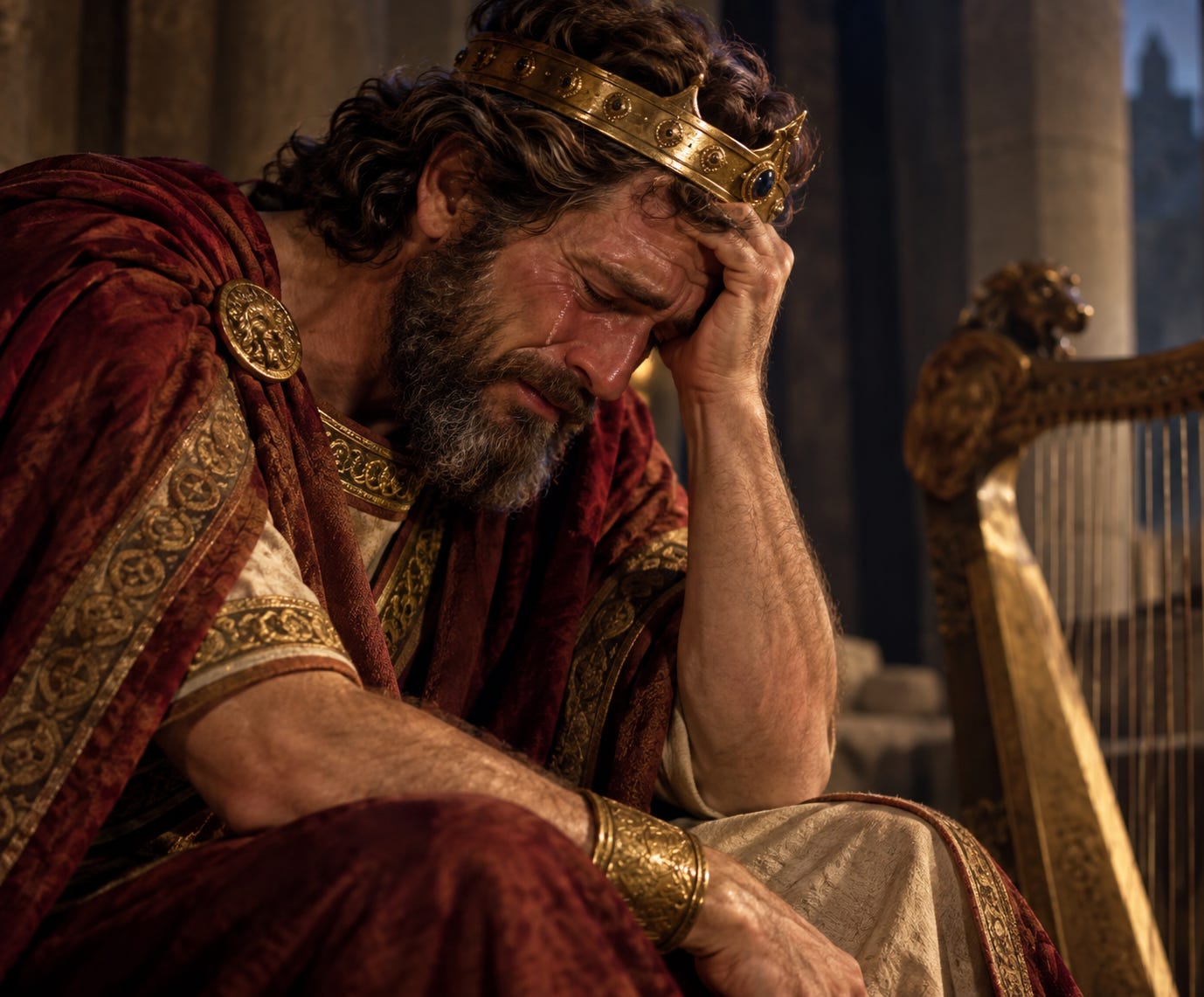
In Psalm 56, David asks God to put his tears in his bottle. David was suffering, even to the point of tears. His suffering was real in this world, and his tears were remembered by God.When we look...
Sometimes You Need a Javelin
Oct 7, 2026 · 4m
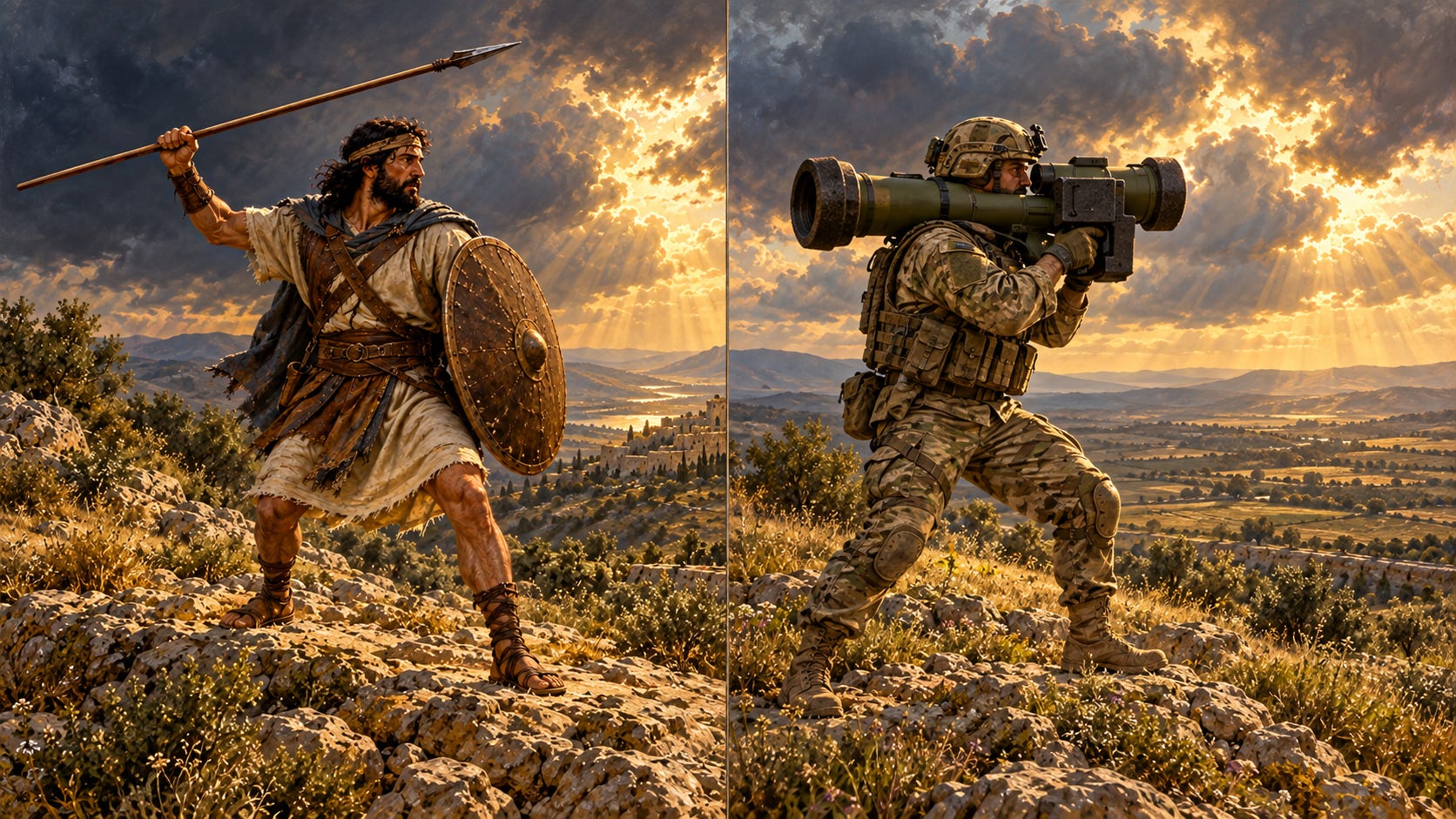
Today’s reflection on the Psalms, for the seventh of October, comes from Psalm 35:“Contend, O LORD, with those who contend with me; fight against those who fight against me! Take hold of shield and...

The Voice of the LORD Over the Waters
Oct 6, 2026 · 5m
Today’s reflection on the Psalms comes from Psalm 29.“Ascribe to the LORD the glory due his name; worship the LORD in the splendor of holiness.”This is a psalm about God forming and shaping his world....
Take these sermons with you.
Follow Reflections on the Psalms Podcast in the Getsermons app to get every new sermon, build playlists, and pick up right where you left off.

