
Reformed & Expository Preaching
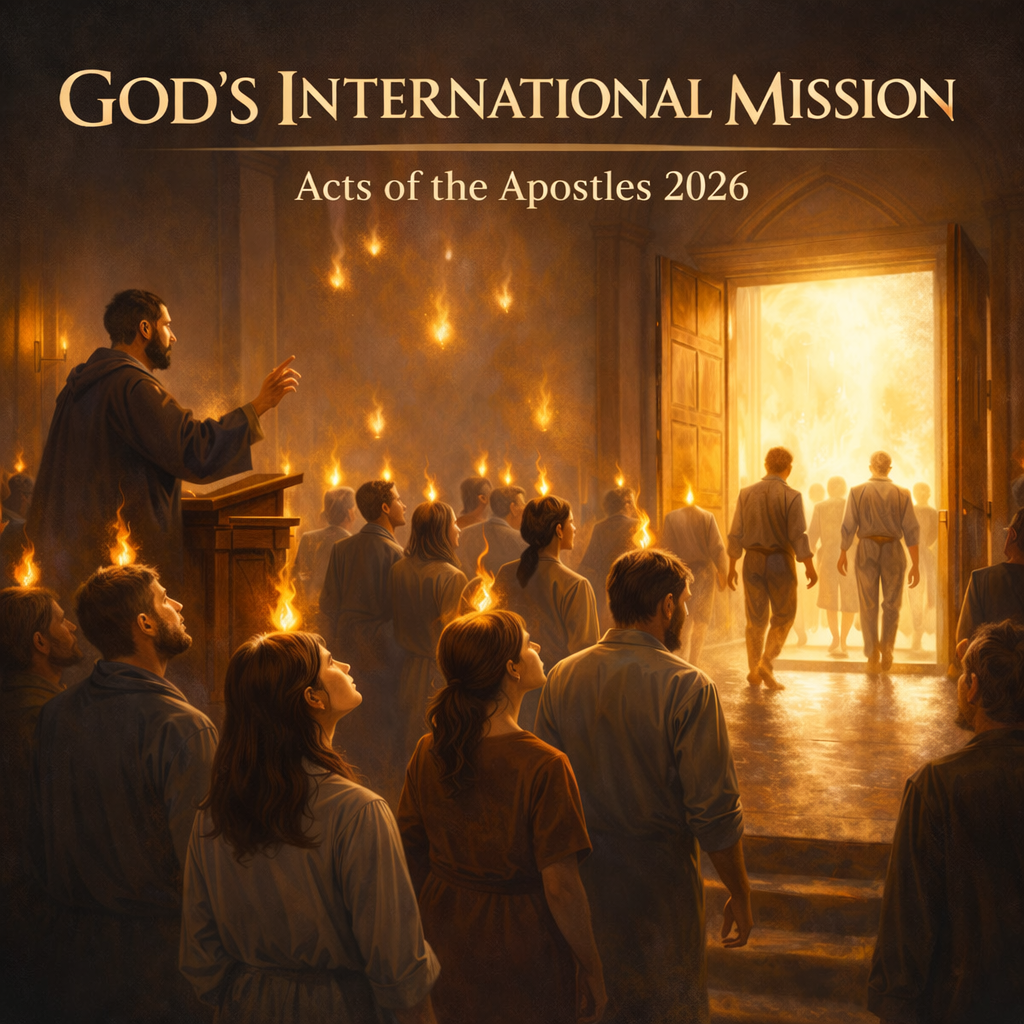
Abandoned or Empowered? (Acts 1:9-26)
Apr 21, 2026 · 34m
Prefer sermons downloaded automatically?
About this sermon
Introduction
It would be so nice to open a door to a throne room and say there is Christ, our king, sitting on a throne. We might think that Christ’s ascension appears as a disappointing event. It seems that Christ has left his church. Why does Christ leave us in this world?
We need to see that the Ascension is not a withdrawal of Christ's presence but rather a transformative moment that establishes the spiritual kingdom.
Christ’s Ascension
The Ascension of Christ is the inauguration of a new phase in God's redemptive plan. The prophets made a promise. The promise needs to come to fruition. We might want all of what the prophet’s word comes to pass, but that is not the Lord’s intention.
The scene of angels appearing to the disciples on the Mount of Olives illustrates how the heavenly realm engages with earthly realities. The angels give the assurance that Christ’s return, as predicted in Zechariah 14:4, is guaranteed. However, now is not the time for the full physical blessings of the kingdom. Christ is not retreating, but publishing the Gospel call through his heralds that holy war is certainly coming. He will bring his final judgment when he returns.
Judas’ Recollection
The Apostles begin to process Christ’s ascension and his ruling from heaven as Peter realizes that Judas needs to be replaced. We begin to see how Christ rules the church from heaven by His Spirit.
The disciples argued in the presence of Christ about their own significance, but now they see the bigger picture. Peter applies Psalms 69 and 109 to their current situation. Peter shows that Judas's betrayal was expected, but they missed it. Psalm 69:25 and 109:8 recount how David was betrayed, and he prayed that the betrayer would lose his station. The betrayer would also be replaced. Peter is showing that the apostles will take the scriptures and understand them in light of Christ.
Matthias Chosen
Peter makes the case that Judas needs to be replaced. The disciples nominate two men. They cast lots to see which of these two men the Lord desires to replace Judas. The lot falls on Matthias. He is the 12th Apostle to take Judas’ place.
Should we continue to cast lots? We now discern the Lord’s will in the Spirit rather than casting lots. We do see Israel casting lots in the Old Testament, and practiced in this transitional period before Pentecost, as we see with Matthias’s ordination.
However, we notice that after Pentecost the church moves toward deliberative, Scripture-based decision-making guided by the Spirit. We see this in Acts 15 with the Jerusalem Council. The church deliberates. It uses the Scriptures, and it judges/discerns in the Spirit. This is Christ ruling his church from heaven by His Word and Spirit. He is not ruling His church through the casting of lots.
Conclusion
The Ascension of Christ is not a disappointing departure. Rather, Christ’s ascension is a pivotal event that establishes the church's identity and mission in the world.
We need to be assured that Christ’s departure is not a disappointment, but the assurance that Christ spiritually reigns. He did not abandon the promise of judgment, but delays it. It is now the call for the gospel to go out from Jerusalem, to Judea, to Samaria, and to the ends of the earth.
Now is the time to bow the knee to Christ when we hear the Gospel. It is not wise to delay. His second coming will bring the full physical shalom kingdom, but he will also put down all the rebellion. Let us be a people who bow the knee to Christ. Let us do so today as we walk in His Spirit being renewed after the image of our God.
More from Reformed & Expository Preaching
A Joy-Filled Failure (Acts 13:42-52)
Nov 24, 2026 · 37m
IntroductionHow can the gospel appear to be both a success and a failure at the same time? In Acts 13, Paul and Barnabas preach Christ in the synagogue. The same message produces radically different...
Why Worship ONLY One God? (Psalm 95; LD 35)
Nov 19, 2026 · 33m
IntroductionHow many gods would we choose if the decision were left to human wisdom? It might seem reasonable to have many gods: one for rain, one for good weather, one for protection, and another...
The Ordinary Means (Acts 13:13-41)
Nov 17, 2026 · 35m
IntroductionThe book of Acts records how the gospel goes out from Jerusalem to Judea, to Samaria, and to the ends of the earth.In Acts 13:13-41, Luke gives us a record of Paul’s preaching in the...
Who Do You Serve? (LD 34; Joshua 24:14, 15)
Nov 12, 2026 · 37m
IntroductionWe can think that other people have idols and fall into idolatry. We picture the Old Testament nations bowing down to statues, or even people. We can fall into the trap and think, “Well, I...
Ordinary People Shaped through Ordinary Means (Acts 12:25-13:12)
Nov 10, 2026
IntroductionWe are drawn to dramatic stories. Story is essential to human culture as far back as we can tell. A good narrative holds a surprise ending and has some extraordinary details. Acts gives us...
Can We Do Good Works? (LD 33; Ephesians 2:1-10)
Nov 5, 2026 · 34m
IntroductionSometimes the Reformed emphasis on sin, total depravity, and our inability to do anything perfectly can leave us wondering why we should even try to please God. If every good work we do...
Take these sermons with you.
Follow Reformed & Expository Preaching in the Getsermons app to get every new sermon, build playlists, and pick up right where you left off.

