

Science of Spiritual Reality with Mitchell K. Jones
"A Few Words of Caution" by Thomas Lake Harris (1848)
Jul 15, 2026 · 11m
Prefer sermons downloaded automatically?
About this sermon
Dear friends, do not believe every spirit, but test the spirits to see whether they are from God, because many false prophets have gone out into the world.
— 1 John 4:1
Metaphysical meaning of judgment (rw)judgment--Mental act of evaluation through comparison or contrast. Spiritual discernment; the inner voice through whose expression we come into a larger realization of ourselves.
Judgment is a faculty of the mind that can be exercised in two ways--from sense perception or spiritual understanding. If its action be based on sense perception its conclusions are fallible and often condemnatory; if based on spiritual understanding, they are safe.
judgment, day of--That period in man’s development when the law of justice and righteousness begins to be felt in his consciousness, and he finds himself in the midst of experiences where he must learn the law and conform to it.
The great judgment day of Scripture indicates a time of separation between the true and the false. There is no warrant for the belief that God sends man to everlasting punishment. Modern interpreters of the Bible say that the “hell of fire“ (Matt. 5:22) referred to by Jesus means simply a time in which purification is taking place.
judgment seat--The “judgment-seat” (Rom. 14:10) is within man. A judging, or discerning between the true and the false, is going on daily in us as overcomers; we are daily reaping the results of our thoughts and our deeds.
In the American metaphysical tradition, including Swedenborgianism, Spiritualism and New Thought, the spiritual power of “judgment” is the mind ability to compare and discern. Judgement, or discernment, is the inner weighing of impressions that determines whether perception is guided by surface appearances or by deeper spiritual understanding. In this sense, judgment becomes inseparable from spiritual development. It is the place where consciousness either falls into the distortions of sense perception, or rises into the clarity of inward discernment.
From this perspective, what Scripture calls the “day of judgment” is not an external apocalypse, but a stage in human awakening, when the law of justice and truth becomes inwardly felt. Life itself becomes the tribunal. Every thought and action returns as experience, and the soul learns through consequence the difference between what is real and what is illusory. The “judgment seat,” as the apostolic writings suggest, is therefore not outside the human being but within it, a continual process of inner evaluation through which truth and falsehood are separated in lived experience.
Thanks for reading! Subscribe for free to receive new posts and support my work.
Thomas Lake Harris was a 19th-century spiritual radical who at various times aligned himself with Universalism, Swedenborgianism, and communitarian socialism. For Harris, as for many of his contemporaries in the 19th-century reform and revelation movements, inner perception was not automatically reliable simply because it claimed spiritual origin. The same age that produced visionary claims and communal utopias also produced sharp warnings about credulity, projection, and the dangers of mistaking psychic impression for divine truth.
It is in this tension that Harris’s “few words of caution” take on their force. While spiritual illumination was widely sought and often regarded as evidence of higher knowledge, Harris insists that discernment itself must be tested, refined, and disciplined. Not every inner impression is trustworthy. Not every voice of illumination is divine in origin. Even revered figures, sacred texts, or charismatic teachers can become objects of intellectual bondage when judgment is surrendered rather than exercised.
Thus, the theme of judgment in this context is double-edged. It is both the gateway to spiritual realization and the safeguard against spiritual deception. It is the faculty that must itself be judged, purified, and awakened.
To discern truth from deception requires the conscious exercise of judgment as a spiritual faculty—what Charles Fillmore described as one of the twelve powers of the mind. This means testing every teaching, impression, or revelation against reason, conscience, and the fruits it produces in life. Not every voice that claims divine origin is rooted in truth. Some channelers, gurus, or spiritual teachers may sincerely believe they are transmitting higher wisdom while actually expressing distorted psychic influences or personal projections. Even in matters of mediumship, where communication with the unseen may indeed occur, discernment remains essential; as the apostle warns in 1 John 4:1, we are to “test the spirits.” Spiritual openness without discrimination leads to confusion, while disciplined discernment safeguards the integrity of the inner life.
The text below is by Thomas Lake Harris and it was originally published in The Univercoelum and Spiritual Philosopher, an influential mid-19th century reform journal associated with the early spiritualist and harmonial movement surrounding Andrew Jackson Davis. Founded in New York in the late 1840s, the paper brought together an eclectic circle of writers, including Thomas Lake Harris, who contributed as a poet and spiritual thinker within this experimental intellectual community. The journal sought nothing less than the “establishment of a universal system of truth” and the reorganization of society, blending Swedenborgian theology, Fourierist socialism, reformist politics, and early explorations of spiritual phenomena. Within this environment of bold speculation and competing revelations, Harris’s cautionary voice stands out. His text reflects both participation in and critique of a culture that often elevated inspired speech to unquestioned authority, insisting instead that true spiritual life requires a continual return to the inner seat of judgment, where every claim must be tested rather than assumed.
A FEW WORDS OF CAUTION
Having been a deeply interested observer of the singular psychological phenomena and disclosures that are now becoming so frequent in their occurrence, and having observed that pernicious consequences may result, and are resulting, from an improper use and superficial understanding of them, I feel impelled to publish a few words of caution at the present time, asking that the ideas advanced may meet with serious consideration.
1. I observe a tendency on the part of certain minds to place implicit reliance on all statements which come from persons in states of Mental Illumination; to make their words authoritative; to receive their sayings as oracular and infallible; to accept and endorse their statements without evidence and without investigation. This is visible among the sect of “Swedenborgians.” Many among them receive Swedenborg as infallible authority, and enslave their minds to his statements. They carry their blind, idiotic subserviency so far as to deny their reason and distrust their intuitions, if so be that they are at variance with the statements contained in their teacher’s Doctrines of the New Jerusalem, or “Memorable Relations of things seen and heard in Heaven and Hell.” No matter how unreasonable an idea, or how great a mass of evidence sustain it—provided Swedenborg deny it, it is treated with contemptuous indifference, as unworthy of notice.
I observe the same tendency among some who have been interested in the various statements put forth by Mr. Davis. It pains me to the heart to find men who ridicule the supernaturalists for making the sayings of Moses, or Jonah, or Jude, authoritative and infallible—greater than reason, more reliable than conscience—falling themselves into the same error, believing whatever Mr. Davis alleges because he utters it; without investigation, without proof—without even asking for proof. It ought to be borne in mind that Mr. Davis’s book contains errors and contradictions, in the midst of much that is truthful. It ought to be remembered that he has made grave mistak…
This is a public episode. If you'd like to discuss this with other subscribers or get access to bonus episodes, visit mitchellkjones.substack.com/subscribe
More from Science of Spiritual Reality with Mitchell K. Jones
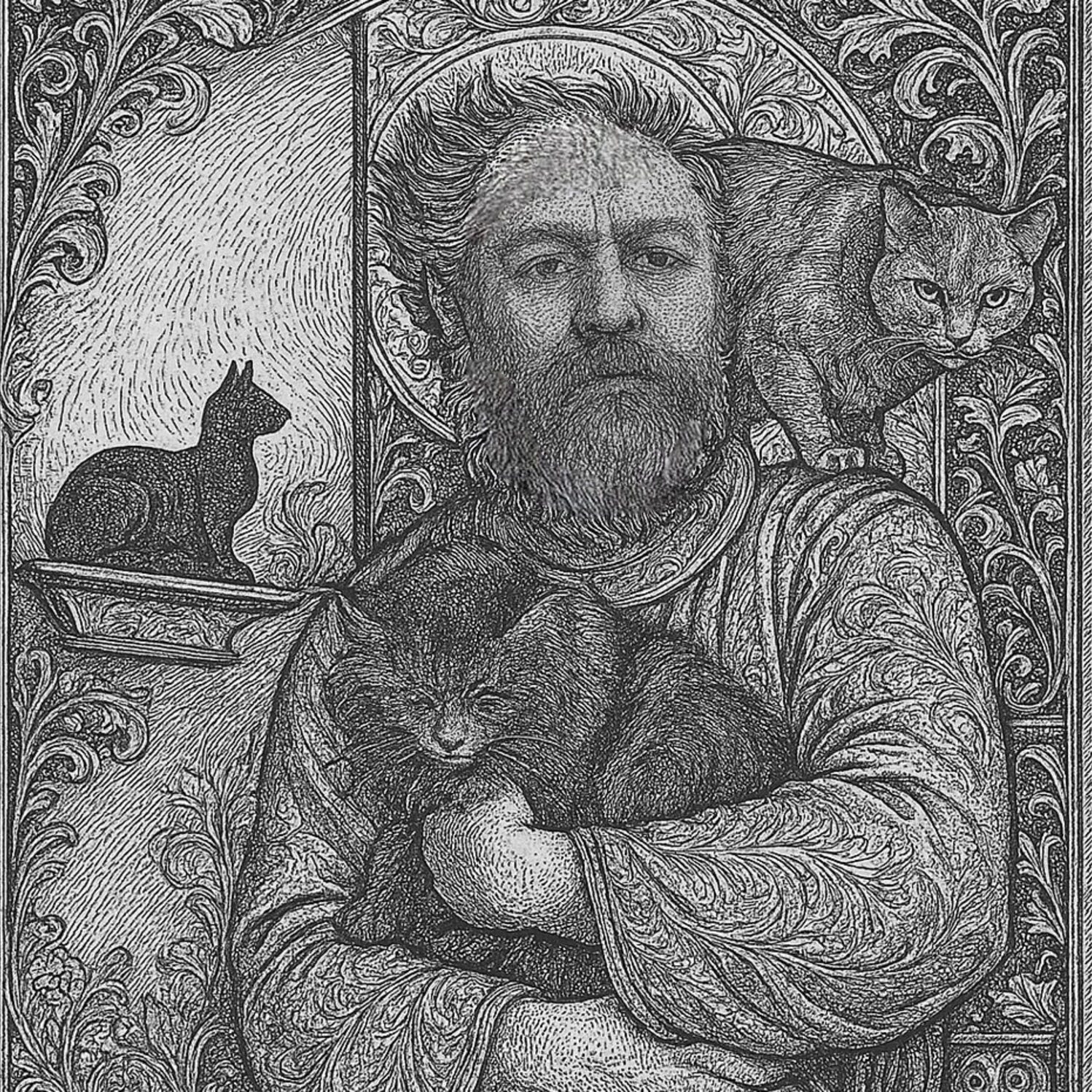
Thanksgiving: Gratitude, the 5th Step in Affirmative Prayer
Nov 21, 2026 · 58m
What does it mean to live with gratitude, even when life presents challenges? In this lesson, we explore Gratitude: The Fifth Step in Affirmative Prayer, examining how appreciation transforms our...
Henry David Thoreau’s Civil Disobedience
Nov 17, 2026 · 56m
Discover Henry David Thoreau’s enduring call for conscience, justice, and resistance to unjust government in Civil Disobedience, presented in a historic 1968 spoken-word recording featuring...
Henry David Thoreau’s Civil Disobedience
Nov 17, 2026 · 56m
Discover Henry David Thoreau’s enduring call for conscience, justice, and resistance to unjust government in Civil Disobedience, presented in a historic 1968 spoken-word recording featuring...
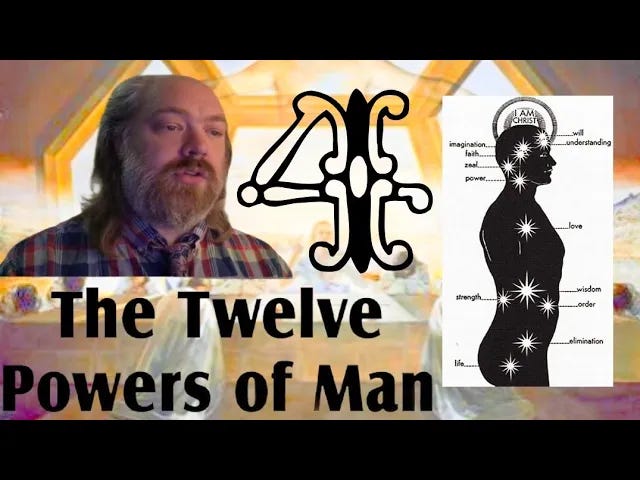
The Twelve Powers of Man, Part 4
Nov 14, 2026 · 1h 26m
The Twelve Powers of Man, Part 4 with Dr. Mitchell K. Jones explores Chapters 7–9 of Charles Fillmore’s classic work on Unity metaphysics: Imagination, Understanding, and Will.What does imagination...
The Twelve Powers of Man, Part 4
Nov 14, 2026 · 1h 26m
The Twelve Powers of Man, Part 4 with Dr. Mitchell K. Jones explores Chapters 7–9 of Charles Fillmore’s classic work on Unity metaphysics: Imagination, Understanding, and Will.What does imagination...
New Harmony: An Example and a Beacon (1971)
Nov 11, 2026 · 28m
Explore the fascinating story of New Harmony, Indiana, in this 1971 documentary New Harmony: An Example and a Beacon, directed by Ledford C. Carter with insights from Donald F. Carmony and Helen...
Take these sermons with you.
Follow Science of Spiritual Reality with Mitchell K. Jones in the Getsermons app to get every new sermon, build playlists, and pick up right where you left off.

