
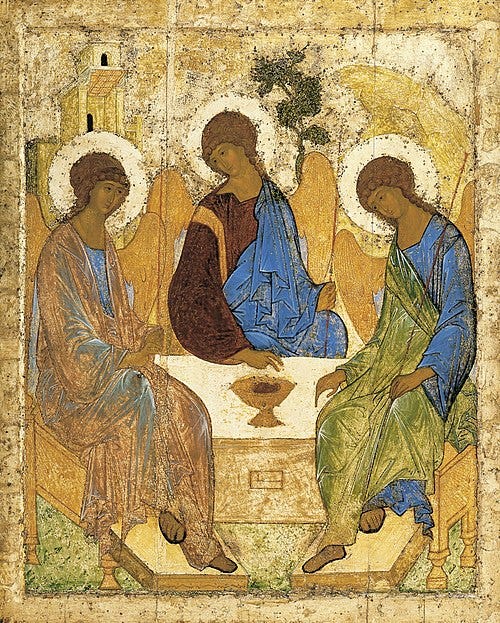
About this sermon
I recently wrote this brief lesson on the Holy Spirit, for a church Bible class book that will appear later this spring or summer. That book will be the 2026 edition of the Berean Series, published by HCU Press, so look for it in a few months. The theme this year is the Seven Ones of Ephesias 4:4–6, and my topic was “One Spirit.” Each author wrote two chapters, one on the overall concept (be it “faith” or “baptism” or “Lord” or, in my case, “Spirit”) and the other on Paul’s emphasis in the passage on the singular nature of the concept (i.e., “one faith” or “one baptism” or “one Lord”). Below is my first chapter, and later I’ll post my second one. But this is just the main text; you’ll have to get the book if you want the footnotes and discussion questions.
Introduction
The Holy Spirit is mysterious. I think it’s supposed to be that way. His purpose is not to tell us about Himself. Jesus told his disciples: “But the Advocate, the Holy Spirit, whom the Father will send in my name, will teach you everything, and remind you of all that I have said to you” (John 14:26). And again: “When the Advocate comes, whom I will send to you from the Father, the Spirit of truth who comes from the Father, he will testify on my behalf” (15:26). Rather than testifying about himself, the Spirit testifies about Jesus. He reminds the disciples of Jesus about what Jesus has said. When the Spirit has done his work, the disciples of Jesus might not have a great understanding of the Spirit, but they will have a better understanding of Jesus.
In Mere Christianity, C. S. Lewis suggests another reason that the Spirit might be less distinct than are the Father and Son. “Do not be worried or surprised if you find it (or Him) rather vaguer or more shadowy in your mind than the other two. I think there is a reason why that must be so. In the Christian life you are not usually looking at Him: He is always acting through you.” As Lewis says, we might think of the Father as in front of us and the Son as beside us while the Spirit is within us or behind us.
Though much of the life and work of the Holy Spirit is unclear to me, we can grasp some things from the evidence of Scripture. One of those things is what we just read from Lewis: the Spirit dwells within us. Paul’s letters are especially insistent on this point, and especially Romans 8, the chapter in the New Testament with the most number of occurrences of the word “spirit.” One example: “But you are not in the flesh; you are in the Spirit, since the Spirit of God dwells in you. Anyone who does not have the Spirit of Christ does not belong to him” (Rom 8:9). More on this later.
For now, what is this Spirit that dwells within Christian believers?
Going Deeper
The Greek word translated “spirit” is pneuma (πνεῦμα), appearing 379 times in the New Testament, including every book except 2–3 John. It mostly refers to God’s Spirit (275x), but can also refer to the human spirit (e.g., Luke 8:55) or a demonic spirit (e.g., Luke 8:2, 29). The standard dictionary for the Greek New Testament discusses this word across four and a half pages, supplying eight different major definitions, starting with “air in movement.” The word sometimes means “breath” or “wind” (cf. Heb 1:7), which allows for the different nuances of the word in Jesus’ speech to Nicodemus: “The pneuma (wind) blows where it chooses, and you hear the sound of it, but you do not know where it comes from or where it goes. So it is with everyone who is born of the pneuma (Spirit)” (John 3:8).
The relevant Hebrew word is similarly broad in meaning, but references to the divine Spirit are much less frequent in the Old Testament. Our word is ruaḥ (רוּחַ), and it appears 389 times in the Hebrew Bible, but a rather low percentage of these appearances are in reference to God’s Spirit (only about 75x). One of the standard dictionaries of ancient Hebrew uses thirteen pages to define this word, but there are only three major definitions: wind, breath, and the divine Spirit.
While the Old Testament supplies crucial information about God’s Spirit, especially its work of empowering people—Bezalel in his artistry (Exod 31:1–5) or Samson in his feats of strength (e.g., Judg 14:6)—it is the New Testament that depicts the Spirit with greater clarity. According to the New Testament, the Spirit belongs in company with the Father and the Son. For example, Jesus commanded his apostles to baptize people “in the name of the Father and of the Son and of the Holy Spirit” (Matt 28:19). Peter addressed his first letter to believers “who have been chosen and destined by God the Father and sanctified by the Spirit to be obedient to Jesus Christ and to be sprinkled with his blood” (1 Pet 1:2). Paul ended his second letter to the Corinthians with this blessing: “The grace of the Lord Jesus Christ, the love of God, and the communion of the Holy Spirit be with all of you” (2 Cor 13:14). And, of course, among the seven Ones mentioned by Paul in Ephesians 4 are One God, One Lord, and One Spirit (Eph 4:4–6).
These passages show that when one speaks of the Christian God, one should speak of not only Father and Son but also Spirit. Traditional Christian theology has pressed further, describing the Christian God as one essence in three persons. While the Apostle’s Creed and the original Nicene Creed (325 AD) included belief in the Holy Spirit as a fundamental doctrine, the expanded Nicene Creed (381 AD) elaborated somewhat on the Spirit’s being and activities and the responsibility of believers to “worship and glorify” him together with the Father and the Son. The New Testament does not provide examples of Christians worshiping the Holy Spirit, but it does provide evidence—beyond the threefold descriptions of God reviewed above—that the apostles conceived of the Holy Spirit as God. A classic example is the twin statements from Peter in Acts 5, who first accuses Ananias of lying to the Holy Spirit (5:3), and then of lying to God (5:4). The divinity of the Spirit would also explain why Jesus regarded blasphemy of the Holy Spirit as such a serious offense (Mark 3:29). Christians in the early centuries considered it appropriate—necessary—to offer worship to the Spirit since he is God. I myself have sung few songs directly addressed to the Spirit, but one such song I have sung many times in my life: “Spirit, we love you, we worship and adore you, glorify thy name in all the earth!”
There are also indications in Scripture that the Spirit is personal, that he has thoughts and desires and agency. Paul and Barnabas undertook the first missionary journey in the book of Acts because the Holy Spirit called them to that work and spoke about his choice (Acts 13:2). Larry Hurtado points especially to the Farewell Discourse in John’s Gospel as offering such testimony about the Spirit. In this passage, the Spirit is depicted as an Advocate or Counselor (paraklētos; John 14:26; 15:26; 16:7), a personal representative of Jesus (14:16–20), who will remind the disciples of Jesus’ teaching (14:25–26; 15:26; 16:12–13), bring glory to Jesus (16:14), and rebuke the world for sin (16:7–11). “This frequent use of verbs of agency has the effect of giving the Spirit a considerably more personal character than we find in the OT and the Jewish tradition of the time, in which the Spirit is often referred to in ways that can connote more simply a divine power/force (e.g. 1 Sam 10:9–13).”
What about the Spirit’s pronouns? If the Spirit is personal, does that mean we should refer to the Spirit as “he” and not as “it”? Many Christians insist on using the masculine pronoun for this reason. Others use the feminine pronoun, “she,” which does, in fact, correspond to the grammatical gender of the word “spirit” in Hebrew (ruaḥ is usually feminine). Look, gender is such a controversial topic in the twenty-first century that we run the risk of inserting modern categories and concepts into ancient and timeless texts by…
This is a public episode. If you would like to discuss this with other subscribers or get access to bonus episodes, visit edmongallagher.substack.com
More from Scripture-ish

Self-Control in Sense and Sensibility
Nov 23, 2026 · 39m
“Those who belong to Christ have crucified the flesh with its passions and desires.” (Gal 5:24)In Jane Austen’s debut novel, Sense and Sensibility, which was published 215 years ago, the best scene in...

Sense or Sensibility?
Nov 16, 2026 · 29m
He that is slow to anger is better than the mighty; and he that ruleth his spirit than he that taketh a city. (Proverbs 16:32)In the year 1811, there appeared a book with the following description...
Like Any Other Book?
Nov 9, 2026 · 38m
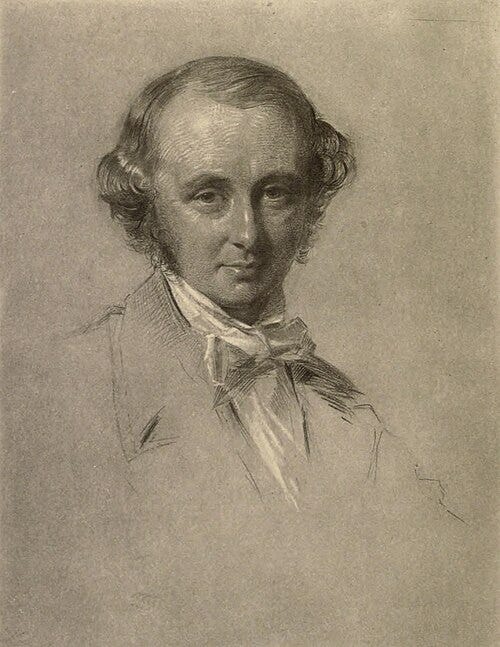
Should Christians interpret the Bible like any other book? The point of asking this question—the point of phrasing it in this particular way—is to echo a line in an essay written 150 years ago by...
What about the Giants?
Nov 5, 2026 · 22m
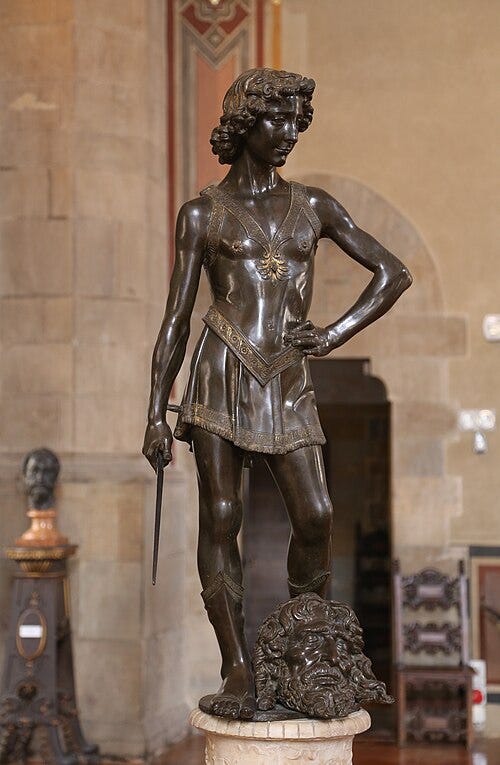
A few people recently posed to me a question about the Nephilim in the Bible, which are often identified as giants. Fortunately, I have actually written something about these characters. The following...

Dracula and Martyrdom
Oct 29, 2026 · 30m
I was telling you why I love the 1897 novel Dracula so much, and what lessons I think a Christian might learn from Bram Stoker. Last time I introduced the novel and ended my thoughts with a focus on...

Dracula and the Sacred Wafer
Oct 26, 2026 · 25m
On the morning of May 16, Jonathan Harker began his diary entry with the following words: God preserve my sanity, for to this I am reduced. Safety and the assurance of safety are things of the past....
Take these sermons with you.
Follow Scripture-ish in the Getsermons app to get every new sermon, build playlists, and pick up right where you left off.

