
Securing the Sanctuary-Christian Warrior Training
Christian Genocide Is Spreading Across Africa
Sep 9, 2026 · 17m
Prefer sermons downloaded automatically?
About this sermon
Paid subscribers make this possible. Please consider upgrading your subscription to help us protect all churches.
American Christians have been hearing fragments of the Nigeria story for years. A kidnapped schoolgirl. A burned church. A Christmas massacre. What most believers in this country do not have is a clear picture of what is actually happening, who is driving it, and where it is headed. This article is built to fill that gap.
Nigeria is currently the deadliest country in the world for Christians. Open Doors, in its 2026 World Watch List, reports that of the 4,849 Christians killed for their faith over the past reporting year, 3,490 of them were killed in Nigeria. That is more than seventy percent of the global total coming from a single country. The violence is not limited to one region or one group. It runs from the northeast, where Boko Haram first emerged, through the Middle Belt, where Fulani militia attacks have emptied entire villages, into the northwest, where ISIS-linked groups now move freely, and across the borders into Niger, Burkina Faso, Mali, Cameroon, and the eastern Democratic Republic of the Congo.
This is a long article. I wrote it that way on purpose. A pastor, a security team leader, or a congregant who wants to understand this situation should be able to come back to a single piece and have the picture in front of them.
The Scale of the Problem
Nigeria is the most populous country in Africa with roughly 220 million people, split about evenly between Muslims in the north and Christians in the south. The Middle Belt sits between the two halves and has become the fault line where most of the killing occurs. The country sits at the southern edge of the Sahel, the arid band that runs across Africa from Senegal in the west to Sudan in the east. Every major jihadist movement currently operating in Africa touches that band somewhere.
The Observatory for Religious Freedom in Africa documented 79,323 people killed across Nigeria between October 2019 and September 2025, of whom 42,033 were civilians. Forty-four percent of the civilian killings were attributed to Fulani militias, compared to twelve percent for Boko Haram and ISWAP combined. In the states where attacks occur, Christians were killed at a rate approximately 4.4 times higher than Muslims relative to their share of the population. The count was 22,835 Christian civilians killed against 10,519 Muslims.
The numbers do not capture the displacement. Since 2019, more than 2.2 million Nigerians have been driven from their homes by the farmer-herder violence alone. That figure does not include the millions more displaced by Boko Haram, ISWAP, and the kidnapping gangs that now operate across large portions of the country. Entire Christian farming villages have been burned. Survivors are pushed into displacement camps with conditions that are hard for most Americans to picture.
The Nigerian federal government has refused for more than a decade to name what is happening. In December 2025, Abuja finally classified Fulani militias, bandits, and armed gangs as terrorists under a new counterterrorism doctrine. Most Nigerian Christians view the move as too late and too narrow.
Who the Fulani Are
To understand the Middle Belt, you have to understand who the Fulani are. The American press almost always reduces them to a single word, “herdsmen,” which leaves out everything that matters.
The Fulani, also called Fula, Fulbe, or Peul, are one of the largest ethnic groups on the African continent. Estimates place their population between 25 and 45 million, spread across at least twenty countries, with the largest concentrations in Nigeria, Mali, Guinea, Senegal, Niger, Cameroon, and Burkina Faso. About 17 million Fulani live in Nigeria. They are the largest nomadic pastoral community in the world. Roughly a third of them still live as traditional herders moving cattle across the Sahel. The rest are semi-settled farmers, traders, scholars, merchants, and in many countries, the ruling class.
The Fulani were among the earliest sub-Saharan African peoples to convert to Islam, centuries before most of their neighbors. That early conversion shaped their identity and gave them a sense of religious superiority over the surrounding peoples they regarded as pagans. From the 1700s into the 1800s, Fulani clerics led a series of holy wars across West Africa. The most significant was the jihad launched in 1804 by Usman dan Fodio, a Fulani preacher who declared the existing Hausa kings insufficiently Islamic and called the population to revolt. His jihad swept through what is now northern Nigeria and built the Sokoto Caliphate, one of the largest Islamic empires Africa has ever seen. That caliphate lasted until the British arrived in the early 1900s.
The Sokoto Caliphate is not history to the people in the region. The Sultan of Sokoto is still recognized as the traditional religious leader of Sunni Muslims across northern Nigeria. Many of Nigeria’s most powerful political figures have been Fulani or Hausa-Fulani, including former president Muhammadu Buhari. The Fulani are not a marginal people. They are historically the dominant political force in the north. Elements within the Fulani community view the Christian Middle Belt as territory that was not fully conquered during the original jihad, and there are factions now working to finish what Usman dan Fodio started.
The Fulani are overwhelmingly Sunni Muslim. Settled, urban Fulani tend to be more devout and more supportive of religious activism. Pastoral Fulani have historically been less rigorous in their practice. That pattern has shifted in the past decade.
How the Herder Conflict Became a Religious Campaign
For generations, Fulani cattle herders and settled farmers across West Africa clashed over grazing land, water, and crop damage. These disputes were local and seasonal, and they were usually resolved through traditional mediation. Something changed in the mid-2010s.
A few factors hit at the same time. Climate pressure pushed pastoral Fulani further south into the Middle Belt looking for water and grazing. The collapse of Libya in 2011 flooded the Sahel with military-grade weapons from Gaddafi’s armories. Boko Haram’s rise in the northeast made Islamist violence regionally normal. And the Miyetti Allah Cattle Breeders Association of Nigeria, a Fulani herders’ organization, has been accused by Nigerian Christians, law enforcement sources, and international observers of financing weapons distribution and coordinating attacks on Christian villages. In February 2026, nine Fulani leaders linked to Miyetti Allah were arraigned in Abuja on 57 terrorism counts for the June 2025 Benue massacre.
Portions of the Fulani were radicalized inside that environment. Jihadist ideology teaches that Christians are infidels who must be subjugated, killed, or forced to convert. That ideology found receptive ground among some of the armed herders. Attackers began chanting “Allahu Akbar” as they raided Christian farming villages. In December 2023, Fulani militants attacked at least 25 Christian communities across three local government areas in Plateau State on Christmas Eve and Christmas Day and killed nearly 200 men, women, and children. The Nigerian Red Cross counted 84 communities affected and 29,350 people displaced. In June 2025, an attack on Yelwata village in Benue State killed between 200 and 270 people. In the first two weeks of 2026, Fulani militants killed at least 12 Christians in Plateau, 13 in Benue, and 10 in Taraba State. On January 18, Fulani militants stormed three churches in Kaduna State during Sunday services and abducted 177 Christians. Kaduna State officials initially denied the attack had happened and only admitted it two days later. The captives were released on February 5 after a joint security operation.
The Nigerian government’s response to attacks like these has followed a consistent pattern. Denial. Reclassification as banditry. Arrests made, then released with…
This is a public episode. If you'd like to discuss this with other subscribers or get access to bonus episodes, visit www.christianwarriortraining.com/subscribe
More from Securing the Sanctuary-Christian Warrior Training
Right To Bear Black Friday Sale: 25 Percent Off for Christian Warrior Training Followers
Nov 25, 2026 · 0m
Paid subscribers make this possible. Please consider upgrading your subscription to help us protect all churches.Christian Warrior Prepper | Christian Warrior Bible StudyRight To Bear is running a...
This Church Security Team Fought Off an Active Shooter
Nov 24, 2026 · 1h 8m
Paid subscribers make this possible. Please consider upgrading your subscription to help us protect all churches.Christian Warrior Prepper | Christian Warrior Bible StudyThis video is brought to you...

Christmas Eve and Christmas Service Security Plan
Nov 19, 2026 · 7m
Paid subscribers make this article possible. It costs a lot of money to keep CWT moving and you make that possible!Christian Warrior Prepper | Christian Warrior Bible StudyBottom Line Up Front...
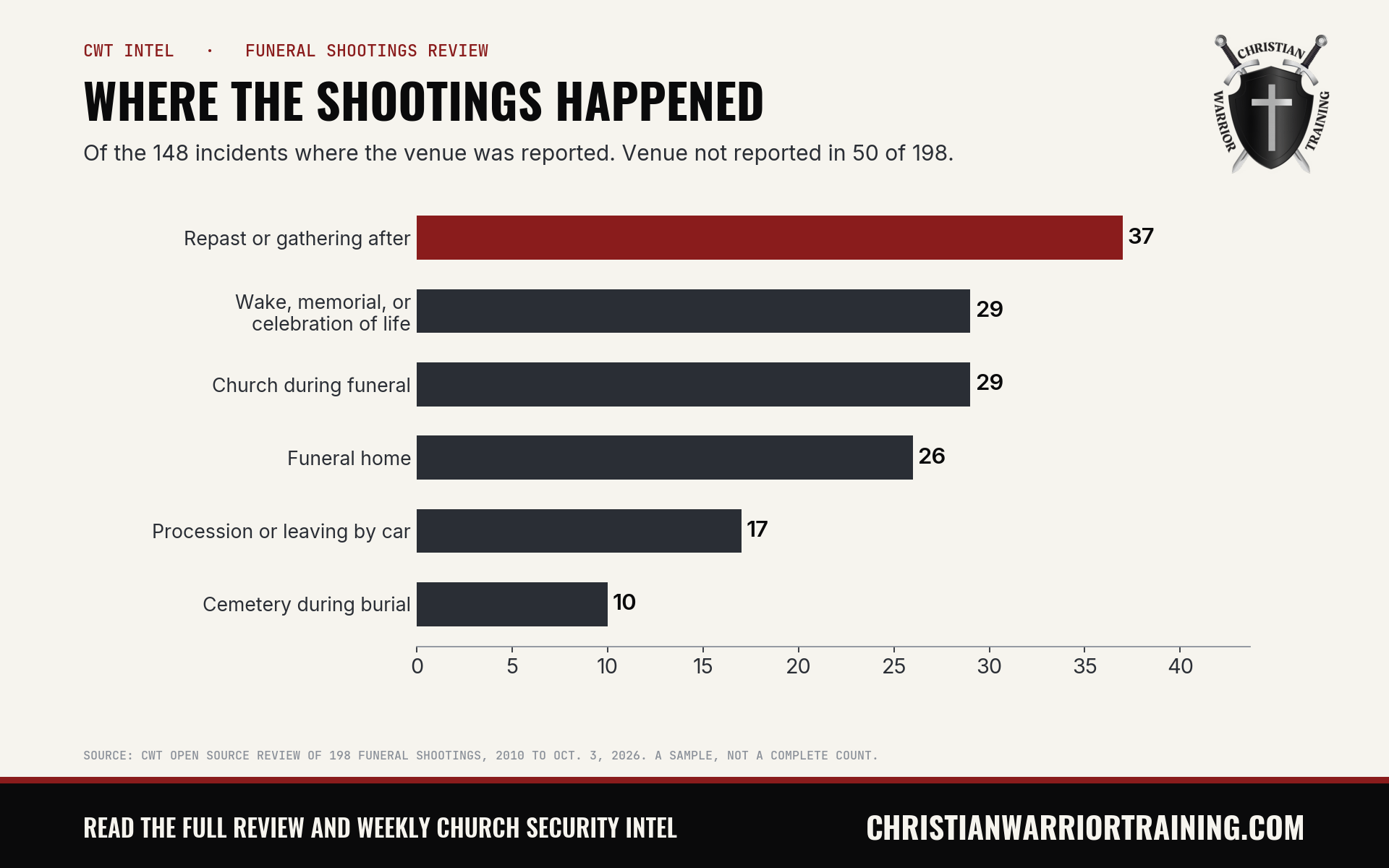
Why Are So Many Shootings Happening at Funerals: Can We Predict Which Funerals Will Have Violence?
Nov 18, 2026 · 9m
Paid subscribers get free downloads with their subscription. Thank you for supporting us!What 198 Funeral Shootings Tell Church Safety TeamsYou’re working the parking lot at your church on a...
This Radio Cut Through Worship Music and Gunfire: POCLINK Titan
Nov 14, 2026 · 12m
Paid subscribers get my analyst notes and two downloads at the end of this article.Bottom Line Up Front (BLUF)The POCLINK Titan (model POC-2) is a push-to-talk radio that carries your voice over...
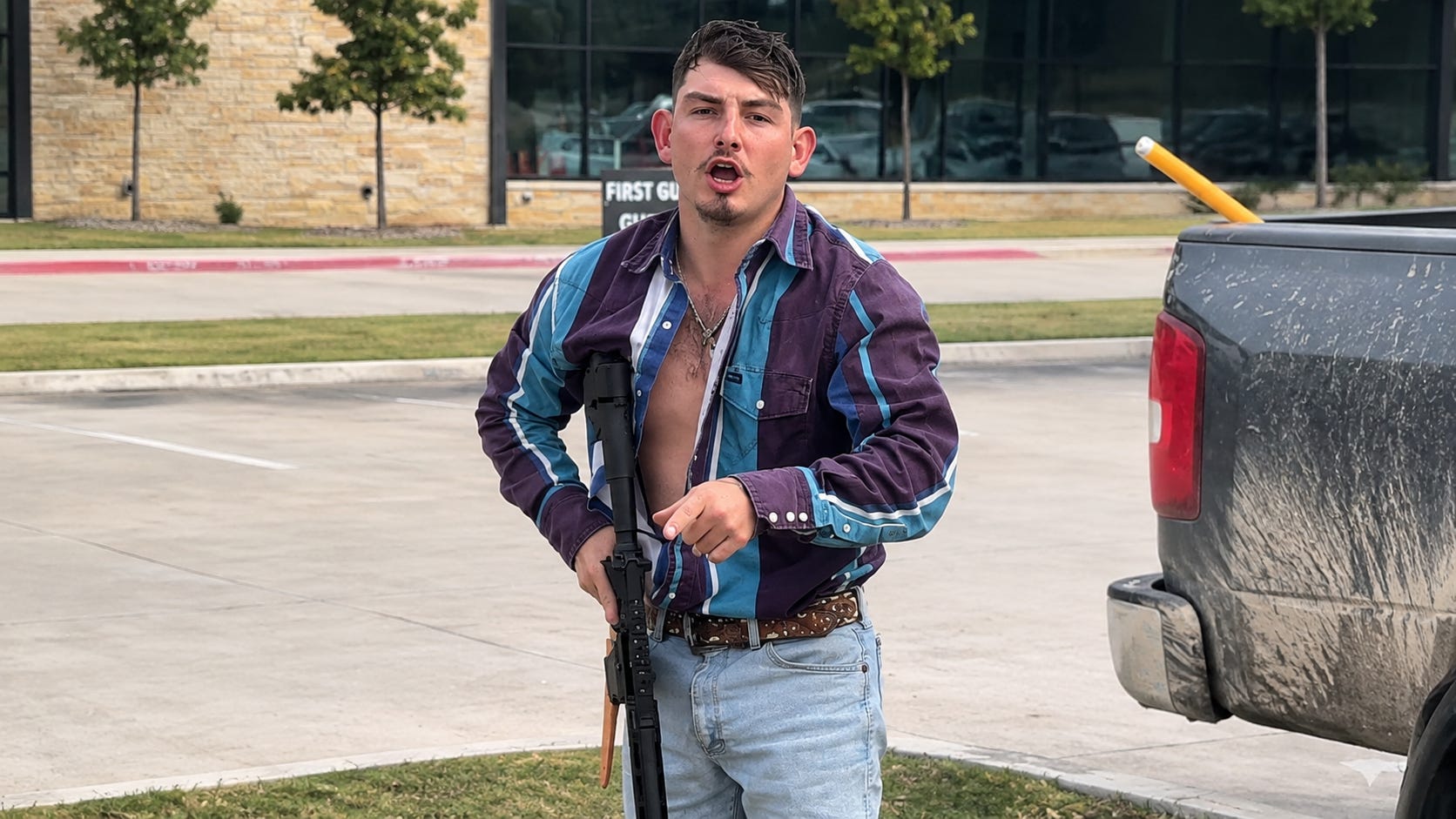
Man Grabs Rifle During Protest Outside Frisco, Texas Church
Nov 11, 2026 · 17m
Your Analyst’s Notes, tabletop scenario, and walk-through scenario for this incident are at the bottom of this article.Bottom Line Up Front (BLUF)On Sunday morning, November 8, a man stood on the lawn...
Take these sermons with you.
Follow Securing the Sanctuary-Christian Warrior Training in the Getsermons app to get every new sermon, build playlists, and pick up right where you left off.

