
Securing the Sanctuary-Christian Warrior Training
The Training Pipeline for a Church Security Team Member
Oct 28, 2026 · 14m
Prefer sermons downloaded automatically?
About this sermon
Help us protect the Body of Christ by upgrading your subscription. For the price of a cup of coffee each month, we can do more to help us all.
Most church security team members get their training in whatever order it shows up. A free class comes along, somebody signs up, and three years later the team has a member who has been through a carbine course but has never applied a tourniquet. Police academies and the military do not train that way. They run recruits through a pipeline, a set sequence of courses where each one builds on the last, and nobody moves forward without the foundation underneath. Church security teams should do the same.
I recommend a ten-step pipeline for church security team members. Unarmed team members complete steps one through five and step nine. Armed team members complete all ten. Nobody carries in the name of the church until they have finished the firearms steps, passed an interview and a background check, and shot the qualification course.
Step One: Free Online Training at Christian Warrior Training
Start with the online courses at Christian Warrior Training (CWT), found at courses.christianwarriortraining.com. They cost nothing, and they cover the church-specific material most outside courses never touch, including recognizing threats, securing the parking lot, and team communication. Very few firearms instructors can tell you how to position a team in a sanctuary during a Sunday service. Finish the online material first so every class you take afterward has a church setting to fit into.
Steps Two Through Five: Training for Every Team Member
Step two is Stop the Bleed. The course runs about 90 minutes, it is often free, and it teaches direct pressure, wound packing, and tourniquet application. A person shot in a major artery can bleed to death before an ambulance reaches the parking lot. Every team member should be able to put a tourniquet on someone else and on themselves, and every team should carry the kits. You can find a class near you at stopthebleed.org.
Step three is a de-escalation course. Most of what a church team handles is a person who is angry, intoxicated, in a mental health crisis, or fighting over custody in the lobby. Most of those situations end with words. A good de-escalation course teaches how to approach, where to stand, what to say, and when to stop talking and call the police. Look at Verbal Defense and Influence or the courses offered by the Crisis Prevention Institute (CPI), and ask your local police department whether it opens its crisis intervention training to civilians.
Step four is constitutional law. A church security team member is a private citizen with no police authority. A team member who does not understand that may detain someone for filming the building from a public sidewalk, grab a protester’s sign, or search a bag without consent, and any of those can bring a lawsuit or criminal charges against the team member and the church. A class in constitutional law, combined with your state’s laws on trespass, citizen’s arrest, and use of force, teaches team members the limits of their authority. Community colleges offer these classes, many police departments cover the material in their citizen’s academies, and an attorney who handles civil rights or self-defense cases can teach a session for your team.
Step five is pepper spray training. Oleoresin capsicum (OC) spray gives a team member an option between words and a firearm, and for unarmed members it is the one tool in the pipeline. Carrying a canister without training is a mistake. A proper course covers drawing and deploying from a holster, hitting a moving target with an inert training canister, decontaminating the person you sprayed and yourself, and the legal standard for using it. Some courses include an exposure so you learn what the spray does and that you can keep working with some of it on you. OC sprayed indoors drifts, gets into the ventilation system, and affects children and older people sitting nearby, so decide as a team, before Sunday, where you will and will not deploy it inside the building.
Steps Six Through Eight: Armed Team Members
Step six is a concealed carry course. It belongs in the pipeline for its use of force instruction. A good course spends hours on when you can legally use deadly force in your state, what happens after you do, and how to handle the police when they arrive. Many states, including Idaho, no longer require a permit to carry, and people in those states should take the class anyway. A team member who carries without understanding use of force law is a liability to the church and to themselves. Choose an instructor who teaches use of force professionally, such as a current or retired police trainer, or a course where an attorney teaches the legal portion.
Step seven is a basic pistol course. It covers safe handling, marksmanship fundamentals, loading, unloading, and clearing malfunctions. Experienced shooters often want to skip this step, and they should take it anyway. People who have shot for years often carry bad habits nobody ever corrected, and a basic course is the cheapest place to find them.
Step eight is an advanced pistol course from a recognized instructor or training organization. In this course a team member learns to draw from concealment, shoot under time pressure, shoot with either hand, move, and reload while moving. I teach the Bill drill constantly: draw and fire six rounds into the A-zone of the target as fast as you can, with a goal under two seconds. Armed people in real incidents miss far more often than they expect, and the drill shows a shooter exactly where their skill stands under time pressure. Before you pay for a course, ask the instructor about their background, who trained them, and whether they have taught armed citizens or only police.
Steps Nine and Ten: Putting It Together
Step nine is Tactical Combat Casualty Care (TCCC) at the basic level. Stop the Bleed teaches you to treat a wound. TCCC teaches you to treat casualties while a threat may still be present, including when to move a wounded person, how to keep an airway open, and how to sort several injured people by priority. The military developed TCCC, and the basic course runs about one day. If you cannot find a TCCC class locally, take Tactical Emergency Casualty Care (TECC), the civilian version, which covers the same core skills. Unarmed team members should take this course too, because during a mass casualty event at a church they will be treating most of the wounded while armed members deal with the threat.
Step ten is force-on-force training. Students face role players who fight back, using marking cartridges or training guns, in scenarios that require them to decide whether to talk, spray, shoot, or treat. This step tests everything that came before it. A team member who shoots well on a static range will often make poor decisions the first time a role player argues, moves, or reaches into a jacket, and force-on-force lets them make those mistakes where nobody gets hurt. Run the scenarios inside your own church when you can, with a dedicated safety officer, every participant searched, and no live weapons or ammunition in the building during training.
What the Bible Says
Israel had a training problem after Joshua died. The generation that fought for the land was gone, and the next generation had never been in a battle. Judges 3:1–2 says the Lord left certain nations in the land “to test Israel by them,” and then gives the reason: “It was only in order that the generations of the people of Israel might know war, to teach war to those who had not known it before.” Each generation had to be taught to fight.
When David was gathering men while hiding from Saul, 1 Chronicles 12:2 records that the Benjaminites who joined him “could shoot arrows and sling stones with either the right or the left hand.” Nobody is born shooting with the support hand. Those men built that skill through repetition before they ever reached Da…
This is a public episode. If you'd like to discuss this with other subscribers or get access to bonus episodes, visit www.christianwarriortraining.com/subscribe
More from Securing the Sanctuary-Christian Warrior Training
Right To Bear Black Friday Sale: 25 Percent Off for Christian Warrior Training Followers
Nov 25, 2026 · 0m
Paid subscribers make this possible. Please consider upgrading your subscription to help us protect all churches.Christian Warrior Prepper | Christian Warrior Bible StudyRight To Bear is running a...
This Church Security Team Fought Off an Active Shooter
Nov 24, 2026 · 1h 8m
Paid subscribers make this possible. Please consider upgrading your subscription to help us protect all churches.Christian Warrior Prepper | Christian Warrior Bible StudyThis video is brought to you...
Christmas Eve and Christmas Service Security Plan
Nov 19, 2026 · 7m
Paid subscribers make this article possible. It costs a lot of money to keep CWT moving and you make that possible!Christian Warrior Prepper | Christian Warrior Bible StudyBottom Line Up Front...
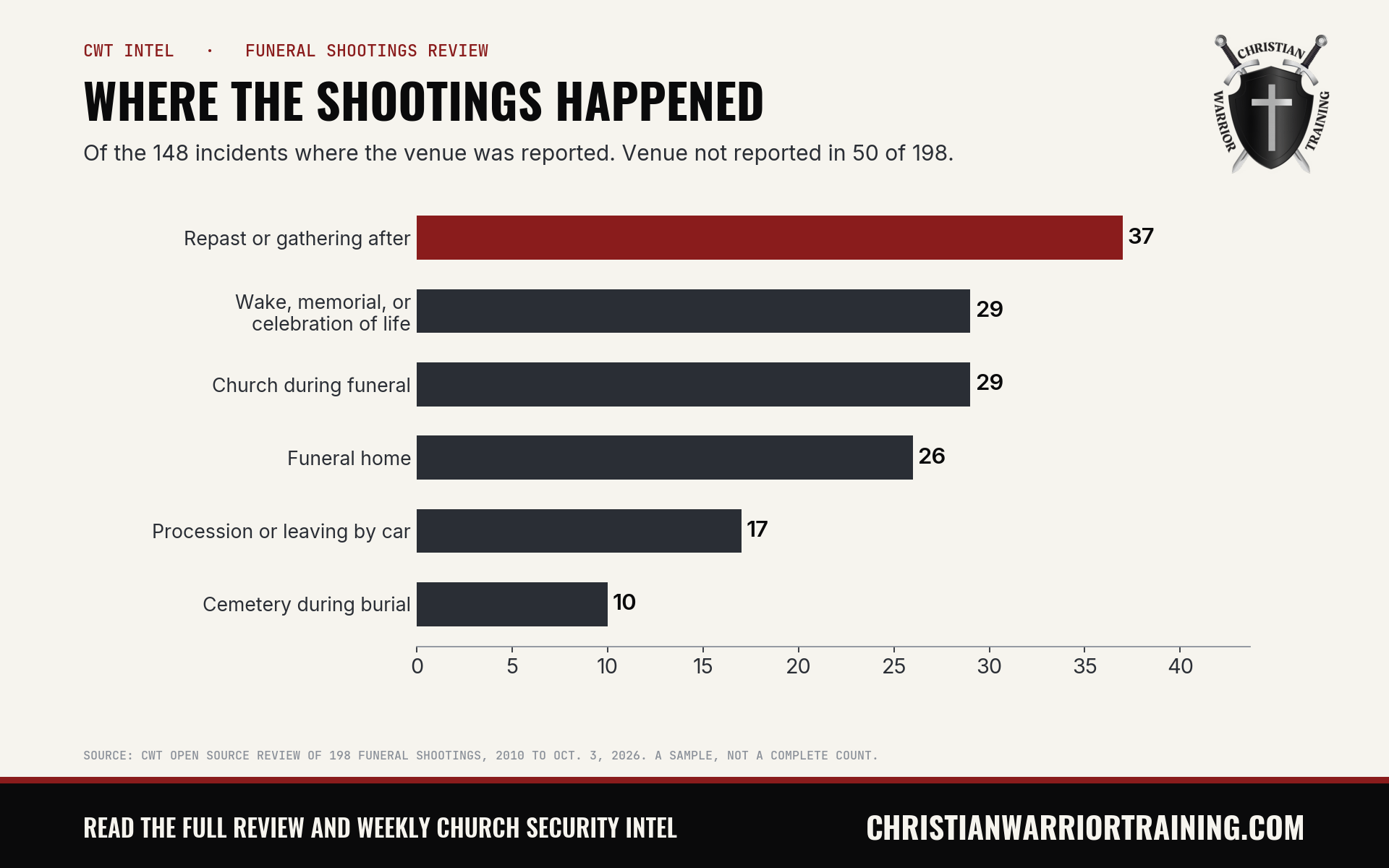
Why Are So Many Shootings Happening at Funerals: Can We Predict Which Funerals Will Have Violence?
Nov 18, 2026 · 9m
Paid subscribers get free downloads with their subscription. Thank you for supporting us!What 198 Funeral Shootings Tell Church Safety TeamsYou’re working the parking lot at your church on a...
This Radio Cut Through Worship Music and Gunfire: POCLINK Titan
Nov 14, 2026 · 12m
Paid subscribers get my analyst notes and two downloads at the end of this article.Bottom Line Up Front (BLUF)The POCLINK Titan (model POC-2) is a push-to-talk radio that carries your voice over...
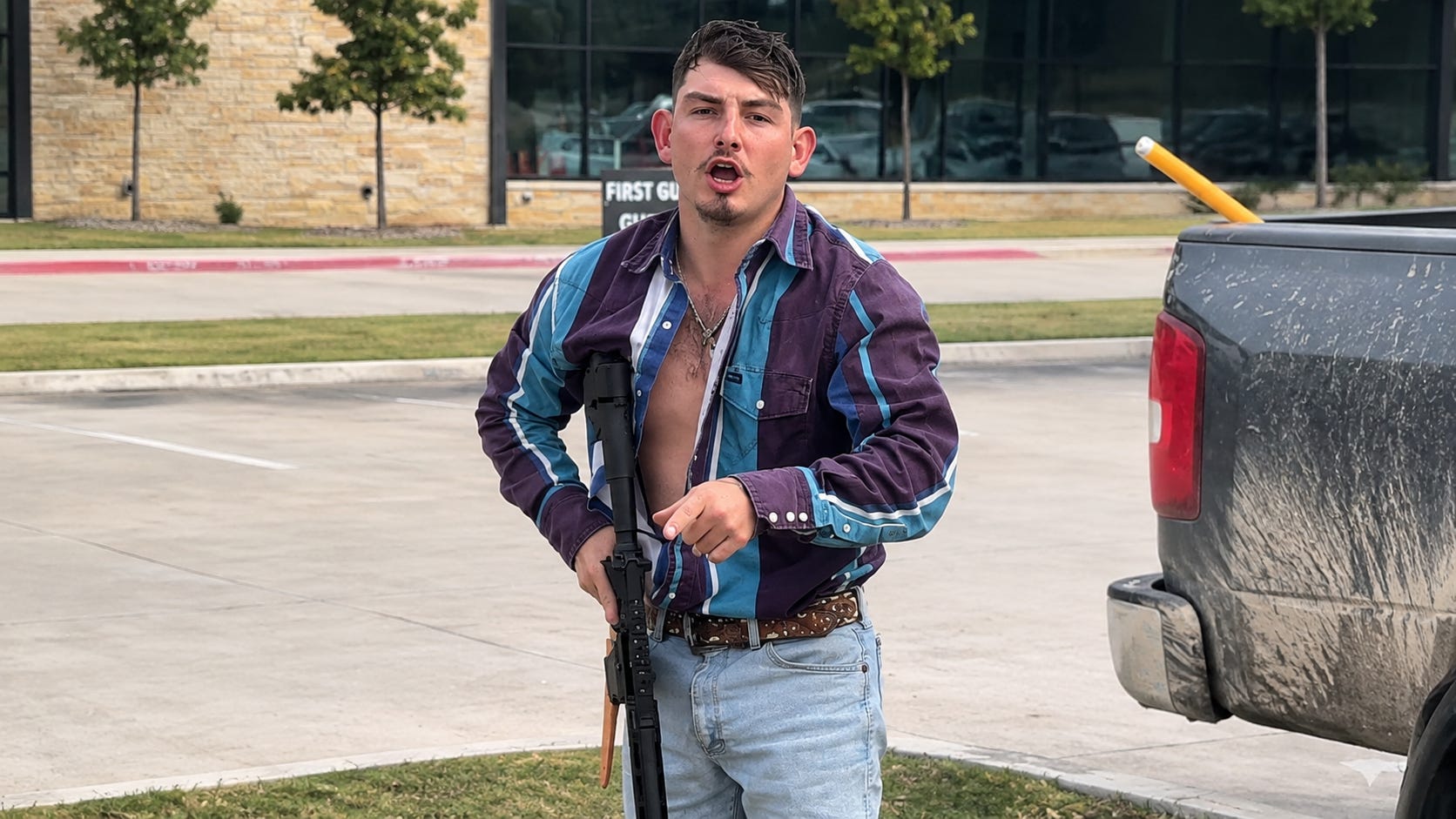
Man Grabs Rifle During Protest Outside Frisco, Texas Church
Nov 11, 2026 · 17m
Your Analyst’s Notes, tabletop scenario, and walk-through scenario for this incident are at the bottom of this article.Bottom Line Up Front (BLUF)On Sunday morning, November 8, a man stood on the lawn...
Take these sermons with you.
Follow Securing the Sanctuary-Christian Warrior Training in the Getsermons app to get every new sermon, build playlists, and pick up right where you left off.

