
Sparks
When Your Inner Voices Start Taking Sides
Sep 8, 2025 · 11m
Prefer sermons downloaded automatically?
About this sermon
As professionals, we face split-second decisions that can make or break relationships, deals, and careers. But have you ever wondered what's actually happening in your brain during those high-pressure moments when multiple voices compete for control? The answer reveals why some leaders thrive under pressure whilst others crumble… and it all comes down to which voice gets the final say.
What if I told you that every internal struggle you've ever experienced was actually a crew meeting aboard the starship of your mind? That voice urging caution in the boardroom? That's a crew member. The one pushing you to take bold action? Another crew member. The constant chatter about what colleagues think of you? Yep, crew member. And they're all having heated debates about who gets to make the decisions that shape your professional trajectory.
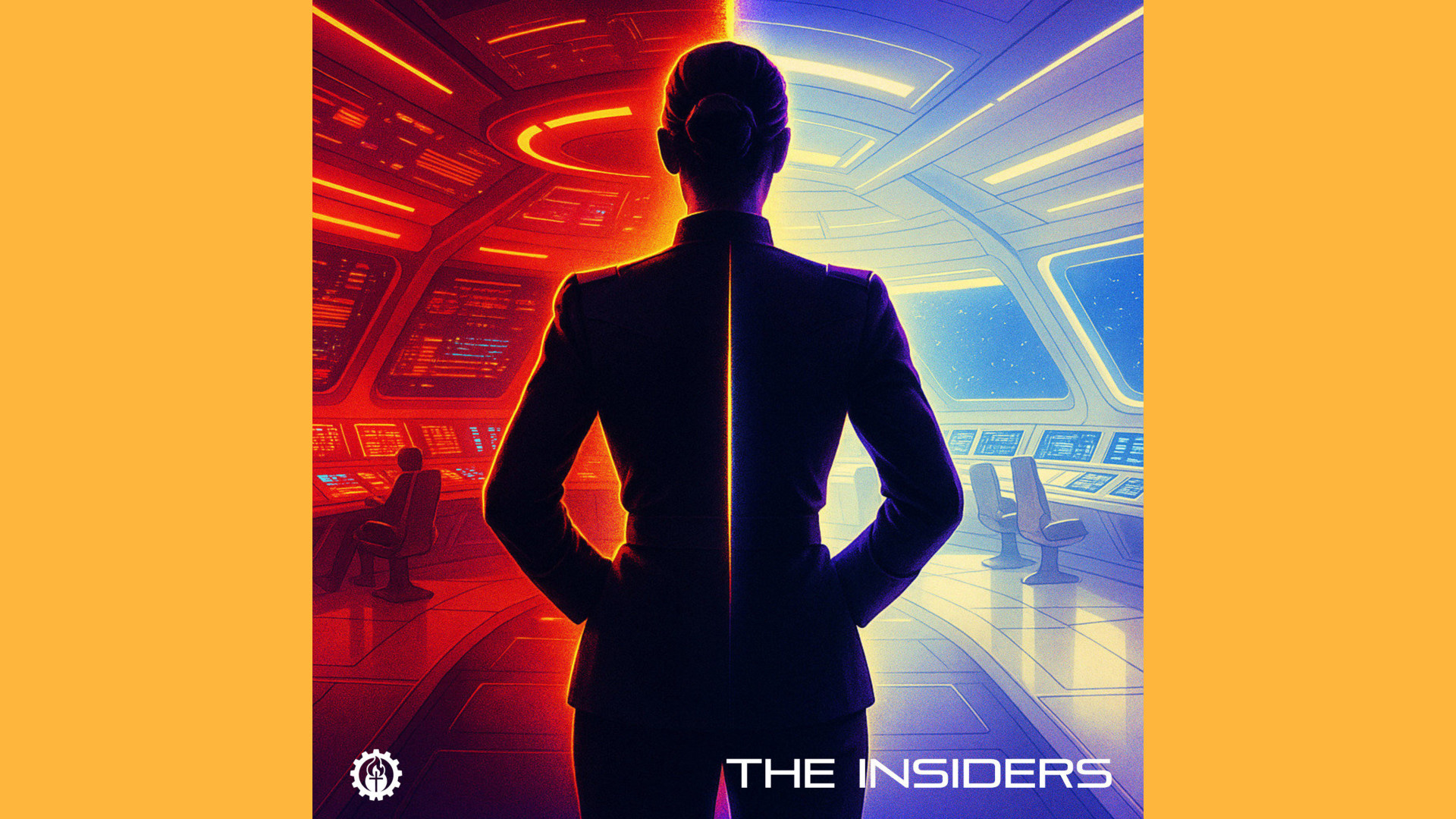
This isn't just a creative metaphor, it's the foundation of my debut novel, The Insiders, where these competing voices come alive as actual characters aboard The ALEx, a bio-engineered spaceship that represents the human brain. Every crew member embodies the actual functions, processes, and neurochemicals happening inside your head during every challenging moment you face.
The Morning Commute Revelation
Let me give you a perfect example of this internal battle in action. You're driving to work, feeling calm and centred. You've had your coffee, perhaps even listened to some uplifting content. You're a rational, courteous professional with above-average skills and a genuine heart for others.
Then some absolute muppet cuts you off in the morning traffic jam.
Instantly, rage floods your system. Not mild irritation; proper, volcanic fury that would make the Hulk proud. Your hands grip the steering wheel until your knuckles turn white. Words emerge from your mouth that would make your grandmother reach for the soap. For a moment, you're ready to follow that inconsiderate driver and have a very pointed conversation about traffic etiquette.
Where did that come from? Thirty seconds ago, you were practically a saint. Now you're contemplating vehicular revenge over a simple lane change.
Welcome to Walter's world.
The Neuroscience of Split-Second Reactions
That driver who cut you off triggered what neuroscientists call your threat detection system faster than you could blink. In The Insiders, Walter represents this ancient survival mechanism; your amygdala's lightning-fast assessment of every situation for potential danger.
Here's the crucial part that most professionals don't understand: Walter processes threats in approximately 12 milliseconds. Your prefrontal cortex—the rational, strategic part of your brain—takes about 500 milliseconds to fully engage. That 488-millisecond gap is where Walter rules supreme, flooding your system with stress hormones before your conscious mind even knows there's a situation to assess.
This isn't a bug in your system… it's a feature! Walter's rapid-fire threat assessment kept your ancestors alive when rustling bushes might contain predators. When genuine danger appears, you want Walter's split-second reactions, not careful deliberation.
But here's where our magnificent survival system becomes problematic in modern professional life: Walter can't tell the difference between a sabre-toothed tiger and a snarky email from your boss. To your threat detection system, they're both potential dangers requiring immediate response.
That challenging question in the board meeting? Walter interprets it as an attack on your status. The unexpected change in project direction? Walter sees it as a threat to your security. The colleague who questions your approach? Walter prepares for battle.
Enter the Response Team
This is where Candi comes in. In The Insiders, she represents what psychologists call "response flexibility" - your ability to pause between stimulus and reaction, to choose your response rather than simply react on autopilot.
"Can do!" Candi declares in the story, her optimistic energy a stark contrast to Walter's perpetual vigilance. She represents the part of you that believes problems have solutions, that challenges can be overcome, that you have power over your circumstances rather than being victim to them.
But here's the challenge: by the time Candi gets the message from Walter, your body is already flooded with stress hormones. Your heart is already racing. Your muscles are already tense. Walter has done his job—he's prepared you for immediate action. Now Candi has to work with a system that's already in crisis mode.
The tension between Walter and Candi plays out in your head countless times each professional day. Walter says "Danger!" Candi says "Opportunity!" Walter warns "This could go wrong!" Candi responds "But it could go right!" Walter focuses on what you can't control. Candi focuses on what you can.
The Professional Stakes
In Romans 7:15, Paul captures this internal conflict perfectly: "I do not understand what I do. For what I want to do I do not do, but what I hate I do" (NIV). Paul was describing the same struggle every professional faces—the gap between reactive impulses and chosen responses.
Modern neuroscience now explains exactly what Paul experienced. Your amygdala processes threats before your prefrontal cortex can engage strategic thinking. That gap between reaction and response is where careers are made or broken, where relationships flourish or fracture, where leadership is demonstrated or demolished.
Consider these common professional scenarios:
The challenging email: Walter floods you with defensive anger before you've even finished reading. Candi suggests pausing to understand the sender's perspective and crafting a response that serves the relationship, not just your ego.
The unexpected criticism: Walter interprets feedback as personal attack and prepares counterarguments. Candi sees an opportunity to learn, grow, and demonstrate professional maturity.
The risky opportunity: Walter catalogues every possible failure scenario. Candi evaluates the potential for growth, learning, and positive impact.
The leader who succeeds isn't the one who never experiences Walter's warnings… that would be dangerously naive. The successful leader is the one who acknowledges Walter's concerns whilst choosing Candi's responses when appropriate.
The Grateful Truth
Here's what's crucial to understand: you should be mighty grateful for Walter. That magnificent, hypervigilant, slightly paranoid voice in your head is the reason you're alive to read these words. Every time you've safely navigated a difficult conversation, avoided a career-limiting mistake, or instinctively stepped back from a genuinely problematic situation, Walter was working behind the scenes.
The problem isn't that Walter exists, it's that he's working overtime in a professional world that constantly triggers his alarm systems. He's like a smoke detector that goes off every time you make toast. Necessary for real fires, exhausting for daily cooking.
Your modern workplace bombards Walter with stimuli designed to trigger threat responses: urgent emails marked "high priority," meeting requests that disrupt your planned schedule, performance reviews that feel like judgement, organisational changes that threaten stability. Your poor threat detection system, evolved for rural agricultural life, is now trying to process the emotional equivalent of standing in a battlefield 24/7.
The Choice That Changes Everything
The beautiful truth woven throughout The Insiders is that you have genuine choice in this process. Not whether Walter reacts - he will, every time, because that's his sacred duty. But you can choose what happens in that 488-millisecond window between his initial assessment and your final response.
You can let Walter's initial reaction become your final response, or you can invite Candi into the conversation. You can acknowledge the threat assessment whilst choosing a response that fits the actual situation rather than Walter's worst-case scenario.
This is what Jes…
This is a public episode. If you would like to discuss this with other subscribers or get access to bonus episodes, visit differencemakers.substack.com
More from Sparks

My Name for God Was “Fix-It”
Nov 20, 2025 · 8m
For most of my life, my name for God was “Fix-It.” That wasn’t His name, of course, but it was mine for Him, a reflection of my own broken operating system. My world was built on performance, a...
Our New “Kingdom Lens Podcast” (And a Deep Dive on Romans 12:2)
Nov 10, 2025 · 5m
We are so excited to share a pilot episode of a brand new project: The What’s Better Today? Kingdom Lens Podcast.For a while now, we’ve been exploring what it means to be “Apprentices of the Way” -...
The Reviews Are In
Oct 5, 2025 · 7m
Five days ago, The Insiders launched into the world. The reviews are already telling a story I hoped for but didn’t dare expect.As professionals, we’re bombarded with content promising transformation,...

When Good People Hit Emotional Rock Bottom: The Soil Story
Sep 25, 2025 · 8m
I’ve been coaching for years, and there’s a pattern I see over and over again.The kindest, most conscientious people are often the ones who suffer most in difficult relationships. They’re the ones who...
The Rewiring Revolution (And Why Your Brain Wants You to Believe Change is Impossible)
Sep 22, 2025 · 12m
As professionals, we're constantly told to "adapt or die" in our rapidly changing workplace landscape. But here's what most leadership development programmes won't tell you: your brain is actively...
The Captain of Your Soul (And Why Stewardship Matters)
Sep 18, 2025 · 12m
As leaders, we face a fundamental question that determines every decision we make, every priority we set, and every response we choose: who's really in charge? Not just of your team or department, but...
Take these sermons with you.
Follow Sparks in the Getsermons app to get every new sermon, build playlists, and pick up right where you left off.

