
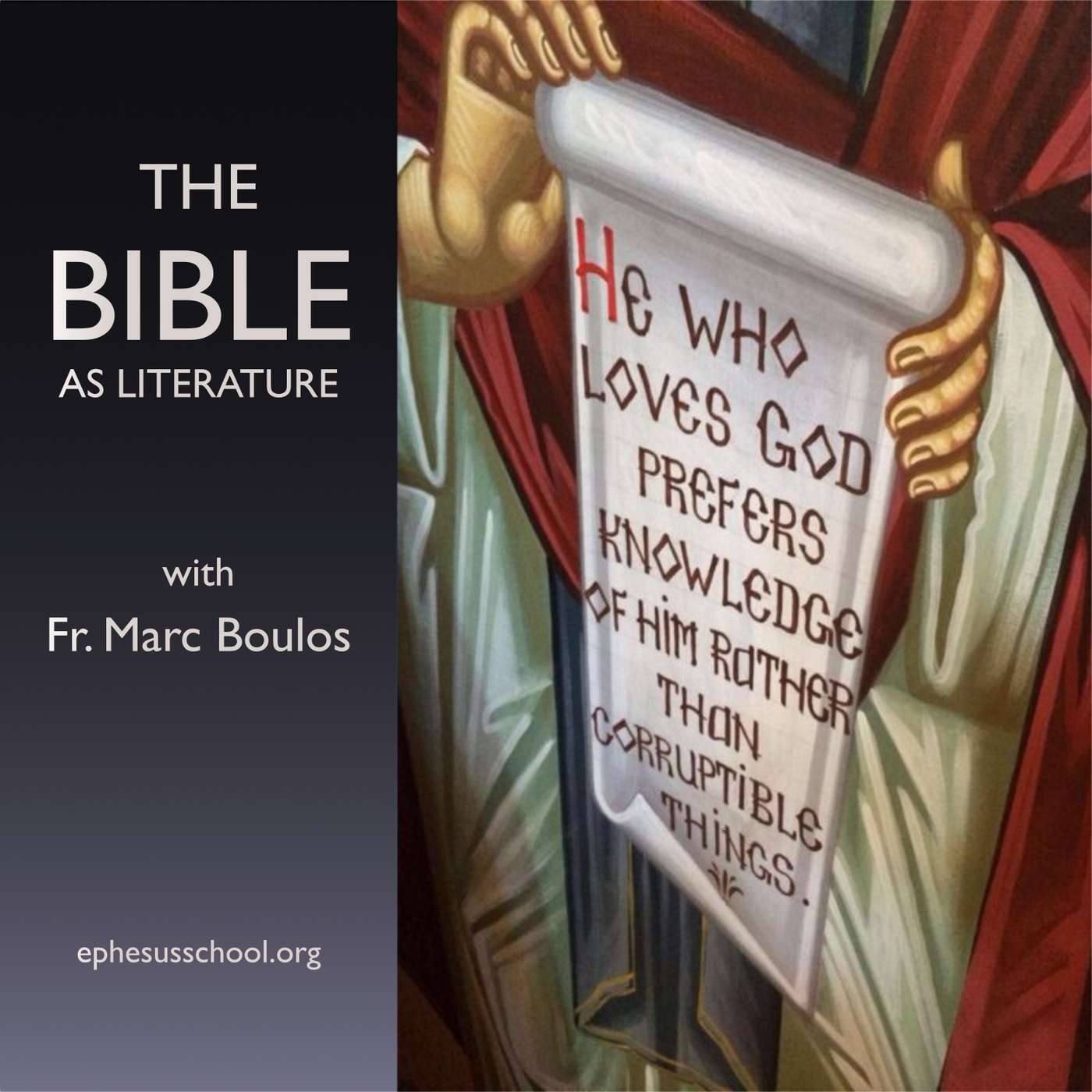
The Bible as Literature
Internalized Racism
Apr 24, 2025 · 48m
Prefer sermons downloaded automatically?
About this sermon
In “Dark Sayings,” I explore how internalized racism destroyed my mother’s family. This psychological process, woven out of Hellenistic pluralism and anti-Scriptural platitudes about the so-called “Melting Pot,” reveals how systemic racism operates not only externally but within the immigrant’s self-conception.
Internalized racism is more insidious than the inferiority complex from which it stems. Eventually, the immigrant—the stranger in a foreign land—overcomes fear by adopting the personality of the oppressor.
“You shouldn’t give your children Arabic names, Marc.”
“Stop listening to Arabic music, Marc.”
“You need to assimilate into this culture, Marc.”
“If you love the Middle East so much, Marc, why don’t you live there?”
The last one is my favorite. It reveals the speaker’s true heart. They might as well say, “Go back to Africa, Marc.”
My father is from Africa. Is Africa a punishment?
Internalized racism explains why people from the West Bank see themselves as superior to people from Gaza. It’s why Arab Christians often identify with white Western Christians against their Muslim brothers. It’s why immigrants and minorities across backgrounds look up to those who marginalize them.
This concept of “Stockholm Syndrome” reflects a fundamental truth about the human condition. The privileged and underprivileged who perpetuate internalized racism share something profoundly disturbing in common: both reject the God of Abraham, trusting not in him as King, but in themselves.
Ironically, Pharaoh (or Caesar) is not their king, as they profess in John’s Gospel, but merely their locum tenens — their temporary substitute. They view themselves as the true sovereigns. This explains their enthusiasm for elections; they delight in proclaiming their chosen figurehead by acclamation: creatus imperator.
They “create” (creāre) him. They “make” him. They “elect” him. They “bring him into being” and then they control him—but they can’t control the God who speaks out of the whirlwind.
Providence, habibi, is rougher than a corncob. She’ll slap you sideways even if you’re careful.
Though “internalized racism” isn’t a Scriptural term, it’s rooted in biblical notions of cowardice; in the absolute fear of the power of death and deep anxiety about what might happen if Jesus alienates the “wrong people” in Decapolis. God forbid he offend those “nice white people.” Very bad for business.
Consider the disciples.
What a bunch of cowardly, misguided fools. One almost wonders why Jesus didn’t let his Father finish what he began with the storm at sea.
Oops! I am starting to sound like Jonah. See, there are no good guys!
This week, I discuss Luke 8:25.
Show Notes
βουλή (boulē) / מ-כ-ר (meem-kaf-resh) / م-ك-ر (mīm-kāf-rāʾ)
Purposeful plan, will, counsel. يَمْكُرُ (yamkurū) to plan, scheme, plot. מכר (makar) to sell. For example, Joseph being sold by his brothers (מָכְרוּ māḵərū Genesis 37:28).
“But the Pharisees and the lawyers rejected God’s plan (τὴν βουλὴν τοῦ θεοῦ tēn boulēn tou theou) for themselves, not having been baptized by John.” (Luke 7:30)
“For thus says the Lord: ‘You have sold yourselves (נִמְכַּרְתֶּם nimkartem) for nothing, and you shall be redeemed without money.’” (Isaiah 52:3)
“Woe to the rebellious children,” declares the Lord, “Who execute a plan, but not mine, and make an alliance, but not of my Spirit, in order to add sin to sin.” (Isaiah 30:1)
“And [remember] when those who did not believe made plans (يَمْكُرُ yamkuru) against you to restrain you, or kill you, or expel you. And they make plans (ۚ وَيَمْكُرُونَ wa yamkuruna), but God makes plans (وَيَمْكُرُ wa yamkuru) — and God is the best of planners (الْمَاكِرِينَ al-makirin).” (Surah Al-Anfal 8:30)πίστις (pistis) / אֱמֶת (ʾemet), from the root א-מ-ן (aleph-mem-nun), אָמֵן (ʾāmēn), and أمين (amīn)
The root א-מ-ן (aleph-mem-nun) is functional with إيمان (īmān, “faith”) and آمن (āmana, “he trusted”), reflecting the biblical Hebrew concepts of trust, faithfulness, and reliability.
Under the influence of Hellenism (Judaeo-Christianism), אֱמֶת (ʾemet) is misinterpreted by neoplatonists as “truth,” as if it were a philosophical abstraction. Here, the wisdom of George Carlin comes to mind:
“I leave symbols to the symbol-minded.”The God of Abraham is not a “symbol,” let alone a pagan effigy—he is our trustworthy Master. Saying “amin” does not indicate agreement with an idea; it reflects placement of trust in the trustworthy Master.
φοβέω (phobeō) / י-ר-א (yod-resh-aleph) / و-ر-ي (wāw–rāʼ–yāʼ)
Fear, fearful, or feared. وَأَرَى (waʾara) — “to frighten someone.”
“Abraham stretched out his hand and took the knife to slay his son. But the angel of the Lord called to him from heaven and said, “Abraham, Abraham!” And he said, “Here I am.” He said, “Do not stretch out your hand against the lad, and do nothing to him; for now I know that you fear God ( יְרֵ֤א אֱלֹהִים֙ yerēʾʹ ʾělō·hîmʹ ), since you have not withheld your son, your only son, from me.” Then Abraham raised his eyes and looked, and behold, behind him a ram caught in the thicket by his horns; and Abraham went and took the ram and offered him up for a burnt offering in the place of his son. Abraham called the name of that place The Lord Will Provide, as it is said to this day, “In the mount of the Lord it will be provided.”” (Genesis 22:10–14)In the Qur’an, وَأَرَى (waʾara) is linked to divine signs intended to cause fear. Concerning the Lukan reference, Abraham is shown (أَرَى arā) a terrifying thing:
“And when he reached the age of striving with him, [Abraham] said: ‘O my son, indeed I see (أَرَى arā) in a dream that I am sacrificing you.” (Qur’an 37:102)In Genesis 22, Abraham also sees (וַיַּרְא wayyárʾ) the ram caught in the thicket, and “fears God” (ירא אלהים yirē ʾelohim) through his obedience.
θαυμάζω (thaumazō) / ת-מ-ה (taw-meem-he)
The disciples encountered God on Mount Zion, were filled with terror, panicked, and fled:
“They saw it, then they were amazed (תָּמָ֑הוּ tā·māʹ·hû); They were terrified, they fled in alarm.” (Psalm 48:5)In Ecclesiastes, after a reminder to “fear God,” a warning: don’t be shocked by institutional oppression. Corruption and injustice are standard and forever entrenched — officials monitor one another, but the system will always fail. “Reform” is a word found only on the lips of the self-righteous:
“Guard your steps as you go to the house of God and draw near to hear rather than to offer the sacrifice of fools; for they do not know they are doing evil….For in many dreams and in many words there is emptiness. Rather, fea...
More from The Bible as Literature
The Same Skeleton: Hebrew and Arabic as One Grammar, with Blaise Webster
Nov 28, 2026 · 55m
Are Hebrew and Arabic two languages, or one Semitic tongue with the same skeleton? Fr. Marc Boulos talks with Blaise Webster about Ibn Janāḥ's Kitāb al-Uṣūl, the Book of Roots, now in English, and...
Reference and Function: Semitic Roots and Chinese Characters
Nov 15, 2026 · 27m
Do Chinese characters work the way Semitic roots do? Fr. Marc Boulos talks with Matthew Franklin Cooper about his comparative lexicography of Chinese, Hebrew and Arabic, and about how the Bible...
The Tenth Belongs to God
Nov 11, 2026 · 51m
Deliverance is not for sale.Balak sent the elders of Moab and Midian to Balaam with the fee for divination in their hands. Pharaoh's magicians asked about their reward before they threw down their...
The Illusion of Choice
Oct 25, 2026 · 36m
This week the Bible as Literature podcast steps outside its usual format. Fr. Marc Boulos sits down with two parishioners of St. Elizabeth: Bethany Saros, former parish council president, and Carter...
Crossing into Judgment
Oct 8, 2026 · 58m
Fr. Marc Boulos presents "Crossing into Judgment: The ʿIbri, the ʿArabah, and the Philological Manufacture of an Ethnos" at the 2026 OCABS Symposium, held October 2–3, 2026, at St. Elizabeth...
The Scriptural Canon
Oct 6, 2026 · 1h 35m
Fr. Paul Nadim Tarazi's final public presentation, "The Scriptural Canon," delivered as the keynote address at the 2026 OCABS Symposium, held Saturday, October 3, 2026, at St. Elizabeth Orthodox...
Take these sermons with you.
Follow The Bible as Literature in the Getsermons app to get every new sermon, build playlists, and pick up right where you left off.

