
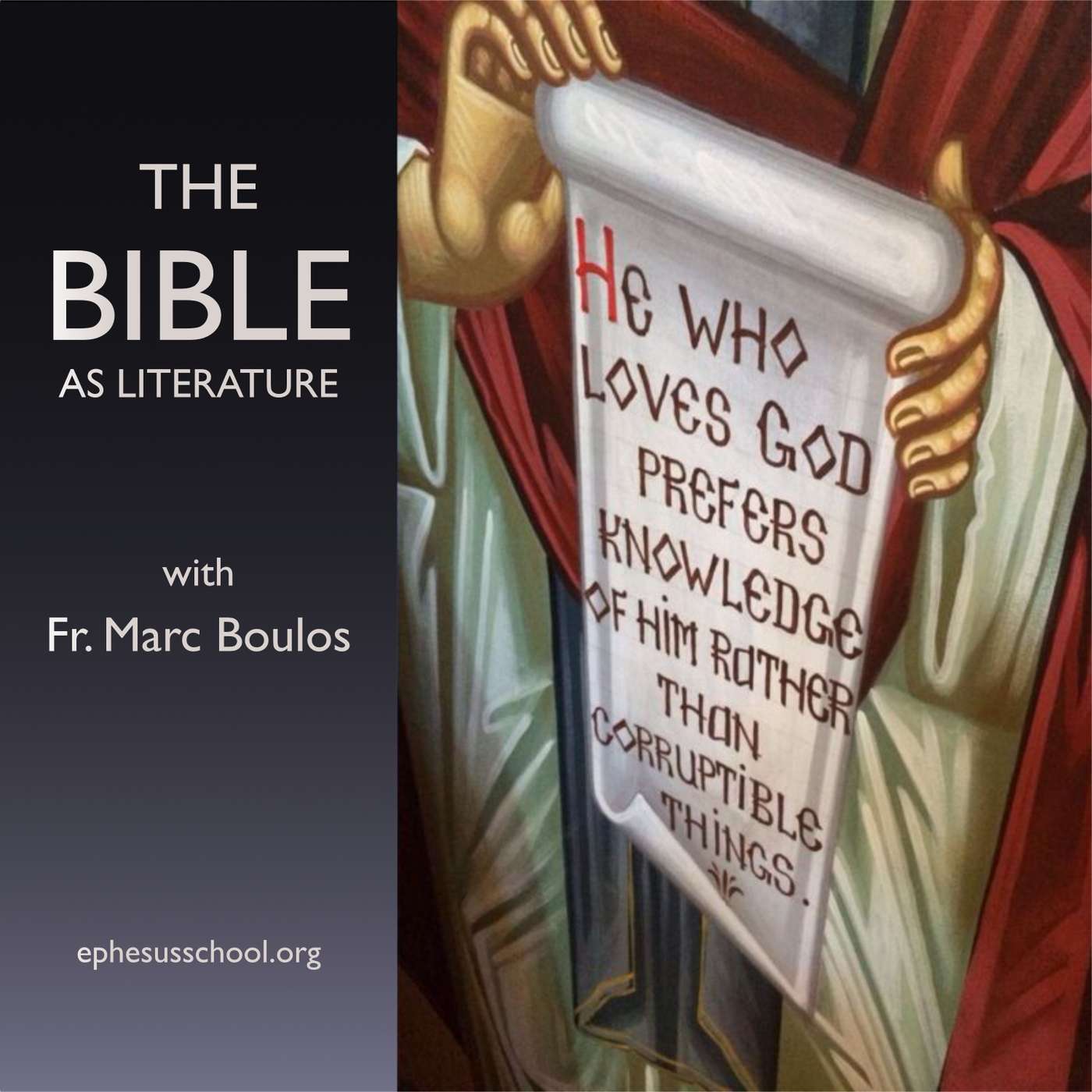
The Bible as Literature
Needy Teachers
Jul 11, 2024 · 23m
Prefer sermons downloaded automatically?
About this sermon
When you hear a parable on the lips of the Master, the worst thing you can possibly do is try to figure out what the parable means based on your understanding of the biblical narrative or narrative context.
But people do this all the time. It’s been done on this podcast—and it’s wrong.
The last thing any Bible student should do is try to figure out what the text is saying based on their knowledge.
Take, for example, the parable of the wineskins in Luke. Typical explanations compare old and new covenants, which leads less discriminating disciples to compare old and new communities.
Uhuh.
You sound like teenagers evaluating their parents—because your premise is that you are new and improved, better than what came before you.
Disgusting.
Like those who bravely protested the Vietnam War in the sixties before growing up to become the apologists and suppliers for the Gaza Genocide.
Western Values, habibi.
Like I said, disgusting.
Nothing new here—or anywhere else under the sun.
You believe in this nonsense because you approach the biblical text in terms of your understanding of a narrative, which is no different than your theology. It’s the same thing—a god in your head—a statue you construct to elevate yourself above others as a reference.
You and your “personal relationship” with a king you can manipulate control.
You know, the Jesus that wants you to kill Palestinians. That one. The one you constructed in nineteenth-century Europe. Or was it much earlier?
Why?
Because you are like Hymenaeus and Philetus—you need to be loved.
So, you refuse to submit as a hearer of the Bible. Instead, you insist on reading it because when you read the Bible, you control what you process and make what you control the reference.
According to Luke, when you do this, you become the old wineskin. You become the thing to be disregarded because you become the needy teacher.
If you want to hear the riddle—the dark saying—and submit to the mashal of the old wineskin, you must first stop vying to be the teacher who needs to be loved. The key to the wineskin’s riddle is not your narrative; it’s the Bible’s terminology.
This week, I discuss Luke 5:36–39.
(Episode 525)
★ Support this podcast on Patreon ★
More from The Bible as Literature
The Same Skeleton: Hebrew and Arabic as One Grammar, with Blaise Webster
Nov 28, 2026 · 55m
Are Hebrew and Arabic two languages, or one Semitic tongue with the same skeleton? Fr. Marc Boulos talks with Blaise Webster about Ibn Janāḥ's Kitāb al-Uṣūl, the Book of Roots, now in English, and...
Reference and Function: Semitic Roots and Chinese Characters
Nov 15, 2026 · 27m
Do Chinese characters work the way Semitic roots do? Fr. Marc Boulos talks with Matthew Franklin Cooper about his comparative lexicography of Chinese, Hebrew and Arabic, and about how the Bible...
The Tenth Belongs to God
Nov 11, 2026 · 51m
Deliverance is not for sale.Balak sent the elders of Moab and Midian to Balaam with the fee for divination in their hands. Pharaoh's magicians asked about their reward before they threw down their...
The Illusion of Choice
Oct 25, 2026 · 36m
This week the Bible as Literature podcast steps outside its usual format. Fr. Marc Boulos sits down with two parishioners of St. Elizabeth: Bethany Saros, former parish council president, and Carter...
Crossing into Judgment
Oct 8, 2026 · 58m
Fr. Marc Boulos presents "Crossing into Judgment: The ʿIbri, the ʿArabah, and the Philological Manufacture of an Ethnos" at the 2026 OCABS Symposium, held October 2–3, 2026, at St. Elizabeth...
The Scriptural Canon
Oct 6, 2026 · 1h 35m
Fr. Paul Nadim Tarazi's final public presentation, "The Scriptural Canon," delivered as the keynote address at the 2026 OCABS Symposium, held Saturday, October 3, 2026, at St. Elizabeth Orthodox...
Take these sermons with you.
Follow The Bible as Literature in the Getsermons app to get every new sermon, build playlists, and pick up right where you left off.

