
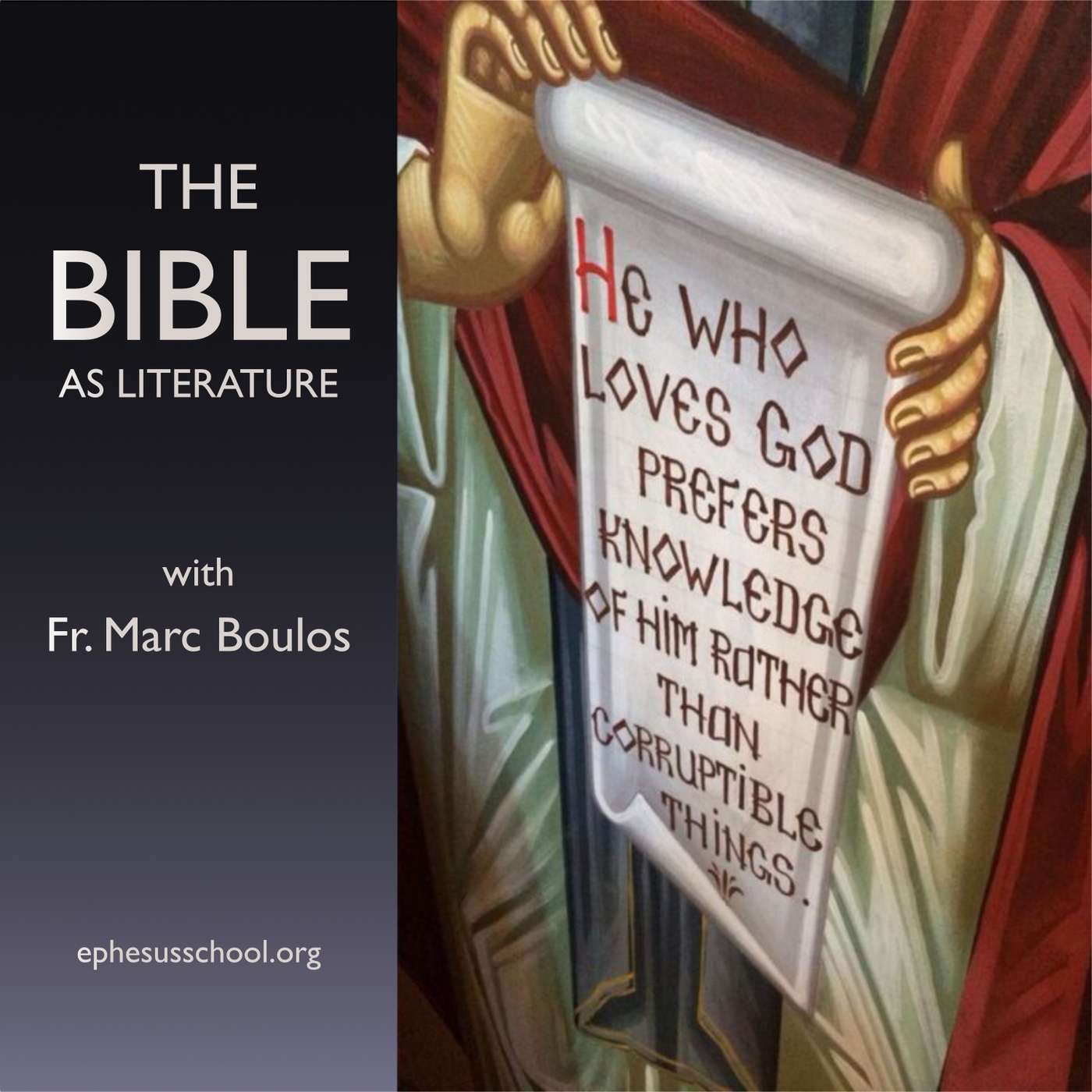
The Bible as Literature
We Are the Evil
Aug 1, 2024 · 25m
Prefer sermons downloaded automatically?
About this sermon
There’s a riddle I’ve been working out as a pastor for many years. I’ve accepted the biblical premise that the gospel is not about growing churches or building temples. I’ve observed the scandal it creates in meetings and discussions with mission boards, parish councils, and planning committees.
All of that makes sense as the institutional scandal of the crucifixion.
What has been most eye-opening, or perhaps better stated, “ear-opening” for me, has been how it plays out in pastoral relationships. It all goes back to the Parable of the Sower in Mark.
Everyone wants to be the plant that takes root and bears fruit. Unfortunately, all of us have to reconcile what it means scripturally to come face-to-face with a God who can’t be depicted. No matter how long it takes, the implications of this reconciliation are—in a very literal sense—life-shattering.
Our human tendency is to attempt to contextualize this reconciliation in terms of human community, relationships, or personal connection, which we naturally understand in terms of loyalty—in other words—the way we understand family. If we just stick together, we rationalize, we can survive.
But that’s not how it works in Scripture.
I was doing a Bible study this week with a friend from the Jesuit community, a poet and teacher. We were hearing the Gospel of Mark while studying Fr. Paul’s commentary and looking at lexicography.
I noticed something interesting in Mark with the use of the word “synagogue.” A similar pattern appears in Luke with respect to the problem of people gathering.
Humans gather for security, fellowship, even for celebration, when we should be on the move—moving outside of the city wherever the teaching moves, away from human control.
My daughter asked me this week if there was anyone I thought could be president of the United States who could stand up to the criticism of the Bible. I said, “no,” and quickly added, “I myself don’t stand up to this criticism.”
I established a small mission church in my hometown with people I knew. As with most humans, everyone involved, including me, had good intentions.
Still, like the government, it’s a human institution with all the same complications, difficulties, and corruption because it’s made up of human beings who want something other than what Jesus brings to the synagogue.
The reason people don’t like it when the gospel dismantles their idols is that if they can’t believe in something—a system, a program, a nation, an idea, a hero—they can’t believe in themselves. So as long as you’re defending something—anything you judge worthy of being redeemed—you will never be able to encounter the inexistant, undepictable, indescribable, and incomprehensible God of Scripture, whose pass of entry demands that you have no other gods before him—least of all and last of all, yourself.
I keep saying it, but none can hear it, because none are willing to believe it.
If I say it nicely, you will praise my humility—shutting yourself out of the Kingdom. If I act it out, you will see what I am and condemn me—and then there is hope for both of us: because all will see that we who have gathered at church are no different than the prostitute and the thief.
As Paul said, “because there is no difference; οὐ γάρ ἐστιν διαστολή” (Romans 3:22)
We are the evil Americans.
This week, I discuss Luke 6:6-7.
★ Support this podcast on Patreon ★
More from The Bible as Literature
The Same Skeleton: Hebrew and Arabic as One Grammar, with Blaise Webster
Nov 28, 2026 · 55m
Are Hebrew and Arabic two languages, or one Semitic tongue with the same skeleton? Fr. Marc Boulos talks with Blaise Webster about Ibn Janāḥ's Kitāb al-Uṣūl, the Book of Roots, now in English, and...
Reference and Function: Semitic Roots and Chinese Characters
Nov 15, 2026 · 27m
Do Chinese characters work the way Semitic roots do? Fr. Marc Boulos talks with Matthew Franklin Cooper about his comparative lexicography of Chinese, Hebrew and Arabic, and about how the Bible...
The Tenth Belongs to God
Nov 11, 2026 · 51m
Deliverance is not for sale.Balak sent the elders of Moab and Midian to Balaam with the fee for divination in their hands. Pharaoh's magicians asked about their reward before they threw down their...
The Illusion of Choice
Oct 25, 2026 · 36m
This week the Bible as Literature podcast steps outside its usual format. Fr. Marc Boulos sits down with two parishioners of St. Elizabeth: Bethany Saros, former parish council president, and Carter...
Crossing into Judgment
Oct 8, 2026 · 58m
Fr. Marc Boulos presents "Crossing into Judgment: The ʿIbri, the ʿArabah, and the Philological Manufacture of an Ethnos" at the 2026 OCABS Symposium, held October 2–3, 2026, at St. Elizabeth...
The Scriptural Canon
Oct 6, 2026 · 1h 35m
Fr. Paul Nadim Tarazi's final public presentation, "The Scriptural Canon," delivered as the keynote address at the 2026 OCABS Symposium, held Saturday, October 3, 2026, at St. Elizabeth Orthodox...
Take these sermons with you.
Follow The Bible as Literature in the Getsermons app to get every new sermon, build playlists, and pick up right where you left off.

