
The Christian Life Podcast
Anointed (Χριστός)
Sep 20, 2026 · 23m
Prefer sermons downloaded automatically?
About this sermon
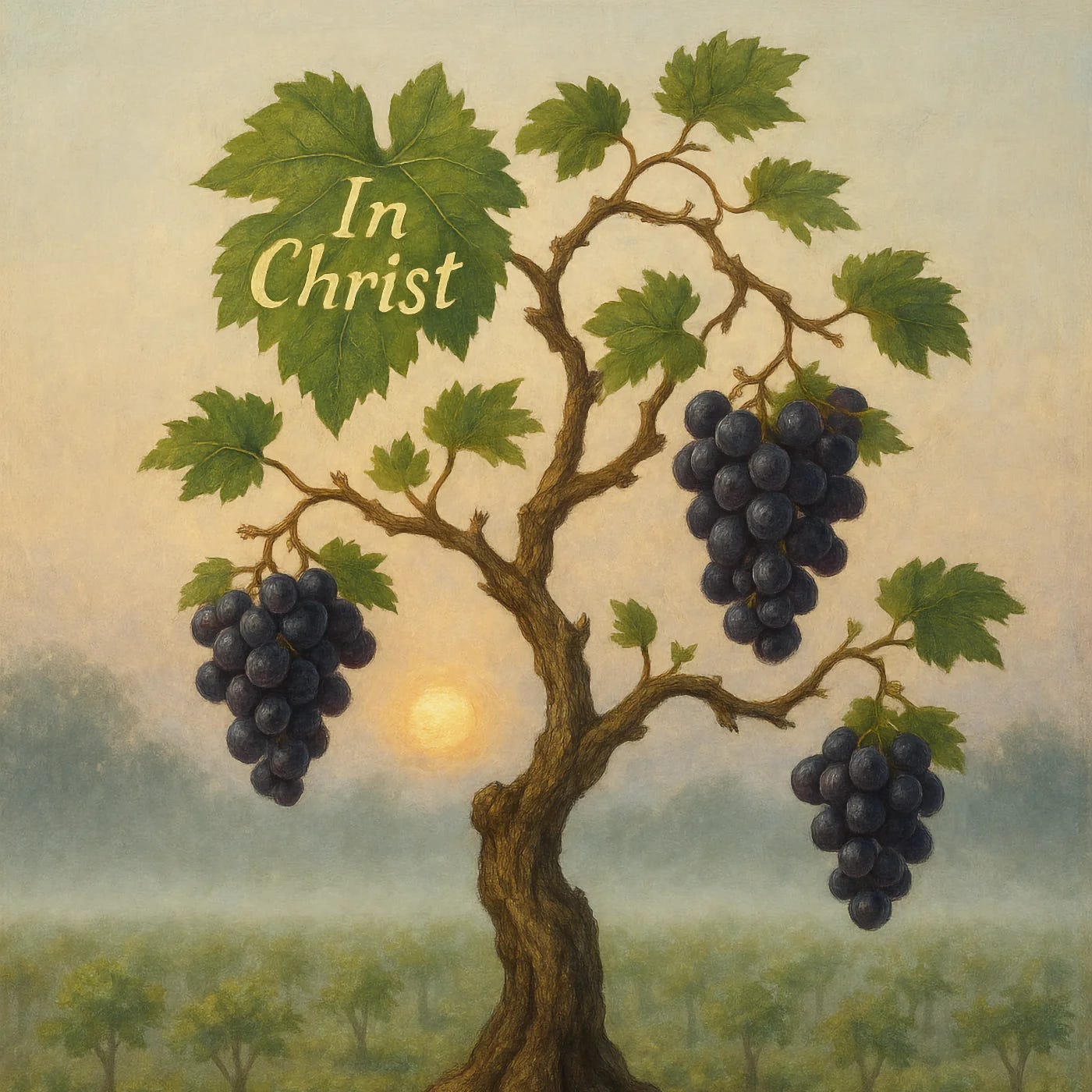
Christos (Χριστός) is an adjective meaning “anointed.” In addition to its descriptive function, it may also serve as a title.
According to Matthew 1:16, Jesus, the son born to Mary, receives this title at birth. The title designates Jesus as God’s anointed one, whom God would send from David’s line to reign. The Hebrew term mashach (מָשַׁח) shares the same meaning as Christos (Χριστός). In 1 Samuel 24:6, David refers to Saul as the anointed (mashiach) of God. Within the Levitical order, priests were also anointed (Leviticus 4:3). In Psalm 2:2, David provides a prophetic statement concerning the LORD’s mashach, while Daniel 9:25–26 offers another prophecy regarding the coming of the Messiah.
While mashach may refer to both kings and priests in the Old Testament, its primary usage in the New Testament pertains to the anticipated king from the line of David, Jesus Christ (Matthew 1:1). Jesus is identified as the promised Messiah who fulfills the prophecies concerning the LORD’s Mashach.
During the period of Jesus’ birth, there was widespread expectation in Israel regarding the coming of the Messiah. When John the Baptist appeared as the voice in the wilderness, proclaiming the need to prepare the way of the Lord, religious leaders questioned whether he was the Messiah (John 1:20). Upon hearing of the birth of a king of Israel, Herod summoned the chief priests and scribes to determine the prophesied birthplace of the Messiah (Matthew 2:4).
After accompanying Jesus for three years, Peter confesses that Jesus is the Christ, the Messiah, and the Son of the living God (Matthew 16:16). Peter recognizes Jesus as God incarnate, who came to fulfill the promise made to David and to assume his throne. Following Peter’s declaration, Jesus instructs him to remain silent about this revelation, as Israel had rejected the Messiah and Jesus was preparing for His death and resurrection (Matthew 16:20–21).
Acts 2:36 introduces an expanded definition of the term “Christ.” Prior to His death and resurrection, Jesus was recognized as the king of Israel and God’s anointed. He is the one against whom the nations raged and the rulers of Israel conspired (Psalm 2:2–3). He is also the Holy One whom God did not abandon to Sheol (Acts 2:27; Psalm 16:10). Following His resurrection, God appoints Him as both Lord and Christ, granting Him authority over all earthly kingdoms and the angelic order (Colossians 2:15; Ephesians 1:20–21). The Father promises to give Him the nations upon request (Psalm 2:8). The term “Christ” thus acquires a new dimension, referring to Jesus as the resurrected and glorified One. Although He was delivered to lawless individuals for crucifixion and death, God raised Him from the dead (Acts 2:23–24).
Because the meaning of Christos (Χριστός) evolved after Acts 2:36, contextual analysis is necessary to determine whether the reference is to the Messiah, the promised king of Israel, or to the resurrected, glorified One. When the title is applied to Jesus in relation to the Church, it consistently signifies the resurrected, glorified One. Conversely, when used in the context of Israel, it should be translated as the Messiah.
In 1 John 2:23, John addresses the concept of the antichrist, noting that many antichrists deny that Jesus is the Messiah and, in doing so, deny both the Father and the Son (John 5:23). In contrast, 1 John 1:7 refers to Jesus as the resurrected, glorified One. Paul similarly employs the term “Christ” in both senses. In Galatians 3:16, Paul interprets Genesis 22:17, identifying the singular seed promised to Abraham as the Messiah, Jesus. In Romans 3:24, Paul asserts that complete redemption is achieved through Jesus Christ, the resurrected, glorified One.
With the resurrection of Christ, God established a new creation (2 Corinthians 5:17). Consequently, the term “the Christ” is also applied to this new creation, in which Christ serves as the head and the Church as His body (Ephesians 1:22–23). All who believe in the death of Christ for sins and resurrection three days later are immersed into the body of the Christ by the Holy Spirit (1 Corinthians 12:12–13). In the original language, this usage of Christ often includes an article or preposition, though context remains the determining factor for the application of Christos (Χριστός).
Therefore, the name and title of Jesus Christ carry significant meaning. The name Jesus refers to the humanity of God the Son, while the title “Christ” derives its specific meaning from the context, indicating whether it pertains to Israel, the resurrected state of Jesus, or the Church.
The Christian Life is a reader-supported publication. To receive new posts and support my work, consider becoming a free or paid subscriber.
This is a public episode. If you would like to discuss this with other subscribers or get access to bonus episodes, visit www.thechristianlife.org
More from The Christian Life Podcast
2 Thessalonians 3:3–4 | The Lord Guards You from the Malignantly Evil One
Nov 24, 2026 · 3m
And the Lord is faithful, who will establish you all and guard you from the malignantly evil one. And we are persuaded in the Lord concerning you all, what we announced to you, you are doing and...
1 Timothy 3:2 | Qualifications of a Pastor
Nov 23, 2026 · 3m
Therefore, it is necessary that the bishop be blameless, a husband of one wife, vigilant, sober-minded, orderly, fond of strangers, able to teach (1 Timothy 3:2). The position of a Pastor is a...
Mercy (ἔλεος)
Nov 22, 2026 · 11m
“Mercy” means “to show pity.” God’s mercy is an aspect of His goodness. Because it is an aspect of goodness, through pity it relieves the effects of sin. “Mercy” should not be mixed up with grace or...
1 Peter 1:20-21 | Christ Foreknown Before the Foundation of the World
Nov 22, 2026 · 2m
Indeed, having been foreknown before the foundation of the world, but was manifested upon the last times because of you, those who believe through Him unto God, who raised Him out from the dead and...
Revelation 6:5–6 | Black Horse Famine in the Tribulation
Nov 21, 2026 · 2m
And when He opened the third seal, I heard the third living creature say, “Come and see.” And behold a black horse, and the one sitting upon it having scales in his hands. And I heard as a voice in...
Ephesians 1:11 | In Christ We Are God’s Inheritance
Nov 20, 2026 · 1m
In Whom also we are an inheritance, having been marked off according to the purpose of the One who works all things according to the determination of His desirous will (Ephesians 1:11). God has both a...
Take these sermons with you.
Follow The Christian Life Podcast in the Getsermons app to get every new sermon, build playlists, and pick up right where you left off.

